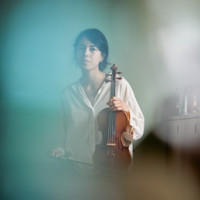
Rune Glerup
15








Under temaet EPIPHANY har den aarhusianske festival for ny musik og lydkunst, SPOR, offentliggjort det fulde program for sin 2017-udgave.
Det engelske ord "epiphany" kan bedst oversættes til dansk som åbenbaring, men dækker også over manifestationer af noget overnaturligt eller magisk. På SPOR 2017 udforsker man gennem temaet små fortryllelser, der er i clinch med hverdagen.
Det kommer i programmet til udtryk gennem forskellige situationer, der erobrer de rum, hvori hverdagslivet udspiller sig og kaster nyt lys over de mønstre og rutiner, som knytter sig til det daglige liv.
»Eksempelvis laver Ea Borre og Sandra Boss et værk, som tager udgangspunkt i en kendt situation – en gademusikant, som sidder og spiller – det er noget man bumper ind i, når man er i sit almindelige hverdagsliv. Men de vender, drejer og strækker det, så de ender med noget, som bliver en lille bobbel af magi, som både har den her kendte hverdagslige følelse, men som samtidig sætter sig fuldstændigt ud over den«, forklarer den ene af festivalens kunstneriske ledere Anne Marqvardsen.
Værket hedder Sustained Effort og gør brug af en akkordeon-lignende lydskulptur af ekstreme fysiske proportioner, der bliver en del af en offentlig performance i Aarhus' byrum.
Ligeledes laver den polske komponist, performer og kunstner Jagoda Szmytka en syv dage lang performance, hvor hun bor i et udstillingsrum til frit skue for offentligheden. Og således bidrager programmet på forskellig vis med små performative, der rummer åbenbaringer.
»Der er en meget stærk personlighed i årets tema og i de værker og kunstnere, som er blevet inviteret indenfor, og som er blevet udvalgt. Det, der generelt kendetegner SPOR er, at der altid er en ret stram kuratering og tematik, som tegner festivalen rigtigt meget, uanset om vi gør det solo, eller om vi gør det sammen med en gæstekurator. Vi inviterer ikke bare de kunstnere og ensembler ind, der alligevel turnérer i maj måned«, pointerer Anne Marqvardsen.
SPOR er født med idéen om at have en ny kurator hvert år. I 2007 var det Anne Marqvardsen og Anna Berit Asp Christensen, der vandt kuratorkonkurrencen. Året efter indtrådte de som festivalens direktører og har siden givet kuratorstafetten videre til vægtige danske komponister som Bent Sørensen og Simon Steen-Andersen, til udenlandske udfordrere som Joanna Bailie og Jennifer Walshe eller fællesskaber som f.eks. det belgiske Nadar Ensemble, der kuraterede festivalen sidste år. Men på tiåret for deres debut kurateres festivalens program atter af direktørparret Marqvardsen og Christensen.
»EPIPHANY er også et tema og en overskrift, der relaterer sig personligt til det arbejde vi selv har haft med festivalen. Det er vores tiende festival i år, og på en måde tror jeg der ligger en grundforståelse for os begge to af, at vi har arbejdet så utroligt eksperimenterende med den her festival, og vi har valgt at lave så mange ting, som var ukontrollérbare og uden at vide, hvad det ville ende med. Det har affødt de her bittesmå åbenbaringer eller magiske ting, som vi ikke kunne være sikre på. Så der ligger også noget personligt i det tema i forhold til, hvordan vores egen rejse har været med den her festival gennem 10 år«, fortæller Anna Berit Asp Christensen.
Efter at have vokset sig til den institution, den er i dag, har SPOR kræfter til at realisere flere og mere ambitiøse tiltag. Det afspejler sig eksempelvis i projekter som SPOR New Music School, hvor der under festivalen de seneste to år er blevet komponeret samtidsmusik og lydkunst af musikskoleelever på 11-15 år. Men festivalens udvikling ses også i musikprogrammet:
»Alt, hvad der er på programmet, er noget vi holder af på en helt særlig måde, og som betyder rigtig meget for os. Men der er ingen tvivl om, at jeg er rigtig stolt over, at vi i år kan præsentere en meget stor Manos Tsangaris-produktion. Han er en utrolig anerkendt figur på ny-musik-scenen i hele Europa, og man har aldrig haft en Tsangaris-produktion i det format før i Danmark«, afslutter Anna Berit Asp Christensen.
SPOR finder sted i Aarhus 8-14. maj på forskellige lokationer i Aarhus.
Læs mere på festivalens hjemmeside.
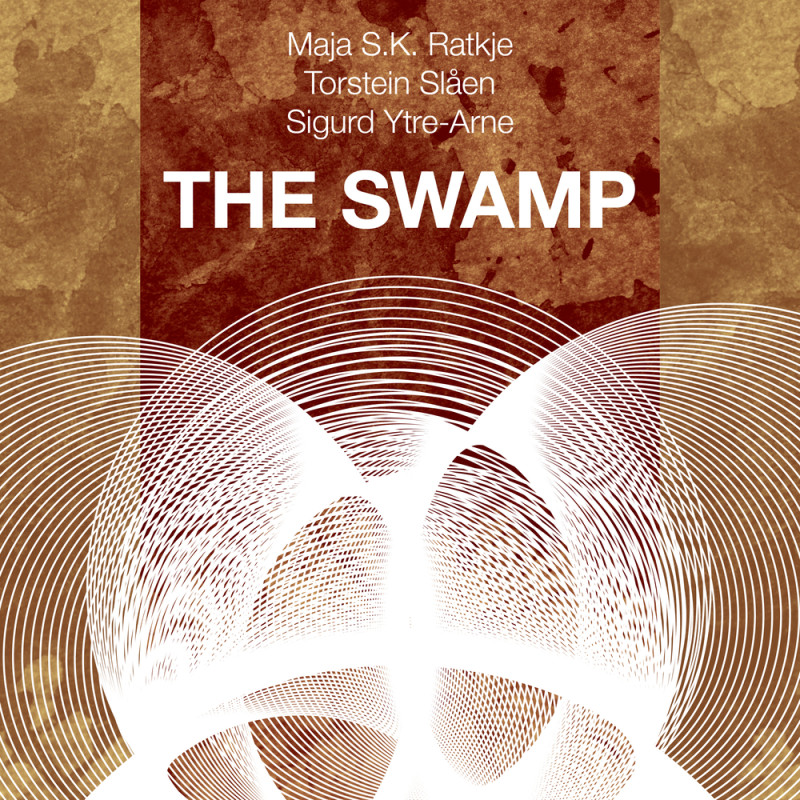
The term Dadaism must be used with caution – it easily risks becoming a cliché and trampling disrespectfully on its origins. Nevertheless, it’s hard to avoid Dada when listening to The Swamp, created by Norwegian experimental composers Maja Ratkje, Torstein Slåen, and Sigurd Ytre-Arne. The album is a 40-minute chaotic mirror of our times, shaped by merciless improvisation, noise drones, and Ratkje’s absurd vocalizations.
The music is raw, rancid, and deliberately un-beautiful – a constant stream of manipulated field recordings, reminiscent of a horror film foley studio. Bells, metallic clanks, white noise, and industrial sounds are warped together, driven by a syncopated, menacing rhythm and an underlying fuzz drone. Most fascinating is Ratkje’s voice, which appears as a riddle: is she singing in Celtic, Norwegian, or pure gibberish? The latter seems most likely and evokes the Dada poetry of Kurt Schwitters, particularly his 1932 Ursonate. At the same time, her vocal techniques dig deep into Nordic soil – conjuring the spirit of völva chants and Viking songs.
The combination of controlled noise and purposeful chaos elevates much of the album, with the opening track and the completely unhinged »Discomanic« standing out. The former is as close as the trio gets to something conventional; the latter borders on pure sound art. Only the two slower pieces – the seven-minute-long »Oligarchification« and »Lullaby for Trembling Hearts« – tend to drag a bit. Otherwise, the group manages to keep the material focused, sharp, and intensely trippy. It’s impressive how effectively it all works, even as the expression remains so relentless and challenging.
English translation: Andreo Michaelo Mielczarek
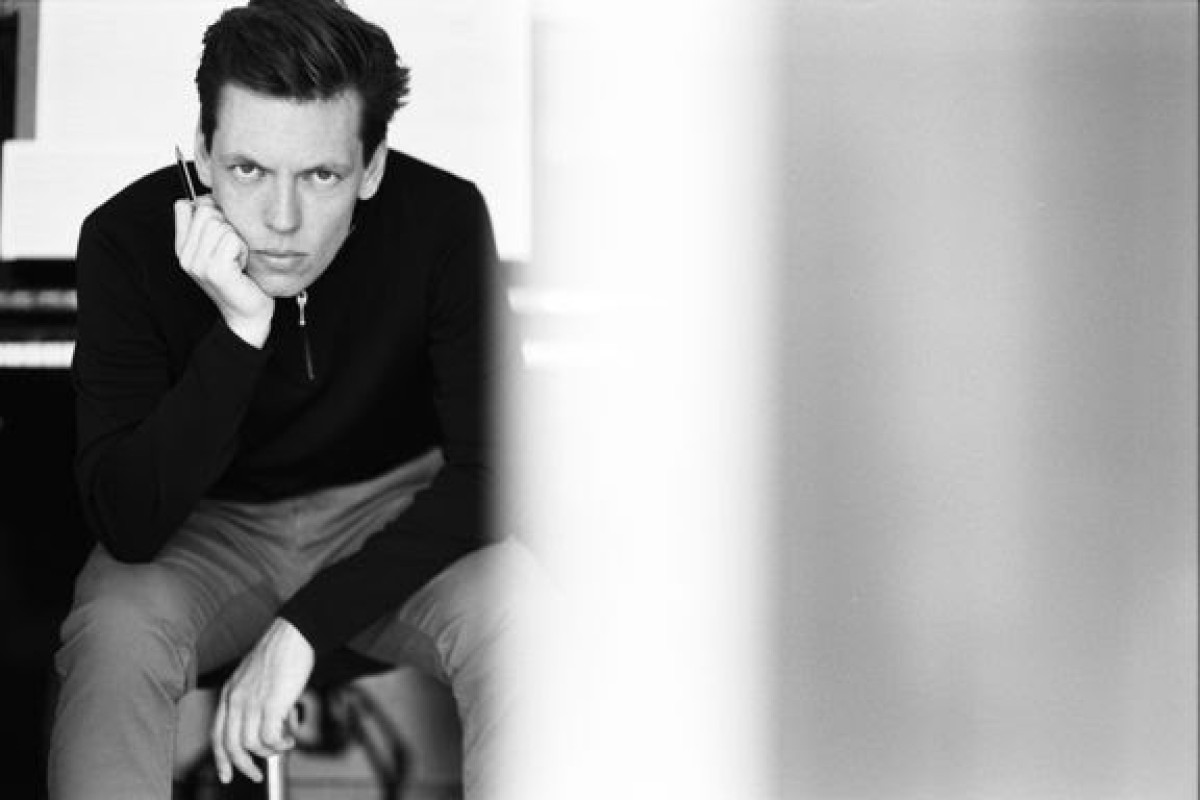
A string quartet consists of four players, and a clarinet quintet five, though the Danish composer Rune Glerup (b. 1981)’s newly recorded works for both ensembles would have you believe their ranks are vastly undercounted. The recipient of last year’s Nordic Council Music Prize for his violin concerto Om lys og lethed (About Light and Lightness), Glerup writes pieces for chamber and orchestra that are often characterized by their multidimensionality: a sonic idea will persistently recur in altered guises, for a sense that one is feeling around different facets of a physical form. Yet the two works on Perhaps Thus the End – brought to life by the impeccable Quatour Diotima and clarinetist Jonas Frølund – are just as potent a demonstration of expansive interiority as they are of surface area.
In the titular string quartet, whose seven movements are named for lines from Beckett’s late prose work Stirrings Still, long tones and galloping motives are seamlessly shuffled amongst the ensemble, generating such a sonority that the group seems to have doubled in size. The language is sometimes mechanical but never automatic, bending rather into balletic shapes. Glerup is a careful manager of texture, finding grace in unintuitive sounds through skillful layering – to speak merely of how, in a later movement, a harmonic pizzicato punctuates the string equivalent of vocal fry before the group pivots suddenly into stillness.
On the unexpectedly addictive »Still Leaning Towards this Machine«, which is surely among the few times a contemporary clarinet quintet has received that distinction, electronics magnify the ensemble through a subtle stuttering resonance. As a result, across three spunky movements, the group is occasionally transmuted into a sort of paranormal accordion. It’s a wonderfully weird effect that, just as weirdly, the score seems to deliver with a straight face – just one more satisfying surprise among many others on this excellent record.
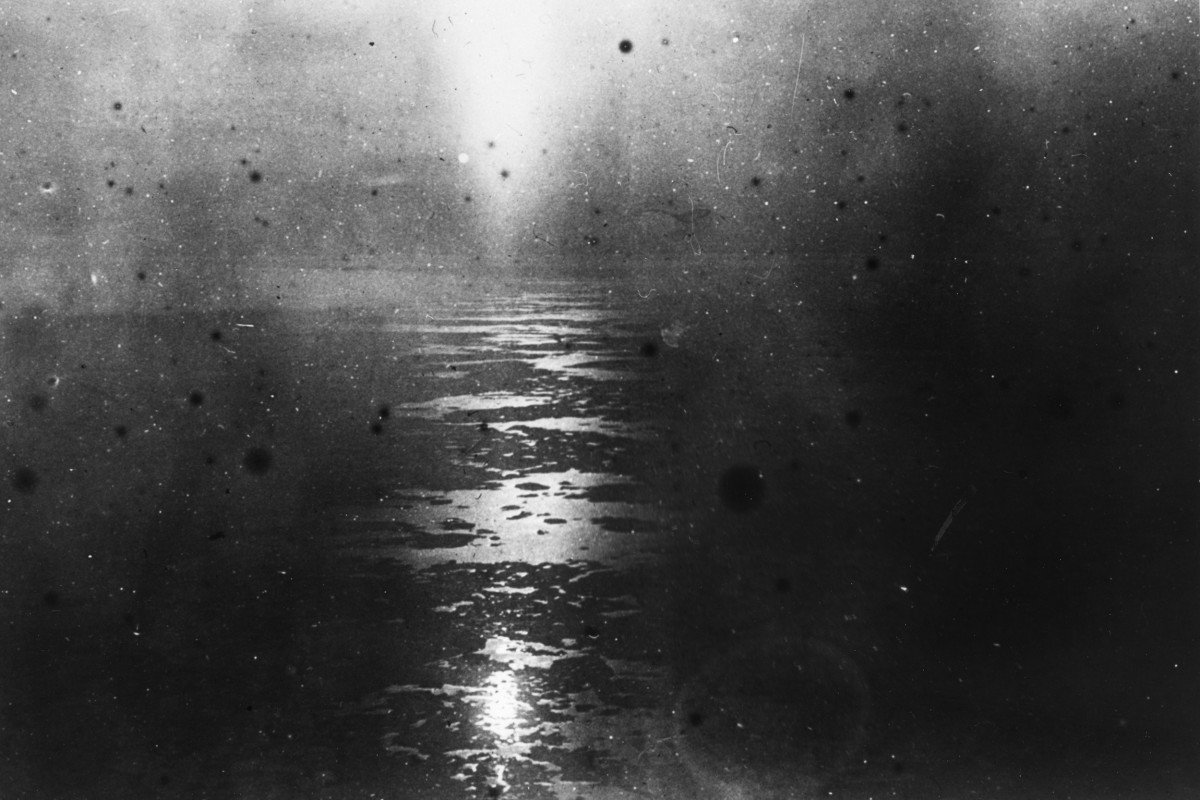
On his new album, Snowblind, Jacob Kirkegaard shifts his focus away from revealing the hidden sounds of our surroundings to instead depict a psychological drama. The inspiration: The Swedish polar explorer Salomon August Andrée, who in 1897 set course for the North Pole in a hot air balloon – a reckless journey that cost him and two others their lives, blinded by snow and the pursuit of fame.
Through 11 icy tableaus, Kirkegaard paints a portrait of the anxiety and doubt Andrée must have felt when the balloon crashed onto the pack ice east of Svalbard. For two months, the three men continued on foot until they reached the desolate island of Kvitøya – where they died a few weeks later, possibly poisoned by undercooked polar bear meat. By then, nature had long since revealed its hostility.
You hear all this on Snowblind. First, the balloon takes off in an air current that elegantly balances on the edge of suffocating dark synths and a heartbeat rhythm, while a metallic screech – reminiscent of a heroic electric guitar – subtly signals doubt: Was Andrée a hero or a villain? Shortly after, we land in a vast nothingness of scraped metal. The shockwave transforms into mischievous, squelchy synth footsteps as desperation and hallucinations grow: Was that a ship's horn I heard? A lifeline?
But no. Silence wins. The icy water rattles like a hungry beast. The hardboiled psychological drama leaves no room for hope, only a chance to stare at your end right in the face. Had Kirkegaard been a truly ruthless portraitist, we might have descended even further into darkness and disorientation, but his weightless ambience still leaves its marks in the snow.
English translation: Andreo Michaelo Mielczarek
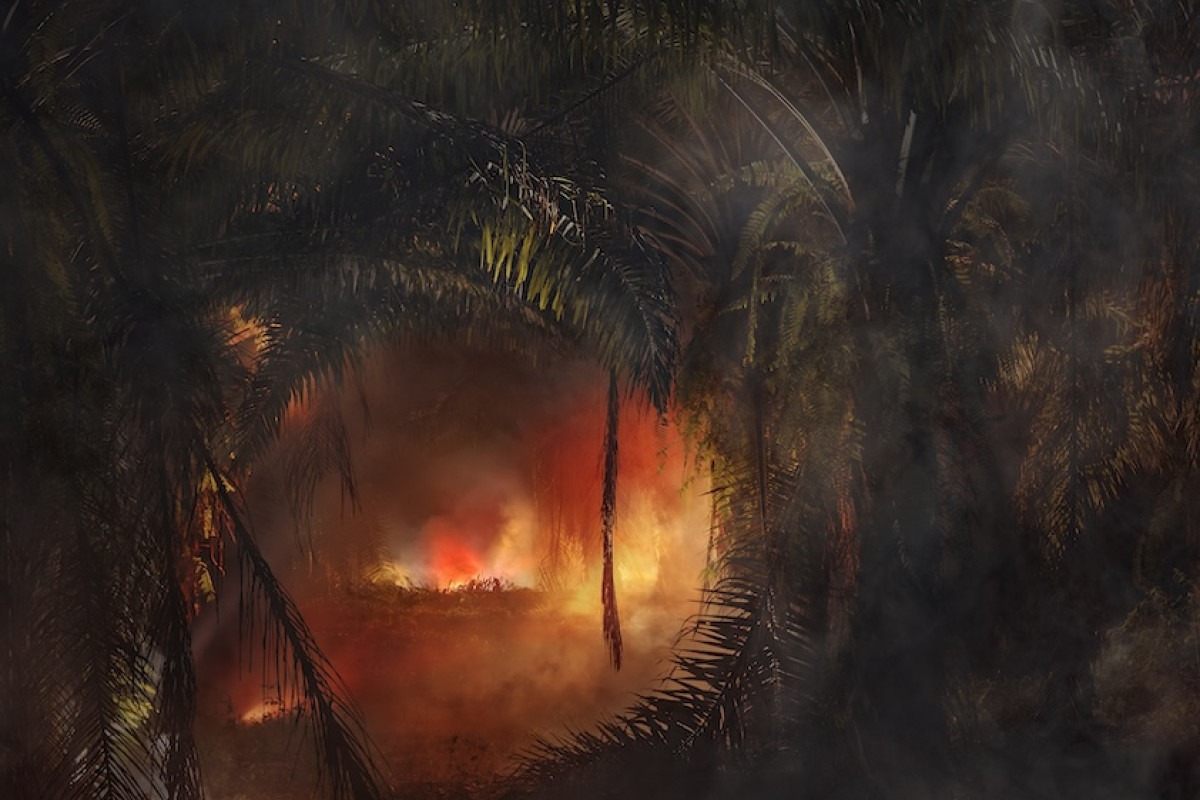
We wander through a garden: it's dark, with palms and ferns everywhere, illuminated by infrared light and equipped with sensors, causing the plants to create crackling noise. Red blinking lights above resemble drones. Welcome to the end of the world. And the beginning of the world. We’re not entirely sure. Perhaps it’s a serious rave party that has come to a halt. Just like the techno in the film An Invitation to Disappear, set in a Southeast Asian oil plantation, blurring night and day – making the senses lulled, vulnerable, and compliant.
In the '90s, Erik Satie’s sad piano music always played in broadcasts about climate disasters. Here – at the beginning of a new chaotic year – you can disappear into the exhibition Solarstalgia created by the French-Swiss artist (and Olafur Eliasson student) Julian Charrière. Experience life in an apocalyptic afterworld with all its ominous sounds, in a fully immersive and enveloping way – as this might be how we can learn a bit about the geological forces and changes in nature around us today.
At the end of Arken's long exhibition space, the eye is drawn to an onyx boulder emitting light (the work Vertigo). When approaching something with light, one becomes greedy. The pig-like sounds you hear come from volcanoes in Ethiopia and Iceland. A devouring sound. Just like the entire exhibition, it elegantly addresses both the eyes and techno-loving ears.
It's seriously clammy as you step down into the Cisterns beneath Søndermarken – humid, with brick columns dripping with condensation and chalk stalactites hanging down. A piano has been left down here for five months, slowly deteriorating. I was skeptical about Opløsninger: yet another Annea Lockwood-inspired work, simply inflicting violence on a poor instrument? And if not, is a composer like August Rosenbaum, who works with short, vibe-friendly piano pieces, the right person to elevate the idea into something greater? Yes, as it turns out, fortunately.
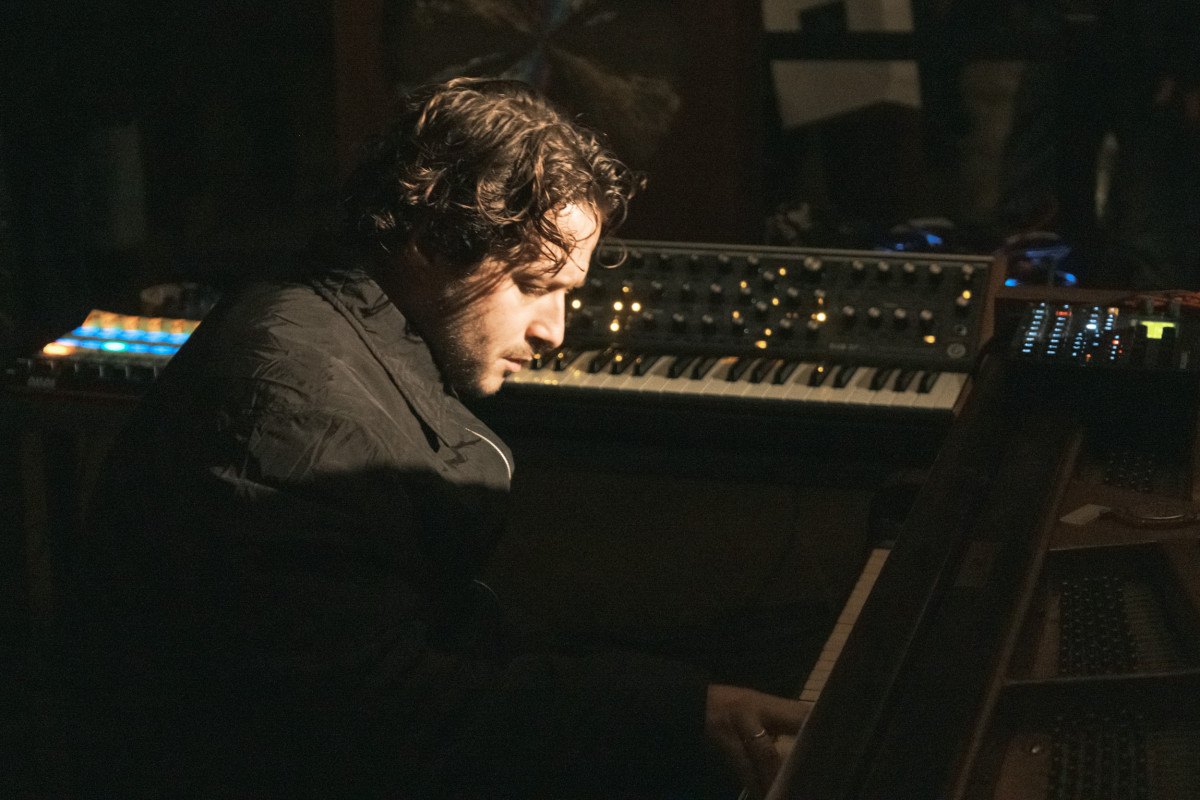
Together with visual artist Ea Verdoner, Rosenbaum has created an installation piece that spans three chambers, and in the first, you indeed see the decayed piano with centimeter-thick mold patches on the keys. As you shuffle along to the second chamber, Rosenbaum sits in the dark in front of a better-preserved grand piano. His playing is both minimalist and grandiose, but it’s the breaks in the composition that truly captivate me. Half motifs, repeated triplets, tritone-like intervals. Rosenbaum loops a captured sound from the decayed piano on a sequencer, gets up, and walks away briskly. He returns and turns up the industrial rumble of a gong, as if he were Trent Reznor in the studio. Combined with choreography about duality, a voice-over about life and birth, and a video about the body and decay, it becomes an exciting and reasonably new depiction of the raw, cold, and arbitrary nature of decomposition.