







Under temaet EPIPHANY har den aarhusianske festival for ny musik og lydkunst, SPOR, offentliggjort det fulde program for sin 2017-udgave.
Det engelske ord "epiphany" kan bedst oversættes til dansk som åbenbaring, men dækker også over manifestationer af noget overnaturligt eller magisk. På SPOR 2017 udforsker man gennem temaet små fortryllelser, der er i clinch med hverdagen.
Det kommer i programmet til udtryk gennem forskellige situationer, der erobrer de rum, hvori hverdagslivet udspiller sig og kaster nyt lys over de mønstre og rutiner, som knytter sig til det daglige liv.
»Eksempelvis laver Ea Borre og Sandra Boss et værk, som tager udgangspunkt i en kendt situation – en gademusikant, som sidder og spiller – det er noget man bumper ind i, når man er i sit almindelige hverdagsliv. Men de vender, drejer og strækker det, så de ender med noget, som bliver en lille bobbel af magi, som både har den her kendte hverdagslige følelse, men som samtidig sætter sig fuldstændigt ud over den«, forklarer den ene af festivalens kunstneriske ledere Anne Marqvardsen.
Værket hedder Sustained Effort og gør brug af en akkordeon-lignende lydskulptur af ekstreme fysiske proportioner, der bliver en del af en offentlig performance i Aarhus' byrum.
Ligeledes laver den polske komponist, performer og kunstner Jagoda Szmytka en syv dage lang performance, hvor hun bor i et udstillingsrum til frit skue for offentligheden. Og således bidrager programmet på forskellig vis med små performative, der rummer åbenbaringer.
»Der er en meget stærk personlighed i årets tema og i de værker og kunstnere, som er blevet inviteret indenfor, og som er blevet udvalgt. Det, der generelt kendetegner SPOR er, at der altid er en ret stram kuratering og tematik, som tegner festivalen rigtigt meget, uanset om vi gør det solo, eller om vi gør det sammen med en gæstekurator. Vi inviterer ikke bare de kunstnere og ensembler ind, der alligevel turnérer i maj måned«, pointerer Anne Marqvardsen.
SPOR er født med idéen om at have en ny kurator hvert år. I 2007 var det Anne Marqvardsen og Anna Berit Asp Christensen, der vandt kuratorkonkurrencen. Året efter indtrådte de som festivalens direktører og har siden givet kuratorstafetten videre til vægtige danske komponister som Bent Sørensen og Simon Steen-Andersen, til udenlandske udfordrere som Joanna Bailie og Jennifer Walshe eller fællesskaber som f.eks. det belgiske Nadar Ensemble, der kuraterede festivalen sidste år. Men på tiåret for deres debut kurateres festivalens program atter af direktørparret Marqvardsen og Christensen.
»EPIPHANY er også et tema og en overskrift, der relaterer sig personligt til det arbejde vi selv har haft med festivalen. Det er vores tiende festival i år, og på en måde tror jeg der ligger en grundforståelse for os begge to af, at vi har arbejdet så utroligt eksperimenterende med den her festival, og vi har valgt at lave så mange ting, som var ukontrollérbare og uden at vide, hvad det ville ende med. Det har affødt de her bittesmå åbenbaringer eller magiske ting, som vi ikke kunne være sikre på. Så der ligger også noget personligt i det tema i forhold til, hvordan vores egen rejse har været med den her festival gennem 10 år«, fortæller Anna Berit Asp Christensen.
Efter at have vokset sig til den institution, den er i dag, har SPOR kræfter til at realisere flere og mere ambitiøse tiltag. Det afspejler sig eksempelvis i projekter som SPOR New Music School, hvor der under festivalen de seneste to år er blevet komponeret samtidsmusik og lydkunst af musikskoleelever på 11-15 år. Men festivalens udvikling ses også i musikprogrammet:
»Alt, hvad der er på programmet, er noget vi holder af på en helt særlig måde, og som betyder rigtig meget for os. Men der er ingen tvivl om, at jeg er rigtig stolt over, at vi i år kan præsentere en meget stor Manos Tsangaris-produktion. Han er en utrolig anerkendt figur på ny-musik-scenen i hele Europa, og man har aldrig haft en Tsangaris-produktion i det format før i Danmark«, afslutter Anna Berit Asp Christensen.
SPOR finder sted i Aarhus 8-14. maj på forskellige lokationer i Aarhus.
Læs mere på festivalens hjemmeside.
Bumblebees Come With Punk
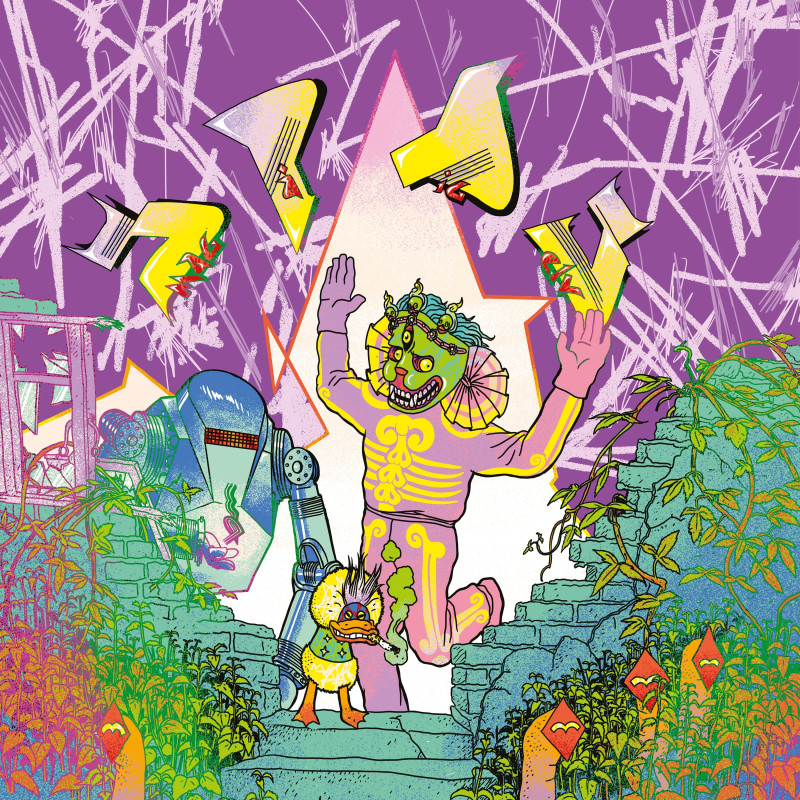

Smag På Dig is pretty punk. True, the instruments most commonly associated with the genre have been replaced by saxophones, and yes, the music sounds markedly different from what one would normally link with punk. Nevertheless, with their debut release SPDS, tenor saxophonist Oliver Lauridsen, baritone and bass saxophonist Thorbjørn Øllgaard, and drummer Albert Holberg have created a bona fide, high-energy punk album – packed with fun, mischief, seriousness, and anger.
The style is established from the very first track. The trio plays catchy, often pop-inflected melodies built on Øllgaard’s thunderously deep saxophones, Holberg’s tight drumming, and Lauridsen’s high-energy, lyrical tenor sax. Particularly effective is »Middelklassen avler kun skeletter«, which has a comparatively darker tone, a bass sax buzzing like a fat, murderous bumblebee, and a stronger focus on atmosphere than many of the other tracks – without sacrificing melody.
At the other end of the spectrum are tracks like »PGO HOT 50«, with its stomping tempo, cowbells, and an epic sax guyfrom hell, and »Negirî«, which, with Luna Ersahin on vocals and saz in the eleventh hour, lets the horns step into the background – not to mention Thorbjørn’s angry poems, addressing everything from globalization, climate change, and war to the art academy and one’s own worth as a human being. Impressively, it all hangs together; everything works in its diversity. And it convincingly illustrates the age-old punk dictum that you can be angry and still have fun at the same time.
Feel Yourself Becoming Nature Again

Frozen human bodies and faces shaped and painted like ceramics are meticulously carried around by flower sculptures that have abandoned their static nature. The roles are reversed. Nature becomes the living environment that grants the clay humans small, temporary lives in Ghost Flower Ritual at Copenhagen Contemporary.
The piece is a live installation with musicians and performers, where 34-year-old composer Sophie Søs Meyer has collaborated with visual artist Cecilia Fiona, who is of the same age. It’s a sensorially overwhelming, yet dramatically subdued ritual. Over the course of forty-five minutes, we sit together beneath a giant flower and sense the performers’ meticulous, slow movements. Meanwhile, soundscapes and small pulsating figures from four string players and a flute shape a landscape of colors, tones, and movements that melt together – filling the high-ceilinged room with auditory and visual presence. We are part of a whole.
I love the wild costumes that descend strangely from the sky. I love being part of the ritual that heals our forgotten connection to nature, which is the very foundation of our lives. I love the sound of stroked, plucked, and blown wood from Athelas’ musicians. Culture is nature. The human animals and the flowers are part of the greater consciousness. It’s all a hyper-complex mechanism. Cecilia Fiona possesses an extraordinary visual and creative abundance in her intricate details, and Sophie Søs Meyer is precise and intriguing in her swaying tonal figures that change slowly and meticulously. Until one flower blows into the large conch shell. Then the ritual is over.
English translation: Andreo Michaelo Mielczarek
Beneath the Restless Canopies

An inner soundscape characterises being in love. You walk through the city with a new rhythm, a different melody. The same is true of depression, though here major gives way to minor. Yet the early phases of love, too, can contain moments of doubt and dark foreboding. In composer and guitarist Ask Kjærgaard’s musical staging of Naja Marie Aidt’s 2006 short story Store træers grønne mørke (The Green Darkness of Large Trees), released as an LP last year, this same interplay is palpable as the music moves us from gentle strokes through melancholy to a rougher sound. The recording features the trio LiveStrings – cello, violin and viola – with actor Jens Albinus as the first-person narrator.
In the concert version of Kjærgaard’s work in Aarhus, featuring Rasmus Kjær on keyboards, Albinus’s voice appeared even more exposed. The piece introduces us to a depressed man who, wandering through a park, finds moments of calm beneath the trees—and at times up in them. For when despair causes you to fall out of the system’s sky, through sickness benefits and social assistance, only to land at the roots of the trees, perhaps there is only one thing to do: climb into the treetops? But then our anti-hero meets a woman in the park, and the drama begins. Can infatuation lift him out of depression, or will it end up short-circuiting him?
At first, the music crept in quietly. Kjærgaard’s ability to support the flow of the text revealed his experience as a film composer, particularly in his blending of classical music, meditative new age, and piercing guitar. Words and music carried the narrative together. When Albinus fell silent, the music became the voice of the inner landscape. The strings, in particular, delivered the dreamlike tones of infatuation, but when the gloom returned with renewed force, it was Kjærgaard who, with a roaring guitar, sprawled across the emotional abyss. It was beautiful and brutal.
English translation: Andreo Michaelo Mielczarek
Explosive Jazz Builds Up and Burns Down

From the very first downbeat, I sense a special energy – saxophonist and composer Amalie Dahl, in interplay with vibraphonist Viktoria Søndergaard, guitarist Viktor Bomstad, and drummer Tore Ljøkelsøy, unfolds a unique balance between calm and restrained wildness. Take, for instance, the album’s second track, which opens at a lingering tempo with a duet between Søndergaard’s vibraphone and Dahl’s saxophone. At times their playing merges into harmonic dialogue; at others, the interaction is disrupted by contrasting movements. Like a conversation, the instruments alternate between gentle suggestions and lively outbursts. It is a joy to listen to music that flows so effortlessly. Halfway through, Bomstad suddenly kicks the door open with his guitar, hurling himself into the conversation with explosive force. Where moments earlier I was savouring the finely tuned interplay between Søndergaard and Dahl, I am now overwhelmed by the flaming, noise-rock chaos Bomstad ignites – and I love every second of it.
All three tracks on the album are thus imbued with sheer joy of playing, confident compositions, and impressively free excursions. The listener is kept on the edge of their seat, knowing that at any moment the four musicians can cause an otherwise cosy passage to detonate. With Breaking/Building Habits, Dahl and her collaborators exemplify the unique vitality of partially composed, partially improvised jazz. They build up and burn down, again and again – and as a listener, there is nothing to do but surrender to their compelling show of force.
English translation: Andreo Michaelo Mielczarek
Mathias Reumert Group Masters the Art of Playing with Sound

Mathias Reumert Group is a playful and tightly knit percussion ensemble. This was already evident upon entering KoncertKirken: the long side of the hall was densely packed with an impressive arsenal of percussion instruments, ready to bring the space to life. The programme opened with a delightful performance of György Ligeti’s Síppal, Dobbal, Nádihegedüvel featuring soprano Anna Caroline Olesen. A work driven by humour and constantly shifting yet precisely placed sounds – harmonica, referee whistles, marimba, tubular bells, and much more. We were even fortunate enough to hear the final movement twice.
The early encore loosened up the otherwise somewhat conventional concert format – one piece followed by the next, and so on. In new-music ensembles, one increasingly encounters curatorial and conceptual frameworks for concerts. Perhaps this is a development from which this curious ensemble could benefit?
The concert concluded with Chiung-Ying Chang’s Solar Myth – a piece of music theatre rooted in Taiwanese culture, where prop and instrument became one. Three masked beings played softly on a bass drum, initiating what felt like a ritual. But the ritual was abruptly disrupted when a fourth percussionist stepped forward, offering resistance through the tones of a marimba. The three beings responded with sharp, piercing cracks from their bright red fans – but the marimba did not yield. What followed was an explosive soundscape of metallic percussion, bright, clattering, and dancing. The dramaturgy seemed shaped by a deep understanding of the nature of music itself. Enchanting. One left KoncertKirken a little taller, happier, and more playful.
English translation: Andreo Michaelo Mielczarek