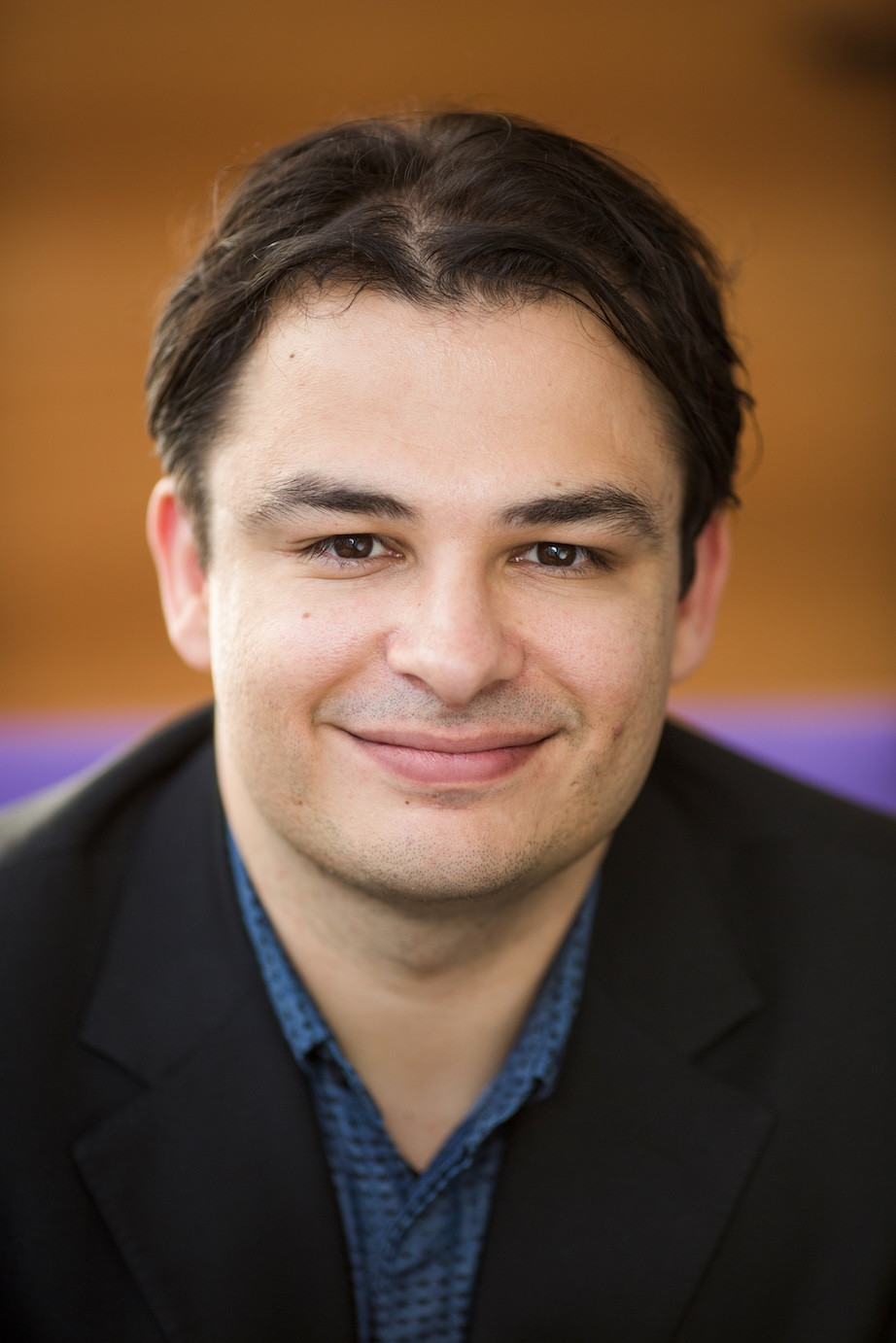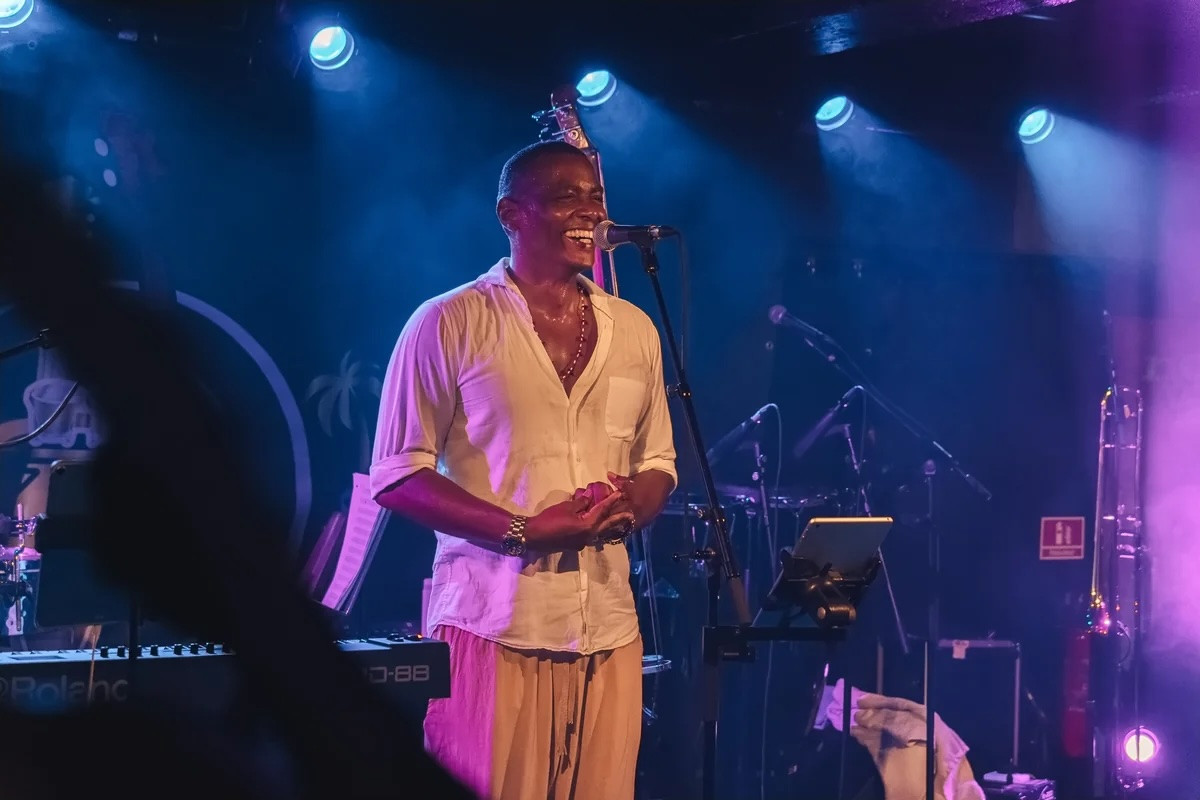
Damon Albarn. © Julien Benhamou

2025 Between Straw and Signal

A dialogue on listening, loss and resonance across Poland, Germany, UK and Denmark.
  • Annonce

    CTM
  • Annonce

    Athelas

Andreo Michaelo Mielczarek (Seismograf):

How are your ears? How did 2025 sound like to you?

Bastian Zimmermann (Positionen):

This year, something essential shifted. For obvious reasons, I finally moved from Spotify to Tidal – which meant leaving behind years of saved albums and playlists and starting from zero. It brought back a memory from when I was seventeen or eighteen, when a hard drive crash erased my entire archive of ripped CDs from the jazz club where I used to play. A loss that felt both devastating and strangely liberating.

There is something refreshing in starting over, but also something painful. Maybe that’s why I began buying vinyl again

Anke Eckardt: »Moreth Anhuman«, Heizhaus during Musik Installationen Nürnberg. © David Häuser

There is something refreshing in starting over, but also something painful. Maybe that’s why I began buying vinyl again – selectively, intentionally – replacing albums that have accompanied me for years, even decades.

The first half of the year was shaped by my own festival. I barely traveled, instead immersing myself in the sound worlds of the artists at Musik Installationen Nürnberg

The second half unfolded in motion: my most intense festival tour so far. In September and October, I attended five festivals across Europe in five consecutive weekends.

© PR
© PR

One stands out in particular: the newly founded Scent Art Festival in Riga, exploring the relationship between different performing arts such as music, dance and smell. Last year, Positionen dedicated an issue to this theme, curated by Sandris Murins, who – together with composer Bruno Mesz – carried it forward into this festival.

So perhaps the question of how 2025 sounded also has an answer in how it smelled.

One work has stayed with me especially – a piece built around real, organic processes of decomposition. Overwhelming, unsettling, and unexpectedly deep.

© PR
© PR

Ed Cooper (Tempo):

Worth saying how excellent your own festival is too, Bastian! Really glad to see how successful it was in 2025. You approach curation like no one else. 

Małgorzata Heinrich (Glissando) 

I live in Warsaw, but I have also moved around quite a lot this year – mostly in the second half. I went to Sounds of Now Vienna, a relatively new festival dedicated to the youngest generation of composers, just at the beginning of their creative path. As usual, I also visited Ostrava Days. In Warsaw, I regularly visited Hashtag Lab – their programmes are full of fantastic stuff. Their AżTak Festival had so many interesting pieces – Morton Feldman’s Rothko Chapel was put side by side with Teoniki Rożynek’s Tomba Emannuelle about another secular chapel, and also Emanuel Vigeland’s mausoleum. You could get a massage by sound in Sonora Sound Tube… There was even a piece inspired by mushrooms and mycorrhiza!

Warsaw Autumn is an obvious choice for contemporary music lovers in the city. I feel each year there are more and more accompanying concert series, which usually end up as the most interesting for me. Although this year's philharmonic concert with Blecharz Field. 9 Evanescence also stole the show.

During the 20th Ad Libitum, there came great legends of improvisation. Percussive sets absolutely left me speechless. Lê Quan Ninh, Günter Sommer, and Paul Lytton gave spectacles of almost superhuman skills, precision, and artistry – each in their own idiom and style. King Übü Örchestrü set the pinnacle for group improvisation. But there were also pieces referring to field recordings and soundscape tradition.

Lilleøre literally means »little ear«, I believe!

Andreo:
Soundwalks! Have you also wandered through suburbs or forests, listening intently? Any festival worthy of the name invites audiences on soundwalks to learn the city and its sonic textures. We are sound tourists – for better and for worse. This summer, I took the ferry Lilleøre to the island of Samsø. 

Ed: 

Lilleøre literally means »little ear«, I believe!

Andreo:

Exactly! And on Samsø I sat in this house made of straw, listening to a work by Henning Christiansen. It was a reconstruction of the composer’s famous straw-bale castles, originally conceived as concert spaces for his music.

© Rachel Dagnall / Henning Christiansen Arkiv, Møn DK

The new festival Grøn Musik went all in on listening as a shared practice – where humans, animals, and landscapes together co-create the world. Where sound is not an object to be consumed, but a relationship that demands time, presence and the whole body. And where nature is not a silent backdrop, but an active voice, if we learn to listen with green ears. Henning Christiansen literally painted his ears green.

Małgorzata:

As I am also active academically, in May I went to Finland for a conference Music, Research and Activism. It was my second time there, a fantastic event, tons of knowledge about feminism, decolonisation, ecology, and many others. In the topic of music and ecology, being my domain, I got to know the pieces by David Dunn and Robert Coleman – an Irish author of many participatory, ecological-musical projects I really would love to take part in one day. Then I made a trip across National Parks in Lapland – often desolate, the only sounds being snow, water, and animals. Listening to it was one of the best kinds of music.

Maja Ratjke at Sacrum Profanum in Kraków. © PR

Another composer-activist we could listen to this year was Maja Ratkje, who performed in Kraków during the Sacrum Profanum Festival. Fascinating artist, who managed to make a convincing ecological installation piece, Desibel (2009) using up to 130 dB via a mobile system of tube speakers. I also remember William »Bilwa« Costa’s performance at Ostrava Days in Czechia – his sound sauna. In the confined space between the loudspeakers, vibration ceased to be something one heard and became something one inhabited – to the point where the body felt close to disintegration.

Andreo:

At Ostrava Days, I also encountered a massive, vibrating sound field created by three symphony orchestras – and three conductors – performing together. There, too, I was struck by how astonishingly contemporary Kurt Schwitters’ dadaist Ursonate (1923–32) sounded in our deranged TikTok era. It was as if the disintegration of language spoke directly into the present.

© Martin Popelář
© Martin Popelář

Małgorzata:

Yes! Ursonate performed by Christopher Butterfield was definitely one of the highlights! I was also astonished by how much his version of Satie’s Socrate moved me; among all grand and contemporary concerts, it felt like a long-forgotten peaceful island of the past. 

I also can’t stop thinking about the new Futurofonia Festival in Opera Bałtycka in Gdańsk. Two days of fantastic music, all concentrated around the notion of voice – understood very broadly, not really in a sense that could be dictated by the location. Human or non-human, abstract, semantic, live, recorded and processed, in electronic and acoustic settings. Embedded in multimedia, songs, radio plays, field recordings, choreographic performances, and installations. A very concise festival, but definitely offering all the best kinds of experiences. 

I couldn’t understand the language, but the energy was irresistible

Bastian:

This summer was the first time that I went to the Sanatorium of Sound Festival in Poland – in the rural, old-world setting of Sokołowsko, in historic Silesia. Over the past twenty years, a community of artists based there has transformed a former spa town into a remarkable arts centre. The village itself is worth the journey, and what this creative family has built feels truly unique. 

For me, the finest live moment of the festival was the Saturday evening, when three successive acts became my curatorial highlight of 2025. It began indoors, in a long, narrow hall, with Ellen Fullman’s Long String Instrument – she played for over an hour, coaxing those immense strings into a delicate, sustained drone with her hands. 

Then I stepped outside to the open-air forest stage, where a Polish trap duo Xenon x PLK unleashed hard, very directly mixed beats and rap. I couldn’t understand the language, but the energy was irresistible. 

After them came Erwan Keravec, the accordionist I first saw at MaerzMusik and was deeply impressed by. He has that rare ability, even within composed repertoire, to connect with the audience, to truly be present with us in the moment. His performance wasn’t just playing music – it was real communication. 

Andreo:

Speaking of communication, I will remember Unsound and the bodily vibrations at Hotel Forum – a concrete heart in Kraków where noise and silence still pulse side by side. It was here that footwork legend RP Boo and Polish drummer Piotr Gwadera discovered a new shared language between Chicago bass music and Polish folk idioms.

Fragile voices have returned

Björk was present at nearly every concert during Dark Music Days – a Reykjavík festival unafraid of darkness and experimentation. Quietly attentive in a white anorak, she blended into the audience, a reminder of her deep connection to Iceland’s new music scene. Spor Festival in Aarhus celebrated its 20th anniversary by exploring sound as a shared, material experience – oversized flutes included.  

This year we lost several towering figures: Per NørgårdPeter Ablinger, and Marilyn Mazur.

Peter Ablinger, Sanatorium of Sound. © Helena Majewska

It was also the year the Faroe Islands received only its second operaDamon Albarn’s Mozart interpretation at Le Lido in Paris may have lacked originality, but it points toward a moment when opera once again attracted composers from outside its tradition. At Copenhagen Opera Festival, there were no dying divas in Parisian salons, but intimate works addressing queer identity, domestic violence, the climate crisis, and mental illness. Fragile voices have returned. 

Damon Albarn. © Julien Benhamou

Just who is funding or listening to this expensive music?

Ed:

This year made me realise how much I don’t understand about the more institutionalised new music record labels. These are enormous productions: thousands spent on top performers alongside supposedly cutting-edge studios and meticulous mastering. And this is before factoring in administration or marketing costs, or even the label asking composers or performers to cover the costs of printing and designing CDs. I hear gossip of some labels selling fewer than twenty copies of certain releases in a year, leaving composers with boxes of unsold discs that function as premium business cards or glam research repositories. There seems to be a disconnect between the money invested and listenership. Just who is funding or listening to this expensive music?

There are, however, other models. Small, tightly curated labels often operate as passion projects, breaking even because listeners actually purchase and engage with the music they release. Perhaps the most renowned of these is the UK-based label Another Timbre, run by Simon Reynell. Its releases are absent from streaming services, and there are no elaborate marketing campaigns – Another Timbre doesn’t even have a social media presence.

Reynell’s label was something of an entry point for me. Since becoming interested in new and contemporary music, I’ve found Another Timbre’s releases consistently among my favourites each year – and I suspect many others feel the same. Crucially, I sense the label has a listenership that extends beyond composers and performers of the kind of music it champions. I’d be surprised if the same could be said of the more institutionalised labels.

Andreo: 

Any highlights?

Ed:

The batch of five albums released through Another Timbre in November 2025 epitomises everything that’s good about the label. Jürg Frey, a regular presence on the label, offers Je laisse à la nuit son poids d’ombre, a characteristic 52-minute ghostly yet subtly biting experience. Marja Ahti’s Visiting Cloud presents a diptych of transcriptions of droning, timbrally nuanced acousmatic works. Santiago Diez Fischer’s SONGS stands out for its particular use of electronics alongside simple, plaintive instrumental material, making for a highly emotional experience. dead-wall reveries brings Eldritch Priest’s slippery, previously unreleased scored chamber music, performed by Priest himself together with Another Timbre mainstay Apartment House and Arraymusic.

Marja Ahti. © Hertta Kliski

My favourite from this batch is Jakob Ullmann’s Solo I / Solo IV. This first release of the underrated composer on Another Timbre presents simultaneous realisations of solo works for quartertone bass flutes and double bass, performed by Rebecca Lane and Jon Heilbron respectively. As ever with Ullmann’s music, it’s the cultivation of disquietude through quietude that lures me in. Each of these five albums has its own particularities and peculiarities, and together they present a vision of understated novelty and diversity in new and experimental music.

In other musical worlds, many listeners are turning away from streaming services. 2025 saw a rise in people buying MP3 players, refurbishing old iPods, and redirecting money once spent on subscriptions toward purchasing music – often second-hand CDs – thus taking more care in curating their listening habits. Another Timbre feels related but also indifferent to this: Reynell’s label never lost sight of how good music can be when money and care are invested where it counts.

Perhaps that is how 2025 sounded: fractured, vibrating, uneven – but attentive

Bastian:

When it comes to recorded music, one of the most decisive moments for me this year was a Positionen theme issue – the August issue, dedicated to so-called EDO tunings (equal divisions of the octave).

Together with guest editor Genoël von Lilienstern, I took a deep dive into what could be described as a young, largely digital EDO scene. Much of it unfolds on Discord, across genres and continents, where musicians experiment with alternative tuning systems – whether 17 tones per octave, 35, 81, or many others.

For me, this was a completely new world to discover. What emerged from this exploration was a Top-22 EDO list, published in Positionen #144, bringing together some of the most compelling albums across a wide range of genres. Out of this selection, three projects stood out as particularly strong entry points: one rooted in electronic music, one in prog rock, and one in singer-songwriting.

FASTFAST – Xen On
The Mercury Tree – Spidermilk
Maddie Ashman & Tolgahan Cogulu – Nuclear Fusion

And if I may add, on the weekend 22nd/23rd May 2026, we will be able to bring many of these interesting EDO artists to a very unique EDO music convention in Munich. We just got freshly funded, no website yet, but stay tuned!

Małgorzata:

Perhaps that is how 2025 sounded: fractured, vibrating, uneven – but attentive. Between straw and signal, green ears, and hard sounds. 

Andreo:

Because we all love lists, here is one with 10 favourites from 2025: 

Aya: hexed! (Hyperdub)
Oneohtrix Point Never: Tranquilizer (Warp)
James Holden / Wacław Zimpel: The Universe Will Take Care of You (Border Community)
Steve Reich: Collected Works (Nonesuch)
Kristine Tjøgersen: Night Lives (Aurora Records) 
The Necks: Disquiet (Northern Spy)
Ida Duelund: Sibo (Initiated Records)
Novo Quartet (Nielsen. Shostakovich. Vestergård): Track 1 (Aparté)
Ying-Hsueh Chen: Mirage: An Architectural Sonic Experience (ILK)
Los Thuthanaka: Los Thuthanaka (self-released)

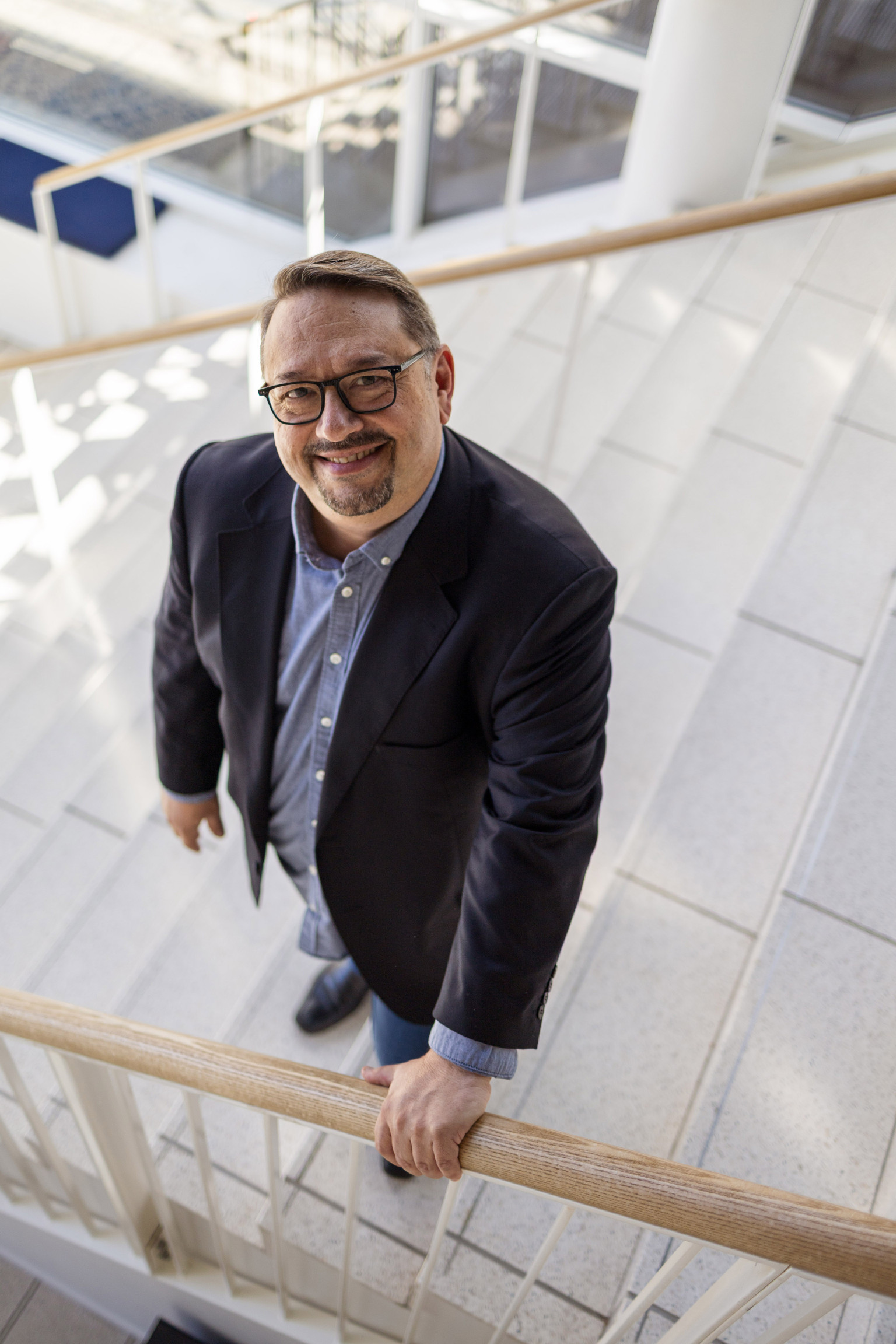
Bastian Zimmermann, Editor-in-Chief, Positionen (Germany)
Małgorzata Heinrich, Co-Editor-in-Chief, Glissando (Poland)
Ed Cooper, Co-Editor, Tempo (UK)
Andreo Michaelo Mielczarek, Editor-in-Chief, Seismograf (Denmark)

The essay is made in a collaboration between Tempo, Positionen, Glissando and Seismograf