Allan Gravgaard Madsen
27








Schou is a powerhouse – unafraid to try new things, push himself in new directions, and pull us all along with him. We sorely need this energy, and we are lucky to have Schou and his do-it-anyway attitude.
But sometimes do-it-anyway needs tempering a little. Schou spoke about how he prepared this concert without guidance from his teachers. Brave, but I missed a guiding hand, a sharper focus. Both concerts were too long, and not always coherent. I sensed an artist who has defined himself by who he isn’t, but not yet by who he is.
Still, there were glimpses of a unique personality. Stefan Prins’ Generation Kill was an odd choice to start a debut concert with – Schou’s back was facing the audience, and the piece did little to highlight his skills as a performer (I also hated the piece, but that’s a personal matter). So I’m going to pretend that the concert started with Johannes Kreidler’s Guitar Piece – a vile little video-nasty to which Schou fully committed. A perfect manifesto – the absolute nerve of presenting two years of soloist class education by eating your guitar. I wish we’d had more of this playfulness.
But the energy sagged with a disparate selection of pieces that seemed more like a composer class concert than a presentation of a fresh artistic profile. Props to Schou for this – using your debut concert to focus on younger composers is bold, and should be celebrated. I just wish we’d had more Schou. My highlight was Emil Vijgen’s Photobooth Study, where Schou got to engage with his instrument in a different way, let loose a little, and be a soloist.
Schou may present himself as a force of nature, and he is, but there is an air of sensitivity (reticence, even) to his presence that does not always match up with the pieces being performed. Rob Durnin’s What, de facto could have benefitted from some more ‘fuck you’ attitude – the performance was oddly shy.
The late-night concert’s improvisation was fun: it’s always a joy to see Marcela Lucatelli and Henrik Olsson improvise (although Schou was the clear third wheel). However, the concert was overlong, and did not add much to Schou’s profile. I get that he wanted to show more sides of himself, but, again, it came at the expense of focus. Replacing Esben Nordborg Møller’s bloated Drones with Sarah Nemtsov’s lounge-jazz tinged Seven Colours from earlier would both shorten the concerts and sharpen the intention.
But these things are matters of polish. Schou is a rare and exceptional artist, and deserves accolades for his work and for these concerts. With more confidence and time to refine his vision, there is no doubt that Schou will be an essential fixture on the new music scene for years to come.
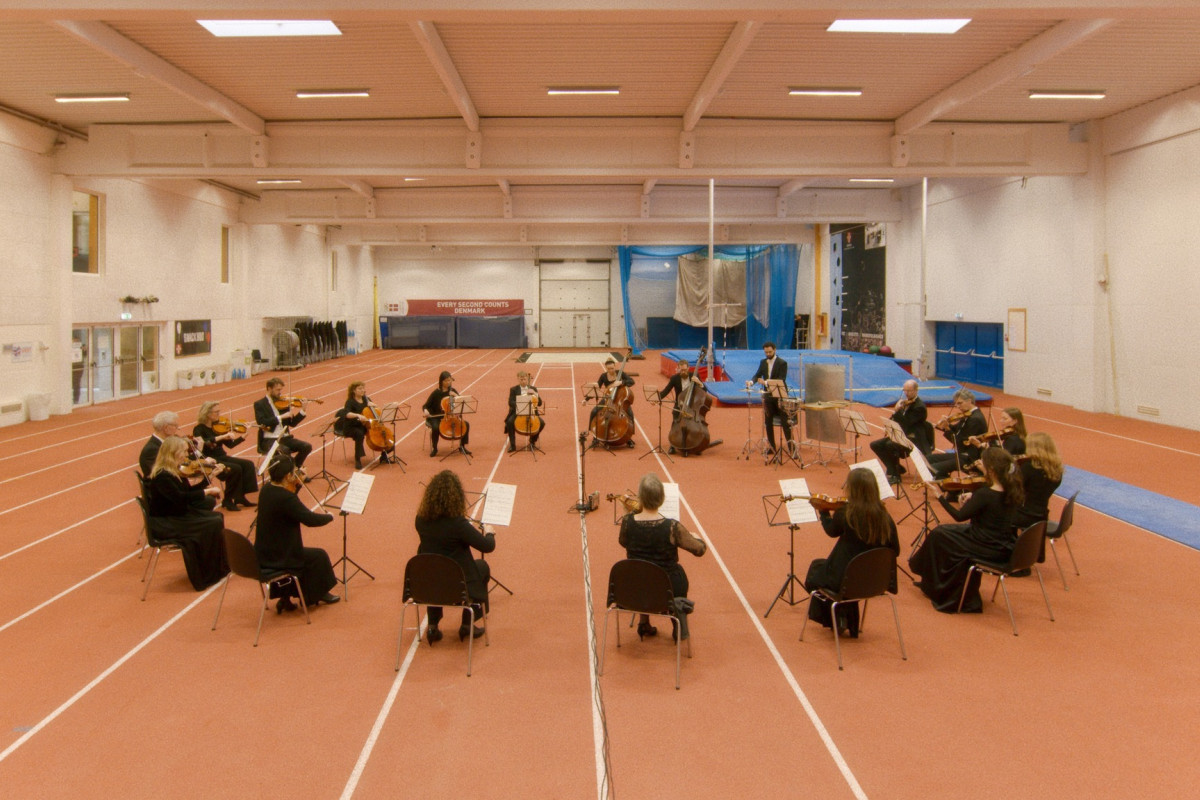
Allan Gravgaard Madsen og Morten Riis’ Away er et »mixed media« orkesterværk. Det fysiske orkester suppleres med lyd og billedoptagelser fra Aarhus Teaters kælder (træblæsekvintet), Aarhus Domkirke (messingkvintet) og Marselisborghallen (strygeorkester). Alle disse steder har på et tidspunkt huset Aarhus Symfoniorkester i de sidste 90 år.
Away indledes af de sidste to akkorder fra ouverturen til Rossinis Willhelm Tell (1829), der udforskes rundt i orkesteret. Løbende forlader musikere orkestret, for sidenhen at dukke op i mindre konstellationer på optagelser fra de omtalte steder. Orkesteret spiller via teknologi på tværs af tid og rum på meget vellykket vis.
Værket udforsker stilstand og bevægelse, med luft som et centralt greb: Ofte blæser blæserne i deres instrumenter uden at producere toner. Strygerne efterligner lyden af vind med plastikposer. For mig har Away tre højdepunkter: Trompeter og slagtøj spiller fraser, der viser sig at foregribe en video af en fløjtenist, der går gennem byen. Trompeterne mimer lyden af en lastbil, »bip-bop-bip-bop«, og slagtøjet er fløjtenistens stiletter. Musique concrete vendt på hovedet! Et sted ses halvdelen af strygerne sidde i en cirkel og spille stærkt dissonante akkorder, for så at dræbe dem igen – det fysiske chok aktiverede mine ører. Tredje højdepunkt: da hele orkesteret spiller sammen igen, mens alle tre projektioner er i gang. Her kan værket begynde, og man mærker tydeligt energien stige i rummet. Men – desværre – så snart vi har ramt det klimaks, falder intensiteten igen.
Med sine knap 45 minutter er Away desværre en kende for langt og stillestående til min smag. Effekten af de føromtalte brud havde måske ikke været lige så stærk i et kortere forløb. Men jeg havde nok ønsket bare lidt mere af den intensitet, værket tydeligvis kunne præsentere. Jeg sad tilbage med en lidt flad følelse. Værket endte også så tyst, at flere var i tvivl, om det overhovedet var slut, og vi kunne klappe.

»All sounds are loud,« hører vi i Flammenwerfer – Hotel Pro Formas fortælling om den svenske maler Carl Fredrik Hill (1849-1911). Alt i dette univers er transparent og rummer mange lag. Den orange farve i Hills kunst, som flimrer på scenen, støjer både smukt gyldent og psykedelisk som 70’er-keramik. I en central scene småskriger Blixa Bargeld i en mikrofon og får loopede skrig tilbage i hovedet. I patchworket af lyd indgår også fem vokalister fra IKI og udvalgte stykker – det eneste musik som nærmer sig det poppede her – af Nils Frahm.
Randene under øjnene er hele tiden store. Ligesom bogstaverne, som signalerer et nyt kapitel, næste dyk ned i sindet, fx afsnittet »Paranoia«. Her udvider IKI Einstürzende Neubautens »Halber Mensch« til fem stemmer, så hallucinationerne og angsten vokser til fuld menneskestørrelse. Ja, lyden var høj og i sig selv bedøvende. Men det skyldes i høj grad IKI, at vi mærker ekstremerne, hjernesygdommen, og at Hill oplever en »misarranged world«. De sang: »Heavy curtains drawn over the mind. A thick deadening cloud that blocks the use of senses.« Og sådan lød det. Køligt. Som det mest triste Instagram-filter med lyd på.
Blixa Bargeld bliver desværre brugt til for lidt i Flammenwerfer, som ikke er noget mesterstykke fra Hotel Pro Forma. Men gallagæsterne sad meget stille i meget bløde sæder og så både en giraf og en ex-dronning på samme aften. Resten af Aarhus Festuge kan kun blive munter.
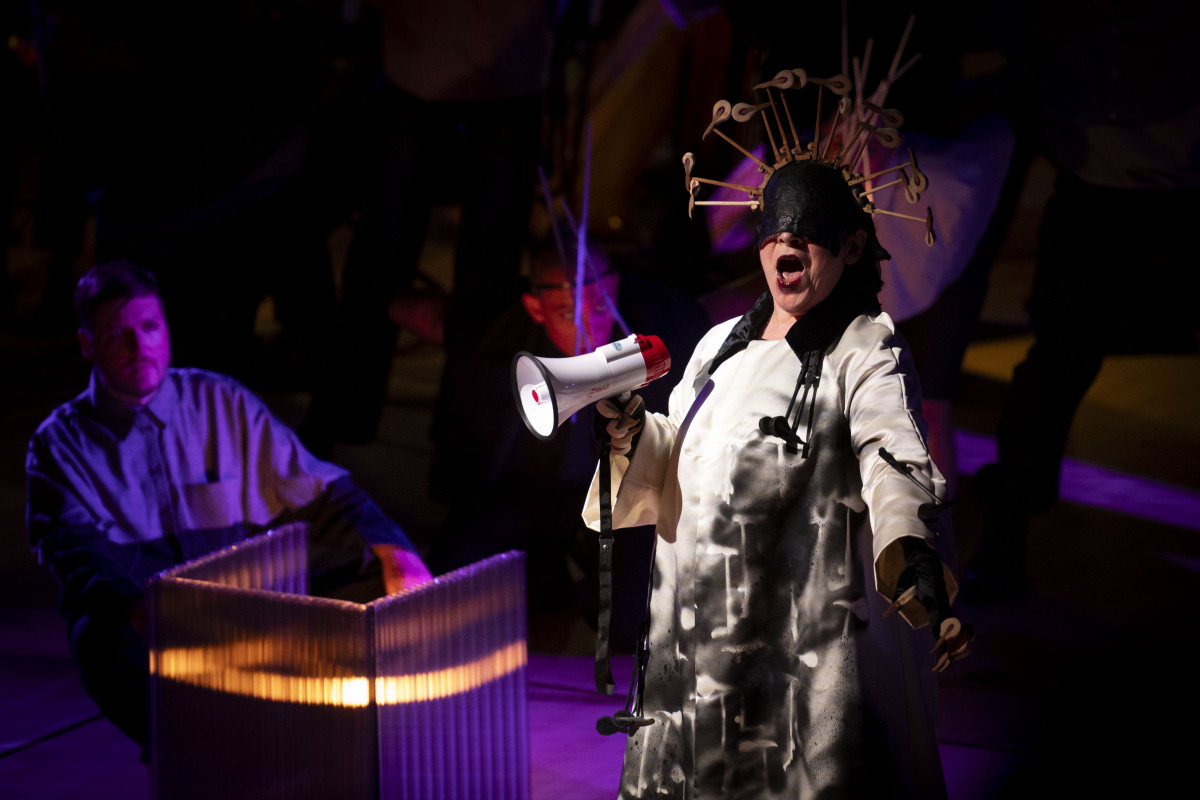
Gik man og troede, at ny opera kun kunne være kras-realistiske skildringer af verdens forfald, kunne man efter Sky in a Small Cage på Copenhagen Opera Festival godt tro om igen. Festivalens sidste værk pegede i en helt anden retning: mystikken, håbet, kærligheden. Alt sammen floskler, men absolut ikke i hænderne på komponist Rolf Hind og librettist Dante Micheaux. Sammen har de spundet den mest mageløse opera om sufi-digteren Jalal al-Din Rumi.
Det var lige så meget fortryllelsen i Rumis poesi, som det var myten om digteren selv, der drev værket. Faktisk var det forrygende svært at skelne mellem poesi og virkelighed: Karakteren Rumi blev genstand for sin egen storladne digterkunst. »It might as well be called a death: the gate you must go through to enter yourself or beloved«, sang en fortællertype i starten. Kærlighed er selvudslettende overskridelse, forstod man. Et tærskelfænomen, der somme tider kræver sine ofre.
Den drømmende dobbelthed fungerede som ledetråd for hele forestillingen. Det var en fornøjelse af høre mystikken brede sig i musikken, som var fænomenalt orkestreret i dryppende gamelan-klokker og bedeskåle, dobbelt-op på harpe, feststemt klaver og flere pumpende tommer, end Lars Ulrich turde drømme om.
Og hvad så med fuglen, buret og idéen om frihed? I Sky in a Small Cage var friheden ikke et spørgsmål om at åbne buret og slippe fuglen fri. Den var lokaliseret i selve kaldet, i sangen, musikken og poesien, som en håndsrækning mod den anden i en form for kærlighedsrus. Åh ja, de store spørgsmål lever stadig i operaen. Gudskelov.
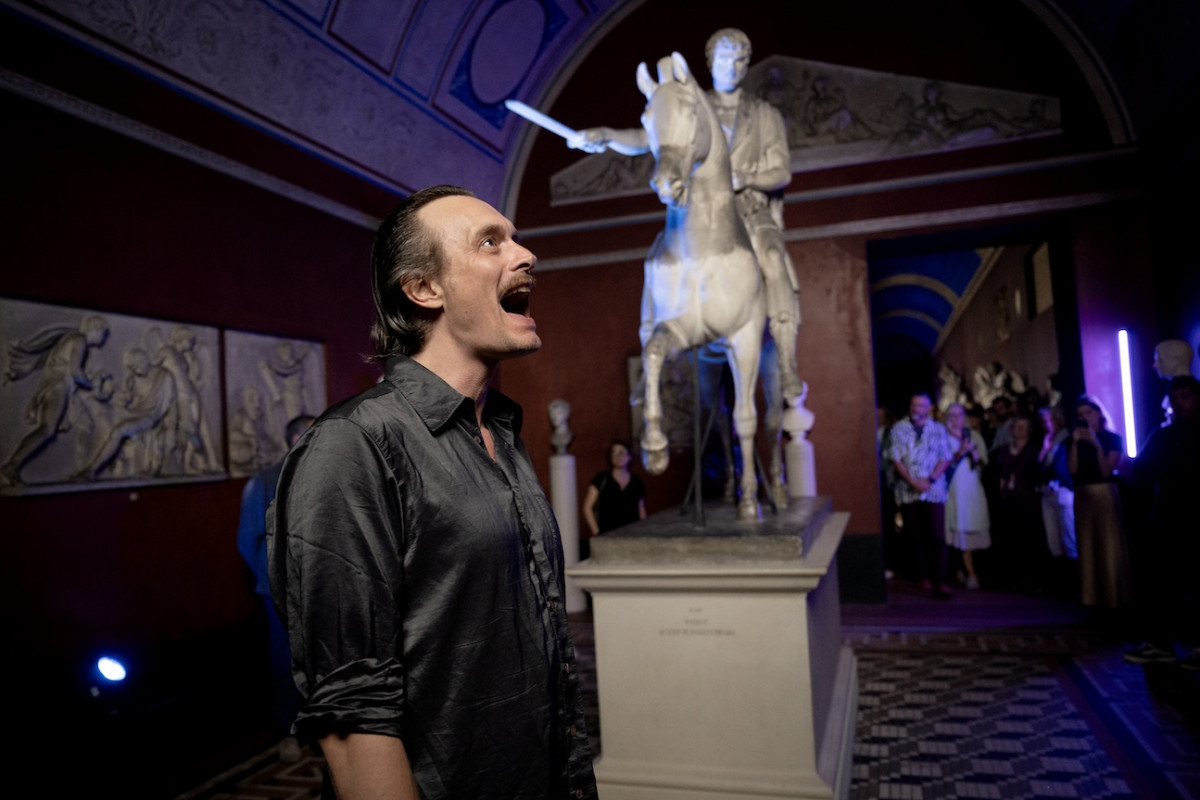
Måske havde jeg indstillet mit oplevelsesmodus forkert, da jeg trådte ind i Thorvaldsens Museum for at se performanceværket Passages. Sanseapparatet var kørt i stilling til fordybelse, vi skulle jo på museum og programmet havde lovet totaloplevelse og fri bevægelighed.
Men der var meget, vi skulle nå på den time, Passages varede. Alt for meget. Vi startede sammen i salen ved indgangen, kringsat af storladne marmorskulpturer. Mens vi smagte på atmosfæren i rummet, der var parfumeret med et diskret elektronisk lydspor, gik en kunstner i gang med en sprittuschtegning på et stort stoflærred på gulvet. Snart blev hun afbrudt af sortklædte sangere, der havde gemt sig i publikum. Passagefigurer, fornemmede man, der kaldende skulle bestøve de gamle lokaler og blegstivnede statuer.
Efterhånden blev vi gelejdet ud på gangen: Nu skulle vi på opdagelse. Problemet var bare, at værket ikke kunne slippe trangen til drama. Der var hele tiden scener, man skulle nå at indhente, en fortravlet følelse af at komme for sent til indholdet. Heraf passagetanken, hjemsøgelsen, flygtigheden, I get it. Men hvorfor så ikke skabe kaos i stedet? Jeg kunne ikke udlede andet end frustration af det subtile fravær, som konstant meldte sig.
Når man endelig fik lov til at dvæle ved noget, var det med en flad fornemmelse. Da vi til sidst endte sammen, hvor vi startede, sluttede værket i en svulstig, musicalagtig finale. Der var slet ikke skabt plads til sådan et storladent temperament. Det føltes ufortjent.
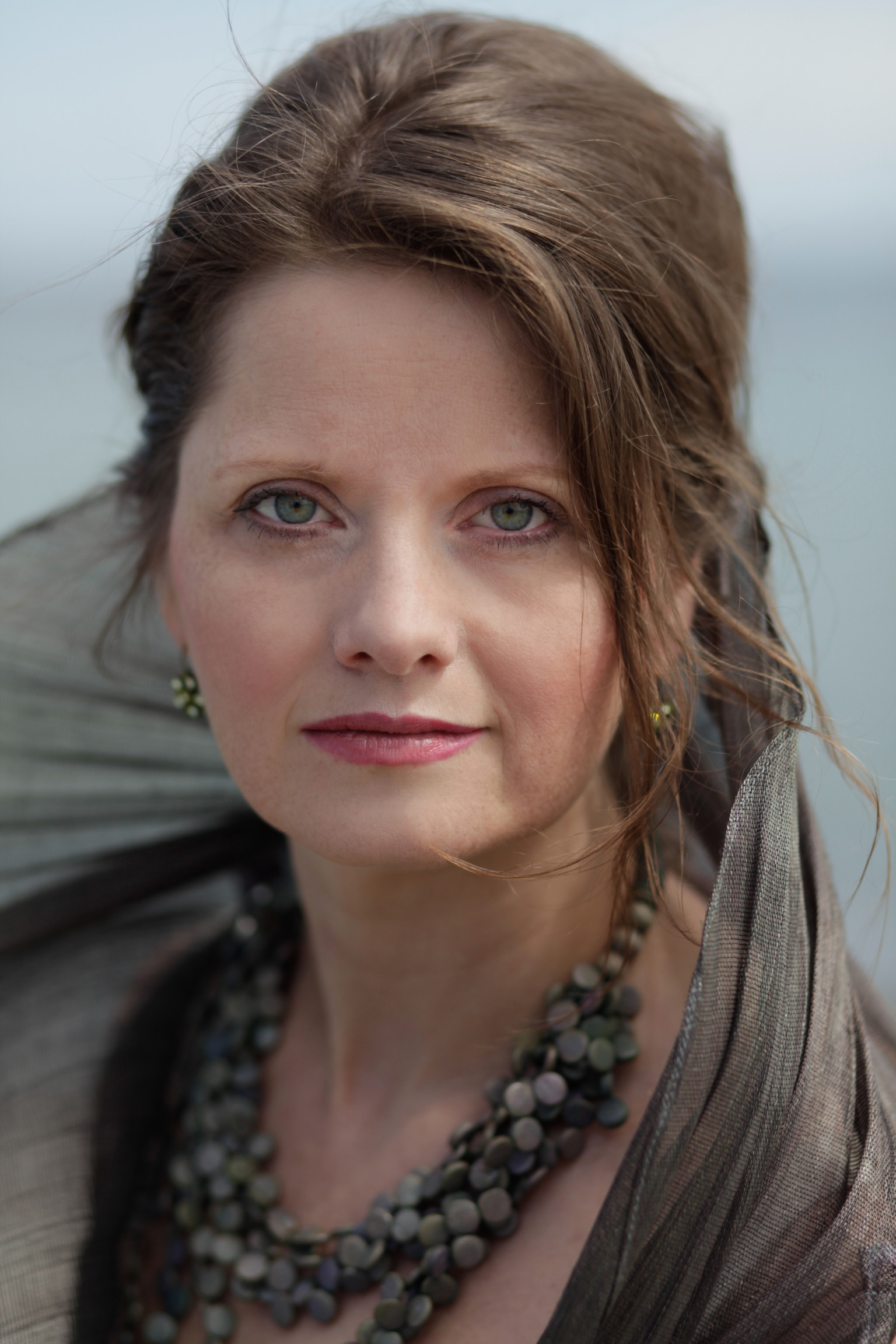
»Musik for mig er en nødvendighed. Nyt og gammelt. På tværs af alle genrer. Musik er noget helt essentielt menneskeligt – og for mig er stemmen det mest direkte kommunikerende instrument i verdenen.«
Else Torp debuterede i maj 2023 i tre koncerter med New York Philharmonic i et værk af den amerikanske komponist Julia Wolfe. Hun har tidligere optrådt med bl.a. BBC Philharmonic, Scottish Chamber Orchestra, Gulbenkian Orchestra, danske landsdelsorkestre, London Symphony Orchestra og Sydney Symphony Orchestra. Hun synger et omfattende repertoire af Lieder, danske sange og eksotiske værker som William Waltons Façade og Judith Weirs one-voice opera King Harald’s Saga. Else Torp er medlem af Paul Hillier’s Theatre of Voices og har optrådt på internationale scener som BBC Proms, Berliner Festspiele, Lincoln Center og ved flere udsolgte koncerter i Carnegie Hall. Else Torp har medvirket på snart 40 indspilninger på Dacapo, Ondine og Deutsche Grammophon og på den Grammy-vindende CD The Little Match Girl Passion (HMU, USA). I 2016 udkom duetten »Distant Sky« med Nick Cave og Else Torp på albummet Skeleton Tree samtidig med premieren på 3D-dokumentaren One More Time with Feeling om albummets tilblivelse. Hun sang live med Nick Cave and The Bad Seeds i Royal Arena og var igen biografaktuel et halvt år senere. I 2018 sang hun blandt andet Kaija Saariahos opera Only The Sound Remains på Paris' Opera Garnier, Teatro Real de Madrid og Lincoln Center i New York. Else Torp har medvirket i DRs Den klassiske Musikquiz, været deltager i Babettes Gæstebud med Brødrene Price, ligesom hun ofte interviewes til DR P2.