



Humming posthuman belonging
Abstract
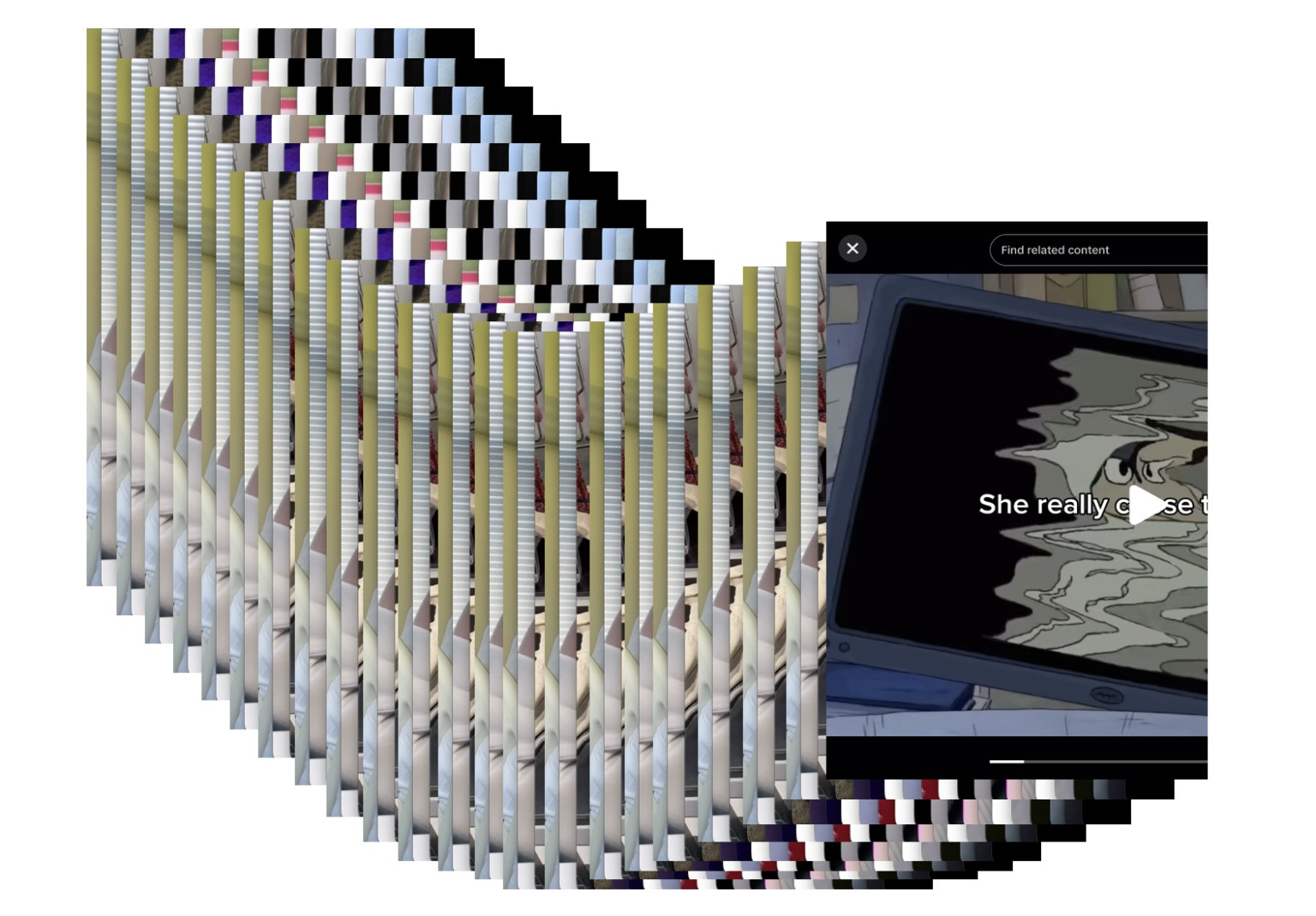
Sonic articulations of belonging, formations of publics, and cultural citizenship practices are increasingly mediated by the algorithmic platforms and participatory practices shaping twenty-first-century music cultures. This is highlighted by the video platform TikTok, where sound and music structure memetic processes of meaning-making that bridge the boundaries between between cultural and political participation, becoming informal citizenship practices. Engaging this space, this article analyzes the wide recirculation of “Kitchen Fan Lullaby”, an audio track that captures a young woman harmonizing with her kitchen fan and has been repurposed in over three hundred thousand videos centering young women’s reflections on grief and (non)belonging. The paper initially positions these practices against the backdrop of public and (bio)political constructions of girls and young women as populations at risk of experiencing mental health conditions, sexual abuse, and gender-based violence and argues that these frameworks render informal media practices matters of transnational female citizenship. Bringing together feminist, sensory, and posthuman theorizations of citizenship, the analysis shows that the audio track’s sonic qualities facilitate an opening toward memetic reflections on belonging – with technology, humans, and non-human others – that bear relevance for questions of gender and citizenship. In closing, the paper considers how the visibility of informal feminist internet citizenship practices on TikTok is conditioned by the platform’s sociotechnical affordances and people’s divergent and strategic engagements with them, and maps onto the unequal vulnerabilities, rights, and citizenship status of women globally.
Introduction
Sonic articulations of belonging, formations of publics, and cultural citizenship practices are increasingly mediated by the mobile devices, algorithmic platforms, and participatory practices shaping twenty-first-century music and media cultures. This is highlighted by the video platform TikTok, which has become a site for online grassroots activism, including feminist media practices that have protested the persistence of gender inequality, sexual harassment and gender-based violence across diverse global regions (see Abbas & Elhosary 2025; Arafat & Khamis 2025; Simões et al. 2023; Sigurðardóttir & Rautajoki 2024). The sociotechnical qualities of TikTok, which invite participation and everyday creative practices (Lee & Abidin 2023), have also facilitated participatory music cultures that frequently foreground girls and young women (Rauchberg 2022) who articulate feelings and negotiate vulnerabilities on the app (Şot 2022). Core interface features enable its users to easily create, save, and recirculate music and audio tracks, thereby positioning sound and music at the center of its users’ memetic media practices (Abidin 2021) and affective negotiations of belonging (Muchitsch 2024).
This article mobilizes feminist, sensory, and posthuman theorizations of citizenship to investigate the borderlands between cultural practices, negotiations of belonging, and cultural citizenship practices in online music cultures. To this end, it analyzes the wide circulation of a quiet, ordinary, and seemingly unremarkable audio track titled “Kitchen Fan Lullaby” originally posted in April 2024, which captures the hum of a young woman, softly harmonizing with the low technological drone of her kitchen fan while preparing dinner. The audio track since has been recirculated in hundreds of thousands of user-generated videos, where “Kitchen Fan Lullaby” has invited kaleidoscopic reflections on grief and experiences of belonging and non-belonging that center young women and cross the dividing lines between private and public, intimate and political, human and extra-human relationships. I conceptualize these participatory engagements as informal and transnational “internet citizenship practices” (Hermes 2006) in which sound and music inform technologically mediated negotiations of posthuman belonging and feminist protest. I argue that what renders negotiations of belonging enacted through these practices relevant to discussions of citizenship is their positioning against a twofold backdrop: First, recent public health reports across diverse global regions that construct girls, young women, and gender-diverse adolescents as biocitizens at higher risk of experiencing ill mental health than any other demographic groups. Second, the sustained global endemic nature of gender inequality, sexual harassment, and gender-based violence, which undermines women’s and gender-diverse individuals’ and groups’ access to and status of citizenship. I draw on feminist, sensory, and posthuman scholarly work that has critically expanded rights-based concepts of citizenship, including Nira Yuval-Davis’ (2007, p. 563) theorization of belonging as an analytical tool that highlights how people of divergent citizenship status–including those holding formal citizenship rights–can (be made to) experience belonging and non-belonging across diverse communities, nation-states and transnational contexts.
Against this conceptual background, this article explores what feminist, sensory, and posthuman theorizations of citizenship can add to analyses of sonic and multimodal negotiations of belonging in the context of online music cultures. It is guided by two questions: What are the roles of sound and music in negotiations of belonging and how are they shaped by the sociotechnical qualities of TikTok? How are articulations of belonging situated within broader sociopolitical constructions of (young) women’s and gender-diverse individuals and groups’ (bio)citizenship? I initially position this study against a threefold backdrop of previous research on gender-based mental health and violence, internet citizenship practices as well as TikTok’s participatory protest and music cultures. Following notes on material and methods, I then bring together theorizations of citizenship from feminist, sensory, and posthuman perspectives. Combining these tools, I analyze “Kitchen Fan Lullaby” and its wide circulation as sonic citizenship practices that center various dimensions of human and posthuman belonging. I suggest that these practices newly destabilize persistent gendered dichotomies of public and private, political and cultural, critical public and audience by centering the role of sound and music in memetic citizenship practices emerging at the intersection of human, affective, and technological processes in contemporary online music cultures.
Background: Citizenship, internet citizenship practices, and TikTok’s participatory cultures
Online (music) cultures as internet citizenship practices
In the mid-2000s, Joke Hermes (2006) conceptualized emergent online cultures as new political publics in which cultural citizenship is articulated and negotiated through participatory media practices. Joke’s work on internet citizenship practices embodied a timely intervention in cultural theories of citizenship that move beyond rights-based frameworks based on T. H. Marshall’s (1950) tripartite model of civil, political, and social rights. Rather than centering individual rights and obligations, the concept of cultural citizenship foregrounds participation in practices and collectivities that involve informal negotiations of shared interests and identity formation (Burgess & Green 2009, p. 77). Such practices and collectivities may partly map onto nation-states but also extend toward transnational formations in the context of globalization (Hermes 2006, p. 301, drawing on Turner 1994). As Jean Burgess and Joshua Green (2009) further emphasize, scholarship on cultural citizenship has shown that informal cultural practices—including “commercial popular culture”—can be “as constitutive of cultural citizenship as the spaces of formal politics,” a point of particular consequence for marginalized groups like women and queer, racialized, or ethnic minorities who have historically been excluded from formal political arenas (Burgess & Green 2009, p. 77).
At the beginning of the twenty-first century, Hermes argued that several features of emergent online cultures are especially relevant for rethinking cultural citizenship, including the blurring of public and private spheres, the overlap of multiple and often temporary online and offline publics, and the central role of “emotion, sensation and experience” in internet citizenship practices (Hermes 2006, p. 304). In their influential study of YouTube, Burgess and Green (2009) similarly suggest that cultural citizenship encompasses everyday musical practices and other “mundane but engaging activities that create spaces for engagement and community-formation,” such as peer-to-peer guitar lessons (Burgess & Green 2009, p. 79). More recently, Raquel Campos Valverde’s (2019) doctoral dissertation examines the use of music on social media as part of formations of sociality in contexts of migration, which also involve negotiations of citizenship.
Extending these perspectives to TikTok’s participatory music and media cultures, I conceptualize the intersections of young women’s participatory music and protest cultures on the platform as transnational internet citizenship practices. To further specify what renders these media practices matters of citizenship, the following section situates them within two bio- and sociopolitical contexts: first, public mental health discourses that construct girls, young women, and gender-diverse adolescents as populations at risk of mental health problems; and second, the global persistence of gender inequality, sexual harassment, and gender-based violence. Subsequently, this literature review concludes by outlining recent research on participatory music and protest cultures on TikTok, critically assessing their qualities, potentials, and limitations.
Mental health and gender-based violence as dimensions of transnational gendered citizenship
Recent public health reports across diverse global contexts identify girls, young women, and gender-diverse adolescents as particularly vulnerable to mental health problems. For example, a 2024 report by the World Health Organization finds that girls across Europe and Central Asia report significantly poorer mental well-being than boys, including higher levels of loneliness and lower life satisfaction (World Health Organization 2023). The report further notes that mental well-being declines during adolescence, with 15-year-old girls faring worst among the groups studied. Comparable findings are documented in recent reports from East Asia and the Pacific (Unicef 2022), the United States (Centers for Disease Control and Prevention 2023), Canada (Public Health Agency of Canada 2025), and Australia (Smout et al. 2025). Several reports also identify gender-diverse adolescents as a particularly vulnerable group (Centers for Disease Control and Prevention 2023; Unicef 2022).
By combining biochemical definitions of mental illness with self-reported well-being and statistical demographic and medical data, public health reports participate in biopolitical constructions of populations and nation-states (Foucault 2010 [1979]). Within this framework, individuals are constituted as biocitizens (Fullagar 2008), whose likelihood of experiencing mental illness, need for psychiatric treatment, and risk of self-harm or suicide are individualized, quantified, and largely decontextualized. From this perspective, the gender disparities documented in recent public health reports articulate a biopolitical discourse in which “being a girl has become a public health problem” (Bäckström Olofsson 2025). Such reports thus contribute to transnational constructions of girls, young women, and gender-diverse adolescents as biocitizens at risk of mental illness and in need of medical or psychiatric intervention. Although some reports acknowledge gender norms as a factor shaping adolescent mental health (e.g., Public Health Agency of Canada 2025), biopolitical public health frameworks often lack critical sociocultural analysis, calling for closer attention to the gendered and intersectional conditions of mental health. These include the cultural coding of emotions and mental illness—for instance, the association of depression, trauma, and sadness with femininity and whiteness foregrounded in twenty-first-century music and media cultures (Holmes 2023; Mooney 2018). More broadly, statistical and biopolitical constructions of girls, young women, and gender-diverse adolescents as at-risk populations require recontextualization within the ongoing global persistence of gender inequality, discrimination, sexual abuse, and violence against girls and women (World Health Organization 2024).
As Suzanne Franzway (2016) argues, because violence plays a central role in the subordination of women, gender-based violence provides a critical lens on the sexual politics embedded in contemporary notions of citizenship. For Franzway, the threat and enactment of violence by men are fundamental to male dominance and condition women’s—as well as queer, racialized, and gender-diverse people’s—“disadvantage” as citizens through processes of exclusion, subordination, and dependence (Franzway 2016, p. 22). Taken together, the gendered findings of public mental health reports and the persistence of gender inequality and gender-based violence construct (young) women and gender-diverse individuals as populations whose (bio)citizenship is marked, on the one hand, by vulnerability to mental health problems and, on the other, by the ongoing risk of erosion through inequality, harassment, and violence. These conditions form the sociopolitical backdrop for the participatory music and protest cultures on TikTok discussed in the next section, informing my conceptualization of these cultures as sites of informal, cultural, and transnational citizenship practices.
TikTok’s participatory music and protest cultures as internet citizenship practices
Introduced to international media users in 2018, the short-video app TikTok has rapidly become a central platform in online media cultures. Its user base and cultural significance expanded markedly during the Covid-19 pandemic, as millions of people confined to their homes turned to the app (Radovanović 2022, p. 52). TikTok’s sociotechnical affordances foster practices that blur cultural production and consumption, including musical practices (Kaye 2022), extending participatory cultures (Jenkins 2006) and produsage (Bruns 2008) associated with earlier platforms through the short-video format. Sound and music are central to these participatory cultures (Vizcaíno-Verdú & Abidin 2022), mediated through interface features that enable users to create, save, and repurpose audio tracks. These affordances foreground imitation and replication, contributing to the formation of memetic practices and publics (Zulli & Zulli 2020). As sound and music circulate across videos, they constitute “audio memes” (Abidin 2021), whose sonic, textual, and affective qualities structure memetic processes of meaning-making. TikTok’s participatory cultures have also enabled increased visibility for young female musicians and their fans, whose media practices resonate with broader developments in popular music culture, in which experiences of anxiety, depression, and sexual abuse have been foregrounded in the work and reception of artists such as Billie Eilish (Holmes 2023). They further reflect TikTok’s affective orientation as a platform where discussions of emotions, vulnerability, and trauma have become commonplace among young users (Cheng Stahl & Literat 2022). In this context, the circulation of young women’s music on TikTok constitutes a set of practices through which “produsers” negotiate similarity and subtle differences in everyday lived experience, articulating affective belonging and governing the boundaries of primarily young, female-coded memetic collectivities (Muchitsch 2024). TikTok’s participatory cultures thus intersect with – and complicate – the biopolitical constructions of gendered mental health and gender-based violence outlined above.
The sociotechnical affordances of TikTok, which foster everyday creative practices (Lee & Abidin 2023), have also facilitated the development of new types of social protest and advocacy that combine political and personal expression (Literat & Kligler-Vilenchik 2021). This development has been illustrated in feminist media practices on TikTok that have carried forth the aims of the #MeToo movement (Zeng 2020) in protesting the persistence of sexual harassment (Sigurðardóttir & Rautajoki 2024), gender-based violence (Abbas & Elhosary 2025), and the systemic subjugation of women (Arafat & Khamis 2025; Simões et al. 2023) across diverse global regions. Studying the use of music as a tool for the protest of anti-Black racism on TikTok, Olivia Sadler (2022) conceptualizes TikTok’s activist media practices as connective practices, which hold potential new forms of agency through the use platform practices like lip-syncing, video editing, and the use of hashtags. Simultaneously, Sadler notes that platform-mediated protest tends to entail processes of individualization and decontextualization that may limit the potential of social movements.
These analyses highlight broader concerns associated with the relocation of protest to the platform economy, including unequal access to and control of digital infrastructures (van Dijk 2020) and the logics and effects of algorithmic recommendation systems (Gillespie 2017). As Thomas Poell and José van Dijck emphasize in relating to protest and social movements, platforms’ technological processes of mediation “do not necessarily correspond with user interests, let alone with activist interests, but are first and foremost informed by the business models of social media corporations” (Poell & van Dijck 2015, p. 528). What is more, the encoding of existing social norms and biases in algorithmic recommendation systems (Gillespie 2017), including such along lines of gender and race (Noble 2018), calls for further attention to people’s strategic employment of platform literacies in attempts to amplify their concerns (Sadler 2022).
Bringing together these perspectives, I conceptualize TikTok’s participatory music and media cultures that center young women’s articulations of vulnerability, mental health, and trauma as transnational internet citizenship practices. Characterized by participatory and memetic media practices bridging personal and political expression and situated within the context of unequal structures of access and power in the platform economy, I explore the roles of algorithmically mediated sound and music in these practices.
Material and method
In this article, I analyze the recirculation of a short audio track extracted from a video uploaded on 19 April 2024 by Charlottesville, Virginia–based singer Claire Boyer, in which she softly harmonizes with the low drone of her kitchen fan. The audio track was soon incorporated in other TikTok user’s videos, by way of the app’s original sound feature, which enables the isolation of an audio track of a video, called sound on TikTok, and its use in new multimodal media content. Responding to the rapid circulation of the original audio track, Boyer posted an extended and slightly edited version, titled “Kitchen Fan Lullaby” on her profile in May 2024. Sixteen months after the original post, the two tracks have jointly been used in over three hundred thousand videos. In this paper, I analyze the one hundred most viewed videos that respectively incorporated the original and edited version of the example. To collect the material, I initially used a free online TikTok video scraping tool provided on the website Apify to download videos and video metadata including captions, dates, number of views and likes. I subsequently edited the output manually to correct mistakes and used the free video downloading tool SSSTik that allows downloading slideshows as video, which were not included in the original output by Apify.
I combine methods of auditory music (Moore 2016) and multimodal discourse analysis (O’Halloran 2004) to examine how meaning is generated through the combination of communicative modes including sound, music, image, and (meta-)text in TikTok’s multimodal material. Although this material is openly accessible, it cannot simply be considered public material, given the experience of intimacy characterizing TikTok (Şot 2022). Diverting attention from individual videos, my analysis largely focuses on broader themes, resonating with conceptualizations of TikTok at large as a mimetic text (Zulli & Zulli 2020), which creates meaning through networked and collaborative participatory practices. Where individual examples are discussed, I do not use identifying data and metadata such as usernames, dates, and captions or links since videos may include discussions of personal experiences of mental health, sexual abuse, and violence.
Theorizing belonging as a dimension of citizenship practices
Feminist activists and scholars have undertaken consequential critiques of citizenship with a commitment to “[recognize and expose] the limitations, restrictions and violence enacted by states through constructions of citizenship” (Roseneil 2013, p. 1). Feminist scholars have challenged core elements of normative theorizations of citizenship, including claims to gender-neutral universality (see for example, Young 1989; Mouffe 1992), the dichotomy between private and public spheres (see for example, Pateman 1988), and associated gendered conceptualization of political activity and publics (see for example, Fraser 1990). Through these critiques, feminist theorists have transcended normative rights-based notions of citizenship toward a multi-layered (Yuval-Davis 1999) concept of citizenship that includes affective and sensory dimensions of belonging (Yuval-Davis 2007). Nira Yuval-Davis (2007, p. 563) conceptualizes belonging as a political sphere that is closely entangled with, yet distinct from normative definitions of citizenship. As Yuval-Davis explains, individuals and groups of people of different citizenship status, including those who hold formal citizenship rights, can be constructed as “the other” who does not to belong to a community or a nation-state. Although frequently associated with the exclusionary discourses of racialized and nationalist politics–like those studied by Sara Ahmed (2004), who shows how affective and sensory imaginaries of belonging (at home, in the nation-state) are utilized to position citizens against “foreign” others–Yuval-Davis emphasizes that belonging extends from macro levels of nation-states to local communities and families. As belonging emphasizes emotional dimensions of politics that traditional concepts of citizenship fail to recognize, Yuval-Davis argues, it opens the possibility of thinking beyond a dichotomous, gendered understanding of private and public, emotion and reason, embodied and cognitive (Yuval-Davis 2007, p. 564) in theorizations of citizenship.
Feminist theorizations of affective, relational, and multilayered dimensions of citizenship are echoed in more recent theorizations of sensory and sonic citizenship. Cultural anthropologists Susanna Trnka, Christine Dureau, and Julie Park (2013) offer sensory citizenship as a concept to analyze how belonging in collectivities may be variously created or hindered by sensory forms of participation (Trnka et al. 2013, cited in Højlund et al. 2024, Introduction). As Marie Koldkjær Højlund, Anette Vandsø, and Morten Breinbjerg suggest in their reading of this work, sensory approaches to citizenship—like the feminist work outlined above—disregard universalist conceptions of citizenship and open for investigations of the “bodily and sensory basis of engagement and exclusion” (Højlund, Vandsø & Breinbjerg 2024, Introduction). Extending this aim toward the sonic realm, Højlund and colleagues propose sonic citizenship as a concept to theorize the role of “everyday sonic activities” in the practice, negotiation, and maintenance of citizenship (Højlund et al. 2024, paragraph 4).
Resonating with the tenets of feminist and sensory retheorizations of citizenship just outlined, internet scholar Sonia Livingstone argued in the mid 2000s for studying “[online] phenomena that, at first glance, are of only ambiguous or borderline relevance to politics and the public sphere” (Livingstone 2005, p. 26). For Livingstone, the multiplication of publics in the context of technological mediation “forces a broader conception of citizenship” and tasks scholarly work to ask when mediated negotiations of belonging “spill over into matters of identity politics, social inclusion and exclusion, and new social movements” (Livingstone 2005, p. 26). In the context of online media culture, Zizi Papacharissi (2015) develops affective publics as a concept to theorize the mutual mediations of technology and affect in formations of digitally mediated publics. Drawing on Donna Haraway’s (1991) conceptualization of technology as “material and generative”, Papacharissi argues that affective formations in online cultures evolve “concurrently with the flow of events technologies facilitate” (2015, p. 15). Thereby, the “medialities of networked technologies enable affective processes that reflexively drive or nullify publics” (Papacharissi 2015, p. 24). As I have argued elsewhere (Muchitsch 2024), the mutual mediation between TikTok’s sociotechnical characteristics and the affective patterns of participatory practices consequentially structure articulations of belonging that center sonic and musical participatory practices. The sensory, affective, and technologically mediated negotiations of belonging in online music cultures at large, and the algorithmically mediated endless stream of participants’ videos on TikTok’s “For You Page” in particular, highlight multilayered, relational, and transitory processes of belonging that include human and non-human actants. These qualities resonate with posthuman theorizations of citizen-belonging as a process of becoming. Çaǧdaș Dedeoǧlu (2023, p. 987) conceptualizes posthuman citizenship as a process of “making-with” others, borrowing Haraway’s phrase to articulate a fundamentally relational reconceptualization of “naturecultural” beings (Haraway 2016, p. 58). Further, building on N. Katherine Hayles (2020), Dedeoǧlu suggests further that citizenship, theorized as posthuman belonging, encompasses dimensions of sympoeisis with human others, non-human biological others, and digital technologies (Dedeoǧlu 2023, p. 987).
Bringing together these perspectives, I analyze TikTok’s participatory music practices as informal citizenship practices that center relational, sensory, and posthuman formations of belonging. As I will discuss, the negotiations of belonging studied in this article may rarely center formal politics, but they are temporarily intertwined with feminist activist movements. Further, as noted above, the negotiations of belonging studied here bear relevance for questions of transnational citizenship given their positioning against constructions of (young) women and gender-diverse people as (bio)citizens at risk of mental health struggles and of experiencing gender inequality, harassment, and gender-based violence globally. In the following analysis, I examine what negotiations of belonging the affective, musical, and technological dimensions of these participatory cultures amplify or mute and consider, where participatory media practices become matters of cultural citizenship.
Analysis: “Kitchen fan lullaby” and ordinary posthuman belonging as digital citizenship practice
The gentle humming duet with a kitchen fan may seem like an improbable success in the noisy soundscape of TikTok, which incessantly shapes viral musical trends through algorithmically mediated participatory practices. And yet, in the months since Claire Boyer’s original post in April 2024, the gentleness of the hum-fan duet has become the soundtrack to over three hundred thousand videos. Like most popular sounds on TikTok, its duration is well under a minute: The audio track unfolds as a brief melodic contour around focal notes drawn from the fan’s approximation of E Major, before cutting out at the twenty-second mark. The absence of lyrics prohibits the common practice of lip-syncing, which is central to memetic constructions of belonging on the platform (Muchitsch 2024). However, the wide recirculation of “Kitchen Fan Lullaby” suggests that its subdued quality, lack of lyrics, and everyday setting have not inhibited its affective potential but instead invited readings of universalized affective experience and posthuman belonging. This is expressed by one person, who suggests amid the audio track’s widening circulation in the days after its original posting: “The world is crazy because one day a girl randomly decided to record herself harmonizing with her fan while cooking dinner, without even realizing she had just perfectly encapsulated the feeling of grief in a sound. Effectively producing a feeling that would hit thousands of people over an app. A sound we all can’t explain, but can feel. I love humans” (anonymized post, April 2024). This reading suggests two things: First, the TikTok user ascribes a universalized striving for belonging recognized in the mundane gentleness of the human-technology duet, and second, they identify a sonic embodiment of grief as a universalized affective experience. Taking this reading as a jumping-off point, I consider participatory engagements with “Kitchen Fan Lullaby” as ordinary sonic citizenship practices that center around posthuman formations of (non-)belonging. I trace these formations along four themes—belonging with technology, humans, and non-human nature as well as articulations of posthuman non-belonging—and consider them against the backdrop of (bio)political constructions of girls, young women, and gender-diverse people as populations whose citizenship is associated with the risk of suffering from mental health problems and gender-based violence.
Sounding belonging-with-technology
Despite the absence of lyrical context, the audio track’s sonority and title carry meaning through generic associations of the lullaby. In its popular imagination, the lullaby has been considered a primordial, “natural”, and universal musical form (Aubinet 2024, p. 412) and invited ideas of universalized human connection, gentleness, and love. However, the lullaby can also be examined as a culturally and historically situated sonic practice that has been coded feminine given its association with mothers or other caregivers, who sing or hum to soothe children (Aubinet 2024, p. 412). Against this backdrop, the title “Kitchen Fan lullaby” suggests a technological reimagining of the lullaby, which is sonorously actualized through the singer’s interaction with the static buzz of her kitchen fan.
Scholars in popular music have argued that the ubiquity of technological signatures in music production has naturalized technological sounds as sonic qualities (Brøvig & Danielsen 2013), thereby losing their aesthetic and conceptual association with the posthuman (Avdeeff 2019, p. 2). Along similar lines, media users’ experience of algorithmically mediated collectivities as intimate and safe spaces (Şot 2022) highlights how mobile devices like smartphones and algorithmic logics of media platforms like TikTok are becoming increasingly naturalized as technologies of self-formation, human interaction, and relationships. In a context where digital and algorithmic technology becomes increasingly ubiquitous and, thereby, naturalized, the kitchen fan is here recognized as a technology precisely through the “old tech” sonority of its steady low-tech buzz. I suggest that “Kitchen Fan Lullaby” and its wide circulation can be understood as an ordinary sonic articulation of posthuman belonging that rests on the recognition of the fan’s buzz as a technological signature. It is precisely via this recognizably (old) technological sonic signature that “Kitchen Fan Lullaby” sounds an ordinary, ubiquitous and seemingly unremarkable “belonging-with” technology (Dedeoǧlu 2023, p. 987), which has invited TikTok users’ reflections on human and extra-human belonging, including intimate and universalized experiences of belonging-with-humans through reflections on grief.
Intimate and universalized belonging-with-humans
Many videos that focalize experiences of grief unfold as implicit or explicit reflections on the transience of life that are frequently anchored in personal experiences of loss. Family relationships are a common thread in this material as people have used “Kitchen Fan Lullaby” as a soundtrack for collages of parents who have died at a young age or videos of a grandparent’s final birthday celebration. The frequent centering of grandparents and parents highlights the young age of many people participating in these practices. Visual imagery and account data including profile pictures, names, and pronouns further mark these practices as predominantly young and female, although there is some diversity in gender and age.
The temporal collectivity unfolding through the circulated audio track and centering experiences of grief and sadness is thus positioned against public health reports that depict girls, young women, and gender-diverse adolescents as biocitizens whose existences are depicted as a global public health problem (Bäckström Olofsson 2025). While health reports construct these groups as at-risk populations, the memetic reflections on grief and human belonging that have formed around “Kitchen Fan Lullaby” together shape an affective public, as conceptualized by Papacharissi (2015, p. 15), as a collective “way of sense-making” that overlaps with but is irreducible to sociopolitical constructions of biocitizens. The formation of online publics highlights the translocation and transformation of girls’ bedroom cultures, which have been theorized as marginalized spheres of cultural production (McRobbie & Garber 1977) into “the public domain” (Avdeeff 2021, p. 91). TikTok’s circulating audio tracks thereby take part in the formation of temporary collectivities that newly challenge the gendered dichotomies of public and private, political and personal, publics and audiences (Livingstone 2005). Considered from this perspective, young women’s nuanced reflections on loss, and grief soundtracked by the hum’s gentle and subtly hopeful sonority embody informal yet critical citizenship practices as they broaden public constructions of young female citizenship in relationship to mental health – and the assumed negative effects of media on youth mental health (see Marciano et al. 2022).
Importantly, like all formations of collectivity, or “intimate publics” (Berlant 2008) that center around constructions of affective and experiential similarity, they also raise questions about whose and which experiences of belonging are highlighted or remain invisible, which are further exacerbated in the context of algorithmic systems. Whereas TikTok’s memetic and algorithmically mediated collectivities can be experienced as intimate (Şot 2022), they are positioned within a platform economy that centers attention and visibility (Abidin 2021, p. 82) and is fundamentally shaped by an algorithmic system in which popularity leads to higher recommendation rates and thereby, even more visibility (Kaye et al. 2023, p. 61). TikTok’s mediation of visibility is situated within the broader perpetuation of social norms and biases in algorithmic technologies (Gillespie 2017; Noble 2018) as well as unevenly distributed access to and control of digital infrastructures (van Dijk 2020). Thus, whereas I have conceptualized participatory engagements with “Kitchen Fan Lullaby” as transnational, informal yet critical citizenship practices that critically broader constructions of young women and gender-diverse youth as at-risk biocitizens, they are located within divergent sociopolitical contexts of citizenship globally, on- and offline. Before I return to the effects of these inequalities below, I turn to a subsection of videos that incorporate “Kitchen Fan Lullaby” in reflections on belonging with non-human nature.
“From my rotting body, flowers shall grow”: Belonging with non-human nature others
Roughly a quarter of videos extend articulations of belonging in the wake of life’s transience beyond personal relationships and direct attention toward human and extra-human life cycles. In variations on this theme, videos recount the death of a beloved pet, narrate gaining perspective on minor personal problems by spending time in nature, or center the “friendship” between two female sharks who were found to travel alongside each other in satellite imagery. One video that centers relationships with non-human nature is particularly memorable: it unfolds in consecutive frames that show salmon, whose brightly colored bodies float softly moving in the currents of streams near riverbanks. As the caption explains, the video documents salmons’ return to their place of origin and subsequent death as a reflection on biological life cycles. Further adding to the video’s poetic quality, the caption includes a quote attributed to Norwegian painter Edvard Munch, which contemplates human life and death within the broader rhythms of nature: “from my rotting body, flowers shall grow and I am in them, and that is eternity”.
This video may appear to be a small and ordinary, perhaps naïve, vignette on life and death through imaginaries of human-nature relationships. Nevertheless, the juxtaposition between natural imagery and the audio track of “Kitchen Fan Lullaby” subtly enhances its posthuman effect. While the movements of bodies, water, and rattling leaves may conjure up a familiar natural soundscape, they are masked by the human-technological hum of the audio track. Thus, this sonority, as juxtaposed with the video’s imagery and text, may suggest a posthuman belonging, or “becoming-with” (Haraway 2016, cited in Dedeoǧlu 2023) non-human biological others. Providing a subtle cue to the mediated nature of the viewer’s gaze, the sonority of the audio track may thereby offer an opening for ecocritical and postcolonial analyses of the roles of humans in the lives and life cycle of animals and the broader natural world, including the relationships between humans and salmon, whose commercial farming is inextricably entangled with animal cruelty, global dislocation of labor, pollution, chemical use, disease and threats to other species and ecosystems (World Wildlife Fund n.d.). While the video’s multimodal centering of posthuman belonging may enable a critical opening, these potentials ultimately remain unrealized in lieu of a poetic vignette on belonging-with non-human nature through the common experience of life and death. In the final analytical segment, I turn to a subsection of videos that center another metaphorical human-animal relationship in ways that render belonging and non-belonging between humans acutely concrete as a dimension of women’s citizenship globally.
“Man or bear”: Violence against women and human (non-)belonging
Many videos I have discussed so far engage grief and life cycles as reflective vehicles for belonging—with technology, with human and non-human animal kin, with salmons. About a quarter of videos departs from frequently generalized reflections, centering grief as a response to experiences of sexual abuse and violence against women. Many videos in this theme participate in a social media trend associated with the hashtag #ManOrBear, which gained visibility on TikTok and other social media platforms in spring 2024 and prompts women to answer if they would feel safer in the woods with an unknown man or a bear (Willingham 2024). #ManOrBear has spurred countless videos on TikTok and other social media, in which women recount intimate and generalized experiences of sexual abuse and violence to explain their hypothetical choice of the bear. In the material analyzed in this paper, many videos recirculate survivors’ experiences of sexual abuse and violence in text overlays, juxtaposed with facial close-up shots that convey sadness, shock, and compassion. In these videos, the quietness of “Kitchen Fan Lullaby” gently scores the narrative and affective weight of experiences of abuse and violence co-constructed through text and image. Here, the audio track turns from the feminized form of the lullaby to the feminized form of the lament (Gonzalez 2025) considering the continuous global violation of women’s wellbeing, safety, and human rights.
Considered through feminist, sensory, and posthuman theorizations of citizenship, the activist media practices gathered around #ManOrBear embody ordinary cultural citizenship practices that focalize on experiences of non-belonging caused by the endemic experience of gender-based violence. Anna Korteweg and Gökce Yurdakul (2024) conceptualize non-belonging as an active process in constructions of citizenship that entails the denial of personhood as well as human and citizenship rights and shapes distinct social spaces (Korteweg & Yurdakul 2024, p. 294). Along similar lines, these media practices identify gender-based violence as an act of non-belonging and challenges universalist and gender-blind imaginaries of human kinship and safety. In the sociotechnical environment of TikTok, #ManOrBear exemplifies the strategic use of hashtags in global digitally mediated feminist protest, which has contributed to broader interventions for systemic change (Clark 2016). Similarly, aligning protest practices with a popular audio track like “Kitchen Fan Lullaby” can embody a strategic practice for heightening visibility for social causes (Sadler 2022). These intersecting dimensions show how internet citizenship practices traverse binaries of personal and political articulations and challenge critiques that reduce technologically mediated, connective formations of political protest as purely performative and inconsequential. They highlight that algorithmically mediated protest is inextricably linked to political realities beyond the internet, given that the forms, spaces, and times in which sensory, sonic, and technologically mediated citizenship practices may take on more explicitly political formations are not always visible and predictable (Valverde 2019, p. 152).
One of the most viewed videos in this body of material, with over twenty-nine million views in August 2025, highlights the interlinkage of online and offline protest. In a striking scene, the familiar tune scores a panoramic frame over a large crowd of people wearing white, who quietly assemble on a beach at sunset. As the caption explains, the scene depicts a memorial for 19-year-old Australian student Audrey Griffin, who was murdered on her way home from a night out in March 2025 (Dumas & Cox, 2025). Practices of online protest associated with the hashtag #ManOrBear and the technologically mediated memorial of Audrey Griffin center experiences of sexual abuse as extreme forms of violation to human belonging within and beyond frameworks of citizenship. Suzanne Franzway (2016) argues that the persistence of violence against women even in societies where women have formal and equal citizenship highlights the deeply unequal gender politics of citizenship writ large. As Franzway asserts, “If women were citizens on equal terms with men, their access to the power of the state, and to their political, social and civil rights would ensure effective and equitable responses to violence”, including the recognition of this violence by individuals and institutions (Franzway 2016, p. 23). The continued misrecognition of the systemic nature of violence against women has also been reflected in the reception of the #ManOrBear trend, where some male commentators have ridiculed the prompt and reiterated the ostensible safety guaranteed by the human bond between men and women against the hypothetical threat posed by non-human nature (Willingham 2024). These contestations highlight the negotiation of women’s citizenship and human rights globally as an ongoing process in which, as Franzway notes, “male dominance is constantly being re-claimed and re-asserted as it is challenged by the shifting and changing meanings and effects of gender, power, masculinities, femininities, bodies, and material, social and political contexts” (Franzway 2016, p. 19).
Further, tying in with my above discussion of encoded power dynamics and structural inequality in algorithmic media landscapes, the widely circulated memorial of Audrey Griffin, a young white woman from the global North, raises questions about divergent visibilities of global feminist protest and activist movements on- and offline. As Rana Arafat and Sahar Khamis (2025) discuss in their recent study of transnational digitally mediated feminist movements, the visibility of international feminist activist movements is conditioned by global and partially platform-mediated dynamics of power including support by institutions, celebrities and social media influencers, and men. Simultaneously, online media activists strategically employ cultural and sociotechnical literacies including the use of music to increase the visibility of social causes, such as highlighted by protests associated with the death of young Iranian woman Mahsa Amini in 2022, who died under arrest on account of alleged violation of hijab regulations (Arafat and Khamis 2025). This research highlights how transnational feminist citizenship practices in online music and media cultures are positioned divergently within uneven webs of global sociopolitical and platform-mediated power dynamics.
Closing considerations: Circulating sounds as memetic citizenship practices
In this article, I have traced the ordinary and seemingly unremarkable audio track of “Kitchen Fan Lullaby” as a sensory and sonic dimension of cultural citizenship practices in twenty-first century music and media cultures. This article highlights how online music cultures engage citizenship as multiply mediated and memetic formations of belonging that newly destabilize gendered dichotomous constructions of private and public spheres and cultural and political practices by centering the sonic, affective, and technological dimensions in negotiations of belonging with and beyond humans. I have argued that negotiations of belonging centering young women and discussions of mental health and gender-based violence are relevant to discussions of citizenship given their situatedness with and critical broadening of constructions of (young) women and gender-diverse people as biocitizens at risk of experiencing mental health struggles and becoming victim to gender inequality, sexual harassment, and gender-based violence.
My analysis shows the structural functions of sound and music in TikTok’s memetic negotiations of meaning as the sonorous and affective qualities of “Kitchen Fan Lullaby” have shaped multimodal and networked articulations of belonging. I have argued that the sonic signature of the kitchen fan as old tech sonority invites posthuman reflections of belonging in the audio track’s circulation and becomes a tool for critically examining essentialist ideas of human kinship. This is particularly highlighted in the provocation of woman-bear-belonging emerging around the feminist activist practices associated with #ManOrBear. Importantly, while the sonic qualities of the audio track suggest an opening toward broader reflections on belonging that have bearing on questions of citizenship, they also highlight the sociotechnical qualities of platform-mediated protest. In this context, aligning feminist protest with a popular audio track or hashtag demonstrates people’s strategic employment of sociotechnical literacies to advance social causes in an algorithmic media environment that remediates and newly shapes unequal distributions of vulnerabilities, rights, and citizenship status for women and gender-diverse people globally.
With these analyses, I wish to add to recent scholarly projects that have examined the sensory and sonic dimensions of cultural citizenship practices by exploring the intersection of sonic, affective, and technological dimensions of belonging in contemporary music and media cultures. In the continuous flow of TikTok’s algorithmically curated stream of videos, the themes and practices I have disentangled become meshed once more, forming temporary publics in which musical participation, discussions of feelings and mental health, and sexual politics take part in memetic media practices. Traversing personal and political articulations, circulating sounds and musical fragments may become attached to memetic trends, connective publics, and activist movements, temporally extending online music and media cultures toward sonic and multimodal citizenship practices today.
Keywords
Bibliography
Audiovisual material
Boyer, C./Claireboyermusic (2024). Incase you were wondering, i was making tacos. original sound – Claire Boyer. TikTok. 19 April. https://www.tiktok.com/@claireboyermusic/video/7359417784306076958 (Accessed: 5 February 2026).
Boyer, C./claireboyermusic (2024). Extra points if you can figure out what song I was singing -spotify link in bio. Kitchen Fan Lullaby (Raw) – Claire Boyer. TikTok. 14 May. https://www.tiktok.com/@claireboyermusic/video/7368974985811119406 (Accessed: 5 February 2026).
Secondary sources
Abbas, L. and Elhosary, M. (2025) "Digitized narratives on #MahsaAmini: Constructing a digital transnational feminist movement on TikTok". In Women’s Studies in Communication, 48(1), pp. 122–147.
Abidin, C. (2021) "Mapping internet celebrity on TikTok: Exploring attention economies and visibility labours". In Cultural Science Journal, 12(1), pp. 77–103.
Ahmed, S. (2004) "Affective economies". In Social Text, 22(2), pp. 117–139.
Arafat, R. and Khamis, S. (2025) "Unveiling the online dynamics influencing the success and virality of TikTok social movements: A case study on pro- and anti-hijab feminist activism" In Media, War & Conflict, 18(2), pp. 251–272.
Aubinet, S. (2024) "Lullabies and universality: An ethnographic review". In Cross-Cultural Research, 58(5), pp. 411–446.
Avdeeff, M. (2019) "Artificial intelligence and popular music: SKYGGE, Flow Machines, and the audio uncanny valley". In Arts, 8(4). doi: doi.org/10.3390/arts8040130
Avdeeff, M. (2021) " 'Girl I’m tryna kick it with ya': Tracing the reception of the embodiment of girl/bedroom culture in '7/11' ". In Marshall, M.L. and Iddon, M. (eds.) Beyoncé: At Work, On Screen, and Online. Bloomington: Indiana University Press, pp. 226–250.
Avella, H. (2024) " ‘TikTok ≠ therapy': Mediating mental health and algorithmic mood disorders". In New Media & Society, 26(10), pp. 6040–6058.
Bäckström Olofsson, H. (2025) " 'Being a girl has become a public health problem!': Feminist organizations both resisting and reproducing postfeminist mental health discourses". In NORA – Nordic Journal of Feminist and Gender Research, 33(1), pp. 31–44.
Berlant, L. (2008) The Female Complaint: The Unfinished Business of Sentimentality in American Culture. Durham, NC: Duke University Press.
Bruns, A. (2008) Blogs, Wikipedia, Second Life, and Beyond: From Production to Produsage. New York: Peter Lang.
Brøvig, R. and Danielsen, A. (2013) "The naturalised and the surreal: Changes in the perception of popular music sound". In Organised Sound, 18(1), pp. 71–80.
Burgess, J. and Green, J. (2009) YouTube: Online Video and Participatory Culture. Cambridge: Polity Press.
Centers for Disease Control and Prevention (2023) Youth Risk Behavior Survey 2013–2023. Available at: https://www.cdc.gov/yrbs/dstr/pdf/YRBS-2023-Data-Summary-Trend-Report.pdf (Accessed: 5 February 2026).
Cheng Stahl, C. and Literat, I. (2022) "#GenZ on TikTok: The collective online self-portrait of the social media generation". In Journal of Youth Studies, 26(7), pp. 925–946.
Clark, R. (2016) "Hope in a hashtag: The discursive activism of #WhyIStayed". In Feminist Media Studies, 16(5), pp. 788–804.
Dedeoğlu, Ç. (2023) "Posthuman citizenship". In Citizenship Studies, 27(8), pp. 983–1002.
Foucault, M. (2010) The Birth of Biopolitics: Lectures at the Collège de France, 1978–1979. London: Picador.
Franzway, S. (2016) "The sexual politics of citizenship and violence". In Women’s Studies International Forum, 58, pp. 18–24.
Fraser, N. (1990) "Rethinking the public sphere: A contribution to the critique of actually existing democracy". In Social Text, 25/26, pp. 56–80.
Fullagar, S. (2008) "Sites of somatic subjectivity: E-scaped mental health promotion and the biopolitics of depression". In Social Theory & Health, 6, pp. 323–341.
Gillespie, T. (2017) "Regulation of and by platforms". In Burgess, J., Poell, T. and Marwick, A.E. (eds.) The SAGE Handbook of Social Media. London: Sage, pp. 254–278.
Gonzales, R. (2025) Why Sad Songs? Women’s Lament in Popular Music. PhD thesis. University of California, Los Angeles.
Haraway, D.J. (1991) Simians, Cyborgs, and Women: The Reinvention of Nature. London: Free Association Books.
Haraway, D.J. (2016) Staying with the Trouble: Making Kin in the Chthulucene. Durham, NC: Duke University Press.
Hayles, N.K. (2020) "Novel Corona: Posthuman Virus". In Critical Inquiry Blog. Available at: https://critinq.wordpress.com/2020/04/17/novel-corona-posthuman-virus/ (Accessed: 5 February 2026).
Hermes, J. (2006) "Citizenship in the age of the internet". In European Journal of Communication, 21(3), pp. 295–309.
Højlund, M., Breinbjerg, M. and Vandsø, A. (2024) "Sonic citizenship: About the messy and fragile negotiations with and through sound". In Journal of Sonic Studies, 26. Available at: https://researchcatalogue.net/view/3032038/3032039 (Accessed: 5 February 2026).
Holmes, J.A. (2023) "Billie Eilish and the feminist aesthetics of depression: White femininity, Generation Z, and whisper singing". In Journal of the American Musicological Society, 76(3), pp. 785–829.
Jenkins, H. (2006) Fans, Bloggers, and Gamers: Exploring Participatory Culture. New York: New York University Press.
Kaye, D.B.V. (2022) "Please duet this: Collaborative music making in lockdown on TikTok’". In Networking Knowledge, 15(1). Available at: ojs.meccsa.org.uk/index.php/netknow/article/view/654 (Accessed: 5 February 2026).
Kaye, D.B.V., Zeng, J. and Wikström, P. (2022) TikTok: Creativity and Culture in Short Video. Hoboken, NJ: John Wiley & Sons.
Lee, J. and Abidin, C. (2023) "Introduction to the special issue of 'TikTok and social movements”". In Social Media + Society, 9(1). doi: doi.org/10.1177/20563051231157452
Literat, I. and Kligler-Vilenchik, N. (2021) "How popular culture prompts youth collective political expression and cross-cutting political talk on social media: A cross-platform analysis". In Social Media + Society, 7(2). doi: doi.org/10.1177/20563051211008
Livingstone, S. (2005) "On the relationship between audiences and publics". In Livingstone, S. (ed.) Audiences and Publics: When Cultural Engagement Matters for the Public Sphere. Bristol: Intellect, pp. 24–51.
Marciano, L. et al. (2022) "Digital media use and adolescents’ mental health during the COVID-19 pandemic: A systematic review and meta-analysis". In Frontiers in Public Health, 9, pp. 793–868.
Marshall, T.H. (1950) Citizenship and Social Class. Cambridge: Cambridge University Press.
McRobbie, A. and Garber, J. (1977) "Girls and subcultures". In McRobbie, A. (ed.) Feminism and Youth Culture: From Jackie to Just Seventeen. London: Macmillan, pp. 1–15.
Mooney, H. (2018) "Sad girls and carefree Black girls". In Women’s Studies Quarterly, 46(3–4), pp. 175–194.
Moore, A.F. (2016) Song Means: Analysing and Interpreting Recorded Popular Song. London: Routledge.
Mouffe, C. (1992) "Citizenship and political identity". In October, 61, pp. 28–32.
Muchitsch, V. (2024) "Sad girls on TikTok: Musical and multimodal participatory practices as affective negotiations of ordinary feelings and knowledges in online music cultures". In Popular Music and Society, 47(2), pp. 231–247.
Noble, S.U. (2018) Algorithms of Oppression: How Search Engines Reinforce Racism. New York: NYU Press.
O’Halloran, K. (ed.) (2004) Multimodal Discourse Analysis: Systemic-Functional Perspectives. London: Continuum.
Papacharissi, Z. (2015) Affective Publics: Sentiment, Technology, and Politics. Oxford: Oxford University Press.
Pateman, C. (1988) The Sexual Contract. Cambridge: Polity Press.
Poell, T. and Van Dijck, J. (2015) "Social media and activist communication". In Atton, C. (ed.) The Routledge Companion to Alternative and Community Media. London: Routledge, pp. 527–537.
Public Health Agency of Canada (2025) The Health of Young People in Canada: Focus on Mental Health. Available at: https://www.canada.ca/content/dam/phac-aspc/documents/services/publications/science-research-data/young-people-canada-focus-mental-health/young-people-canada-focus-mental-health.pdf (Accessed: 5 February 2026).
Radovanović, B. (2022) "TikTok and sound: Changing the ways of creating, promoting, distributing and listening to music". In INSAM Journal of Contemporary Music, Art and Technology, 9, pp. 51–73.
Rauchberg, J.S. (2022) "A different girl, but she’s nothing new: Olivia Rodrigo and posting imitation pop on TikTok". In Feminist Media Studies, 22(5), pp. 1290–1294.
Roseneil, S. (2013) Beyond Citizenship? Feminism and the Transformation of Belonging Basingstoke: Palgrave Macmillan.
Sadler, O. (2022) "Defiant amplification or decontextualized commercialization? Protest music, TikTok, and social movements". Social Media + Society, 8(2). doi: doi.org/10.1177/20563051221094769
Sigurðardóttir, H. and Rautajoki, H. (2024) "Embodying scenes of moral disorder: Bodily gestures as a site of signification in feminist TikTok activism". In Nordic Journal of Media Studies, 6(1), pp. 11–35.
Simões, R.B., Baeta, A.D. and Costa, B.F. (2023) "Mapping feminist politics on TikTok during the COVID-19 pandemic: A content analysis of the hashtags #Feminismo and #Antifeminismo" In Journalism and Media, 4(1), pp. 244–257.
Smout, S., Newton, N.C., O’Dean, S., Champion, K.E. and Gardner, L.A. (2025) "All things being equal? Longitudinal patterns of mental disorder symptoms and associations with key social determinants in a large cohort of Australian adolescents". In Australian and New Zealand Journal of Public Health, 49(4). doi: doi.org/10.1016/j.anzjph.2025.100243
Şot, İ. (2022) "Fostering intimacy on TikTok: a platform that ‘listens’ and ‘creates a safe space' ’’. In Media, Culture & Society, 44(8), pp. 1490–1507.
Thelandersson, F. (2018) "Social media sad girls and the normalization of sad states of being". In Capacious: Journal for Emerging Affect Inquiry, 1(2), pp. 1–21.
Trnka, S., Dureau, C. and Park, J. (eds.) (2013) Senses and Citizenships. London: Routledge.
Turner, B. (1994) "Postmodern culture/modern citizens". In van Steenbergen, B. (ed.) The Condition of Citizenship. London: Sage, pp. 153–168.
Unicef (2022) Strengthening Mental Health and Psychosocial Support Systems and Services for Children and Adolescents in the East Asia and Pacific Region. Available at: https://www.unicef.org/eap/media/11761/file/Regional%20Report%202022%20-%20Strengthening%20Mental%20Health%20and%20Psychosocial%20Support%20Systems%20and%20Services%20.pdf (Accessed: 5 February 2026).
Valverde, R.C. (2019) Understanding Musicking on Social Media: Music Sharing, Sociality and Citizenship. PhD thesis. London South Bank University.
Van Dijk, J. (2020) The Digital Divide. Cambridge: Polity Press.
Vizcaíno-Verdú, A. and Abidin, C. (2022) ‘Music challenge memes on TikTok: Understanding in-group storytelling videos’, International Journal of Communication, 16, pp. 883–908.
Willingham, A. (2024) "Man or bear? A viral question has spawned scary responses". CNN, 6 May. Available at: edition.cnn.com/2024/05/06/us/man-bear-safety-tiktok-question-cec (Accessed: 5 February 2026).
World Health Organization (2023) Mental Health in Europe and Central Asia: Girls Fare Worse than Boys. Available at: https://www.who.int/europe/news/item/10-10-2023-mental-health-in-europe-and-central-asia--girls-fare-worse-than-boys (Accessed: 5 February 2026).
World Health Organization (2024) Violence Against Women. Available at: https://www.who.int/news-room/fact-sheets/detail/violence-against-women (Accessed: 5 February 2026).
World Wildlife Fund (n.d.) Farmed Salmon. Available at: www.worldwildlife.org/industries/farmed-salmon (Accessed: 5 February 2026).
Young, I.M. (1989) "Polity and group difference: A critique of the ideal of universal citizenship". In Ethics, 99(2), pp. 250–274.
Yuval-Davis, N. (1999) "The 'multi-layered citizen' ". In International Feminist Journal of Politics, 1, pp. 119–136.
Yuval-Davis, N. (2007) "Intersectionality, citizenship and contemporary politics of belonging". In Critical Review of International Social and Political Philosophy, 10(4), pp. 561–574.
Zeng, J. (2020) "#MeToo as connective action: A study of the anti-sexual violence and anti-sexual harassment campaign on Chinese social media in 2018". In Journalism Practice, 14(2), pp. 171–190.
Zulli, D. and Zulli, D.J. (2020) "Extending the internet meme: Conceptualizing technological mimesis and imitation publics on the TikTok platform". In New Media & Society, 24(8), pp. 1872–1890.