
PEER audio paper03.07.2026
Invisible citizens, sonic refugees
Post-2020 musicalities in Belarus and in exile




Use " " to search for an exact phrase. Use AND, OR, and NOT (in caps) to refine your search.
Post-2020 musicalities in Belarus and in exile


An ethnographic exploration of aural diversity and how we hear together as sonic citizens

How sonic solidarity is formed within a separatist community of women who have undergone fertility treatment
Negotiating noise with the non-living

A questioning of the very idea of ‘generic sound’ in the face of the ever growing datafication of the mundane.
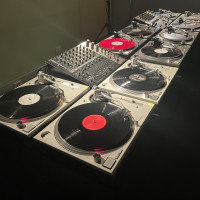
Informed by DJ practice and practice-led research, this audio paper shares historical examples of locked grooves alongside loop-based compositions and a new installation work.

This audio paper considers how human activity as a possible vehicle of interference serves as a resistance agent against the speculated becoming-generic of alert sounds in public and private spaces.

This audio paper is a provocation in response to the political provocation of generic aural gentrification.

This audio paper investigates the private and public ways in which we encounter or engage with sounds, questioning the particularity of sound events as they enter our acoustic boundaries.

An audio paper on the historical scold’s bridle: a Late Middle Ages' torture instrument used by European men to silence European women and enslaved Africans.

This audio paper explores choric settings of generic voices as a vehicle for contemplating and deconstructing concepts of Being and subjectivity.

It is through knowledge of the art-form and skilful weaving of networks of symbols, that creatives can dictate the terms of storytelling and thus exert their power over the audience.

This audio paper narrates through the experiences and ambiences of Russian aggression to which Ukrainians relate a long history of Russia’s imperial statehood.
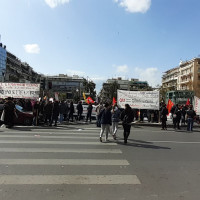
The sound of the slogans at the demonstrations touches the body, it is impossible to hide from. The vulnerability revealed through this touch creates immediate affective responses pointing at the limitations of sonic support and solidarization.
Operating rooms are typically noise filled environments, where polyrhythms and polyphonics of human and non-human sounds collide. In this paper the operating room soundscape is used for relational ethnographic exploration, framed in critical affect theory, and brings together insights from medical sociology and sound studies.
In the audio-paper »Fear of Weakness: Songs to Agitate the Man«, artist Morten Poulsen builds on his project »Boys Will Be…« (2022), in which he met with young cis-men to have conversations about vulnerability, intimacy and masculine norms

Following Ruiz and Vourloumis, this audio paper performance sounds a formless formation, exploring integrity and wholeness among Black and Indigenous collectives that organize via radical forms of togetherness outside state-sponsored institution
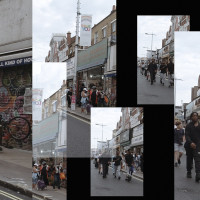
This audio paper explores the »acoustic territory« (Labelle, 2010) of Peckham Rye Lane through my sonic journey as a Peckham resident, practitioner, and researcher.
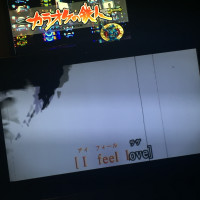
I went on an artist residency in Tokyo in 2018/19 for three months and ended up spending most of my time in karaoke boxes. I don’t remember what my actual project was but in the birthplace of karaoke, amateur singing of pop songs was all I could think of.

For over 4000 years, the Inuit in Kalaallit Nunaat, as Greenland is called in Greenlandic, have been living in an intimate relationship with nature in the Arctic. Their knowledge of how to survive under such harsh conditions has been preserved and passed on via sound through the millennia.

In this audio paper, we are focusing on a guided lamenting circle, and explore on the meanings that the participants in the circle give to the lament.

This audio performance paper queries if the application of sound and music has the potential to evoke and relieve the pain of intergenerational grief.

In this audio essay we interrogate the autoethnographic in soundscapes by engaging with the narratological nature of field recordings in their ability to convey not only affect but also memory, history, and context.