In brief
22.05.2023

Beruset af storbyen

XYZ Sound Collective & KU.BE: »Lydfelter på cykel – en lydrejse gennem Frederiksberg«
© PR
© PR

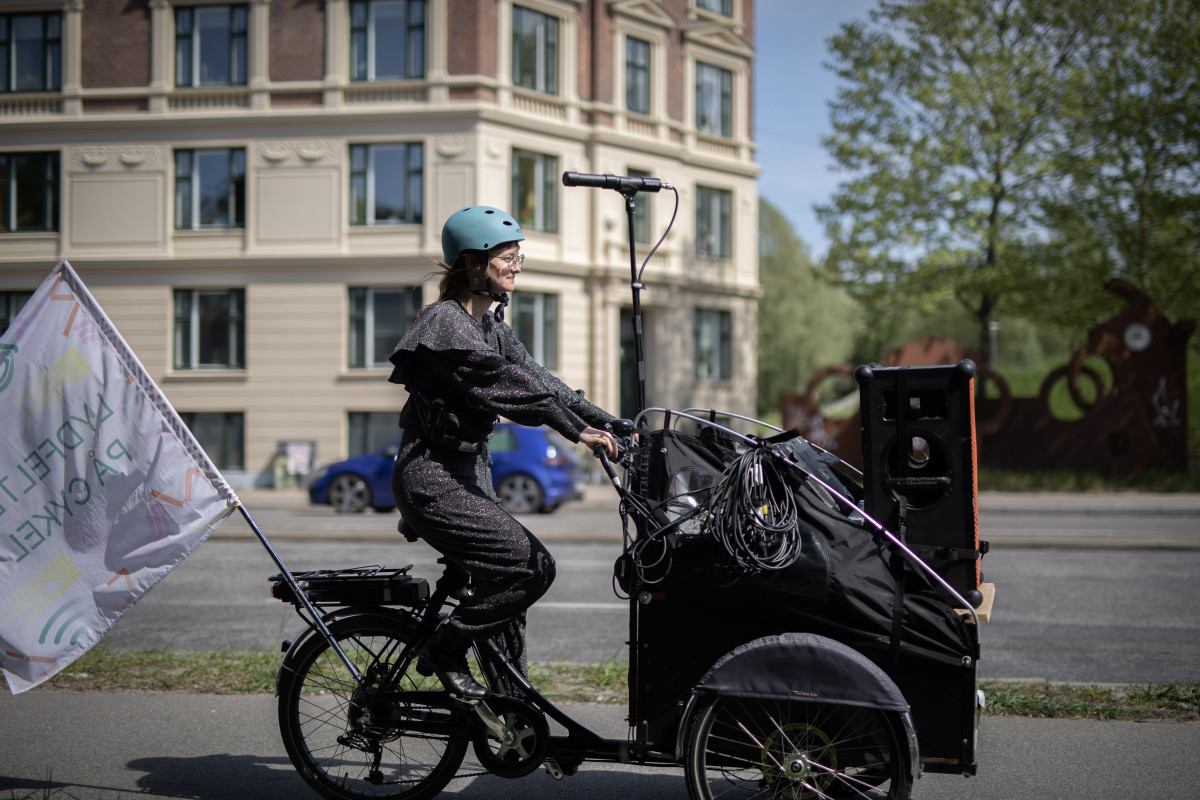
Lydkollektivet XYZ Sound Collective og kulturhuset KU.BE inviterede på en musikalsk cykeltur på Frederiksberg med intet mindre end fem koncerter. Vi kom vidt omkring – ikke kun fysisk. 

Lydkunstneren Julie Østengaard bød på trafikal musique concrète under Bispeengsbuen, mens Lola Ajima hypnotiserede med engleagtige vokalloops, fuglesang og græsslåmaskine i Landbohøjskolens have. Performancekunstnerne Absurdum Temporary Art bød et absurd-komisk retssalsdrama tilsat techno og pantomime foran retsbygningen på Skyggens plads, og musikerne Ingvild Skandsen og Arash Pandi tegnede en arabesk af små cirkulære melodier med pibeorgel og persisk daf i Frederiksberg Hospitalskirke. Under en gylden aftensol afsluttede lydkunstnerne LuN/A og Tanja Schlander turen med en nærmest ASMR-lignende forstørrelse af de mikroskopiske lyde, der gemmer sig i alt fra en spand vand til en bunke spillekort til træernes grene på en bakketop bag KU.BE. 

Særligt begejstret var jeg for Julie Østengaards koncert, der på støjende og storslået vis gjorde Bispeengsbuen til en brutal, stærkt trafikeret, sekssporet katedral, og som fremstod som en kærkommen kærlighedserklæring til en berusende storbyfølelse, der nok er på vej væk: I 2027 begynder nedrivningen af Bispeengsbuen; bilerne, larmen, forureningen og kaosset skal ud af byen; beton og asfalt skal erstattes af lysegrønne områder, og idealet er en kompulsivt behagelig forstadsidyl. Man kan jo ikke stritte imod udviklingen, men Østengaards koncert var en destilleret påmindelse om den energi, den sanselighed og den skønhed, der er til stede i alle de ting, vi ihærdigt forsøger at rense byen for. 

© PR

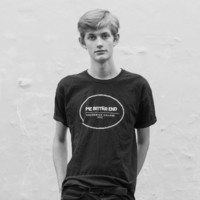
»A lot is projected onto music and making music – I'm careful, singing doesn't make you more intelligent and certainly doesn't make you a better person. It's like in sexuality. A lot of things go very consciously wrong for some people. Music like sex are means of communication, people come into contact and negotiate with each other and their instruments/tools and meet themselves in it. This is also the case when I listen to music – from every conceivable genre and context, even if I always notice that as a teenager I used to play a lot of jazz guitar.«

Bastian Zimmermann lives in Munich and works freelance in the areas of music and performance. As a dramaturge, he works with artists such as the soloist ensemble Kaleidoskop, Yael Ronen and Neo Hülcker. He is editor of the German speaking magazine Positionen – Texts on Current Music and curates projects such as »Music for Hotel Bars« and the festival Music Installations Nuremberg festival. His focus is on social aspects of making music, experimental music concepts and the questioning of bourgeois structures in contemporary music. In Spring 2025 he will take over the Wolke Verlag publishing house for books on music with Patrick Becker.

© PR

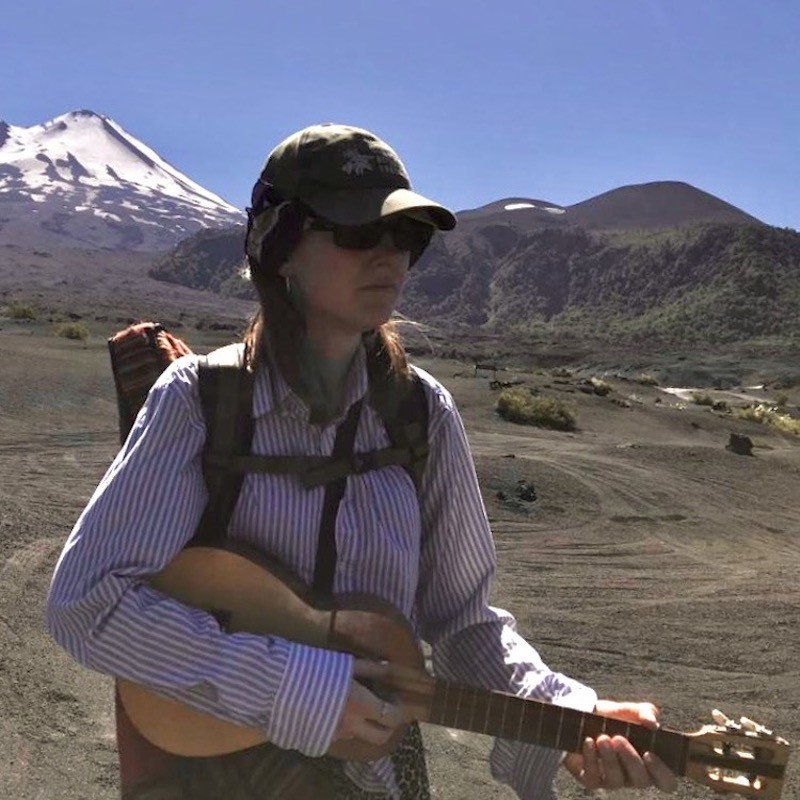
»Music to me is… my work. I've landed in the best job in the world, where a core task is to discover new music, to learn its internal logic and aesthetics, who created it, and why. I'm a music researcher and have just returned from the island of Java in Indonesia with my research partner and husband Nils, where we've been visiting experimental musicians in Yogyakarta – artists we've now followed for seven years.
One recurring theme is the trance/horse dance jathilan (or jaranan), which several of the artists have introduced us to. Jathilan is on one hand an old Javanese ritual, and on the other hand a contemporary (village) culture in full development. There is no single historically 'correct' jathilan. It's a practice that follows an old spiritual ritual, but is also open to current Indonesian influences.

The playlist consists of three tracks by Senyawa, Gabber Modus Operandi, and Raja Kirik, all of whom have incorporated the ritual into their music. The fourth track was supposed to be a 'traditional' jathilan, but as far as I know, no such recording exists on Spotify. Instead, I found a related jaranan piece that includes a dangdut song – an ultra-popular genre that is often performed as part of a jathilan event. The final track is one of the most popular dangdut songs at the moment.«

Sanne Krogh Groth is Associate Professor of Musicology at Lund University, Sweden, where she conducts research on electronic music and sound art, currently with a focus on Indonesia. Sanne was editor-in-chief of Seismograf from 2011–2019. In 2015, she established Seismograf Peer, which she is still the managing editor of.

© Henry Detweiler

»For me, music is work and a way to escape it. Music is the fanciest way of communication and therefore the most delicious food for analysis. It is what prolongs your feeling for longer than you can physically hold. Music is something after which you say: 'I’m glad you didn’t use words'. After all, it’s something that makes your commute or chores shorter, and this time-controlling function is the very first and foremost mystery I love about it.«

Liza Sirenko is a music theorist and music critic from Kharkiv, Ukraine. She is a co-founder and board member of the Ukrainian media about classical music The Claquers. She is a former Fulbright Visiting Scholar at the Graduate Center, CUNY (New York, USA), and a graduate of National Music Academy of Ukraine (Kyiv, Ukraine). Her current interests include processes in the classical music industry, contemporary opera in Ukraine, and a role of postcolonial moves in these. Liza is a former PR Director of the Kyiv Symphony Orchestra, currently working as a Program Officer at the Goethe-Institut Ukraine.

In brieflive
12.04

Feel Yourself Becoming Nature Again

Cecilia Fiona, Sophie Søs Meyer: »Ghost Flower Ritual« 
© Farzad Soleimani
© Farzad Soleimani

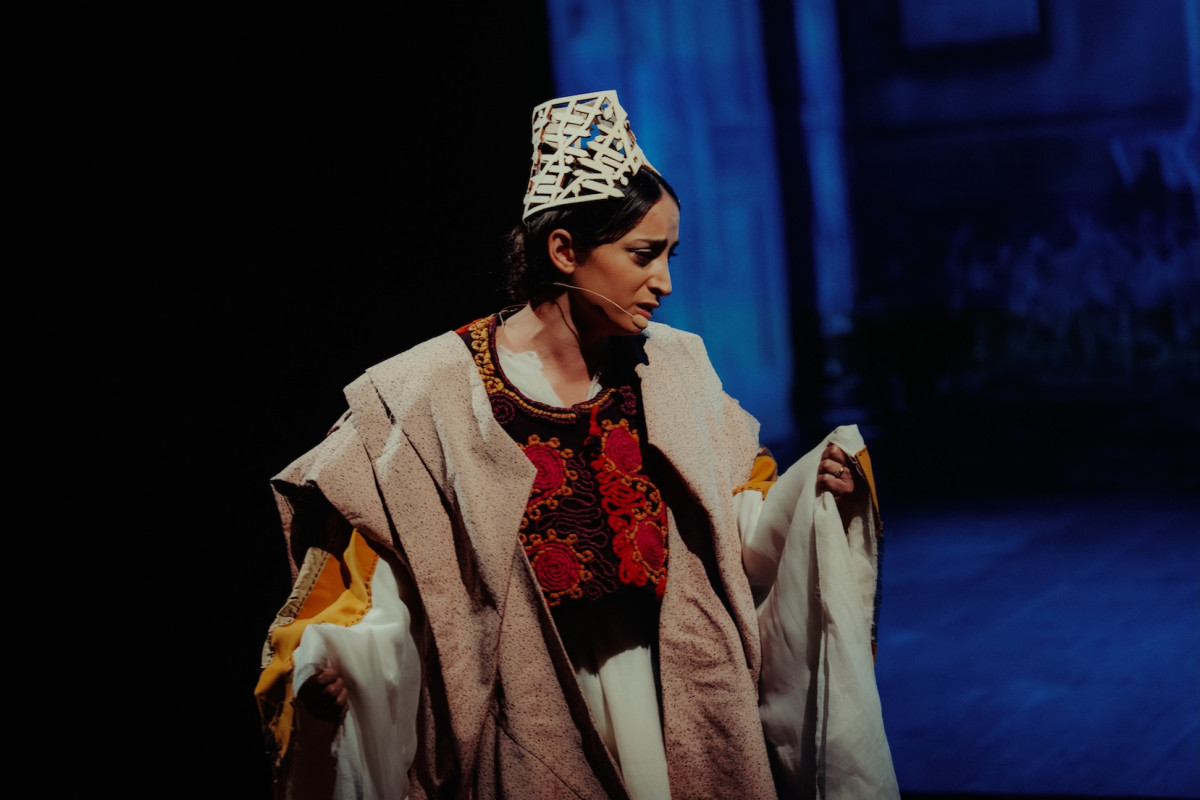
Frozen human bodies and faces shaped and painted like ceramics are meticulously carried around by flower sculptures that have abandoned their static nature. The roles are reversed. Nature becomes the living environment that grants the clay humans small, temporary lives in Ghost Flower Ritual at Copenhagen Contemporary.

The piece is a live installation with musicians and performers, where 34-year-old composer Sophie Søs Meyer has collaborated with visual artist Cecilia Fiona, who is of the same age. It’s a sensorially overwhelming, yet dramatically subdued ritual. Over the course of forty-five minutes, we sit together beneath a giant flower and sense the performers’ meticulous, slow movements. Meanwhile, soundscapes and small pulsating figures from four string players and a flute shape a landscape of colors, tones, and movements that melt together – filling the high-ceilinged room with auditory and visual presence. We are part of a whole.

I love the wild costumes that descend strangely from the sky. I love being part of the ritual that heals our forgotten connection to nature, which is the very foundation of our lives. I love the sound of stroked, plucked, and blown wood from Athelas’ musicians. Culture is nature. The human animals and the flowers are part of the greater consciousness. It’s all a hyper-complex mechanism. Cecilia Fiona possesses an extraordinary visual and creative abundance in her intricate details, and Sophie Søs Meyer is precise and intriguing in her swaying tonal figures that change slowly and meticulously. Until one flower blows into the large conch shell. Then the ritual is over.

English translation: Andreo Michaelo Mielczarek 

In brieflive
09.04

Beneath the Restless Canopies

Ask Kjærgaard, Jens Albinus, Rasmus Kjær, LiveStrings: »Store træers grønne mørke«
© PR
© PR

An inner soundscape characterises being in love. You walk through the city with a new rhythm, a different melody. The same is true of depression, though here major gives way to minor. Yet the early phases of love, too, can contain moments of doubt and dark foreboding. In composer and guitarist Ask Kjærgaard’s musical staging of Naja Marie Aidt’s 2006 short story Store træers grønne mørke (The Green Darkness of Large Trees), released as an LP last year, this same interplay is palpable as the music moves us from gentle strokes through melancholy to a rougher sound. The recording features the trio LiveStrings – cello, violin and viola – with actor Jens Albinus as the first-person narrator.

In the concert version of Kjærgaard’s work in Aarhus, featuring Rasmus Kjær on keyboards, Albinus’s voice appeared even more exposed. The piece introduces us to a depressed man who, wandering through a park, finds moments of calm beneath the trees—and at times up in them. For when despair causes you to fall out of the system’s sky, through sickness benefits and social assistance, only to land at the roots of the trees, perhaps there is only one thing to do: climb into the treetops? But then our anti-hero meets a woman in the park, and the drama begins. Can infatuation lift him out of depression, or will it end up short-circuiting him?

At first, the music crept in quietly. Kjærgaard’s ability to support the flow of the text revealed his experience as a film composer, particularly in his blending of classical music, meditative new age, and piercing guitar. Words and music carried the narrative together. When Albinus fell silent, the music became the voice of the inner landscape. The strings, in particular, delivered the dreamlike tones of infatuation, but when the gloom returned with renewed force, it was Kjærgaard who, with a roaring guitar, sprawled across the emotional abyss. It was beautiful and brutal.

English translation: Andreo Michaelo Mielczarek