





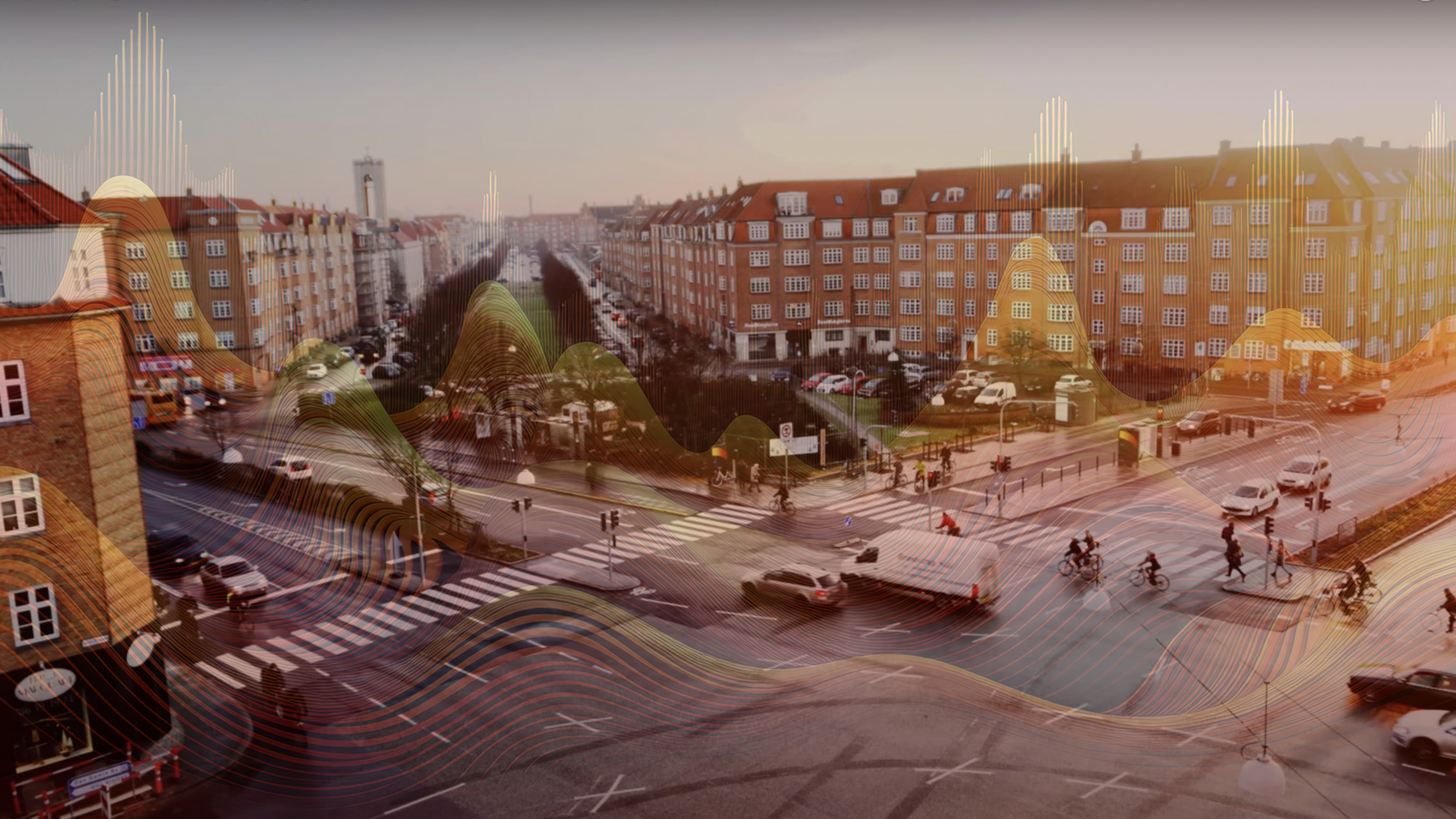
Editorial: Exploring directions in Sonic Citizenship
Sonic Citizenship begins from a simple but often overlooked premise: sound does not merely surround us; it structures how we are together. We listen to one another, regulate ourselves in relation to others’ sounds, and navigate shared environments through auditory norms and expectations. Citizenship, in this sense, is not only a matter of legal status or formal political participation, but also of how one sounds, listens, accommodates, or resists, the sonic conditions of social life. In this special issue, we propose Sonic Citizenship as a way of understanding citizenship as something enacted through sound and listening in situated, everyday practices. Sonic Citizenship points both to the right to sound and to be heard, and to the responsibility to listen to others, while acknowledging that these rights and responsibilities are unevenly distributed and culturally regulated. The concept thus opens a field for analysing how participation, belonging, and exclusion emerge through sonic practices: who is allowed to occupy auditory space, who is expected to remain silent, and which infrastructures, technologies, and norms shape these possibilities.
In this issue we use the concept of Sonic Citizenship in an open and expansive sense. Sonic Citizenship can unfold in everyday micro-practices as e.g. lowering one’s voice in a public space, overhearing others, as well as in collective acts such as singing together, protesting or broadcasting. It can generate forms of belonging and care but also reproduce hierarchies and exclusions. As such, Sonic Citizenship offers a prism through which to understand how social, cultural, and political relations are continuously produced through sound.
Reconfiguring citizenship through the senses
Historically, the concept of citizenship is tied to legal and political status: a formal relation between individuals and the state, articulated through rights, obligations, and participation in institutionalized forms of governance. Yet, over the past decades, this framing has increasingly been challenged by approaches foregrounding the lived, embodied, and everyday dimensions of citizenship and belonging. Citizenship, in this expanded view, is not only something one possesses or performs within institutional settings, but something that is continuously enacted through practices, affects, and modes of inhabiting shared worlds. This shift resonates with what has been described as a broader “sensory turn” across the humanities and social sciences, in which perception, embodiment, and the sensorium have increasingly been understood as central to social and political life (Howes, 2022).
Sensory experience is culturally and historically conditioned and entangled with relations of power. From this perspective, the distribution of what can be seen, heard, touched, or felt is never neutral, but participates in shaping forms of inclusion and exclusion. Attending to the sensory is to recognize how political life is already mediated through embodied and perceptual arrangements. Such a perspective opens new questions about how belonging is sensed, how participation is mediated through perception, and how inequalities are reproduced or contested through the organization of everyday sensory life.
In this sensory reorientation, a growing body of scholarship has sought to reconceptualize citizenship beyond its juridical and institutional foundations by foregrounding its sensorial, atmospheric, cultural and affective dimensions. With their notion of sensory citizenship, Trnka et al. (2013) argue that the sensory dimensions of citizenship are a crucial aspect of political power, collective ideology, as well as the subjective citizenry. Building on this, Patrick Eisenlohr speaks of atmospheric citizenship in exploring the sonic aspects of urban place-making (2021). In contexts of contested urban space and precarious citizenship Eisenlohr turns to atmospheres as an analytical lens to allow for new perspectives on the bodily felt aspects of citizenship and belonging. Due to the emotive qualities, atmospheres provide a diffuse as well as holistic feel to situations and environments, which make them useful in trying to understand the bodily felt qualities of cities and neighbourhoods. With sound being inherently somatic Eisenlohr argues for sonic practices to offer a powerful, non-discursive mode for marking spaces and making claims to the city and nation (Eisenlohr, 2021).
In a similar vein, Ruard Absaroka (2023) explores how music, migration, and urban life intersect in shaping alternative forms of citizenship beyond formal legal status. He argues for cities being dynamic “contact zones” marked by mobility, heterogeneity, and cultural encounters, in which the sense of citizenship cannot solely be understood through an intuitional construct of belonging, but through lived experience, practices of agency, and affective attachment.
Martin Stokes (2023) further situates music within broader debates on citizenship as increasingly plural, performative, and decentered, challenging its anchoring in national belonging and identity. Stokes foregrounds citizenship as a dynamic field of practices through which political subjectivities, rights claims, and forms of collective life are negotiated across scales. In this framing, music is not merely expressive of identity, but actively participates in shaping modes of inclusion, exclusion, and affiliation, opening a space to rethink citizenship beyond nationalist paradigms and toward questions of sustainability, democratic participation, and cultural coexistence.
With these various branches of how citizenship is approached beyond legal definitions into more sensory orientations, it is essential to also touch upon how technology takes part in our sensory relations to the world. With a specific focus on sound, Mack Hagood (2019) explores how people apply technologies allowing for auditory self-control to actively shape and regulate their affective and sensory engagement with an environment. He argues that technologies such as noise-cancelling headphones, noise-machines, and sound-masking systems function as forms of “orphic media”, enabling individuals to shape their own sensory realities instead of engaging in critical reflection or resistance.
While Hagood's focus is on how technologies mediate sensory relations and shape individuals' engagement with their surroundings, digital technologies also play a broader role in opportunities for democratic engagement and in structuring how people participate in social and political life. With their notion of digital citizenship, Mossberger et al. (2008) address how the internet has become crucial for civic, political, and economic participation. They define digital citizenship as the ability to participate in socity online, including accessing political information and engaging in democratic activities such as public discussion, voiting, and communication with political representatives (Mossberger et al., 2008). At the same time, the authors highlight that these opportunities are not evenly distributed. Digital citizenship thus highlights both the democratic potential of digital technologies and the exclusions that accompany them (Mossberger et al., 2008).
Together, these different approaches to citizenship offer a set of conceptual openings that help situate Sonic Citizenship within a broader landscape of attempts to rethink what it means to inhabit and participate in shared worlds.
Towards a field of sonic citizenship
The concept of Sonic Citizenship does not belong to a single discipline or theoretical tradition. Rather, it has emerged across a range of fields where sound studies, politics, and belonging intersect. Across these contexts, Sonic Citizenship is consistently understood as a way of grasping how listening and sounding are integral to the formation of social relations and modes of participation.
An early articulation can be found in Vincent Andrisani’s work, where Sonic Citizenship is framed in relation to collective acoustic practices among populations with limited access to formal political power (Andrisani, 2017) and linked to questions of spatial justice, marginalization, and everyday forms of agency. In research on music, religion, and community, Helen Phelan (2018) describes Sonic Citizenship in terms of “rights and rites of belonging,” where musical practices, particularly communal singing, function as ways of enacting membership and participation beyond formal frameworks of national citizenship. Similar perspectives appear in migration and displacement studies, where sound becomes a medium through which subjects negotiate belonging under conditions of precarity, mobility, and exclusion (Western, 2020).
More recent work in sound studies and media research has expanded the concept into digital and platform contexts. Tanya Bosch (2025), for example, conceptualizes Sonic Citizenship as a form of civic participation through sonic acts, including listening, sharing, remixing, or withholding sound, and highlights how these practices are shaped by algorithmic infrastructures and unequal conditions of audibility. In this perspective, Sonic Citizenship becomes a lens for analysing power, participation, and visibility within contemporary media ecologies.
The concept has also been mobilized in analyses of governance and everyday conflict. Eun-Sung Kim (2021), examines noise disputes in dense urban housing, showing how Sonic Citizenship emerges through the negotiation and regulation of sound as part of everyday coexistence and state intervention. In studies of music and cultural production, Sonic Citizenship has been used to explore how artistic practices such as hip hop articulate alternative forms of belonging and diasporic identity (e.g. Andrisani, 2017; Bosch, 2025).
Building on these strands of research, our own work has approached Sonic Citizenship as a process of “messy and fragile negotiations with and through sound” (Højlund, Vandsø and Breinbjerg, 2024). Rather than defining the term as a stable condition or clearly bounded practice, we emphasize its emergent and relational character: it unfolds in the tensions, adjustments, breakdowns, and attunements that occur when people share sonic space. In this perspective, Sonic Citizenship is not only about rights or participation, but about the ongoing micro-political work of listening, sounding, and co-existing, often under uneven and contested conditions.
Finally, recent interdisciplinary work has extended Sonic Citizenship into carceral and juridical settings, where sound can function as a medium of resistance, care, and relationality under conditions of control and enforced silence (Cathcart Frödén et al. 2026). In such contexts, sonic practices produce fleeting yet meaningful forms of connection and agency, even where formal citizenship is constrained or suspended.
Taken together, these contributions position Sonic Citizenship as a flexible and evolving concept that links everyday sonic practices to broader questions of power, participation, and belonging. It is precisely this transversal quality, spanning urban life, religious practice, migration, digital media, and institutional contexts—that this special issue seeks to explore and further develop.
This special issue
In this issue we categorize the contributions in four themes discussing Sonic Citizenship in relation to: 1) Power, governance and audibility, 2) Practices, methods and making publics, 3) Belonging, care and affective relations and 4) Sonic heritage and sound-art curation.
The first theme Sonic Citizenship: Power, governance and audibility concern the cultural norms and regulations, technical infrastructures and economic logics under which sound and listening as conditions for democratic inclusion and exclusion takes place. Who gets a sonic presence, who has the right to speak and be listened to, under what conditions, and at what cost are some of the questions raised.
Under this theme Iben Have discusses Sonic Citizenship in relation to voices of public authorities as they sound through Text-to-speech technologies, and more broadly the democratic implications of having machines that listen and speak. Morten Poulsen explores how the Danish concept of hygge (cosiness) as a cultural norm informs behaviour and notions of what can be said and what can be listened to. Joseph Callaly writes on how the sounds of the city are (already) governed by economic logics e.g. through the way audible attention is being shaped by social norms, technical systems, and legal rules. Sandra Kopljar et al. address how public space is enacted, negotiated, and experienced through sound, and how assumptions, behaviours and agency, affect the soundscape (Sandra Kopljar et al). Finally, Anna Torres Mallma writes about how the voice of public protest or aging people continues to sound faintly in murmurs and rhythms of endurance despite being denied authority or visibility.
In the second theme Sonic Citizenship: Practices, methods, and making publics the different papers converge on a view of sound as a relational, situated, and performative medium of citizenship through which people co-create environments, negotiate belonging, and engage affectively and politically with the world. This concerns a variety of sonic practices of listening and sound making that establishes ways of attuning to and co-sounding with other people and environments.
Lauren Knight and Aline Rossi Zara describe how the urban soundscapes of Toronto in a multimedia artwork of recordings, collages and manifestos are mapped as a way of generating new ways of listening to cities, helping people understand and reshape their shared acoustic environments. Through the concept of mobile Sonic Citizenship – a form of citizenship that is performatively enacted through situated relational sonic practice – Oleksandra Nenko et al. explore outdoor electronic co-sounding in the city of Helsinki as a sensorial and participatory practice of listening, sounding, and relating with environments. Evelyn Buyken examines an attuning method for designing classical concerts in diverse civic spaces, developed at the intersection of sonic and artistic citizenship, and shows how exchanges between these practices can cultivate new ways of listening to places and communities. Finally, Lea Wierød Borčak et al. discuss communal and collective singing in the Danish Broadcasting Corporation’s (DR) televised singalongs and in street protests organized by Men in Black Denmark during Denmark’s COVID-19 lockdowns as different expressions of national belonging, capable of either reinforcing institutional trust or articulating dissent.
The third theme Sonic Citizenship: Belonging, care, and affective relations investigate Sonic Citizenship as a relational and situated practice, where sound, listening and shared sound creation function as central ways of negotiating belonging, care and political empowerment. The articles range from physical and digital spaces to everyday and extreme life situations and focus particularly on marginalised or challenged forms of citizenship.
Håkon Johnson explores through sound recordings and interviews with people in a former cemetery turned public park how the perceived silence associated with the buried non-living interacts with contemporary park sounds, shaping visitors' experience and sense of belonging. Lucy Cathcart Frödén and Áine Mangaoang seek out sites and structures where citizenship is contested, exploring how such systems of exclusion are expressed and resisted in sonic terms.
Tanja Diers analyses how sonic solidarity is created in a separatist community of women who have undergone fertility treatment. Inspired by Deep listening the choir use their voices to express and share their individual journeys and experiences of e.g. hope, disappointment, anger and grief. In a similar but more subtle way, Veronika Muchitsch likewise concerns sonic reflections on grief and (non)belonging by analysing the wide recirculation of “Kitchen Fan Lullaby”, an audio track that captures a young woman harmonizing with her kitchen fan. The analysis shows that the audio track’s sonic qualities facilitate an opening toward memetic reflections on belonging that bear relevance for questions of gender and citizenship.
Bonnie Han Jones imagines the complex and contradictory worlds of transnational and transracial Korean American adoptee citizens. She sonically elaborates on the complex entanglements of the political and personal through the sonic archival practice of one such adoptee. Marie Gorm Aabo propose a reconceptualization of tinnitus as a socio-material phenomenon. From experimenting with sound collages as a method to probe the relationships between sound and everyday life she introduces the concept of “tinnitus attuning” advocating for broader understanding of aural diversity and collective responsibility in Sonic Citizenship.
Illustrated by recordings from music events organized by Belarusians across Europe, and sonic practices of resistance and expression both within and outside of Belarus, Pavel Niakhayeu and Andrei Vazyanau discuss challenges in maintaining Belarusian Sonic Citizenship next to an imperialist neighbour.
The fourth theme, Sonic Citizenship: Sonic heritage and sound art curation, foregrounds how Sonic Citizenship is negotiated through engagements with cultural heritage and curatorial practices, where listening operates as both a methodological and infrastructural condition for civic participation. Across these contributions, sound is approached not only as ephemeral experience but as something that can be preserved, activated, and mediated through institutional, archival, and artistic frameworks. This raises questions about how sonic pasts are curated, who has the authority to interpret and re-sound them, and how audiences are positioned as participants in these processes.
Jacob Kreutzfeld et al. explore the role of the city drum as a historical civic technology through which authority, identity, and territorial belonging were enacted. Drawing on a preserved drum from Struer, the paper shows how such objects carry affective traces of past Sonic Citizenship, shaping collective life through rhythms of gathering, warning, and regulation.
Lastly, Morten Søndergård turns to contemporary exhibition-making and proposes listening as a form of civic technology. Through the concept of resonant citizenship, the paper shows how curatorial infrastructures shape how audiences engage and co-produce shared worlds, positioning them as implied producers rather than passive recipients. Curatorial practice thus becomes a site where governance, ecology, and participation are negotiated through listening.
To conclude, we would like to express our sincere gratitude to the authors for all their work and dedication in their contributions to this special issue. Furthermore, our appreciation extends to the reviewers: colleagues, artists, and scholars for providing their expertise and feedback being very valuable in realizing as well as strengthening this issue.
Enjoy!
References
Absaroka, R. (2023) "Music and Urban Migration: The City, Mobile Ethnography, and Affective Citizenship". In Gratzer, W., Grosch, N., Präger, U. and Scheiblhofer, S. (eds.) The Routledge Handbook of Music and Migration: Theories and Methodologies. London and New York: Routledge, pp. 333–362.
Andrisani, V. (2017) Inventing Havana in Thin Air: Sound, Space, and the Making of Sonic Citizenship. PhD thesis. Concordia University, Montreal.
Cathcart Frödén, L. et al. (eds.) (2026) Sound and Detention : Towards Critical Listening, Sonic Citizenship and Social Justice. 1st ed. [Online]. London: Bloomsbury Academic.
Bosch, T. (2025) "From Airwaves to Algorithmic Soundscapes: Sonic Citizenship in an Age of Populism and War". In RadioDoc Review. 10(2)
Eisenlohr, P. (2021) "Atmospheric Citizenship: Sonic Movement and Public Religion in Shi‘i Mumbai". In Public Culture, 33(3), pp. 371–392. doi: 10.1215/08992363-9262877.
Hagood, M. (2019) Hush: Media and Sonic Self-Control. Durham, NC: Duke University Press. doi: 10.1215/9781478004479.
Holston, J. (1999) "Spaces of Insurgent Citizenship". In Holston, J. (ed.) Cities and Citizenship. Durham, NC: Duke University Press, pp. 155–173. doi: 10.2307/j.ctv11cw70j.
Howes, D. (2022) "Quali(a)tative Methods: Sense-Based Research in the Social Sciences and Humanities". In Qualitative Sociology Review, 18(4), pp. 18–37. doi: 10.18778/1733-8077.18.4.02.
Højlund, M.K., Vandsø, A. and Breinbjerg, M. (2024) "Sonic Citizenship: About the Messy and Fragile Negotiations With and Through Sound". In Journal of Sonic Studies, 26(26). doi: doi.org/10.22501/JSS.3032038
Kim, E.-s. (2016) "Sound and the Korean Public: Sonic Citizenship in the Governance of Apartment Floor Noise Conflicts". In Science as Culture, 25(4), pp. 538–559. doi: 10.1080/09505431.2016.1193132.
Mossberger, K., Tolbert, C.J. and McNeal, R.S. (2008) Digital Citizenship: The Internet, Society, and Participation. Cambridge, MA: MIT Press.
Phelan, H. (2018) "Sonic Citizenship: Rights and Rites of Belonging in Ireland". In Ingalls, M.M., Swijghuisen Reigersberg, M. and Sherinian, Z.C. (eds.) Making Congregational Music Local in Christian Communities Worldwide. London: Routledge, pp. 247–261. doi: 10.4324/9781315142432.
Stokes, M. (2023) Music and Citizenship. Cambridge: Cambridge University Press.
Trnka, S., Dureau, C. and Park, J. (2013) ‘"ntroduction: Senses and Citizenships". In Trnka, S., Dureau, C. and Park, J. (eds.) Senses and Citizenships: Embodying Political Life. New York: Routledge, pp. 1–32. doi: 10.4324/9780203374658-1.
Western, T. (2020) National Phantoms: Sonic Citizenship and Belonging in Conditions of Displacement. New York: Routledge.