


During War, We Become All Ears
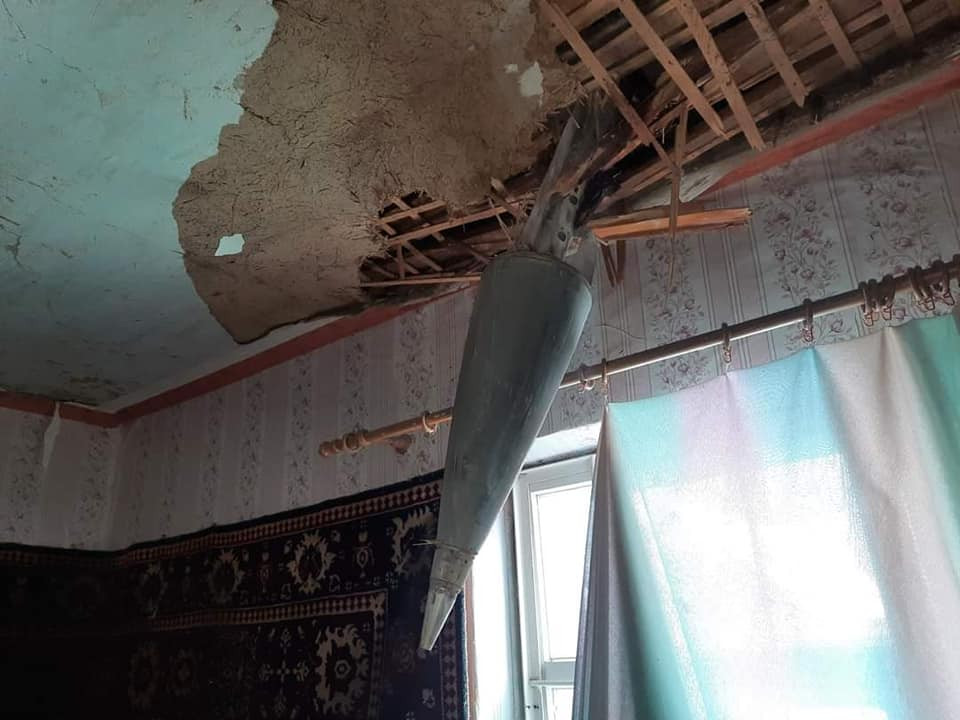
On the twenty-second of June,
At exactly four o’clock,
Bombs were dropped on Kyiv, they announced to us
That the war had begun.
In the Soviet Union everyone knew these lines. One of the few sincere, and at the same time unceremonious songs was created in the first days of the so-called »Great Patriotic War« by the poet Boris Kovyniev. In fact, he wrote lyrics set to the melody of a new waltz, Blue Scarf. In the USSR it was somehow inconvenient to remember that Siniy platochek was the work of two Poles – Jerzy Petersburski (music) and Stanisław Laudan (lyrics). Both versions – Siniy platochek and On the Twenty-Second of June – were sung to us by our grandmothers instead of lullabies, which is why from childhood we knew the exact date of the Nazi air invasion of the USSR.
Now when you hear a siren, it’s as if I feel it under my fingers – and that’s some kind of schizophrenia
When U.S. and British military intelligence informed us that Russian tanks were moving up and down the entire border line, we were, of course, alarmed, but at the same time we did not believe war was inevitable. When the West began giving dates for a probable invasion – first the 16th, then the 18th of February – we tried to joke. But privately we all chose the 22nd, knowing the Russian government’s fondness for symbolism. And so the Russians added yet another two: 22+2, 02.02.2022. And, of course, 4 a.m.
We were sleeping in our suburban house near Kyiv when the first explosions sounded. The clocks showed about 4:30 when an explosion occurred in neighboring Vasylkiv after a military aircraft appeared overhead. As it turned out, the first missiles had been launched. »The war has begun,« I thought with a strange sense of relief that, unlike anxious anticipation, immediately brings calm and concentration.
In wartime, the primary one of the five human senses is hearing. You literally transform into one enormous ear.
On February 24 many of us first heard the wailing of sirens. I live near the Scientific and Engineering Center for Explosive Materials Processing of the Electric Welding Institute. In peacetime, warning sirens would sound daily from the testing ground, followed by alarms. In my childhood, even ten years after the Chernobyl Nuclear Power Plant disaster, we were still trained how to drop to the ground in case of a nuclear explosion (though even as children we understood the absurdity of the idea) and to run into the school basement at the sound of the school siren. But in a large city, sirens do not sound at all like they do at school or at a testing range.
Kyiv has around 150 sirens installed on the roofs of enterprises. Their system has not been updated for 50 years, which is why they hum exactly as they did during World War II. Find me a madman who could believe in the reality of war! The characteristic howl is produced by driving large flywheels with an electric motor. The general alarm signal is a long sound (at least a minute), repeated two or three times. After hearing it, you must go to a shelter. Sirens cannot be activated in time to warn of a missile strike. Their sound signals an incoming air raid. In Kyiv, 10–30 minutes pass from the siren’s wail to impact. In that time, you must rush down to an underground parking garage or a metro station.
I asked my musician friends about their reactions to the sound of sirens. Most told me that over time the sound moved from the real sphere into the imagined (phantom) one, haunting you everywhere. The cellist Vitya Rekalo shared a performance memory with me:
»Last October we played Igor Zavgorodny’s String Quartet at a festival in Graz [a composer and violinist of the younger generation – LM]. It contained very realistic representations of sirens; we worked carefully to make them authentic and convincing. Sirens in all registers, one painful cluster. Now when you hear a siren, it’s as if I feel it under my fingers – and that’s some kind of schizophrenia.«
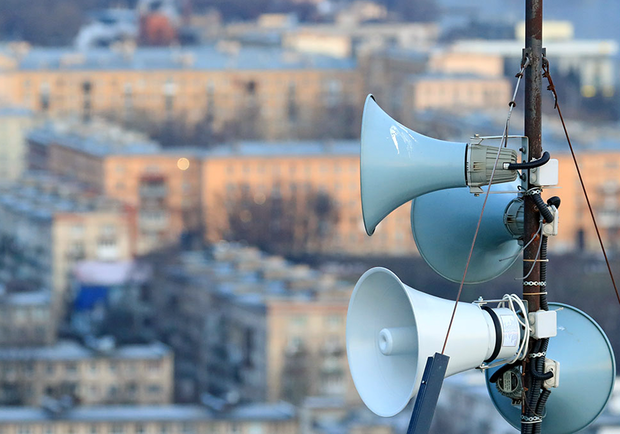
The placement of sirens in Kyiv varies: in new micro-districts you won’t always find them; most are located in the center. When the sound of a siren reflects off buildings, it becomes distorted like a refracted beam. Terrifying, yet hypnotic. At the same time, several friends said it felt as if the earth itself were groaning.
Explosions and artillery fire are also heard in districts where ground fighting takes place. By the end of the second week of the war I could classify them quite well. A prolonged scraping with a whistle – those are missiles. Most often they struck early in the morning: they bombed the airport, an ammunition depot (which detonated heavily for some time), and a fuel base. The last one twice, so twice a column of black smoke rose above the city. But even that black mushroom in the air was not as frightening as the sounds themselves.
Military aircraft do not sound like civilian ones. Helicopters and fighter jets move fast and low, almost grazing rooftops. The sound wave seems separated from the object itself: you hear it slicing the air at one point in the sky, and then it invades your field of vision somewhere entirely different. Aircraft and missiles are the most disturbing sounds, both by their nature and because of the foreboding of what they bring: the greatest death and destruction comes from the sky.
When fighting intensified along the Zhytomyr highway, I also learned to distinguish air-defense systems by ear. They are like celebratory salutes or a bundle of firecrackers. Once they were attributes of holidays and festivities. Now they are the sonic symbol of how Ukrainian defense forces guard the sky above me. During that period I heard air defense almost constantly – day and night. And they calmed me enough that I could even sleep. Then neither real nor imagined missile sounds woke me.
Imagined sounds are baggage we carry with us even during evacuation. I often fall asleep to the rustle of tank tracks, though in reality I had only heard them during parades. Distant vehicle sounds resemble artillery; the screech of brakes on the street you flee along sounds like shells. But still, the most destructive phenomenon is silence.
»Stifled, hidden inside the human body – those are the sounds of war,” the vocalist and opera director Anton Litvinov tells me. “A person takes a sound of any volume and tries to hide it inside themselves.«
The improvising guitarist Dima Radetsky says the war changed his perception of things he had never noticed before: the wailing of wind through cracks in houses along empty streets.
Tania Pilipchuk, an employee of the Kharkiv Literature Museum, says: »I am afraid of silence.« And being in a city where, according to official estimates, at least 600 buildings have been destroyed, she defiantly declares: »Low-quality Chinese firecrackers keep exploding here.« So that the enemy receives no information about the location or redeployment of Ukrainian troops, we maintain all contact in written messages in Aesopian language of metaphors.
The imagined sounds of war we carried with us. Next to us – an airport, railway, cobblestones. Sometimes I would jump in my chair at new sounds
»In my memory remain the rocket launches over Osokorky [a district on Kyiv’s left bank – LM]. A sound I had never heard or imagined before, a red-reddish sky, sound and light – Scriabin’s dream, damn it – and then gradually taming every detail of the siren’s hum, and a masochistic pleasure drawn from those glissandi, and thoughts about how to orchestrate it all, during a nervous descent from the eighth floor by stairs I hadn’t used in 15 years,« writes composer and cellist Zoltan Almashi to me. »Incredible differentiation, breaking down into atoms all that white noise accompanying our daily life… (Exactly, exactly how one should listen to academic noise, man – finally you got it?)« Zoltan has now returned to his mother in Lviv to help and support her. Near their apartment there is always a busy street with high levels of noise day and night. »But now there is SILENCE here that rings and is so loud you cannot fall asleep,« he concludes.
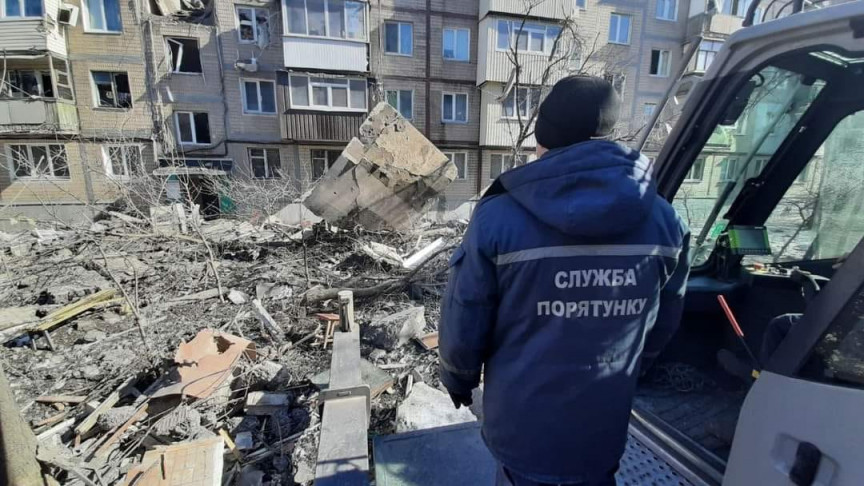
Of suffocating silence as a harbinger of war speaks bandura improviser Volodymyr Voit:
»I heard such silence the night before the war. A few hours before the state of emergency was declared [which, barely having time to begin, would soon transform into martial law – LM], there were hardly any people anywhere. For the first time I heard absolutely no neighbors. No sound, no trace of life. No washing machines, no televisions, no one walking in the corridor, riding the elevator, slamming doors on the floor. As if the whole world had frozen, stiffened listening, and did not wish to hear something. And that was some three or four hours before it began…
Later there were explosions, planes, I heard a missile fly somewhere over our house and hit the TV tower. Irpin and Bucha are very close to us, and if you go to the top floor, you see the fighting as if in the palm of your hand. Once Grad rockets flew – that was terrifying, because unlike a plane or a missile, they roared for a long time, not just for a moment. There were sounds of panic and sirens signaling it was time to hide. But none of these sounds pierced painfully. They were only terrifying. Once, when I stood for many hours in line at a supermarket, some drone was shot down over our heads – it cracked loudly and everyone crouched. But those sounds are forgotten. Next came the bomb shelter. Children’s voices who did not sleep and held their parents’ hands. They woke and cried. Snoring in the shelter, like in a third-class carriage from a previous life. Pets. The mewing of a tiny kitten.«
»But now there is SILENCE here that rings and is so loud you cannot fall asleep«
Children’s voices – that is something that constantly accompanies all refugees in the background. Composer Vita Poleva stood for eleven hours in line at the Polish border during evacuation. Next to her was a woman with a five-year-old girl who kept repeating: »Mom, but I’m little – why do I have to suffer like this? Why do little children have to suffer?« The three-kilometer queue at the border resembled a sea and lived by its laws. A border guard regularly shouted, »Get ready!« His command was tied not only to words but also to shuffling. Moving forward – carrying bags one step – and freezing again until the next wave. Sighs in response to children’s crying. »But I’m little…« And after crossing the border – a refugee canteen. A small boy given an apple. He refuses. »My grandmother is in Mariupol, she is starving – how can I enjoy it?« A little boy who, out of solidarity with his grandmother, cannot eat.
I too evacuated with my children, though I delayed for more than two weeks. Some inner anchor would not let me leave my land. But in the end horror and fear for my children prevailed. The imagined sounds of war we carried with us. Next to us – an airport, railway, cobblestones. Sometimes I would jump in my chair at new sounds. But more often I struggle with dreams in which they appear – tanks. They scrape their tracks, which I have never truly heard well, and fire at my house. And I can only hope that my children do not see my dreams.
Translation Andreo Michaelo Mielczarek
Lyubov Morozova is the artistic director of the Kyiv Symphony Orchestra, founder of the Lyatoshynsky Club and curator of the music program at the Bouquet Kyiv Stage Festival.
The text is part of the series »Ukrainian Corridors«, initiated by Seismograf with Polish journal Glissando and German journal Positionen.