Rune Glerup
15





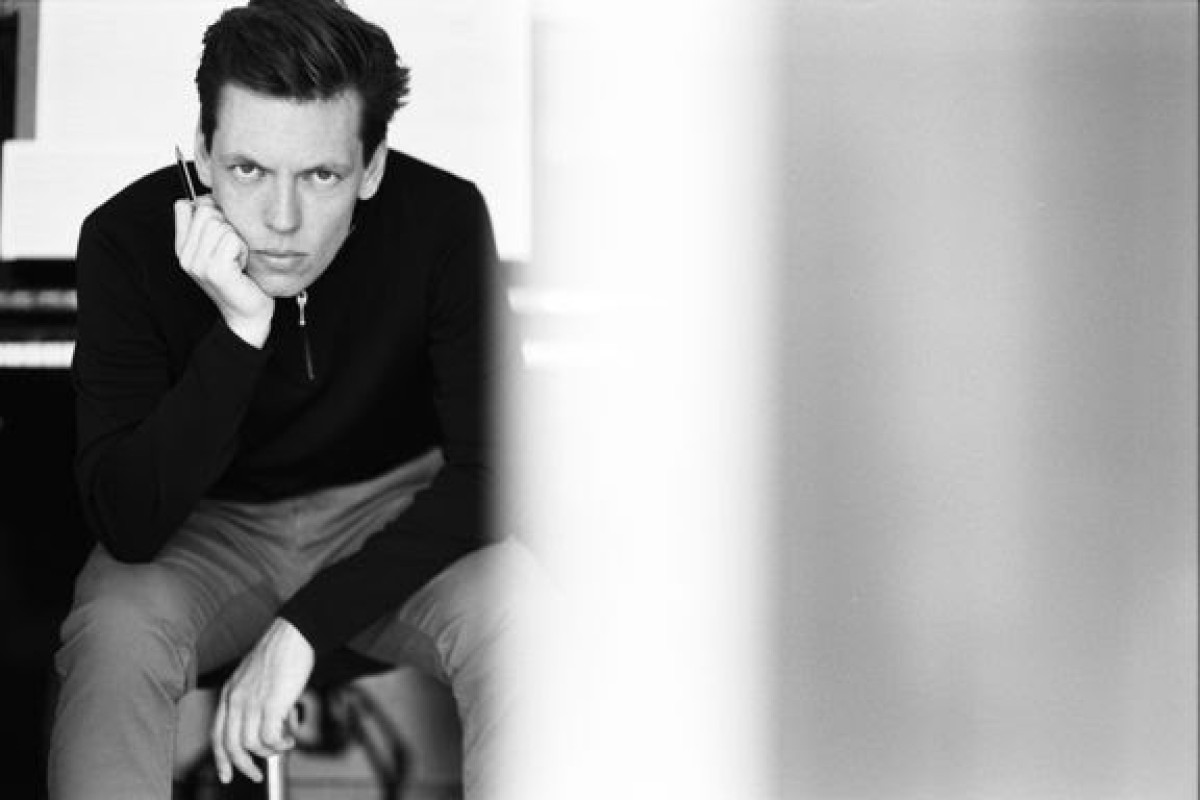
A string quartet consists of four players, and a clarinet quintet five, though the Danish composer Rune Glerup (b. 1981)’s newly recorded works for both ensembles would have you believe their ranks are vastly undercounted. The recipient of last year’s Nordic Council Music Prize for his violin concerto Om lys og lethed (About Light and Lightness), Glerup writes pieces for chamber and orchestra that are often characterized by their multidimensionality: a sonic idea will persistently recur in altered guises, for a sense that one is feeling around different facets of a physical form. Yet the two works on Perhaps Thus the End – brought to life by the impeccable Quatour Diotima and clarinetist Jonas Frølund – are just as potent a demonstration of expansive interiority as they are of surface area.
In the titular string quartet, whose seven movements are named for lines from Beckett’s late prose work Stirrings Still, long tones and galloping motives are seamlessly shuffled amongst the ensemble, generating such a sonority that the group seems to have doubled in size. The language is sometimes mechanical but never automatic, bending rather into balletic shapes. Glerup is a careful manager of texture, finding grace in unintuitive sounds through skillful layering – to speak merely of how, in a later movement, a harmonic pizzicato punctuates the string equivalent of vocal fry before the group pivots suddenly into stillness.
On the unexpectedly addictive »Still Leaning Towards this Machine«, which is surely among the few times a contemporary clarinet quintet has received that distinction, electronics magnify the ensemble through a subtle stuttering resonance. As a result, across three spunky movements, the group is occasionally transmuted into a sort of paranormal accordion. It’s a wonderfully weird effect that, just as weirdly, the score seems to deliver with a straight face – just one more satisfying surprise among many others on this excellent record.

As an abstract micro manifesto Lauri Supponen describes his interest in »music that inhabits a second space and lingers there«, an invitation for us to dwell in the moment and discover music in its quiet emergence.
»Gaz aux étages«, the first composition on Supponen’s breathtaking album, seems to test this idea as it unfolds with whispered bow strokes devoid of pitch. It is as if the piece itself is an entity wondering if it will prove to be music as it tentatively investigates its own constituent components. A subtle opening to an album that answers this question with clarity in its eponymous second work »Dwell« (tracks 2–5), exploring a fascinating microtonal realm. In virtuoso performances of astonishing accuracy, guitarist Petri Kumela and vocalist Tuuli Lindeberg bring Supponen’s demanding four-movement duo to life. The guitar writing in Dwell recalls Norwegian composer Martin Rane Bauck’s Fretted with Golden Fire with its drone-like microtonal strumming – a connection substantiated by the album notes, which reveal both composers know each other and have collaborated with bass clarinetist Madison Greenstone.
The dwelling-space Supponen offers in »Eau & gaz à tous les étages« and »Opus Nen«, return the listener to a more remote sonic space, reminiscent of the album’s opening albeit with tighter compositional sense. Performed with intensity by Madison Greenstone and baritone saxophonist Sikri Lehko, they consolidate the pervasive feeling that Dwell is a uniquely inspired collaboration.
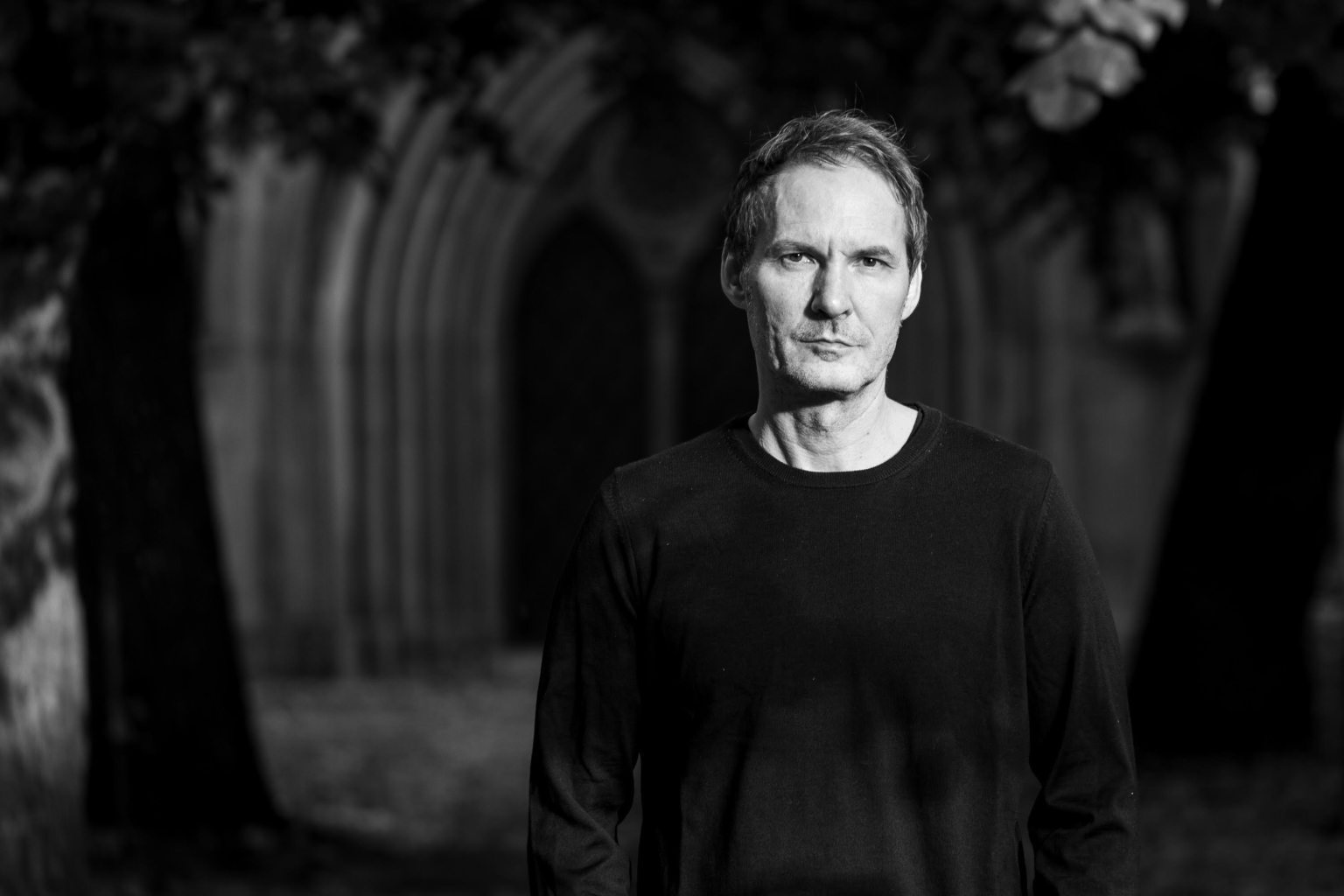
»Every moment is nothing but the uttermost end of the past. Music makes this edge wide and beautiful.«
Sven Helbig is a German composer and producer known for combining orchestral and choral music with electronic elements and a strong poetic sensibility. A self-taught musician raised in Eisenhüttenstadt, he released his debut album Pocket Symphonies on Deutsche Grammophon to critical acclaim for its emotional depth and formal precision. Helbig has collaborated with ensembles such as the BBC Singers, Fauré Quartett, and Staatskapelle Dresden, as well as with artists like Rammstein and the Pet Shop Boys. He just released REQUIEM A on Deutsche Grammophon. It is a deeply personal and reflective composition, intertwining classical Latin liturgical texts with new ones written by Helbig himself. The work revolves around themes of loss, memory, and the possibility of renewal – with the »A« in the title symbolizing Anfang (beginning) and the belief in a new start after devastation.

»Music is hope, confusion, and memory talking with each other, leading us toward futures we haven't yet imagined.«
Patrick Becker is co-director of the Wolke Verlag publishing house and co-editor of the contemporary music magazine Positionen.

»A lot is projected onto music and making music – I'm careful, singing doesn't make you more intelligent and certainly doesn't make you a better person. It's like in sexuality. A lot of things go very consciously wrong for some people. Music like sex are means of communication, people come into contact and negotiate with each other and their instruments/tools and meet themselves in it. This is also the case when I listen to music – from every conceivable genre and context, even if I always notice that as a teenager I used to play a lot of jazz guitar.«
Bastian Zimmermann lives in Munich and works freelance in the areas of music and performance. As a dramaturge, he works with artists such as the soloist ensemble Kaleidoskop, Yael Ronen and Neo Hülcker. He is editor of the German speaking magazine Positionen – Texts on Current Music and curates projects such as »Music for Hotel Bars« and the festival Music Installations Nuremberg festival. His focus is on social aspects of making music, experimental music concepts and the questioning of bourgeois structures in contemporary music. In Spring 2025 he will take over the Wolke Verlag publishing house for books on music with Patrick Becker.
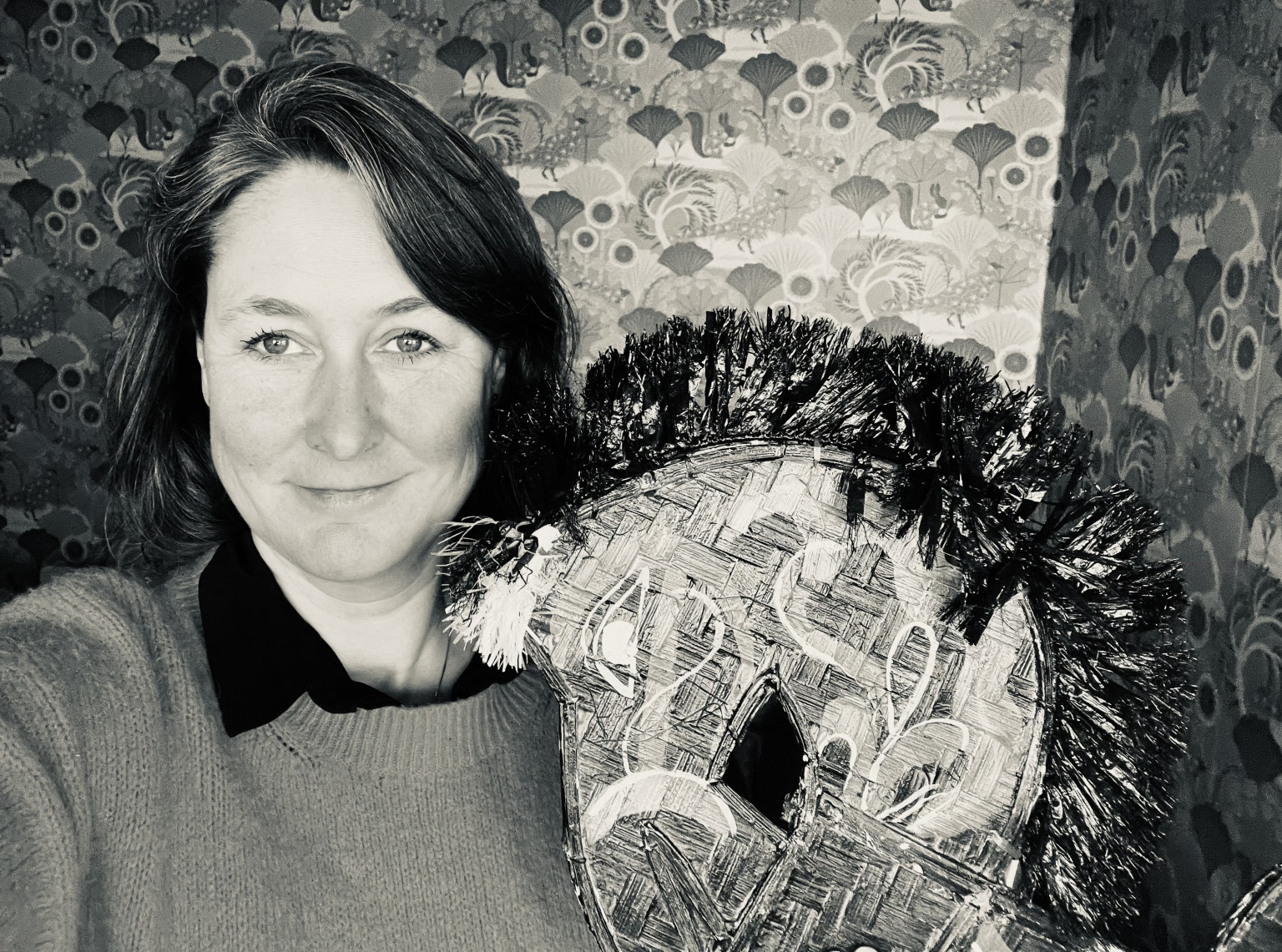
»Music to me is… my work. I've landed in the best job in the world, where a core task is to discover new music, to learn its internal logic and aesthetics, who created it, and why. I'm a music researcher and have just returned from the island of Java in Indonesia with my research partner and husband Nils, where we've been visiting experimental musicians in Yogyakarta – artists we've now followed for seven years.
One recurring theme is the trance/horse dance jathilan (or jaranan), which several of the artists have introduced us to. Jathilan is on one hand an old Javanese ritual, and on the other hand a contemporary (village) culture in full development. There is no single historically 'correct' jathilan. It's a practice that follows an old spiritual ritual, but is also open to current Indonesian influences.
The playlist consists of three tracks by Senyawa, Gabber Modus Operandi, and Raja Kirik, all of whom have incorporated the ritual into their music. The fourth track was supposed to be a 'traditional' jathilan, but as far as I know, no such recording exists on Spotify. Instead, I found a related jaranan piece that includes a dangdut song – an ultra-popular genre that is often performed as part of a jathilan event. The final track is one of the most popular dangdut songs at the moment.«
Sanne Krogh Groth is Associate Professor of Musicology at Lund University, Sweden, where she conducts research on electronic music and sound art, currently with a focus on Indonesia. Sanne was editor-in-chief of Seismograf from 2011–2019. In 2015, she established Seismograf Peer, which she is still the managing editor of.