in brieflive
05.12

Anna von Hausswolff: The Path to the Organ’s Modern Resurrection

Klara Lewis, Anna von Hausswolff
© PR
© PR

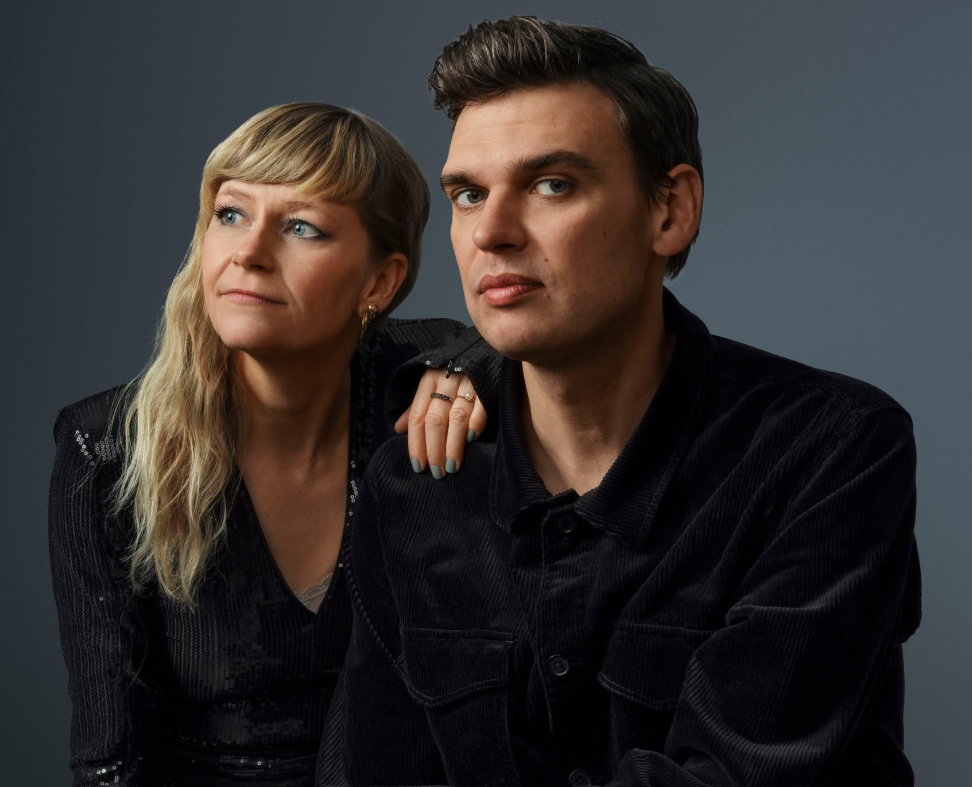
The organ, one of Christianity’s most powerful liturgical markers, runs like a red thread through Swedish artist Anna von Hausswolff’s work. But on her latest album Iconoclasts, the long, piercing drones are toned down in favour of a sharper, driving energy. It was an energy that came through strongly at Hausswolff’s concert in Vega last night, where she was, as usual, joined by a large band. The evening opened with Swedish noise musician Klara Lewis, whose mumbling cassette-loop textures set a brutally atmospheric tone from the start.

Hausswolff’s band was this time expanded with saxophone and percussion, both central on Iconoclasts and both contributing to the slight eurodance tinge that colours several tracks. Unfortunately, the saxophone was at times swallowed by the dense soundscape. Fortunately, Hausswolff’s radiant voice cut through clearly. So did the small organetto – a kind of bellows-driven organ with long pipes. It stood like a totem at the centre of the stage and was almost embraced by Hausswolff whenever she played it. A piece like »The Whole Woman« (a waltzing duet with Iggy Pop on the album) became, in concert, a touching love ode, carried by the organ’s gentle breath as its pulse.

In recent years, a number of musicians have used the organ’s distinctive resonances to wrest it free from the weight of Christian liturgy, giving the instrument an almost iconoclastic status. Despite a slightly muddy sound mix, Hausswolff’s concert was a clear example of this contrast – still deeply rooted in ecclesiastical connotations, yet now an accomplice in large-scale modern productions and a central instrument on major stages.

English translation: Andreo Michaelo Mielczarek

© Mads Smidstrup, Aros

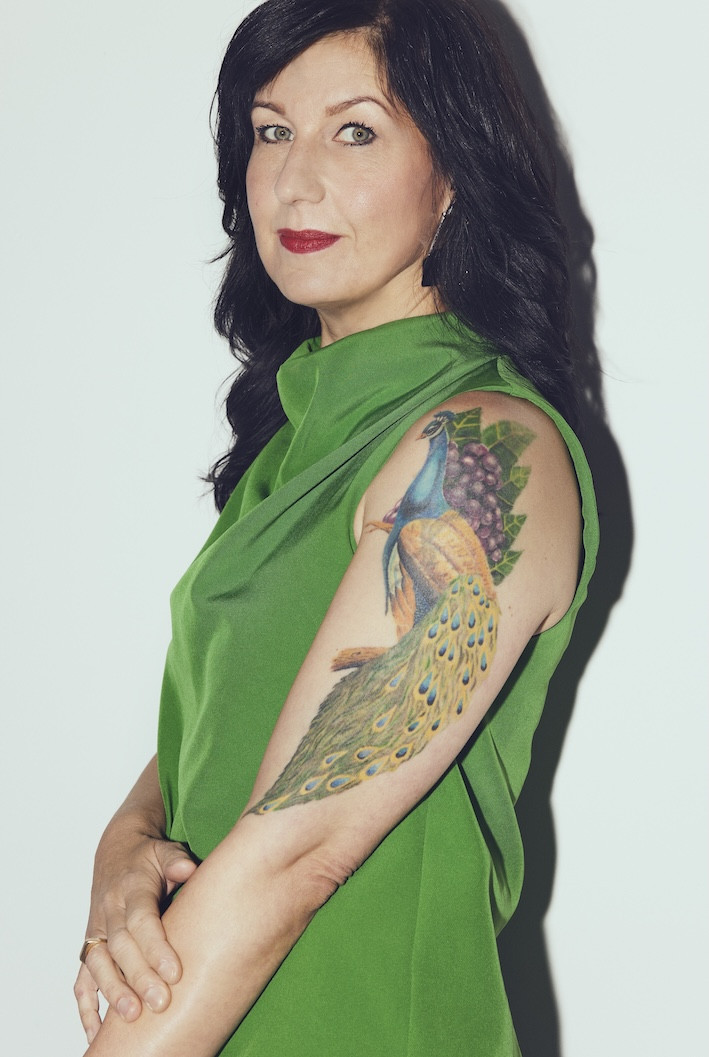
»Music for me is medicine, comfort and a kick in the ass. Community, joy, a vent. Poetic political compass. And over the years, music has also become a kind of life chapter, linked to specific places, times and people.«

Marie Arleth Skov is a Danish art historian who has lived in Berlin since 1999. She works at the intersection of art, sexuality and music, with a primary historical focus on surrealism and the punk movement in the 1970s and 1980s. Her book Punk Art History was published by Intellect Books (UK) in 2023. Most recently, she has curated the exhibition UNRULY. The Body in Punk, which can be seen at Aros Kunstmuseum in Aarhus in the autumn of 2026. The catalogue for the exhibition is published by Marrow Press.

© Guannan Kang
© Guannan Kang

自由即兴创作比性爱更好! – »Free improvisation is better than sex.« According to drummer Kresten Osgood, the saying is attributed to Confucius. Whether the ancient Chinese philosopher ever uttered those words is doubtful. But the quote perfectly captures the spirit of one of the most unusual events at this year's Copenhagen Jazz Festival.

From 7–11 July, pianist Søren Kjærgaard and drummer Kresten Osgood will take over CC Taste on Amagerbrogade, performing daily from 2–4 pm among diners, dim sum and steaming hot pots.

in briefrelease
19.06

When the Machine Starts Singing

Soli City: »Poetics of a New Estate«
© Clement Mogensen
© Clement Mogensen

With Soli City, the boundary between the organic and the synthetic is almost impossible to discern. What first appears to be an ordinary piano suddenly slips into a dizzying glissando. Soli City resembles a cyborg – half cello, half computer – fusing strings and voices into a seamless digital synthesis. The result is a science-fiction dream interrupted by surreal monologues and abruptly punctuated by the shrill click of a camera shutter.

That percussive camera-flash motif runs throughout both PARADOXE (2024) and the new album Poetics of a New Estate. Here, Harald Bjørn, the composer behind Soli City, further develops the sonic language introduced on its predecessor. Whereas PARADOXE staged the encounter between acoustic and digital sounds as an explicit confrontation, the two worlds now feel far more deeply integrated. Even the album's abrupt shifts seem entirely natural, as on »Rooms & Walls«, where a slurred vocoder and delicate string textures give way to an insistent drum groove.

Soli City's music embodies a distinctive form of self-reflection. As acoustic sounds bend, fracture and are interrupted by those recurring electronic flashes, we are reminded of Bjørn's remarkable ability to compose genuinely innovative music. Just as the most visionary science fiction remains rooted in the realities of its own time, every musical breakthrough carries echoes of the past. Soli City embraces these nostalgic resonances only to twist them into unfamiliar shapes.

With deceptively simple means, Poetics of a New Estate dissolves the boundary between nostalgia and contemporaneity. Like a true cyborg, Soli City reveals the divide between the digital and the acoustic to be less a fundamental opposition than an oddly arbitrary construction.

© Laura Cecilie Krogtoft

»Music, for us, is a fusion of different consciousnesses into a single shared focal point.«

The band Selvhenter was founded in 2010 by trombonist Maria Bertel, saxophonist Sonja LaBianca, violinist Maria Diekmann, and drummers Jaleh Negari and Anja Jacobsen. In 2017, Maria Diekmann left the group, and Selvhenter continued as a quartet.

Selvhenter’s sound is driven by a deep fascination with sonic textures, rhythmic displacements and polyrhythms, acoustic and electronic melodies, hard-hitting compositional choices, improvised beauty, and a sheer joy of creating and performing music. Selvhenter has played concerts both in Denmark and internationally. The group is also the nucleus of the artist collective Eget Værelse, which houses the members’ solo projects as well as collaborations such as Valby Vokalgruppe, SOLW, Nina Garcia & Maria Bertel, and G.E.K.

© PR

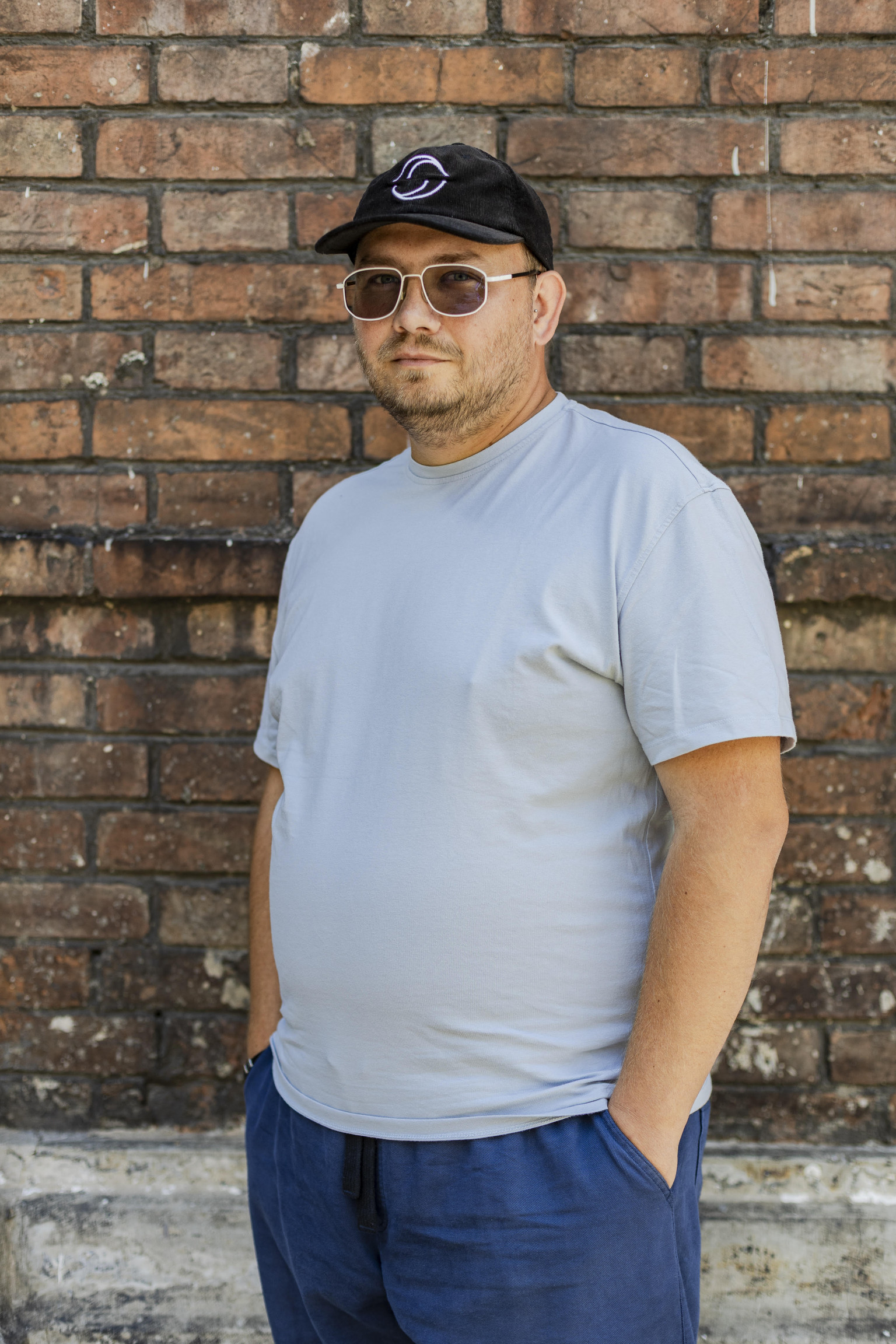
»Music for me remembers.«

Håkon Guttormsen is a Norwegian composer and trumpeter living in Copenhagen. He is educated at the Royal Danish Academy of Music and the Royal Academy of Rhythmic Music. He primarily composes scores for ensembles as well as music drama and opera. He is currently working on a work for solo violin and electronics for ILK Music’s concert series during CPH Jazz 2026 and on his first symphonic work, which will premiere at the academy in 2027. He is a member of nyMusik’s composer group in Norway and a board member of UNM Denmark.