












in briefrelease
28.02.2025

A Clammy Kawaii Crescendo

Keiichiro Shibuya: »ANDROID OPERA MIRROR«
© PR

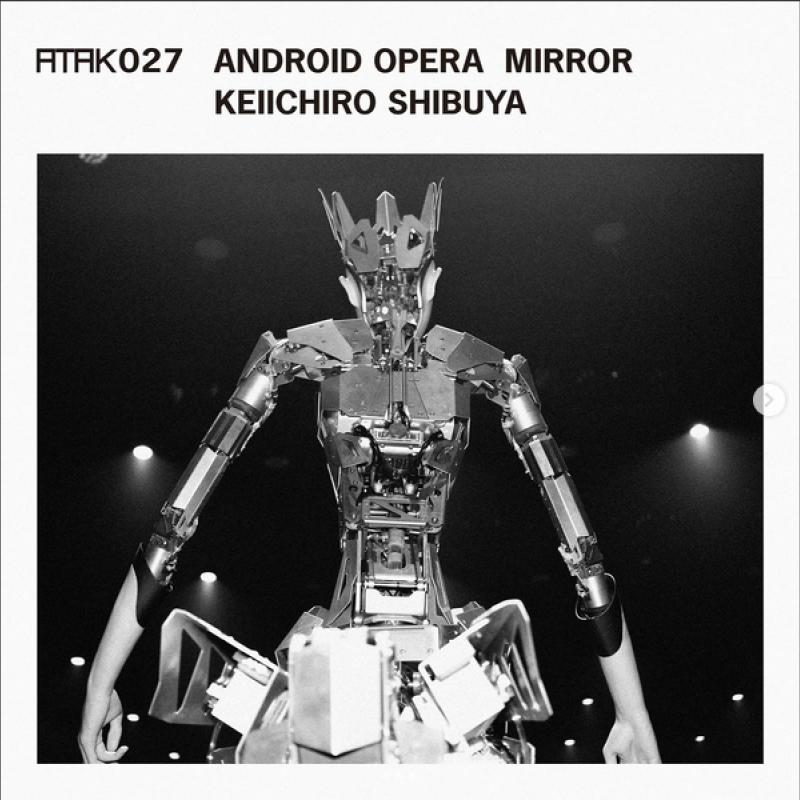
If the Japanese composer and musician Keiichiro Shibuya’s new album ANDROID OPERA MIRROR were to be summed up in a single word, that word would be »bombastic«. From the very first track, »MIRROR«, the listener is bombarded with gliding synth violins, brass, and a robotic voice intoning existential questions – ironically written by an AI.

There is something charmingly awkward about Shibuya’s pop-oriented, over-the-top compositions and the android vocal’s cloying kawaii factor. But before the album is halfway through, the constant pomposity begins to wear thin. »On Certainty«, with its ever-present strings and densely packed arrangements, rarely gives the music – or the listener – room to breathe. Shibuya and his android voice are saying an awful lot all the time, and it is so overwhelming that very little of it actually carries weight. When everything feels like an epic crescendo or the expected release from one, the effect is lost.

Taken individually, several of the tracks are otherwise quite compelling: »Midnight Swan (Android Opera ver.)«, which sounds like the opening theme to a dark and romantic anime, and the closing track »Scary Beauty (Vocal and Piano ver.)«, which shines precisely by trimming away the excess and focusing on the emotional core of the composition – an impact made far stronger by the simpler instrumentation. When the listener is not constantly overwhelmed, the romance, melancholy, and existential questions are allowed to make an impression. Unfortunately, ANDROID OPERA MIRROR is a listening experience that frustrates through its lack of subtlety – something it would otherwise have benefited greatly from.

English translation: Andreo Michaelo Mielczarek

in briefrelease
23.01.2022

Finnish Space Travel

Tomutonttu: »Hoshi«
© Tomutonttu: »Hoshi«

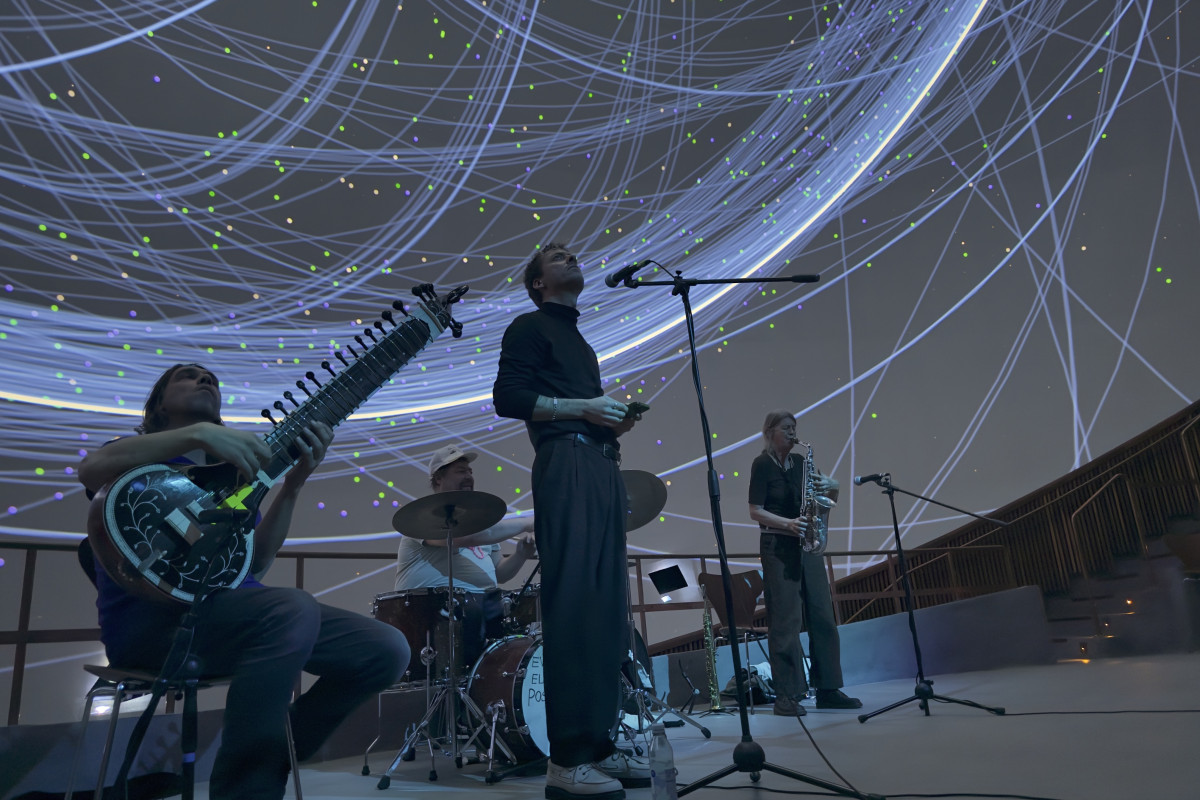
The Finnish multimedia artist Jan Anderzén has, with the album Hoshi, released under the solo moniker Tomutonttu, created a true little star. Not only because »hoshi« literally means »star« in Japanese, but above all due to the music itself. There is something cosmic, yet infinitely minute, about the sonic worlds Anderzén conjures—like a galaxy reflected in a puddle, or a space journey in a rocket carved from a hollow tree trunk. Synths emit busy, warm blips and bloops, while ultra-short vocal and instrumental samples create a recognizable blur. At once artificial and organic – soft, rounded, jagged, crackling.

Anderzén approaches sound with a playfulness I simply adore. His music is strange in an incredibly comforting way. It places me in a kind of colorful, trance-like state, only interrupted when, several times over the course of the album, I find myself smiling in delight at a particularly great sound. The synths on »Katse osuu sähköön!« The choral samples on »Kesä oli äkkiä ohi!« Milo Linnovaara’s flute on »Malta lausua ‘AH’!« And many more. Hoshi is an album packed with microscopic moments that together form a frayed, exploding, radiant, idiosyncratic whole—a stellar moment of just under 38 minutes.