



© Samantha Riott
© Samantha Riott

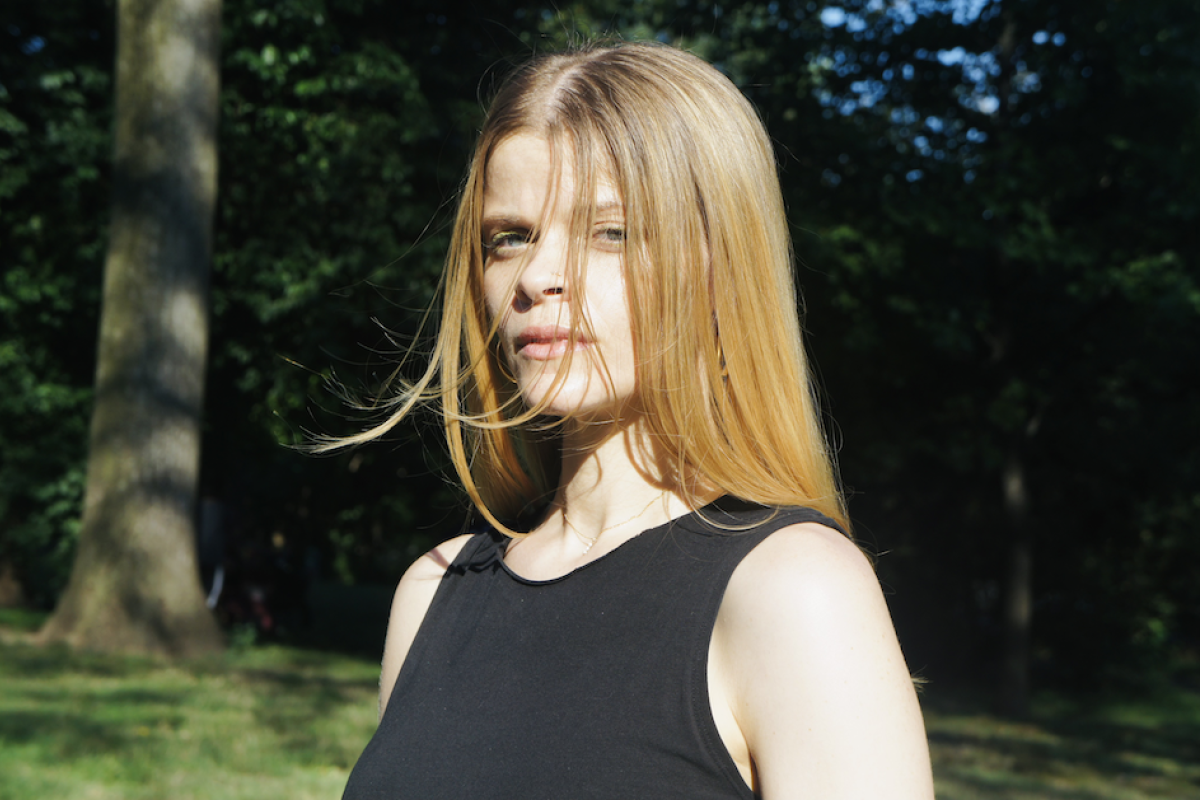
So dextrous a musician is the flutist Laura Cocks that, at shows, their instrument occurs to the eye as merely another limb. A powerhouse New York-based collaborator and interpreter within new classical and experimental music, notably as director of the leading-edge new music group TAK Ensemble, Cocks now releases their first solo statement of improvised compositions with FATHM, an acrobatic intertwining of flute and voice that nods to strange and fleeting visions: among them, birds, string, seeds between the teeth. On FATHM, Cocks applies all the facility of their work as an interpreter of commissioned works – on extensive display in their last solo venture, 2022’s field anatomies – towards the development of an uninhibited, yet highly focused musical language. 

If the album’s mysterious tracklist reads as a sort of cryptogram, then listening to FATHM evokes a process of decoding, parsing the bounds between vocalization and instrument. The album’s opening track, »A thread held between your fingers«, finds Cocks as their own flickering shadow, simultaneously playing the flute and squealing in tones just slightly removed in pitch. »Illinois« is then reclaimed from Sufjan Stevens’ relentless grip as a furious mumble of half-blown notes with underlying trickles of voice. Cocks experiments further with these hoarse timbres on the three infinitive tracks: »To beget« and its later variations »To outstretch« and concluding track »To fly«, which trace the evolution of a dancelike triplet motif. »FAVN«, apparently a faithful depiction of an elephant with severe sleep apnea, may reconcile itself to the sensitive listener through its sheer commitment to the grotesque, while »A seed sucked between your teeth«, orbiting languidly around a major ninth, invites more celestial considerations. »A marsh wren« might take the titular bird as a point of departure, but it quickly imagines a species of its own, singing a song of bustle and snaps and smacks. On »YARN«, Cocks suggests another sort of animal song by making a counterpoint of mews and growls. The flutist’s skill with balancing these peculiar hybrids ultimately distinguishes FATHM as much as Cocks’ ferocious energy; this is an album as happy to shout as it is to slither. 

© Ditte Capion

»For me music is an irregular yet life-long event that requires constant attention in the form of private preparation, rehearsals with others, and performances to audiences.« 

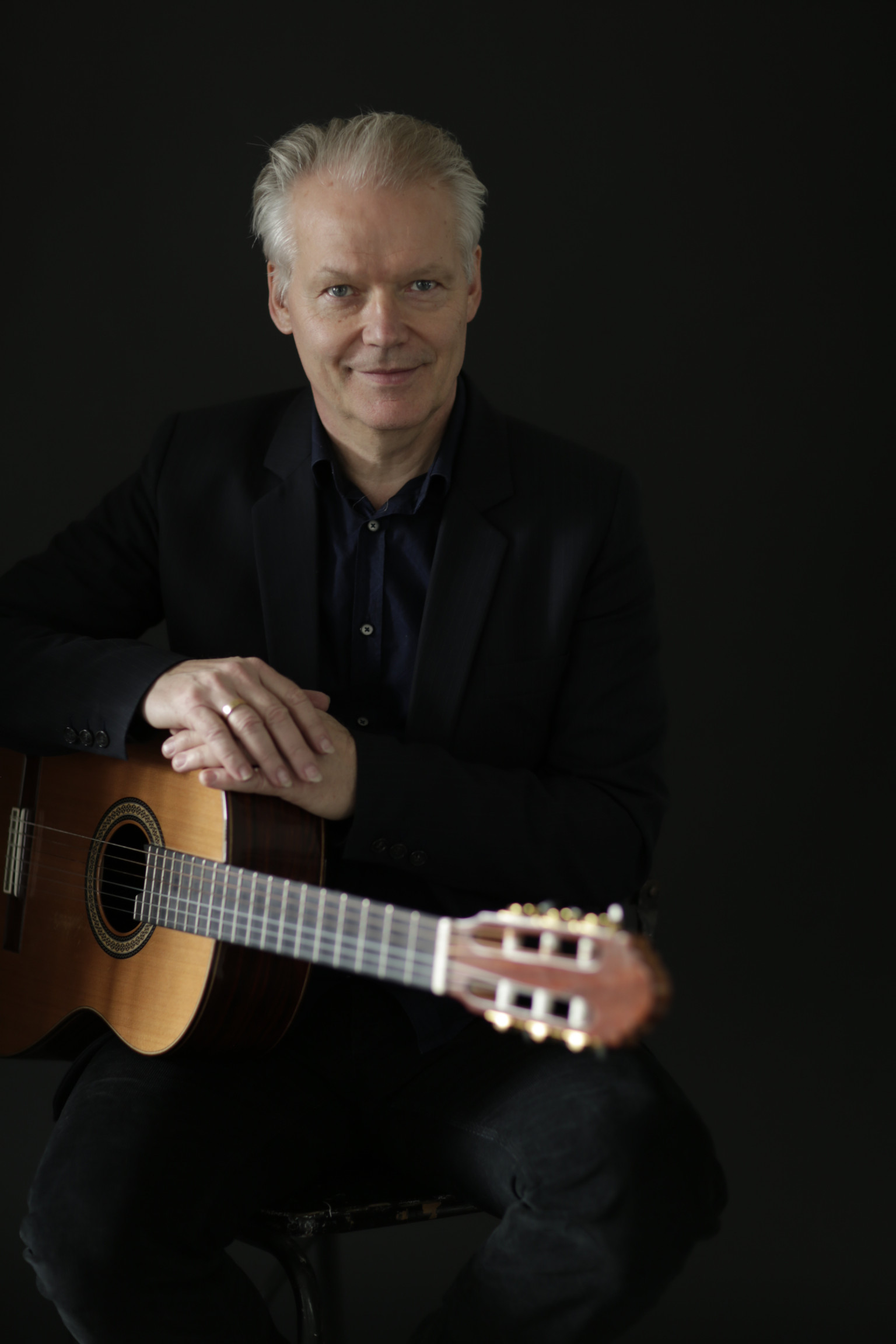
Theater of Voices' founder and artistic director Paul Hillier is originally from England and was educated there Guildhall School of Music and Drama in London. During his career, he has worked as a conductor, singer, teacher, editor and writer. In addition to being the founder of the legendary Hilliard Ensemble, he has been chief conductor for i.a. the Estonian Philharmonic Chamber Choir, is artistic director of The National Chamber Choir of Ireland, and has been chief conductor of Ars Nova Copenhagen since 2003. Paul Hillier has completed more than 200 CD/DVD releases and has won two Grammys. Honors include OBE (Order of the British Empire), The Order of the White Star from Estonia and the Knight's Cross. This week Paul Hillier turns 75. 

In briefrelease
08.02.2024

Behind the Words

Alexander Tillegreen: »In Words« 
© PR
© PR

One of the most mysterious – and at times boundary-pushing – interviews ever captured on tape is Meatball Fulton’s 1967 interview with Pink Floyd’s Syd Barrett. Filled with broken sentences, incongruous word combinations, questions and answers that seem to bear no relation to one another, and pauses that feel endless, the interview pushes the limits of what can meaningfully be called communication at all. »Your impression of me… which you must have… would you care to tell me? And be like absolutely honest… Do you have one?« the interviewer asks at one point. »In words?« Barrett replies.

In Words is also the title of multidisciplinary artist Alexander Tillegreen’s debut album, whose closing composition samples a full seven minutes of the interview. It is not difficult to understand what Tillegreen hears in this peculiar exchange. For someone who, in his artistic explorations of psychoacoustics and phantom words, has consistently probed sound’s possibilities and limitations as a carrier of meaning, the interview must appear as a rather sensational example of the illusory nature of language.

None of this would, of course, be of any interest if the music were not as strong as it is: richly atmospheric, detailed, texturally varied, emotionally potent, and filled with pleasing, warm synth tones that recall 1970s German Kosmische Musik. The fact that a large part of the compositions originate in earlier installation works often leaves me with the strange feeling that there is a dimension or context I do not fully grasp – which, of course, is entirely in keeping with Tillegreen’s spirit.

© PR

Phil Battiekh (Basel, Switzerland) has been a Mahraganat  DJ and producer for over a decade. He is one of the first to dedicate himself to Mahraganat outside of Egypt. In addition to his most popular Mahraganat mixes on Soundcloud (over 450K streams worldwide),  he released the acclaimed Cairo Concepts compilation in 2019. Featuring DJ Plead, DJ Haram, Alaa Fifty, Nustaliga and others, Cairo Concepts contextualises the impact and developments of the Mahraganat scene and examines the way certain artists have appropriated Mahraganat for club scenarios.  

Mahraganat (Egyptian Arabic: مهرجانات( , which literally means »festivals«, is a mix of Egyptian Shaabi, electronic dance music, rap and trap. It is characterized by percussion-heavy rhythms,  massive bass and loads of autotune. Phil Battiekh is curating the SWANA night – a joint event by pantropical, turkis, and Volume Village, which takes place at the latter in Aarhus. Next to his own set, Phil will  also have a role as Wezza Montaser's DJ. 

Bill Frisell. © Carole D'Inverno

Bill Frisell’s career as a guitarist and composer has spanned more than 40 years and many celebrated recordings. From Aaron Copeland and Charles Ives to Bob Dylan and Madonna. His mantra is simple: »I like when it's impossible to tell at first if something is black or white, or country or blues, or whatever«. 

Born in Baltimore, Bill Frisell played clarinet throughout his childhood in Denver, Colorado. His interest in guitar began with his exposure to pop music on the radio.