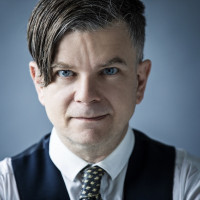
Simon Steen-Andersen
66




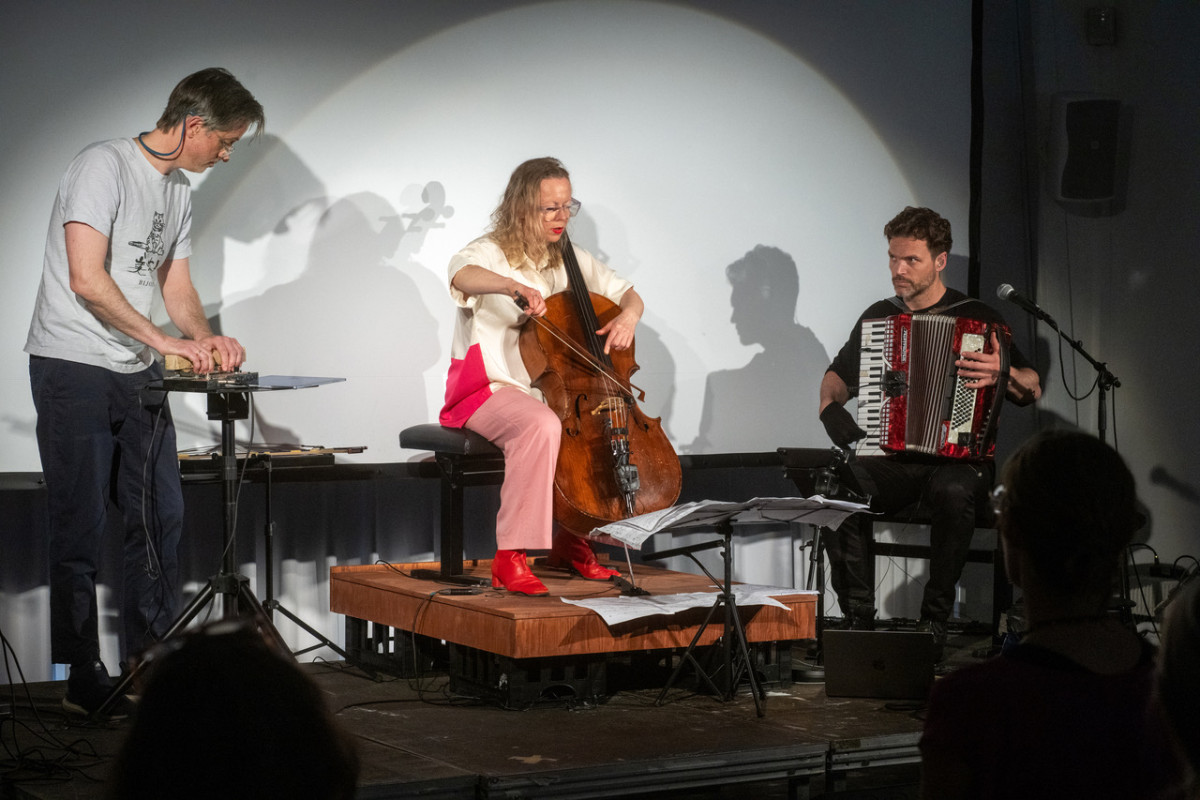
New Sounds at Louisiana is an initiative in which the Louisiana Museum of Modern Art has invited the record label Dacapo and the music publisher Edition S to curate concerts featuring living composers. Simon Steen-Andersen was the first composer in the series, and he seized the opportunity to assemble a programme that was not only overwhelming and exhilarating, but also deeply unsettling. Lasting an hour, the concert unfolded as a continuous sequence in which each work flowed seamlessly into the next, forming a single extended statement of at least part of the composer’s artistic practice and philosophy.
Combining video and live performance, the concert served as a manifestation of several of Steen-Andersen’s key artistic strategies. Central among them are techniques of estrangement and defamiliarisation, exemplified by Asthma (2017) for accordion, air pumps, and video, a work that explores and interrogates human breathing in all its positive and negative dimensions. Amid the many grotesque and humorous scenes – accompanied by Håkon Stene’s brilliant Foley-style soundtrack of air noises, sound effects, and spoken commentary – a brief clip of brutal police violence suddenly appears. In it, an officer methodically sprays pepper spray into the faces of handcuffed demonstrators. In that instant, everything else no longer seems quite so funny, and the crooked smile freezes.
The concert was a veritable sensory bombardment. Presenting all the works attacca undoubtedly created a powerful sense of flow, but it also left the audience almost saturated with impressions. Even so, the subsequent conversation between Simon Steen-Andersen and music critic and author Thomas Michelsen felt far too brief. Yet the composer succeeded in making his point: everything he does, he said, is a form of »deadly serious play.« Exactly.
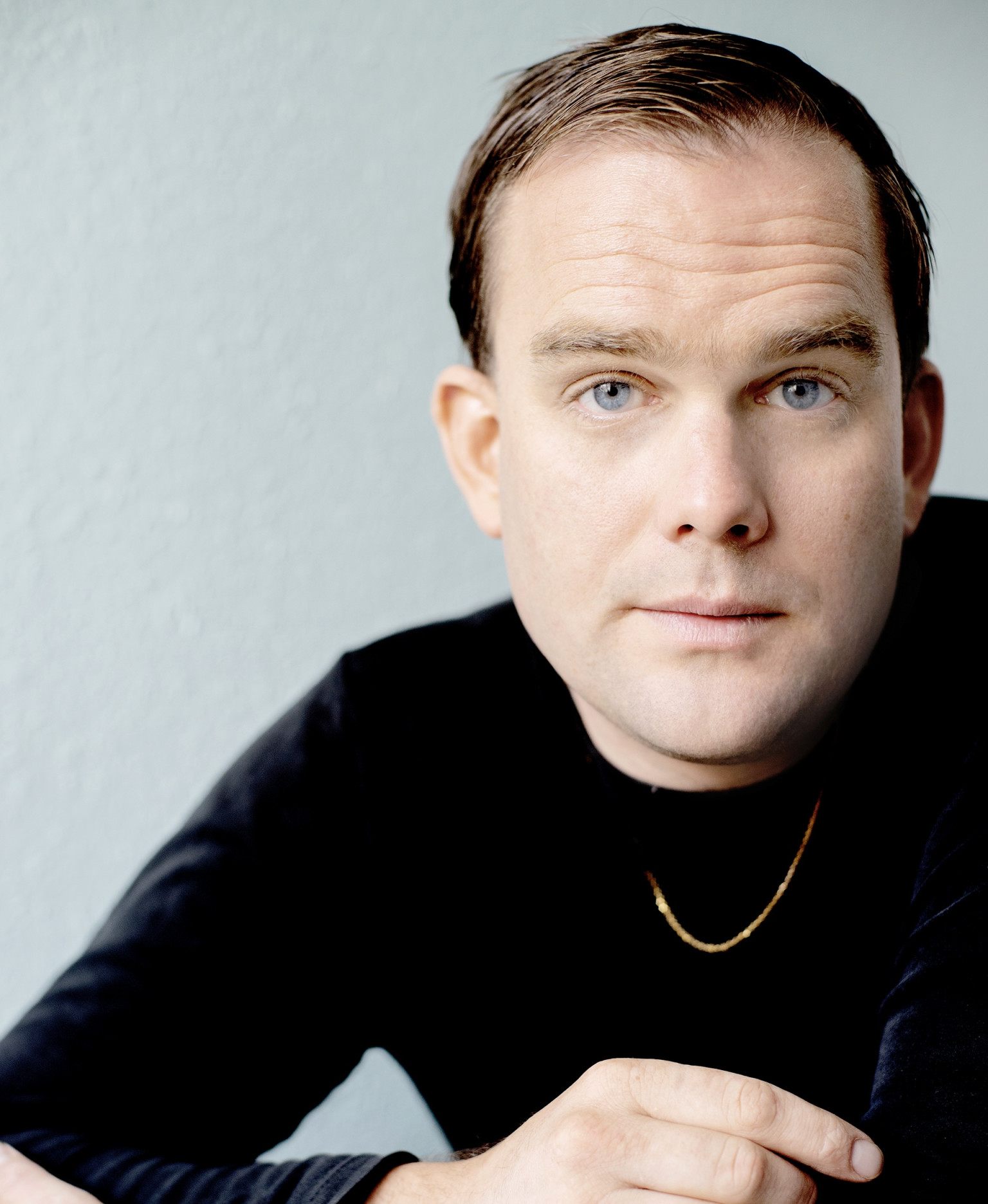
»For me, music is a non-figurative process that cannot be definitively categorised.«
Kristoffer Raasted graduated as a visual artist from the Media School at the Royal Danish Academy of Fine Arts in 2018 and is currently completing a PhD in practice-based and artistic research. Raasted has been an artist in residence at the Danish Institute in Rome and a visiting researcher at UdK Sound Studies in Berlin as part of his PhD.
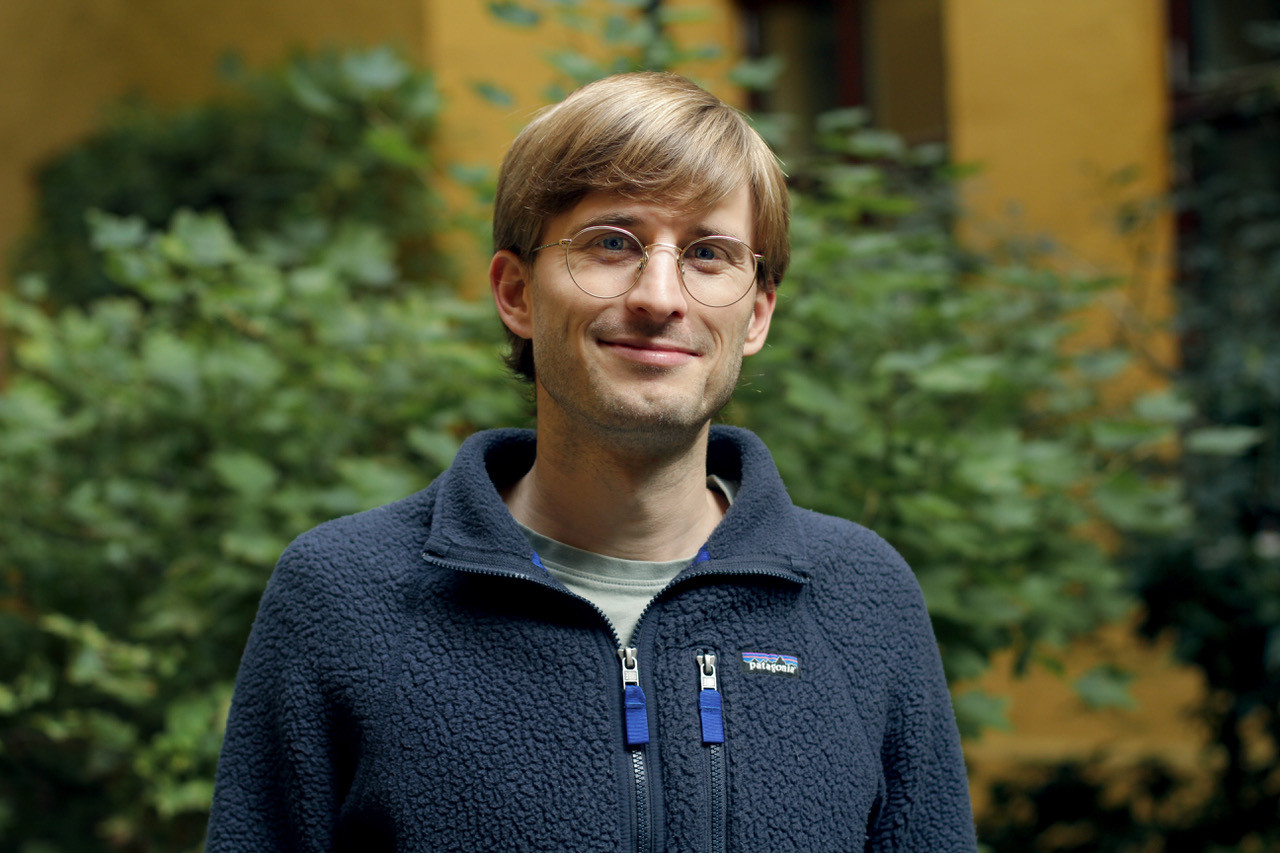
»When I search for new music, I search for sound that evokes images in my mind. It is fuel, a gateway to emotion, and my most important writing companion. When inspiration lapses, music is the tool that always jumpstarts it.«
Iain Forbes is a Scottish/Norwegian film director based in Oslo. He has studied film directing at Nordland College of Art and Film and the Norwegian Film School. His graduation film Revisited won a Student Academy Award in 2023. He has previously directed short films such as Snowman (2015) and Semper Fi (2017). His latest short After Dark won Best International Short Film at the Oscar-qualifying Foyle Film Festival in 2024
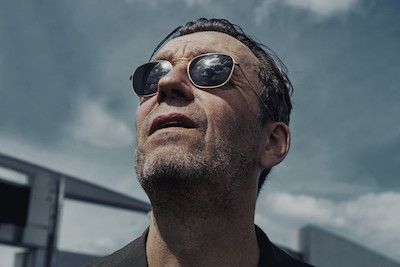
»Music, to me, is a companion through life, a premise, an excuse, a mystery, an explanation, a point of departure. It is old ideas, overlooked treasure chests, new angles, long concerts, doubt and conviction. It is words, tones, cracked voices, different points of departure, bass in the diaphragm, falsetto in the hair, challenges, rewards, and love.«
Nikolaj Nørlund made his solo debut with Navnløs (1996), an interpretation of poems by Michael Strunge, and released Nye Optagelser (1997) the following year, his first Danish-language singer-songwriter album. He has since worked broadly across music and poetry and is behind around 20 releases, both solo and in various band constellations. Nørlund’s projects range from collaborations with Copenhagen Phil on two orchestral albums, created together with author Naja Marie Aidt. His most recent release is the single »Englenes Park (nu ikke saa dark)«, the forerunner to the album Himlen skiftet ud, due for release at the end of November. In addition to his own work, Nørlund has, through the record label Auditorium, produced and released a number of Danish artists, including Niels Skousen, Ulige Numre, Jens Unmack, I Got You On Tape, and Martin Ryum. He was previously a member of Trains And Boats And Planes and periodically works with the English-language project Rhonda Harris. Nørlund has received a Danish Music Award (2003) and a Steppeulv (2006), both as Producer of the Year, as well as the Niels Mathiassen Cultural Award (2012).
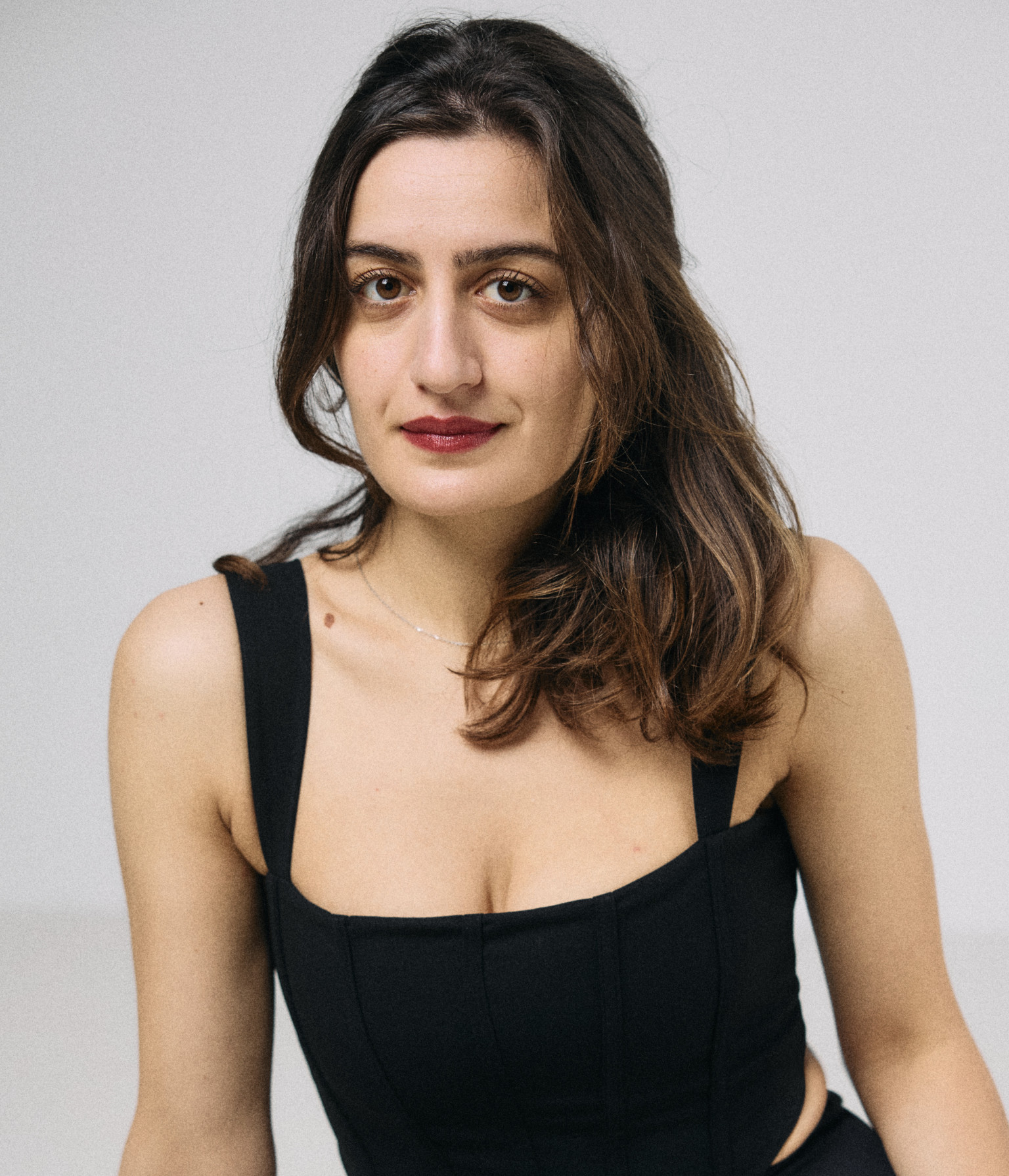
»Music and sound for me is a language, the most present and fleeting one. It’s something that passes through your heart and becomes the past in a second. Music amplifies every emotion, love, happiness, anger, sadness a thousand times over, making me feel everything more deeply and sensitively.«
Sophia Sagaradze is a sound artist, composer, and performer from Georgia, based in Denmark. She experiments with space, multichannel electronics and audio-visual installations. Sagaradze is interested in creating works that explore the boundary between external and internal experiences of space. She holds a bachelor’s degree in classical composition from Tbilisi State Conservatory and a master’s degree in electronic composition from DIEM Royal Academy of Music, Aarhus/Aalborg. In 2022, she received the Carl Nielsen and Anne Marie Carl-Nielsen Foundation’s Talent Award in Composition. Sagaradze has performed in several countries, received commissioned works for ensembles, performed live and created audio-visual installations. She is a founder and artistic director of Aarhus Sound Association (Aarhus Lydforening), Project leader at ROSA and a lecturer at the Royal Academy of Music, Aarhus/Aalborg.
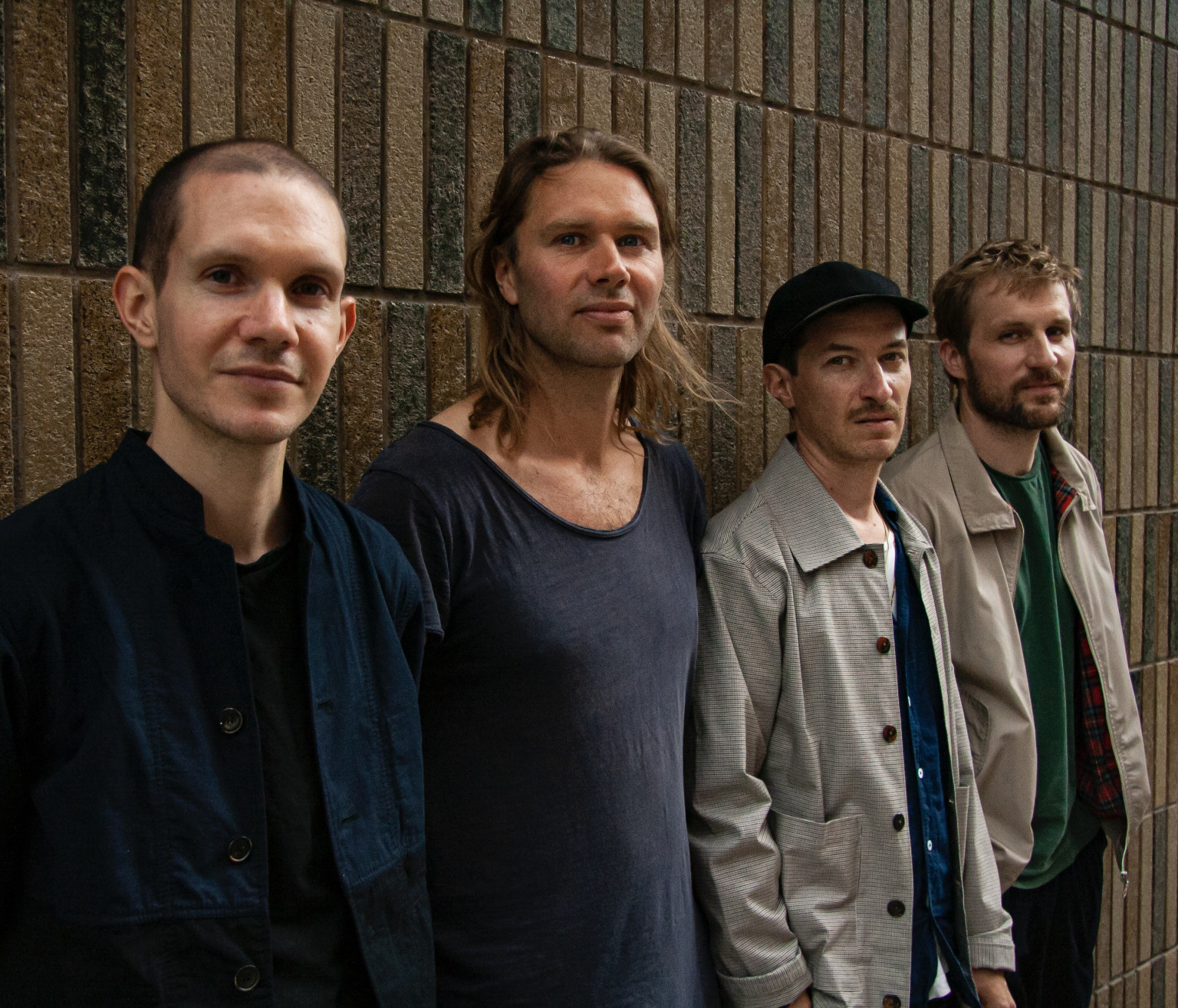
»Like all art, music is a language for emotions, dreams, and the search for meaning—but for us it is just as crucial that music is a path to community.«
Girls in Airports is a Danish instrumental band with a palette that draws in particular on jazz, electronic music, and sounds from distant horizons. Since their debut album in 2010, they have created a sonic universe in which saxophones, synths, and pulsating grooves meet in a collective and dreamlike expression. Recently, the band has focused on artistic collaborations with, among others, Teitur and Aarhus Jazz Orchestra, and they are now on their way with a new album created in collaboration with the string trio Halvcirkel.