in briefrelease
09.03

Everything a Snare Drum Can Do

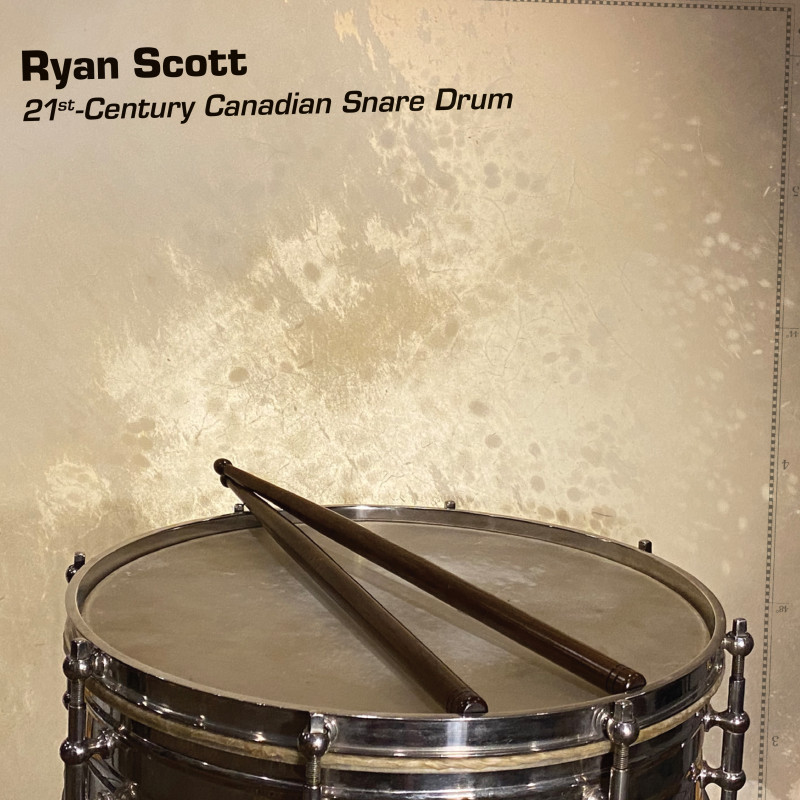
Ryan Scott: »21th-Century Canadian Snare Drum«
© PR
© PR

Let’s be honest: when you think of composed music for solo instruments, the snare drum is probably not the first thing that comes to mind. It may be the noisiest member of the percussion family and has been setting the volume level in everything from classical music to pop for decades. That’s why I pricked up my ears when the Canadian percussionist Ryan Scott announced an entire album of works for snare drum – written by 14 different composers. A full hour and a half of music, no less. And yes, that sounds like a lot for a record that mainly consists of a single drum. But there is definitely something to discover here.

The opening, Andrew Staniland's »ANTIGRAVITYDRUM«, blends free jazz with inspired use of percussive vibraphone, while Beka Shapps’ »Skinscape IV« sends the drum strokes through ring modulation and extensive sound processing, bringing us close to musique concrète. Christina Volpini’s »only ghost« slips into horror territory with march-drum-inspired bursts and ghostly use of the snare drum’s high register, while Amy Brandon’s »Time and Effort« almost becomes a demonstration of the instrument’s technical possibilities.

Fourteen works over ninety minutes is a substantial mouthful. The snare drum’s limited tonal vocabulary means that you occasionally lose focus, even after several listens, and the contrast between drum strokes and silence is repeated a little too often. That said, Ryan Scott and the composers get just about as much out of what is essentially a glorified marching drum as one could hope for. I was both entertained and intrigued along the way. As an experiment, the idea is strong – but in the long run also a bit too insistent for me to return to often. Still, one should not underestimate the versatility of a good old-fashioned snare drum.

English translation: Andreo Michaelo Mielczarek


© Søren Fiil Vesterbak

»Music for me can do something very special. It brings people together in shared experiences, but it can also be a very personal mental tool. Personally, I use music all the time – to create energy on a run, to create concentration for work tasks, or to find peace in stressful situations, such as in the dentist's chair. And of course to create joy and a good mood. Music is always an essential ingredient in good memories.«

Rikke Andersen has been at the helm of SPOT Festival since January 2024. With a background as a venue manager and booker at Fermaten in Herning, she has solid experience from both the creative and organizational side of the music industry. She has previously worked in the record industry, been deeply involved in marketing and communication, and has had a hand in several cultural projects.

© Mike Højgaard

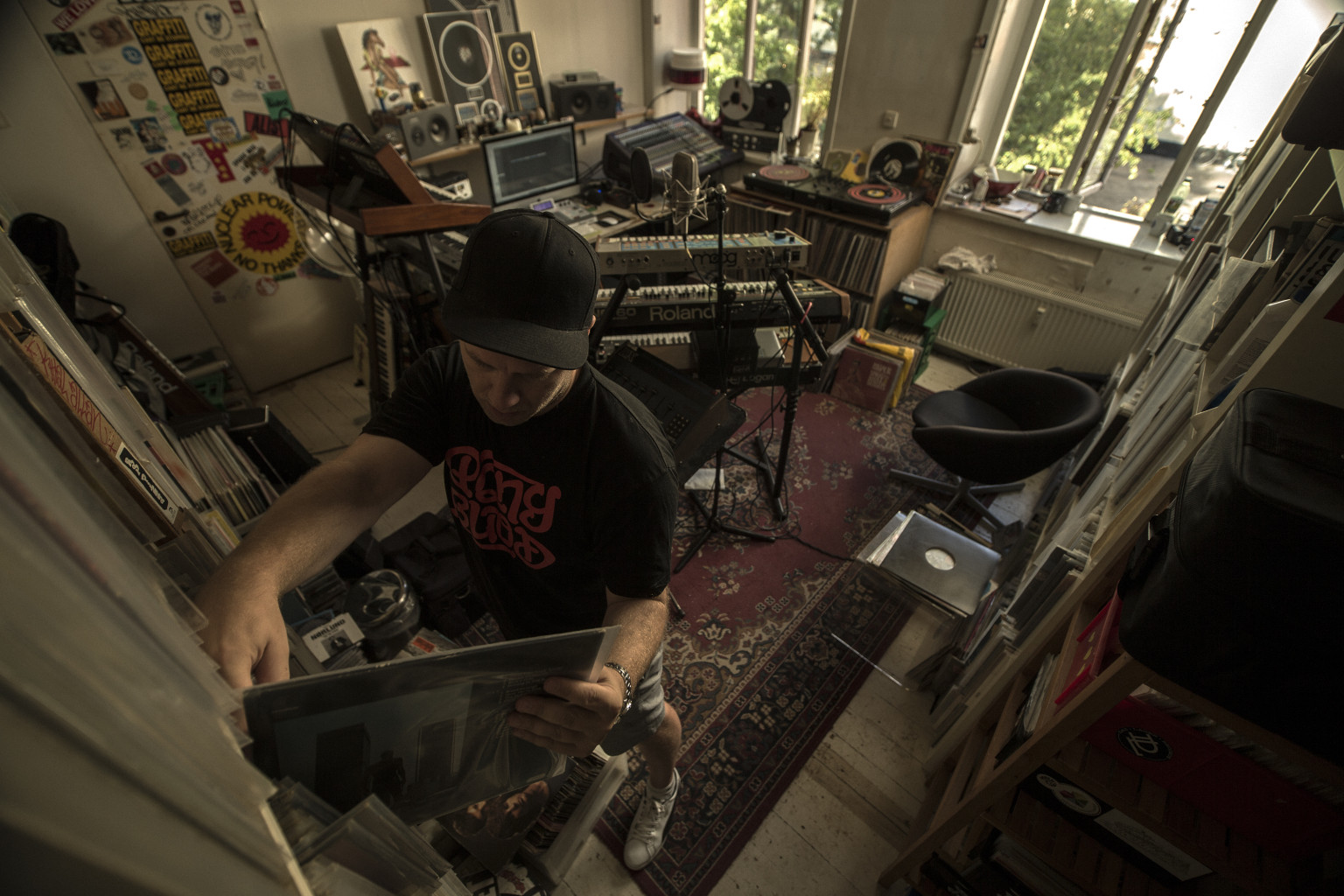
»Music, to me, is an open road to adventure, where anything can happen. Music, to me, is a freedom that holds all emotions. Music, to me, is the most private thing and something many can share. Music, to me, is incomprehensible, enlightening, entertaining, religious, philosophical, vibrating, magical, and the strongest force I know. Music, to me, is something that makes me aware of life. Music, to me, is a free bird.«

Gustaf Ljunggren is a Swedish musician and composer based in Copenhagen. His works are often driven by a desire for introspection and immersion in a noisy world. In 2026, Gustaf Ljunggren releases the album Along The Low Road, created in collaboration with the Icelandic musician Skúli Sverrisson. Ljunggren has contributed to hundreds of releases as an instrumentalist and arranger, and over the years he has worked closely with Emil de Waal, CV Jørgensen, Steffen Brandt, Sofia Karlsson, DR Pigekoret, Eddi Reader, Anders Matthesen, and many more. For the broader Danish public, Gustaf became a familiar face when he served as bandleader on Det nye talkshow on DR1, hosted by Anders Lund Madsen. Since 2011, Gustaf Ljunggren has been the driving force behind SPOT Festival’s concert series Naked.

© Ida Sofie Skov Larsen

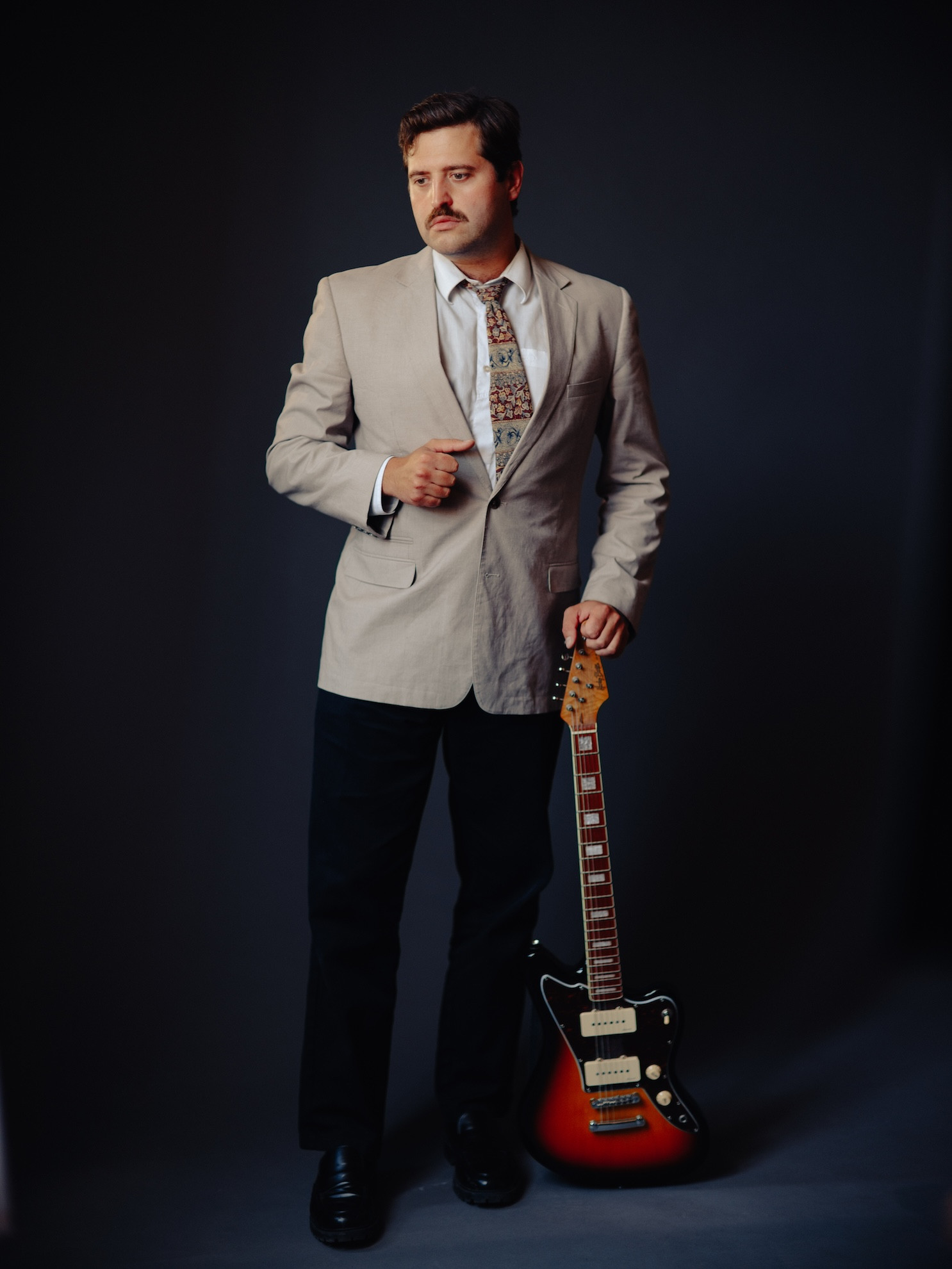
»Music for us is a way to create a connection and community with other people.« 

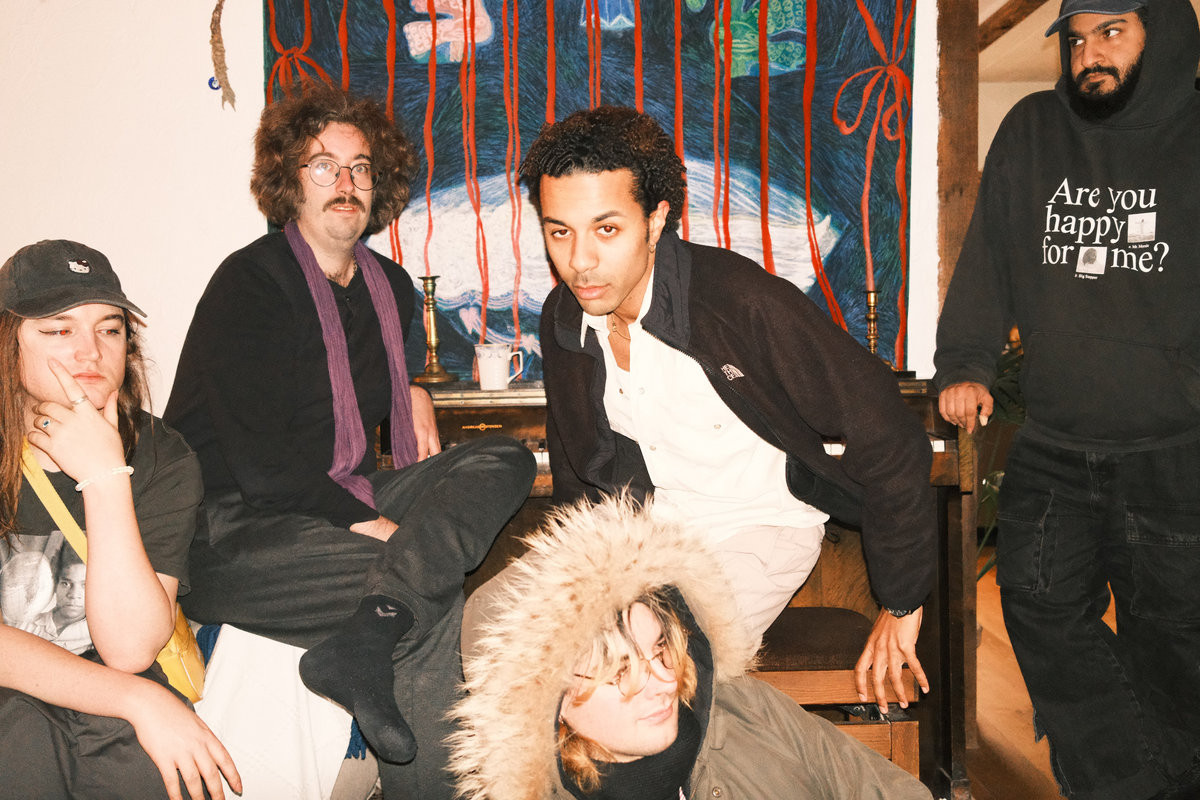
Although Schæfer has only released three singles so far, the band has already made a mark on the Danish music scene. The duo and their friends, Anna Skov (vocals) and Emil Mors (keyboards), write socially relevant, subtle and humorous songs that point fingers at both the outside world and themselves.

in brieflive
13.03

I Am an Empty High-rise, Where the Pain Sits in Every Wall

Ensemble Lydenskab, Martin Ottosen, Ulla Bendixen, Gerd Laugesen & residents at the social-psychiatric housing facility Sønderparken: »Everyone Leaves Traces«
© Phillip Jørgensen
© Phillip Jørgensen

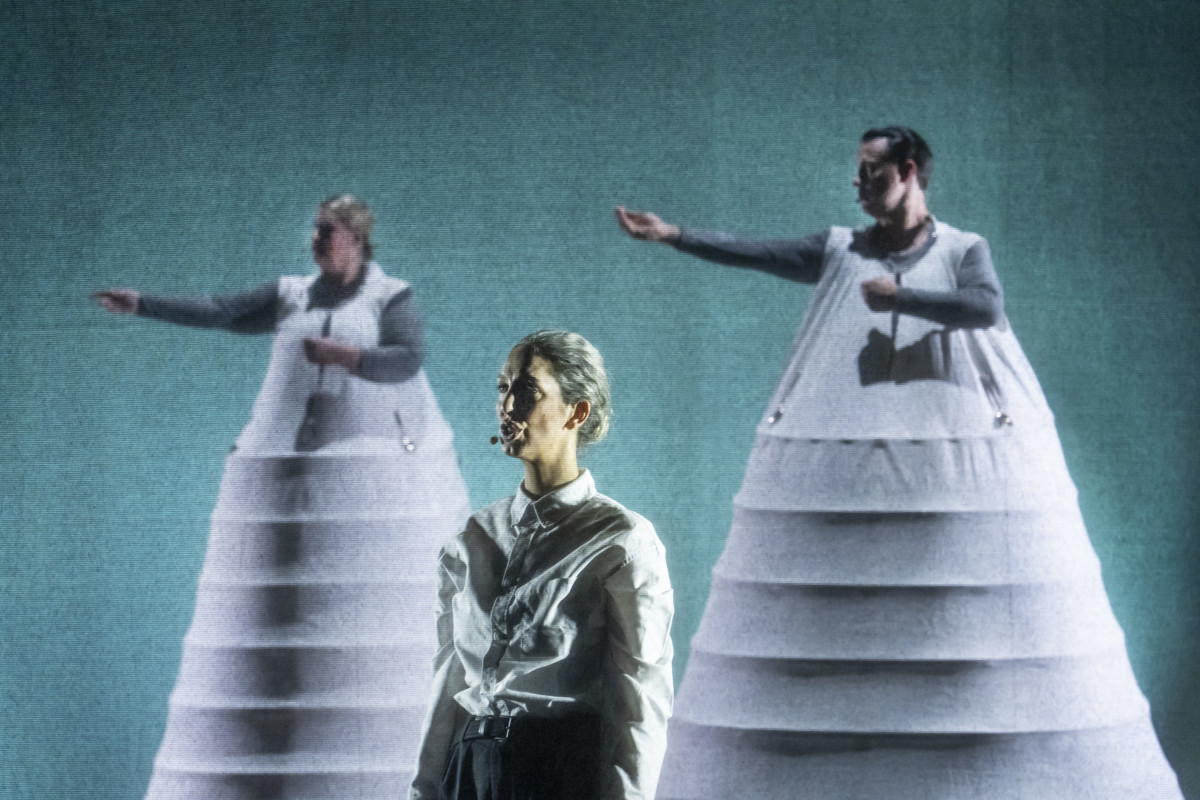
It is both difficult and unfair to approach the concert Alle sætter spor (»Everyone Leaves Traces«) with a critical mindset. It concerns real people with something at stake and with their hearts invested: residents at the social-psychiatric housing facility Sønderparken. They placed their inner lives in the hands of six artists and thus became co-creators of a total of nine songs, which premiered at Museum Ovartaci.

The project Musikalske alliancer (»Musical Alliances«) is simultaneously art, research, and relief. A co-creative endeavour intended to give a voice to people within psychiatry. The result was songs marked by banjo-tinged gallops, painful violin stabs, empty houses filled with inconsolable crying, torn torsos and deep, lingering bow strokes – but also hope, care, and softened edges. Acting as mediators of these life experiences were the poet Gerd Laugesen, three musicians from the ensemble Lydenskab on cello, violin and guitar, as well as pianist Martin Ottosen and vocalist Ulla Bendixen from the electro-folk band Sorten Muld.

It was a capable group that delivered a high musical standard. Even so, it seemed as if this important project succeeded with its co-creation and its conversations, but perhaps not entirely with its artistic expression. Was it because the lyrics were filled with clichés? Or rather because the entire staging felt somewhat inward-looking – almost like a school concert? Despite Bendixen’s wonderfully airy and expressive vocal, the performance felt strongest in the few segments shaped by poetry readings. Yet I had to learn, by indirect means, that the poems were adaptations, while the song lyrics were the residents’ own words. And those were the voices I was meant to learn to listen to.

in briefrelease
13.03

When Joik Meets Drill

Zak Norman & Charlie Miller: »Takkuuk«
© PR
© PR

The Greenlandic word Takkuuk means »attention«, and it is the slightly ironic title of one of the more chaotic projects at this year’s CPH:DOX. The film is a collaboration between visual artist Zak Norman, film director Charlie Miller, and the Belfast-based electronic duo BICEP, and it also features seven musicians from Kalaallit Nunaat and Sápmi. In other words, a multitude of voices and agendas are at play, and the project clearly bears the marks of that.

The process leading up to the film sounds more interesting than the work itself. Norman and Miller travelled around the Arctic, seeking out musicians and researchers while filming glaciers and ice. The film’s seven young musicians then entered the studio with BICEP to create a shared soundtrack: a kind of club-oriented remix of seven very different practices, ranging from drill and heavy metal to joik, throat singing and drum dance. It might have been fascinating to follow those encounters, but instead the film takes us in another direction.

The editing shifts between a documentary strand of interviews and a surreal music-video aesthetic, where specially built cameras pan across the surface of the ice, bathing it in coloured filters referencing the northern lights and club lighting. In the interview track, the participants are allowed to steer the conversation themselves, which sends it in many directions. We touch on the spiritual undertones of traditional musical expressions, and here one would have liked the film to linger longer. One intriguing sequence explains how drum dance relates to the performer’s heartbeat, and how that rhythm is almost the same as the pulse of drill. More of that, please.

In a subsequent talk, the filmmakers explained that the work was originally produced as an audiovisual installation for five screens. That makes sense and might have worked better. Considered as a documentary film, Takkuuk is fragmentary, chaotic and directionless, which is a shame, because the young musicians seem to have much more to offer.

»Takkuuk«, Zak Norman & Charlie Miller (UK), 2025 (67 min). Screenings: 12, 17 and 19 March