
in briefrelease
27.04

Myths From a Dying Sea

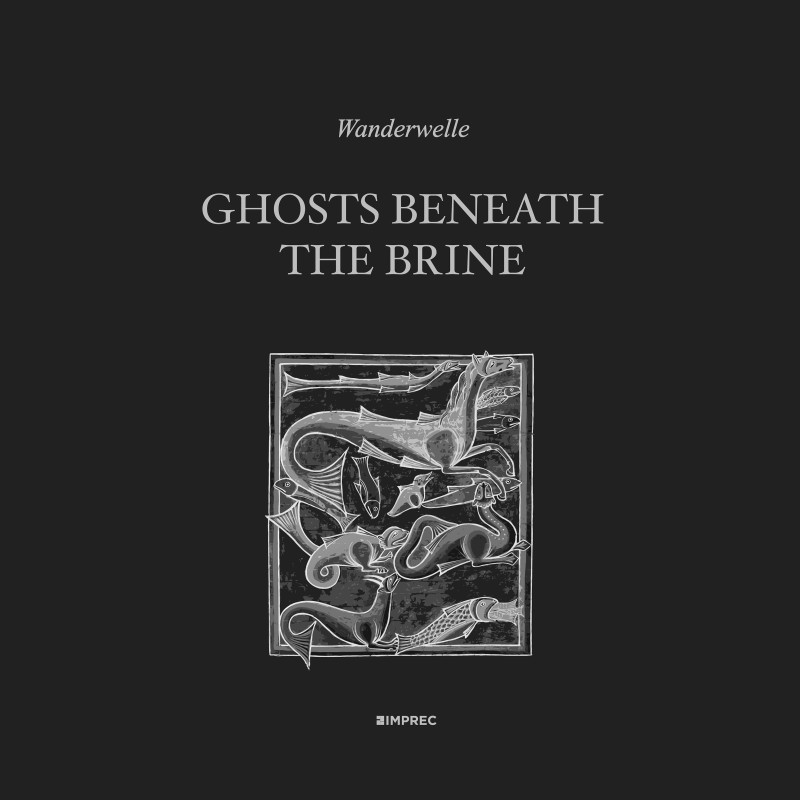
Wanderwelle: »Ghosts Beneath the Brine«
© PR
© PR

The ocean as Cape Lonesome, as a graveyard where at midnight the mythical, the real, and the endangered rise from the dead: this is the sonic world of Ghosts Beneath the Brine, the new album by Amsterdam-based experimental duo Wanderwelle.

Across eight tracks suspended between elegy and requiem, the album navigates the reality of climate change and species extinction while invoking the mythology of creatures of the deep. To sound the crisis, Wanderwelle chose not to record melting icebergs or raging wildfires. Instead, they submerged cymbals – small, bowl-shaped metal plates used since ancient rituals – in saltwater for extended periods. As the metal degraded, its sound grew darker, more fragile, more unstable, releasing ghostly overtones.

Those tones drift through the album like the critically endangered albatross – to which the sixth track is dedicated – spreading its 3.5-metre wingspan like a ghost across vast, indifferent skies. Layered with reverb and sounds evoking lamenting, whimpering animal voices, the pieces carry titles that weave myth and ecological reality: »The Seabishop's Sermon« (named after a creature allegedly caught in the Baltic Sea in 1513), »Empty Net or Dissolving Souls«. The message is clear: sharks and oysters risk becoming as mythical as sea monsters once were, if destruction continues.

And yet this is precisely where the album's beauty becomes its limitation. Ghosts Beneath the Brine sounds hauntingly gorgeous – but like the sublime spectacle of a shipwreck witnessed from a safe distance, it invites us to shudder rather than act. More ghost train than alarm bell, it offers catharsis where the moment calls for urgency.

© PR

»For us, music is... magic? Aside from the fact that we are huge fans of silence, the closing line of one of our upcoming singles perfectly captures our relationship with music: 

'Music feels like magic to me / A superior art form in a marketplace / Trying to find an empty space'. 

That is what it can feel like as a songwriter and performing musician. We try to hold onto an almost childlike infatuation with music, yet the art form we work in – alternative-leaning pop-rock – was created and has evolved 'in a marketplace' driven by powerful economic forces. As a romantic, that can sometimes be a bit disheartening...«

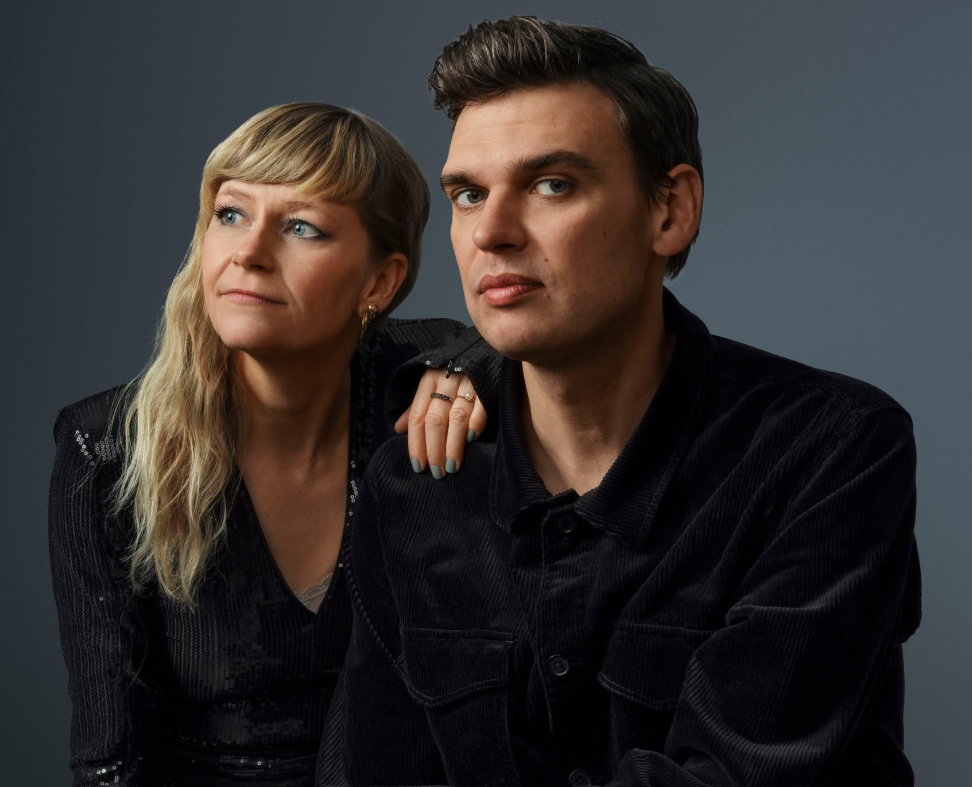
Late Runner consists of Asger Tarpgaard and Tanja Forsberg Simonsen, both formerly of the bands Superheroes and Private.

© Sam Aebi
»I think music is just the way I perceive and process the world.«
 
Raphael Loher is a pianist and composer based in Lucerne, Switzerland who combines elements of experimental electronic music, ambient, and minimalist composition. His distinct, crystalline work explores playful reduction and rhythmic abstraction, aiming to create singular resonances and aesthetic connections. His meditative style of piano playing allows shimmering rhizomatic structures to emerge, giving rise to tense narrative arcs. Loher expands his sound spectrum by preparing the piano, using effect pedals, and working with a tape recorder.
 
Loher’s new album Figuren (Präsens Editionen) is an album shaped by intuition, experimentation, and a deliberate distance from his primary instrument — the piano. Reworking intimate concert recordings made during a residency, Loher deconstructed selected melodies, tones, and resonances into new forms, transforming them further through tape manipulation. 
© PR
© PR

It was officially confirmed only recently that Icelandic avant-garde star Björk is visiting Bielsko-Biała today. After keeping it under wraps until the last moment, the organizers of the Wędrujący Festiwal (Wandering Festival) have revealed that Björk is the artist closing out the festival's grand finale.

© Kåre Viemose

»Recently, I discovered that when a couple of thousand people clap their thick gloves in minus 30 degrees, it sounds like the softest techno – a freezing space where the cold air turns into a wave of warmth, and we, in a moment of collective devotion, become one with the rhythm, one with the invisible bond that connects us in the warmth of silence. Music is not just sounds, but a vain attempt to capture the infinite, which has always been and always will be.«

Andreo Michaelo Mielczarek has been the editor-in-chief of Seismograf since 2021. He is also a music critic and cultural journalist at Kristeligt Dagblad and Århus Stiftstidende/Avisen Danmark and has over the years written to publications such as Kunsten.nu, Glissando (Poland), Neural (Italy), Raw Vision (UK), Nutida Musik (Sweden), Kunstkritikk (DK/Sweden), Iscene.dk, B.T., and Jazz Special. He is the author (together with Lars Muhl) of the book HVA' SAA! En guidet rutsjebanetur gennem Aarhus – før, nu og i fremtiden (2024) and has also contributed to the anthology on music criticism Man skal høre meget (ed. Thomas Michelsen and Claus Røllum-Larsen, 2024). He is a founder and partner in the Polish-Danish cultural organization Kultur(a), and wherever there is a piano, he will be there, eager to coax a melody from it.

© Aria Leth Schütze

»For me, music is an opportunity for transformation.«

Aria Leth Schütze is based in Copenhagen and is the creative force behind the music projects Alto Aria and Samler På Dig. They are a co-founder of the record label Rhizome and a co-editor of the music magazine Passive/Aggressive. Their practice brings together electronic and acoustic music in an exploration of transformation.