
in brieflive
30.10

Only at the End Did the Music Break Free

The Baroque Society: »Remembering«
© Malin Annie Jansson

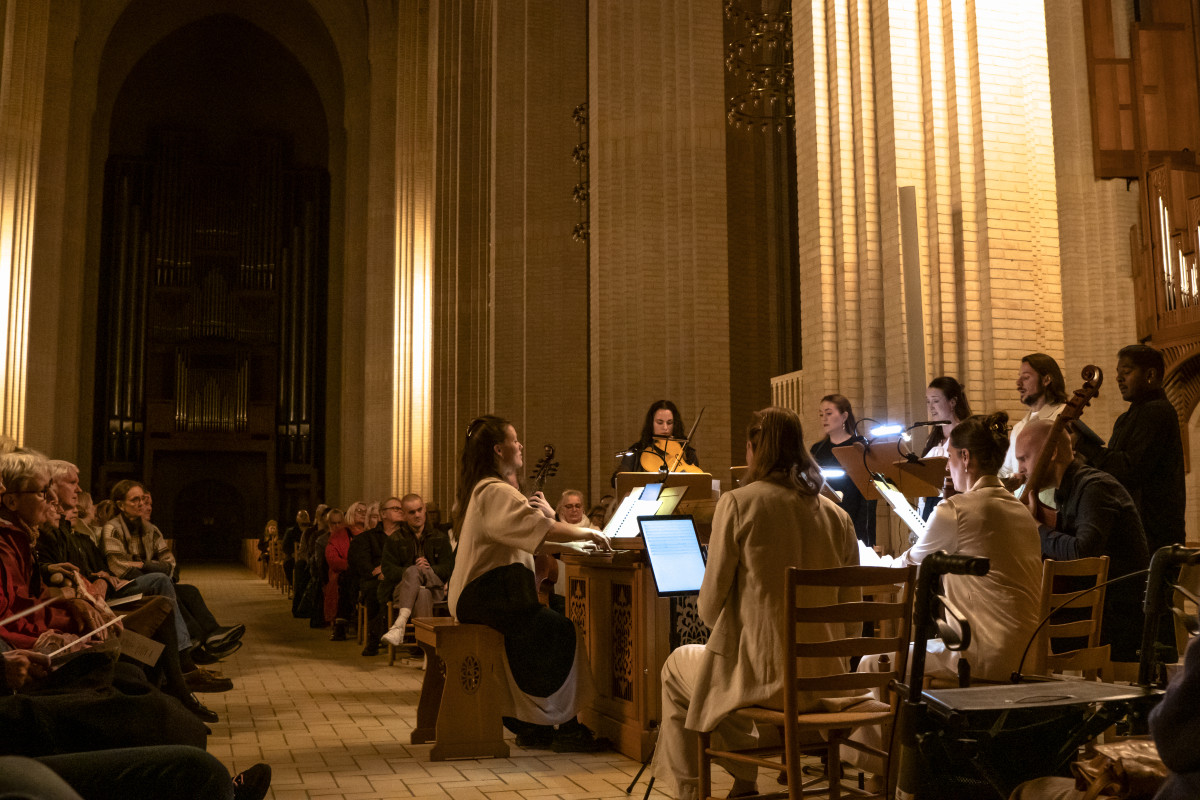
The British composer Nick Martin, who is based in Copenhagen, attempts to give remembrance a sonic form in his brand-new work Remembering, written specifically for The Baroque Society. On Thursday evening at Grundtvig’s Church, he succeeded beautifully in parts of the fifteen-minute work for four singers and a small, intensely focused group of Baroque instruments.

Dense vocal textures lingered over harmonies that unfolded slowly, while allowing the soloists to emerge one by one. The static accompaniment provided a foundation for remembrance, over which the floating voices evoked the lost and departed. The harmonies gradually shifted in colour like clouds in the sky, constantly changing shape – seemingly at random, yet following what felt like a fixed, organic pattern. But the work became too long and passive. Only in its final minutes did the harmonies break apart, making room for welcome rhythmic variation and tantalising silences. Had this shift in form come earlier, Martin might have created a more compelling work. It nevertheless ended with a gem of an open, searching chord which not only demonstrated his gifts as a vocal composer but perhaps also invited us to think of remembrance as something positive and transformative rather than tragic.

Remembering was framed by two works by J.S. Bach (BWV 118 and 106). The latter cantata was later given the title Actus Tragicus, but it was not entirely tragic: for Bach, death primarily offered access to something better. That sense of consolation was harder to find in this performance, where the small orchestra of The Baroque Society lacked energy and momentum. Yngvild Haaland Ruud, seated behind the small organ in the middle of the ensemble, provided insufficient musical direction to bring the players together. The tempo was far too ponderous, and the music lingered too much on the feeling or memory of the sounds just heard. Still, it was refreshing to encounter a new work by Nick Martin – an invitation to remember at All Saints’ Day.

The concert will be repeated in Copenhagen, Helsingør and Gentofte over the coming days

English translation: Andreo Michaelo Mielczarek

in briefrelease
18.05

Somewhere Between an Acid Dream and a Sound Garden

Kaloja: »A Body of Water«
© PR
© PR

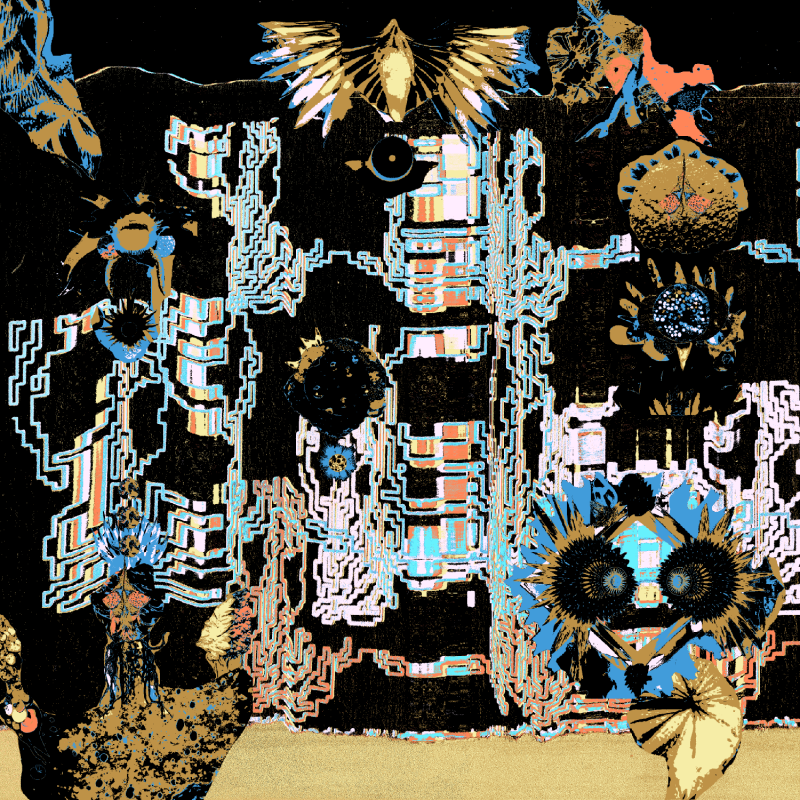
On A Body of Water, you step directly into the singular sonic universe of Finnish multimedia artist Jan Anderzén(Tomutonttu, Kemialliset Ystävät). The album unfolds as a collage of whimsical melodies created in collaboration with British musician Paul Wilson (f.ampism, Yayoba), whose contributions subtly enrich the colorful patchwork of sonic threads. Subtle, perhaps, but unmistakable. The soundscape is densely detailed: beneath the constantly shifting melodies, countless tiny sonic shoots stretch eagerly toward the eardrum. It feels like an acid dream in which everything around you – from roadside flowers to airplanes crossing the sky – has suddenly begun to sing.

Paradoxically, this flood of chaotic and rapidly changing impressions gives the music an almost ambient quality. There is great pleasure in listening closely to the miniature details bubbling beneath the surface, occasionally bursting through to dominate the frequencies for a brief moment.

Yet strong, recurring melodies capable of anchoring the listening experience remain absent in favor of mood and texture. Importantly, this is not a flaw. Heard through an ambient lens, the album – which at first can seem slightly directionless – suddenly reveals its logic. Its playful depth and lack of rigid structure encourage endless free association. It is wonderful music for drifting thought: a multicolored universe where the imagination continually discovers new pathways through a dense undergrowth of details.

English translation: Andreo Michaelo Mielczarek

© Meseguer

»To us, music is the definitive companion. As listeners, it fosters a sense of communion, bridging the gap between souls through the shared experience of sound. As creators, however, music confronts us with our own inner void, that profound solitude that nourishes the creative spirit. At the same time, it dares us to leap into the unknown to decipher the ineffable. Music anchors us to the present moment, to the 'now' shared with a live audience; yet, it also touches the eternal.«

L'arannà is an electronic folk duo. With their last project, Turmarí, the duo dives deep into the folk music traditions of the Pityusic Islands, offering – through their blend of sound exploration– a perspective on Ibiza and Formentera. Synthesizers and keyboards share the stage with traditional instruments and aesthetics inspired by the ancestral ball pagès dance. Reviving cant redoblat (a unique form of singing from these islands preserved by fewer than twenty people) the group weaves a narrative that traces the roots and lived reality of two islands that are far more than just a dreamt-of paradise. The band will be touring around Denmark and Sweden, from 27th to 31th of May, playing at venues like Turkis, Dexter, Inkonst or ALICE.
© Ana Alexandrino

»Music to me is movement, trance, transformation. The rest I won't tell you.«

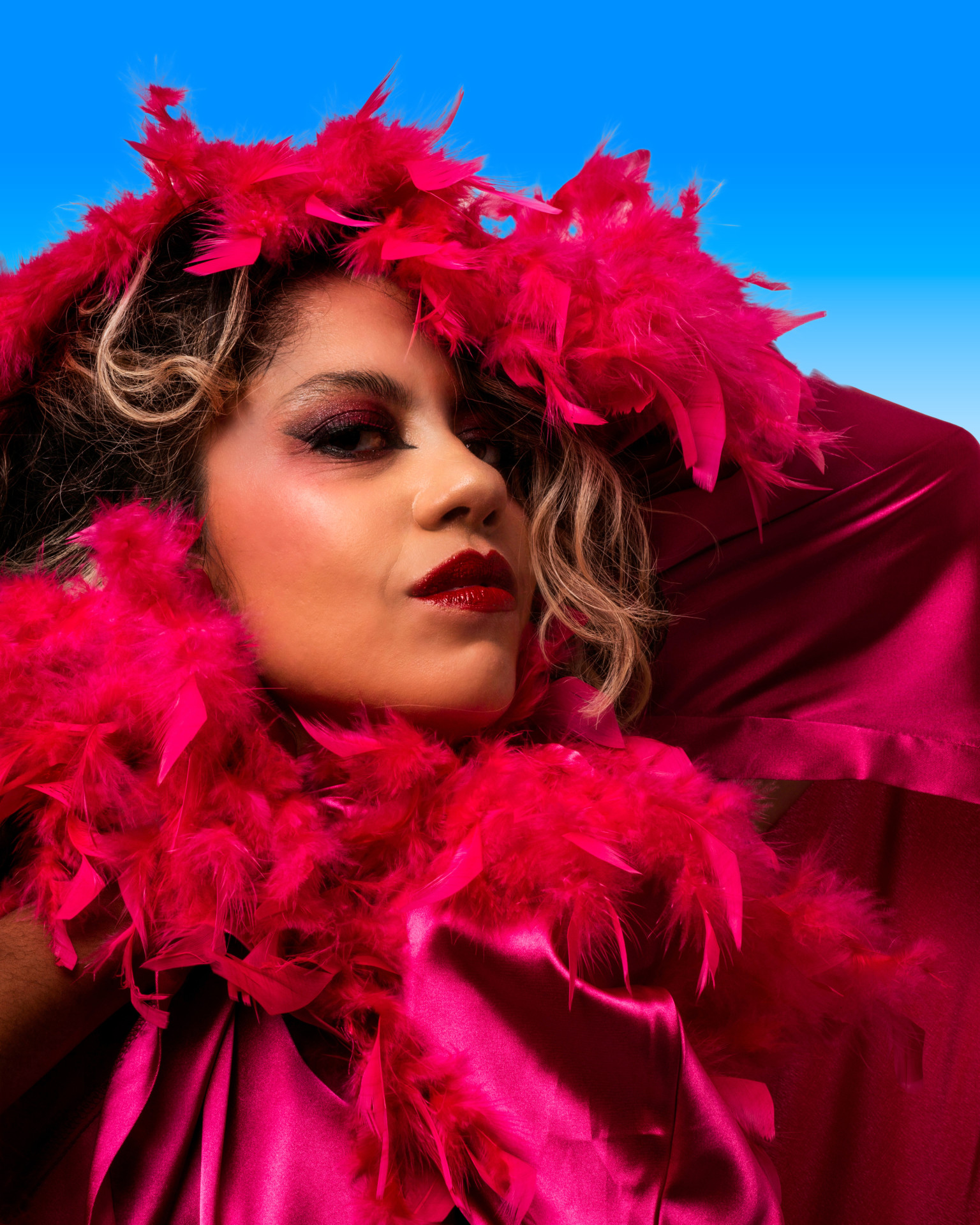
Marcela Lucatelli is a vocalist and composer. Born in Brazil and based in Denmark, she has gained international recognition for her boundary-pushing performances — sensuous, politically charged, and uncompromisingly original. Described by The Wire as a composer of »scores for the limits of bodies and voice,« Lucatelli challenges conventions with her fearless vocal experimentation and bold compositions. Her works have been performed by Danish National Symphony Orchestra, Danish National Vocal Ensemble, and Neue Vocalsolisten Stuttgart. She has appeared at major festivals and venues, including Theatro Municipal de São Paulo, DR Koncerthuset, Donaueschinger Musiktage, Darmstadt Ferienkurse, IRCAM, Copenhagen Opera Festival, Ultima Festival, Borealis Festival, Copenhagen Jazz Festival, Jazzfestival Saalfelden, Cafe Oto, A L’ARME!, DMA Jazz – Danish Music Awards, WOMEX, and many more. Lucatelli's work has earned her several prestigious awards, including the Carl Nielsen and Anne Marie Carl-Nielsen Talent Prize (2019), Pelle Prize (2021), and the Danish Music Awards' 2023 Vocal Jazz Release of the Year, which shows that vocal jazz has many faces – and does not necessarily belong only to the soft end of the spectrum.

© PR

»What is music to me? Here’s a quote from Nietzsche: ‘The people dancing all seemed crazy to the people who couldn’t hear the music.’«

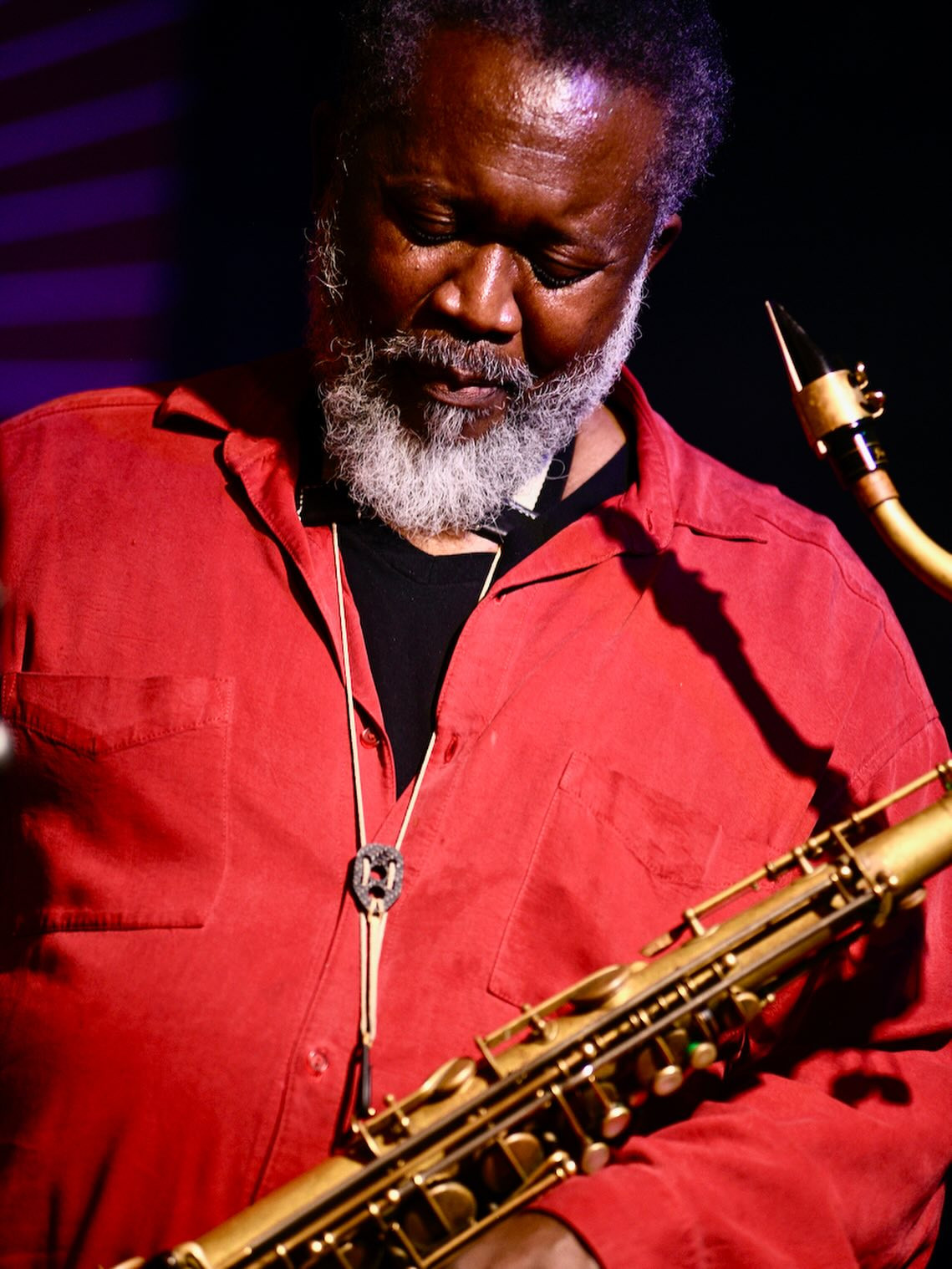
Salim Washington is a saxophonist, multi-instrumentalist, composer, academic, and activist from Detroit who has been highly active on the American jazz scene since the 1970s, and also in South Africa, where he became a central figure. The spirit of John Coltrane hovers over his music, which carries both spiritual and social dimensions.

© Aske Jørgensen

»Music for us is the perfect language that we love to speak. A language where it is the individual's feelings and imagination that determine what is right and wrong. Everyone can speak the language. You don't have to be able to write or understand, but just listen. Some music requires that you listen carefully and maybe hear it several times. A bit like when you talk to someone from Norway or Sweden, you also have to listen a little extra.«

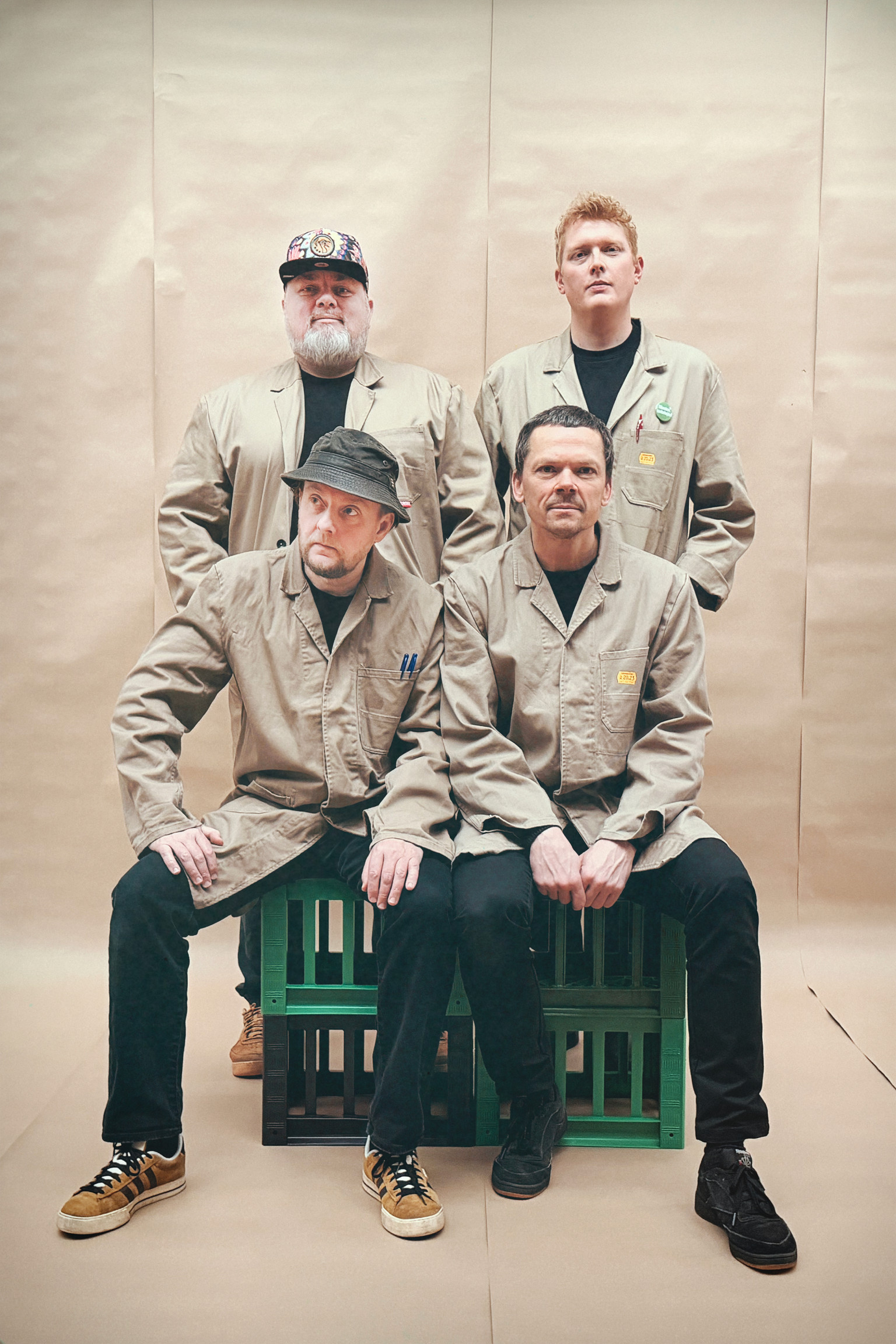
DØGNKIOSK is a Danish punk rock band with roots in Silkeborg. The band consists of bassist and singer Anders Ejner, who has been active on the Danish underground scene for several decades. Musically, DØGNKIOSK moves in a field between classic Danish punk and alternative rock. In the spring of 2026, the band will release their second album, Tæt på kanten.