in briefrelease
15.12

Uncompromising Vignettes of Silence and Sighs

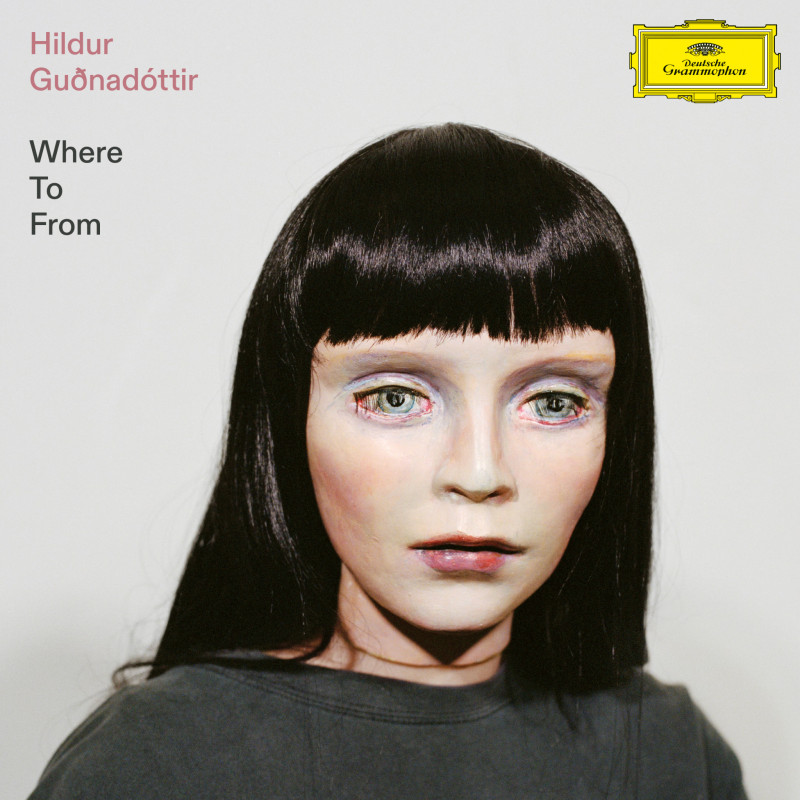
Hildur Guðnadóttir: »Where to From«
© PR
© PR

It seemed to come like a bolt from the blue when the Icelandic cellist and composer Hildur Guðnadóttir broke the sound barrier with an uncompromising, inward-looking sound situated between contemporary classical and experimental music – most widely recognised through her suffocating soundtracks for Chernobyl and Joker.

Yet on her Deutsche Grammophon debut Where to From, it is the personal spaces we are invited into. The instrumentation is pared right back to a chamber ensemble, voices, and extended passages of near-absolute silence. The result is often achingly beautiful – and deeply affecting.

The work unfolds in small vignettes, rarely lasting more than a couple of minutes, before vocals are introduced in the album’s second half – most notably in »Make Space« and the exquisite a cappella hymn »I Hold Close«. The equally beautiful »Melody of Not Knowing« explores the cello’s darkest registers, striking blue midnight tones in the echo of the heart, especially as it glides into »All Along«, where voice and strings merge.

Where to From is a powerfully mood-saturated work that moves effortlessly between chamber music and neoclassicism, finding its uncompromising character in the quietest, most intimate sighs between human and instrument. It is neither too little nor too much – always precisely measured. And for that very reason, Guðnadóttir remains such a compelling musical presence.

English translation: Andreo Michaelo Mielczarek

in brieflive
07.04

PowerPoint Against the Dark

Laurie Anderson with Sexmob: »Republic of Love«
© Ebru Yildiz
© Ebru Yildiz

With her characteristic curiosity, Laurie Anderson opened Sunday’s concert in DR’s concert hall with a political statement and the remark, »Thank you for your attention to this matter.« The theme of the evening was a heavy political climate, to which Anderson – like a professor emerita of the avant-garde – offered a musical framing narrative of music, slideshow, and quotes from thinkers and artists who, each in their own way, nuance an increasingly dark world. A framework in which every piece of music had a clear purpose: to evaporate any residue of convention.

Slide by slide, the audience was guided through curious glimpses of the totalitarian and the conventional. The long list of words deleted from government documents by the Trump administration, for instance, served as an introduction to »Language Is a Virus«, inspired by writer William Burroughs, who also appeared on the screen behind Anderson and the band Sexmob. So did Lou Reed, Anderson’s late husband. Dressed in a glittering jacket that, like a kind of magical Kraftwerk, triggered sounds of drums, foghorns, and cash registers, Anderson shared the couple’s three life lessons while playfully dancing and narrating.

I don’t think I’ve ever attended a concert where the entire production team – both on and off stage – was credited with rolling end titles. Yet it felt like a completely natural conclusion to Anderson’s slightly dry and remarkably hopeful PowerPoint concert. A performance that, as a delightfully deconstructive reminder, united the experimental and the concrete in a hands-on first aid kit against tyranny and oppression.

© Peter Gannushkin

»Music for me is a world full of sound that you can explore, juggle with, systematize, be inspired by and form a starting point for meetings between people across cultures and generations.«  

Håkon Berre (b. 1980) has made his mark as a central figure on the Danish improvised music scene. His practice is characterized by an expanded approach to percussion, where both traditional instruments and everyday objects – such as doorbells, tin plates, chains and kitchen utensils – are included in a nuanced and often unpredictable sonic expression. He has performed at clubs and festivals internationally and collaborated with a wide range of notable musicians, including Peter Brötzmann, Phil Minton, Axel Dörner, John Tchicai, Jamie Branch and Otomo Yoshihide. Berre contributes to an extensive discography with more than 40 releases, many of which on the artist-run label Barefoot Records, which he co-founded. He has also composed and arranged music for theatre and exhibitions, and worked on interactive sound installations shown in museums in Denmark and Germany. He is active in a number of ensembles and collaborations, including Ytterlandet, TEETH, VÍÍK and Mirror Matter, as well as in various duo and quartet constellations.

© Niklas Ottander

»Music is a deep, but not serious, spiritual practice, in which creator, collaborator, and consumer alike are their own personal pope.«

James Black (b. 1990) is a composer, performer, and artistic director of Klang Festival – Copenhagen Experimental Music. Originally from Bristol, England, they moved to Copenhagen in 2013. Black's works have attracted a large amount of attention both nationally and internationally for their signature combination of artistic courage and vulnerability, described by the Danish Arts Council as »a universe of real madness where everything goes«. Their work is a deep and personal exploration of topics such as religion, loss, and queer identity, that is unafraid to be stupid or serious in any direction.

© Christian Klintholm

»Music is just something for me.«

Christian Juncker is a Danish musician and songwriter who has released a number of Danish-language albums. He debuted in 1995 with the band Bloom. Together with his friend Jakob Groth Bastiansen, he formed the duo Juncker in 2002. He is also behind the Christmas carol »Luk julefreden ind« from 2024.

© Guy Wasserman

»Music, for me, reveals the emptiness of boundaries and definitions – in consciousness, in space, and in music itself.«

Idan Elmalem is an oud player and composer working across world and popular music, now presenting his debut instrumental EP and live performance project. Following years of collaboration within the Israeli music scene, he turns toward a more personal and intimate musical voice, blending traditional oud with a contemporary sensibility. Influenced by his studies with master Nissim Dakwar, Elmalem’s music explores the space between tradition and innovation. His debut EP, Time, features three live-recorded pieces that move between past, present, and future, combining classical Arabic and Persian elements with jazz, minimalism, and cinematic sound. Based in Tel Aviv, Elmalem draws on his Moroccan-Danish heritage in his work. He is a graduate of the Jerusalem Academy of Music and Dance and is currently pursuing a Master’s degree in Ethnomusicology at the University of Haifa, alongside his work as a player and composer.