in brief
29.09

When Synthesizers Sprout: Filip Leyman’s Organic Debut

Filip Leyman: »Soft Light«
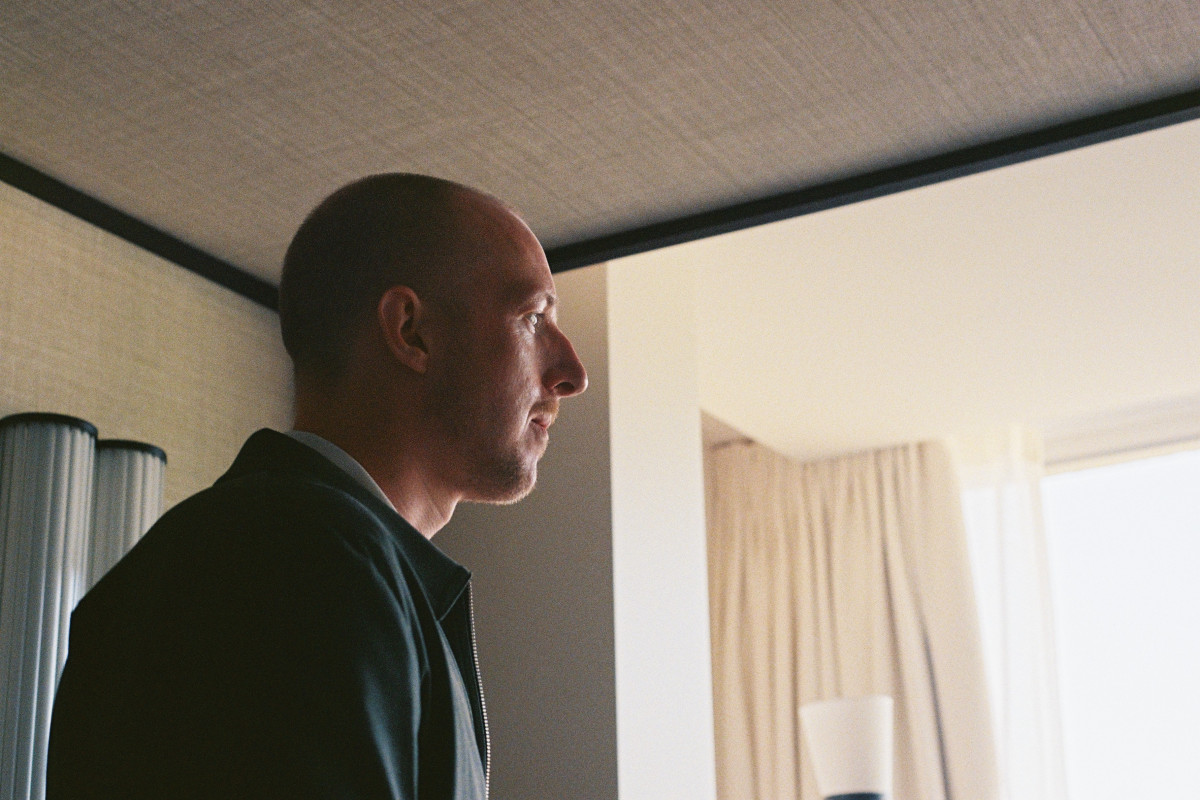
© Gianluca Grasselli

The forest lake is a cradle of life in more than one sense. The forest’s myriad forms of life depend on its waters, but its trickling branches, intense stillness, and soft reflections also hold powerful musical potential. It is precisely this life-giving energy that forms the basis of Swedish composer Filip Leyman’s solo debut album, Soft Light. From the very first track, »Beyond the Sea«, one senses how Leyman manages to create an organic universe where every sound nourishes the soil for the next. It is difficult to find either beginning or end as the many synthesizers and strings grow into and out of one another – you simply have to surrender and sink into this spherical universe of reverberations and deep, steady bass.

Filip Leyman’s work cannot be described without mentioning Swedish artist Anna von Hausswolff. Her music is like a force of nature, carried by long, sacred organ passages – and what is Hausswolff and what is Leyman is never entirely possible to determine. Soft Light gathers together compositions written over decades and appears as a natural extension of the many albums and soundtracks the two have created together. The album contains a strong cinematic dimension: in a track like »Shapes«, the layered sounds culminate in a dazzling climax that feels like slow motion in sound.

Here, Leyman appears as a musical botanist, patiently letting his synthesizers grow, sprout, and bloom. Although Soft Light has developed over many years, it sounds remarkably cohesive – like one long breath. The album seems more cultivated than composed. Let us hope that Soft Light is only the beginning, and that Leyman will allow more solo albums to grow in the same light.

English translation: Andreo Michaelo Mielczarek

© Peter Gannushkin

»Music for me is a world full of sound that you can explore, juggle with, systematize, be inspired by and form a starting point for meetings between people across cultures and generations.«  

Håkon Berre (b. 1980) has made his mark as a central figure on the Danish improvised music scene. His practice is characterized by an expanded approach to percussion, where both traditional instruments and everyday objects – such as doorbells, tin plates, chains and kitchen utensils – are included in a nuanced and often unpredictable sonic expression. He has performed at clubs and festivals internationally and collaborated with a wide range of notable musicians, including Peter Brötzmann, Phil Minton, Axel Dörner, John Tchicai, Jamie Branch and Otomo Yoshihide. Berre contributes to an extensive discography with more than 40 releases, many of which on the artist-run label Barefoot Records, which he co-founded. He has also composed and arranged music for theatre and exhibitions, and worked on interactive sound installations shown in museums in Denmark and Germany. He is active in a number of ensembles and collaborations, including Ytterlandet, TEETH, VÍÍK and Mirror Matter, as well as in various duo and quartet constellations.

© Niklas Ottander

»Music is a deep, but not serious, spiritual practice, in which creator, collaborator, and consumer alike are their own personal pope.«

James Black (b. 1990) is a composer, performer, and artistic director of Klang Festival – Copenhagen Experimental Music. Originally from Bristol, England, they moved to Copenhagen in 2013. Black's works have attracted a large amount of attention both nationally and internationally for their signature combination of artistic courage and vulnerability, described by the Danish Arts Council as »a universe of real madness where everything goes«. Their work is a deep and personal exploration of topics such as religion, loss, and queer identity, that is unafraid to be stupid or serious in any direction.

© Christian Klintholm

»Music is just something for me.«

Christian Juncker is a Danish musician and songwriter who has released a number of Danish-language albums. He debuted in 1995 with the band Bloom. Together with his friend Jakob Groth Bastiansen, he formed the duo Juncker in 2002. He is also behind the Christmas carol »Luk julefreden ind« from 2024.

© Guy Wasserman

»Music, for me, reveals the emptiness of boundaries and definitions – in consciousness, in space, and in music itself.«

Idan Elmalem is an oud player and composer working across world and popular music, now presenting his debut instrumental EP and live performance project. Following years of collaboration within the Israeli music scene, he turns toward a more personal and intimate musical voice, blending traditional oud with a contemporary sensibility. Influenced by his studies with master Nissim Dakwar, Elmalem’s music explores the space between tradition and innovation. His debut EP, Time, features three live-recorded pieces that move between past, present, and future, combining classical Arabic and Persian elements with jazz, minimalism, and cinematic sound. Based in Tel Aviv, Elmalem draws on his Moroccan-Danish heritage in his work. He is a graduate of the Jerusalem Academy of Music and Dance and is currently pursuing a Master’s degree in Ethnomusicology at the University of Haifa, alongside his work as a player and composer.

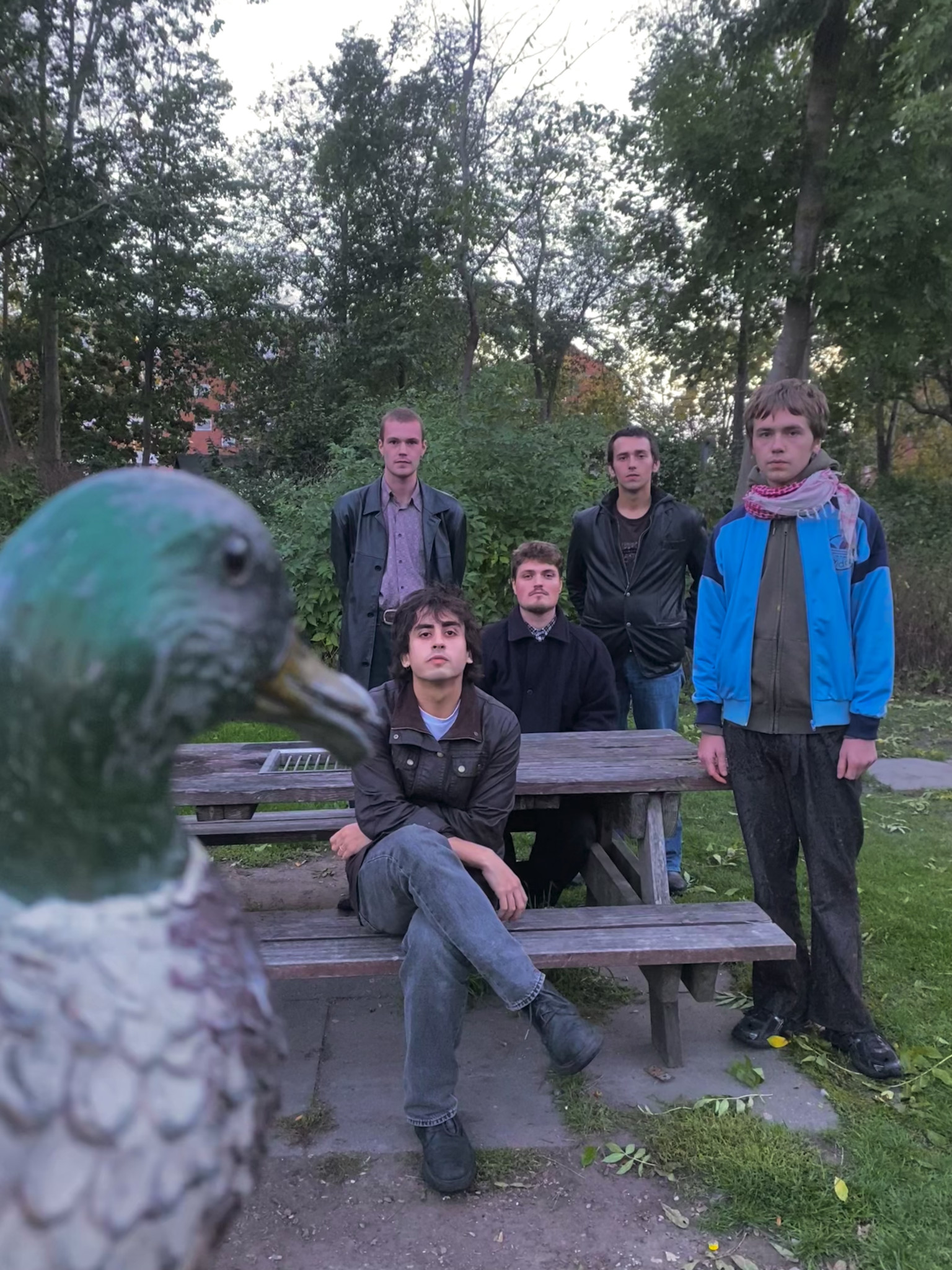
© PR

On May 29, the Aalborg-based collective Datahaven9000 takes over the venue Skråen, transforming its main hall into a concentrated one-day festival of electronic music. The event is part of the concert series Bystanders #3, where the stage is handed over to local scenes rather than the venue’s in-house programming.