© Guannan Kang
© Guannan Kang

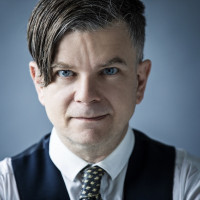
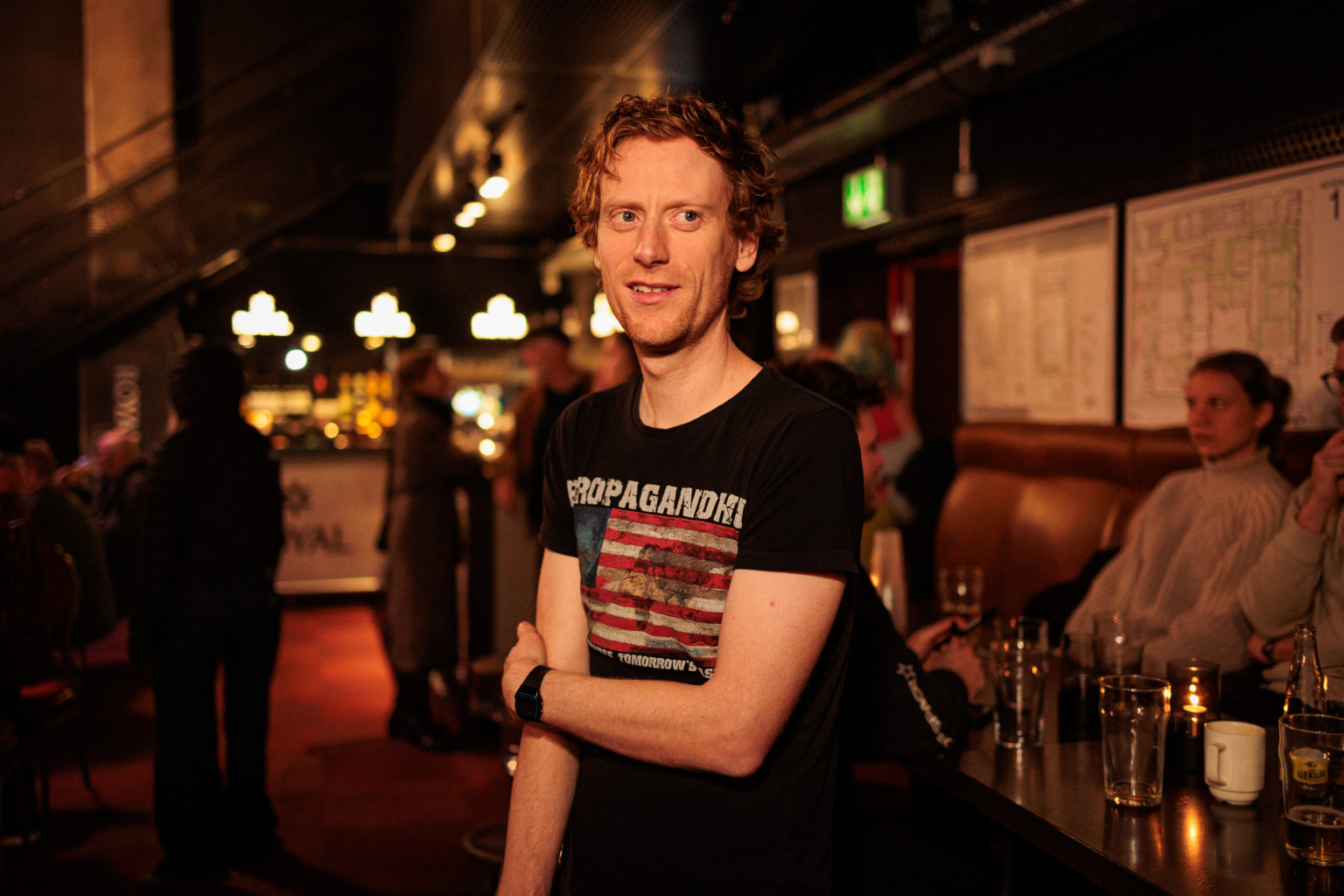
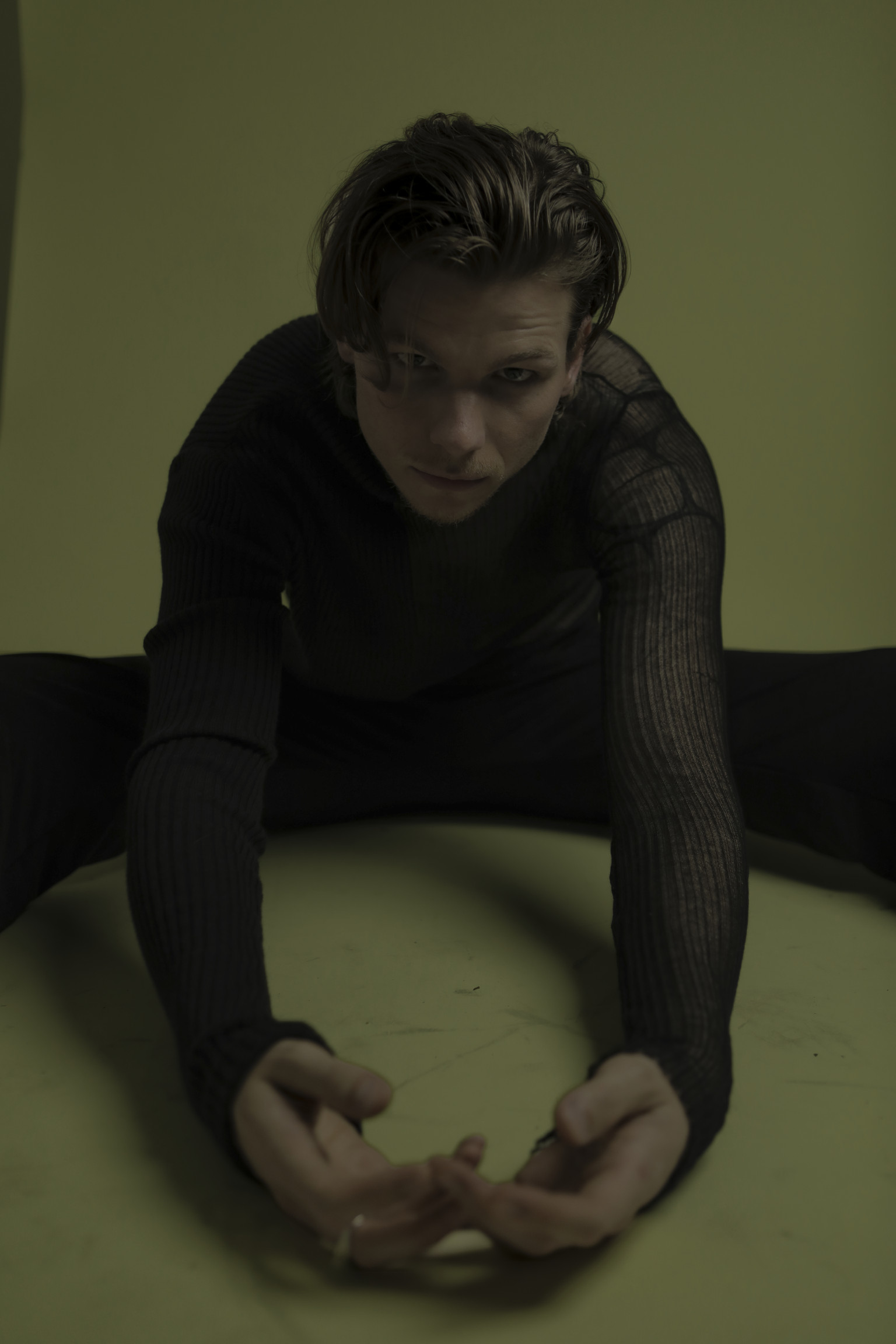
自由即兴创作比性爱更好! – »Free improvisation is better than sex.« According to drummer Kresten Osgood, the saying is attributed to Confucius. Whether the ancient Chinese philosopher ever uttered those words is doubtful. But the quote perfectly captures the spirit of one of the most unusual events at this year's Copenhagen Jazz Festival.

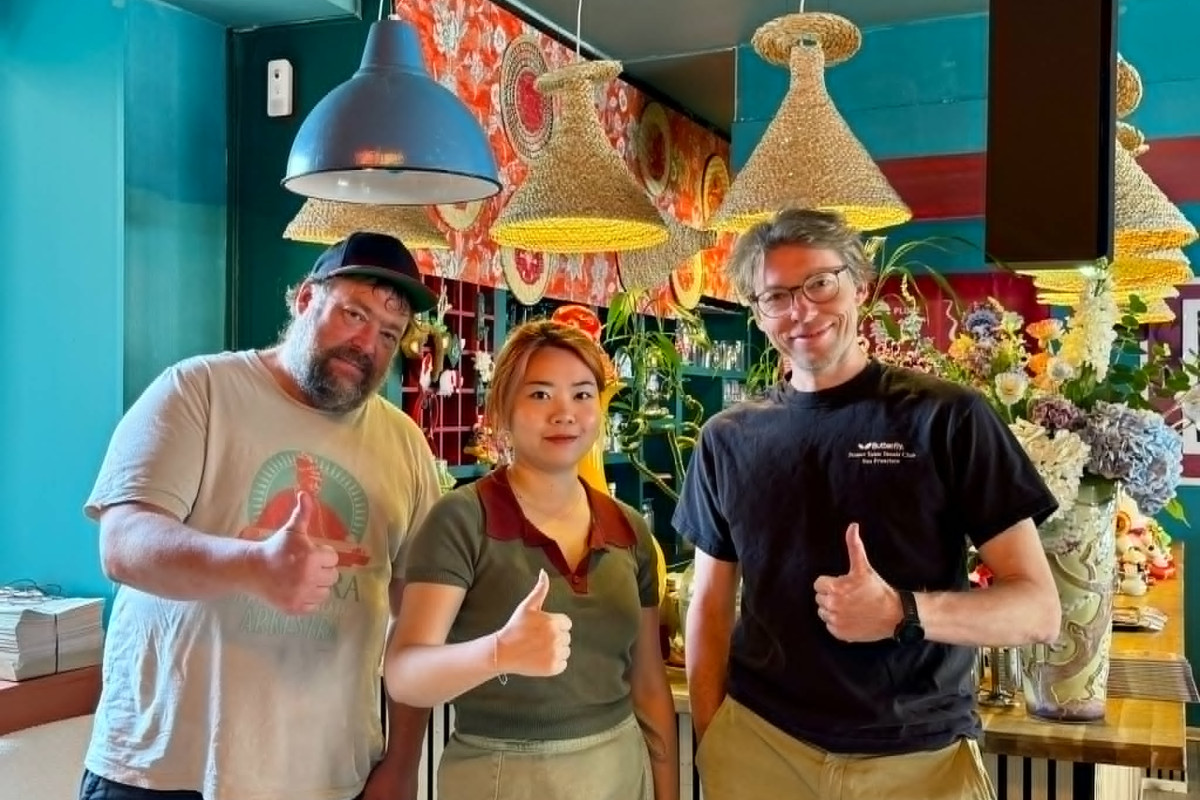
From 7–11 July, pianist Søren Kjærgaard and drummer Kresten Osgood will take over CC Taste on Amagerbrogade, performing daily from 2–4 pm among diners, dim sum and steaming hot pots.

For years, the two musicians have dreamed of taking free improvisation out of its familiar concert settings and into a place where audiences would least expect to encounter it. The idea emerged when they discovered an old upright piano in the restaurant, which has long served as one of their regular meeting places. Stephanie, the owner of CC Taste, immediately embraced the project.

Kjærgaard and Osgood are cousins who grew up together on Denmark's west coast and have been making music together since childhood. For more than 35 years, their duo has remained a constant thread running through collaborations with artists including Herb Robertson, Tim Berne, Thomas Morgan, Bent Jædig and the musician collective ILK. In recent years, they have toured as a duo in Estonia, Latvia, Finland and Norway.

»We've wanted for a long time to bring our music into places that aren't naturally predisposed to it, and to explore how the music affects an environment where people come to enjoy dim sum and have a lovely lunch,« says Kresten Osgood. »The owner of CC Taste loved the idea, and I think everyone involved is a little excited to see what happens.«

For Søren Kjærgaard, the residency format is equally significant:

»We're really looking forward to playing together in the same place for five consecutive days. That's quite rare in the world of free improvisation, where most performances are one-off concerts or ad hoc constellations. We share an enormous amount of experience and have a very deep musical relationship – yet there's always something at stake whenever we improvise together. We know each other inside out, while constantly seeking the unpredictability that comes from that familiarity.«

The restaurant will remain open throughout the performances, allowing audiences to enjoy lunch while listening to the music. The concerts take place daily from 2–4 pm, and all five performances will be recorded.


in briefrelease
04.05

The Escape From a Hotel That May Not Exist

RÖM: »Whispering Dub«

Ladies and gentlemen, we’re deep underground – indeed, all the way to France. This EP is the latest conceptual release from French electronic producer Romain Martin, who works under the name RÖM in the borderland between ambient and techno. Whispering Dub unfolds across five tracks, drawing heavily on dub while telling a story about an escape from a fictional hotel. Escomel’s background in African percussion studies and his fondness for analog gear surface in the mysterious sonic textures and the stark contrast between arranged percussion and dubbed-out echoes, underscoring the concept’s tension between mysticism and reality.

»Oilbird« opens in dystopian ambient before sliding into the rhythmic »Eastern Temple«, which constantly shifts between filtered synths, frantic percussion, and sudden breakbeats. Things cohere more fully on the title track, which blends minimal techno into the mix and stands out by maintaining a steady pulse, while echo-laden drums cast an unsettling atmosphere within the dance framework. On the closing »Hotel Amnesia«, the narrator awakens again in a collage of the record’s electronic tendencies, questioning their own existence in the album’s only use of vocals.

Whispering Dub isn’t wildly groundbreaking or bizarre enough to push the senses into extreme reactions. But as a well-produced and effective piece of electronic music, it invites the listener into a compelling game of whispers.

English translation: Andreo Michaelo Mielczarek

in brieflive
04.05

A Trumpet, Two Illusions and a Fjord

Kasper Tranberg / Mesmer
© PR
© PR

The stage was set for a special experience on Wednesday evening at KU.BE on Frederiksberg. In the borderland between tradition and joyful madness stood birthday celebrant Kasper Tranberg, blowing his trumpet. What emerged was an insistent blend of jazz and avant-garde, laced with understated humor and delivered by a virtuoso with a calm, unmistakably Danish presence. With a wry sense of ease, he made even the most complex passages surprisingly accessible.

Tranberg presented excerpts from 12 Melodic Illusions for Solo Improviser and Melodic Illusions for Sextet with both devotion and a glint in his eye. He demonstrated how the trumpet can stand alone while still conveying abstract emotional states. Sharp trills dissolved into growling undertones, merging with the resonance of the room. At times, he employed backing tracks, creating duets with himself.

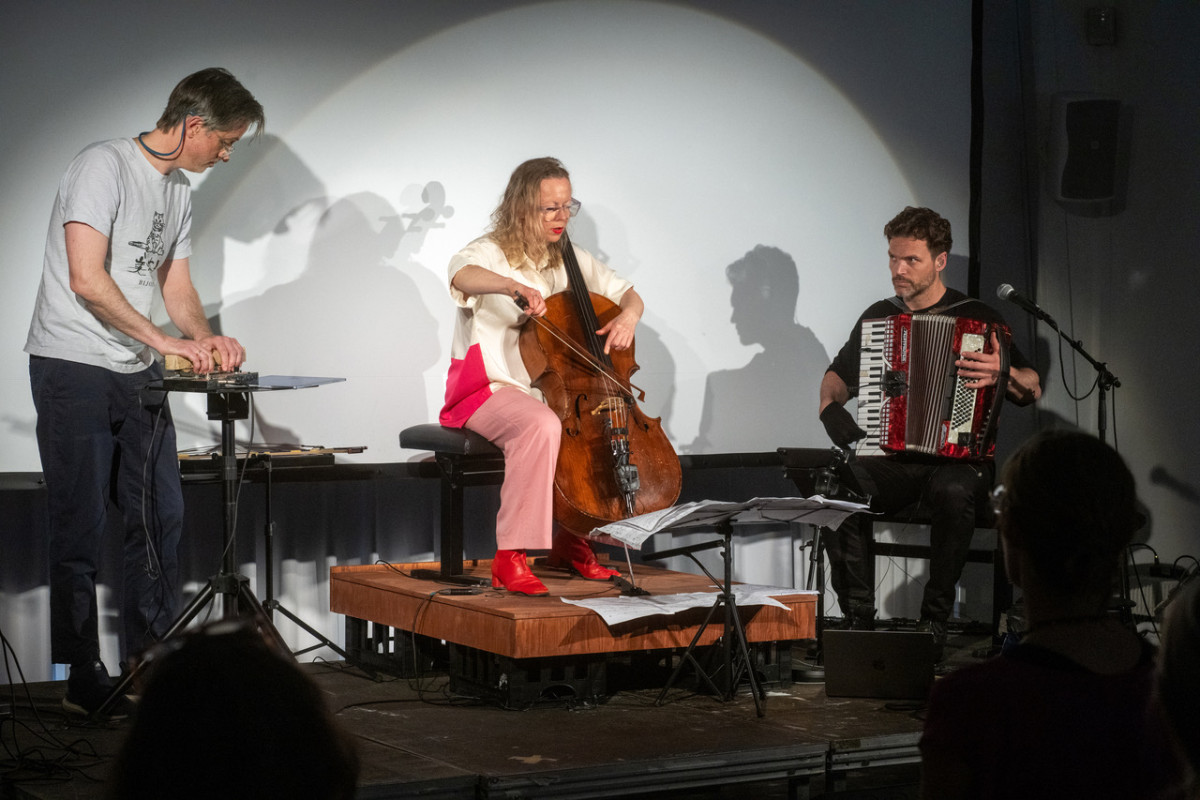
The evening’s main attraction was the trio Mesmer – Emil Jensen, Victor Dybbroe, and Anders Filipsen – who performed works from their new piece Terrain Vague II, developed through several residencies in Northern Jutland. The three compositions moved within a field of electroacoustics, contemporary music, and analogue improvisation, carrying a distinctly cinematic and nature-infused sensibility. The sonic plunges into the Limfjord were particularly striking: Dybbroe’s metal percussion and Filipsen’s lapping synth textures carved out a dark, magnetic space. In the piece inspired by Aalborg Harbour, Jensen’s trumpet cut through with long, mist-laden tones, like signals drifting in from distant ships. The result was both enchanting and, at times, deeply inspiring. It was a concert that, for now, refuses to loosen its grip on me.

English translation: Andreo Michaelo Mielczarek

© Angela Ankner

»The five tracks I'm listening to right now are recordings I discovered either four weeks or 40 years ago. They all bring me joy and inspiration. They represent who I am right now. They carry me. I feel at home and in my happy place when I listen to them. They are an integral part of my sonic persona.«

Holger Schulze is professor in musicology at the University of Copenhagen and principal investigator at the Sound Studies Lab. His sonic anthropology explores how sounds and listening in the 21st century stabilise, disrupt, and permeate everyday life. Artistic practices and everyday objects are both of equal concern to his sonic critique. Currently he works on The Bloomsbury Encyclopedia of Sound Studies in 3 volumes (as one of three editor-in-chiefs together with Jennifer Stoever and Michael Bull) and on The Bloomsbury Handbook of Sound in Museums (together with Alcina Cortez, Gabriele Rossi Rognoni and Eric de Visscher). His publications include: The Bloomsbury Handbook of the Anthropology of Sound (2021, ed.), Sonic Fiction (2021), The Sonic Persona (2018), Sound as Popular Culture (2016, co-ed.)

in briefrelease
27.04

Myths From a Dying Sea

Wanderwelle: »Ghosts Beneath the Brine«
© PR
© PR

The ocean as Cape Lonesome, as a graveyard where at midnight the mythical, the real, and the endangered rise from the dead: this is the sonic world of Ghosts Beneath the Brine, the new album by Amsterdam-based experimental duo Wanderwelle.

Across eight tracks suspended between elegy and requiem, the album navigates the reality of climate change and species extinction while invoking the mythology of creatures of the deep. To sound the crisis, Wanderwelle chose not to record melting icebergs or raging wildfires. Instead, they submerged cymbals – small, bowl-shaped metal plates used since ancient rituals – in saltwater for extended periods. As the metal degraded, its sound grew darker, more fragile, more unstable, releasing ghostly overtones.

Those tones drift through the album like the critically endangered albatross – to which the sixth track is dedicated – spreading its 3.5-metre wingspan like a ghost across vast, indifferent skies. Layered with reverb and sounds evoking lamenting, whimpering animal voices, the pieces carry titles that weave myth and ecological reality: »The Seabishop's Sermon« (named after a creature allegedly caught in the Baltic Sea in 1513), »Empty Net or Dissolving Souls«. The message is clear: sharks and oysters risk becoming as mythical as sea monsters once were, if destruction continues.

And yet this is precisely where the album's beauty becomes its limitation. Ghosts Beneath the Brine sounds hauntingly gorgeous – but like the sublime spectacle of a shipwreck witnessed from a safe distance, it invites us to shudder rather than act. More ghost train than alarm bell, it offers catharsis where the moment calls for urgency.

in briefrelease
26.04

Let's Sing About the Cycle

Adrianna Kubica-Cypek, ÆTLA & Barbara Agertoft: »Månen«
© Saba Lykke Oehlenschlæger

The moon is a fundamental poetic motif. Its cycle pulls at both the tides and at us – within bodies and fluids alike. Composer Adrianna Kubica-Cypek and the vocal ensemble ÆTLA interpret this motif from Barbara Agertoft’s poem »Månen«. The composition is divided into »Månen« I, II, III and IV. It is a successful EP with a clear sense of purpose: the strong textual foundation establishes a distinct compositional direction without digressions, yet musically it cannot stand on its own.

The moon’s power to connect the inner and the outer emerges strongly in Agertoft’s poem: »and we stretched ourselves out, the inner in the outer all that we / bled into.« How better to convey this fundamental mood than through a vocal ensemble – individual bodies that bleed into an external, shared sound? Kubica-Cypek’s interpretation is dynamic, full of contrast and undulating, like flood and ebb. It begins with a piercing timbre of female voices, unfolding into crossing glissandi supported by deep, monotonously chanting male voices. At times, the sounds converge into harmonic chords; more often, the voices move in diverging directions in both volume and pitch, or insist on remaining in dissonance and repetition.

»Månen IV« concludes as an inversion of the sharp opening of »Månen I«, with subdued and dark sonorities that feel partially unresolved – as if the work is meant to be heard again from the beginning. In its form, the choral arrangement is cyclical, bringing out something understated in Agertoft’s poem. It demonstrates the quality of mutual interpretation: the art forms add something to one another.