Louise Beck
Louise Beck

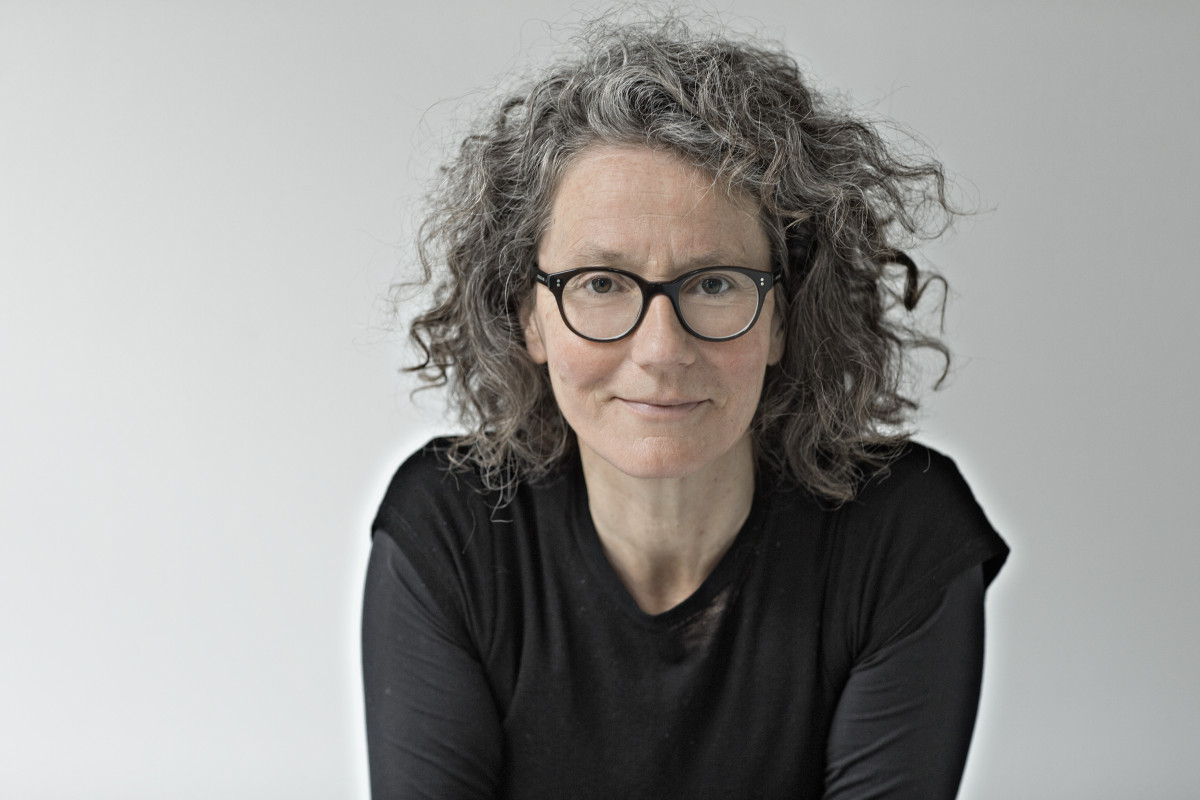
When Louise Beck presented her first opera at Copenhagen Opera Festival in 2022, the audience was asked to bring ski wear and thermal suits. Den Sidste Olie (The Last Oil), about the colonisation of Greenland and the exploitation of nature, unfolded on the ice at Østerbro Skøjtehal. It marked the beginning of a fruitful collaboration on newly written works that expand the frames and spaces of opera. Now that collaboration enters a new phase: from 1 September, Louise Beck will become the festival’s new artistic director.

Louise Beck is a scenographer, director and artistic director of the opera platform OPE-N (formerly OperaNord). For nearly three decades, she has worked to develop opera as a vibrant and contemporary art form – in site-specific formats and in dialogue with the repertoire. She has also made a clear mark in the debate on opera’s development conditions and sustainable structures.

»Over the years, I have followed Copenhagen Opera Festival’s tremendous efforts to make opera more accessible and to enchant an entire city with the art form’s stardust. Opera is an all-embracing and untamed art form that can include and move us all – and the festival has recognised this perfectly. Today, it is an indispensable platform where tradition and innovation, opera lovers and entirely new audiences meet. I look forward to helping strengthen and expand this dynamic platform,« says Louise Beck.

She intends to further develop the festival’s role as a key piece of infrastructure within Denmark’s opera ecosystem, where opera houses, the independent scene and new voices come together in committed collaborations – both during the festival and throughout the year.

»In Denmark, there is an enormous pool of talent and a wealth of both experienced and groundbreaking artists who are able and eager to develop the opera genre within the independent scene. Their creative drive and visions are absolutely crucial to the opera ecosystem, and with targeted support from Copenhagen Opera Festival, this strong field will be able to reach audiences across the country and help place Denmark on the international opera map,« says Louise Beck.

Beck succeeds Amy Lane and will take up the position on 1 September. 

Copenhagen Opera Festival 2026 will take place 13–23 August in Copenhagen.

© Jesper Van

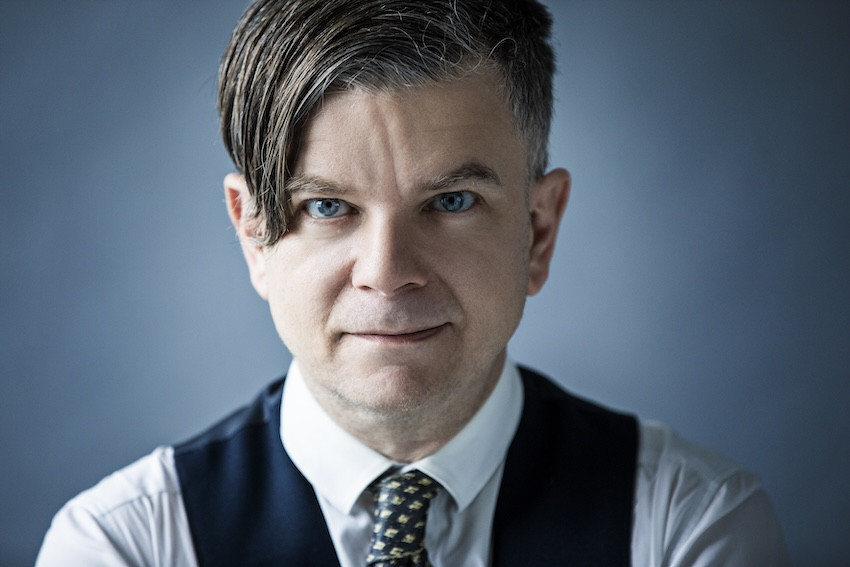
»Music for me is something that’s constantly playing in my head. I can’t switch off that part of my brain where new melodies and rhythms emerge and take shape – hardly even when I’m asleep. For that reason, I’m not really a big music consumer. One exception is live concerts and music festivals, where I love seeking out music I don’t already know and letting myself be surprised – most recently the intriguing band Nebulah, emerging from the Esbjerg Academy of Music. At home, it’s our 19-year-old daughter who controls the playlist. She sings backing vocals on my album and has introduced me to many artists over the past years. Through her, it’s also been great to rediscover classic artists like CV Jørgensen, Stevie Wonder, and Joni Mitchell. Very inspiring.«

LOH is a Danish songwriter and pianist. The piano has been part of his life since childhood, but until recently it was overshadowed by a career in the TV industry, where he worked as a documentary producer, creating hundreds of programs for Danish television. His debut album Logger Ud, released in March 2026, features Danish-language folk-pop songs with a touch of Nordic jazz.

in brieflive
17.04

The Kids Are Alright

Ligeti Quartet: »Workshop concert«
Ligeti Quartet. © Louise Mason

I know, I know. A workshop concert at the conservatory: yawn. And no, hardly anyone showed up – apart from Bent Sørensen. Fair enough. But yes, you missed out. Especially on young Albert Laubel, who did exactly what you hope someone will do at this kind of concert: suddenly step forward, make a mark, and promise something for the future.

It was the English Ligeti Quartet visiting the Royal Danish Academy of Music for the seventh time to work with the students. And they did so with both commitment and precision. (Someone should really give them a prize one day – say, someone sitting on a fortune they clearly don’t know what to do with.)

Lucas Fagervik’s Bells & Canons set up stark oppositions, as composers tend to do in exercises of style: a bright, slightly fractured minor chord set against gentle baroque pastiche in increasingly rapid alternations. Then a movement with brutal – almost banal – glissandi, another with heavy bow strokes, and a final one in which the strings took turns trying to keep a single tone alive. A beautiful, constructive, and Jürg Frey–porous landing.

A different kind of circus instinct drove Yifan Shao’s ultra-short Dreams Evaporated Too Soon, which sounded like abused sounds dragged across a floor. The ending was ultra-theatrical: the quartet froze mid-air for a moment before scraping the last traces of life out of the strings.

»I can make this even more mannered,« Jonas Wiinblad must have thought, opening his String Trio with Viola – not a quartet, of course! – with silent playing. But cliché turned into quiet poetry as small, innocent intervals slowly emerged in tight patterns. When the viola was finally allowed to join, it went against the grain: a virtuosic solo cadenza with falling bow strokes, shimmering overtones, and temperament. Boom! A striking contrast. Less convincing was the piece’s apparent need for a final, unnecessary layer of electronic distortion. Still, points for mannerism.

What remained was Albert Laubel’s String Quartet as the most fully realized work of the concert. Not overthought, just a seamless movement between dynamic extremes. Distinctive trills were elegantly disarmed by inserted snaps, glissandi sounded like part of an internal logic rather than mere effect, and the sound world shifted with calm dramatic overview. Substance and maturity in 2026 – well, well.

English translation: Andreo Michaelo Mielczarek

in briefrelease
13.04

A Cave of Sound: TAK Ensemble Cuts into the Acoustic Darkness

TAK Ensemble: »Between the Air«
© Titilayo Ayangade
© Titilayo Ayangade

Between the Air demands ears in exploration mode. TAK Ensemble’s eighth album unfolds as a dense acoustic landscape – like a cavern of sonic stalactites, rich in texture and resonance.

The five works, written specifically for the New York-based ensemble, present distinct voices in experimental contemporary music. The album opens with Eric Wubbels’s Instruments, a compelling actualization of Helmut Lachenmann’s musique concrète instrumentale. Violinist Marina Kifferstein’s energetic scratch technique sets a raw tone, carried by the ensemble’s precise, noise-based interplay, which shapes the album as a whole. At its center lies Lewis Nielson’s Siesta Negra, a sonification of Che Guevara’s final notes, written in 1967 shortly before his execution. Its oppressive, almost nightmarish atmosphere is foreshadowed by the sharp-edged textures of Golnaz Shariatzadeh’s moon that sank | wet grass. Bethany Young’s At Midnight I Walked in the Middle of the Desert then follows as a surreal, radio-play-like, playfully exaggerated coda. The album concludes with Tyshawn Sorey’s For jamie branch, a restrained elegy for the exceptionally gifted jazz musician who tragically died in 2022 at the age of 41.

With Between the Air, TAK Ensemble once again demonstrates its remarkable sensitivity to the materiality of sound, inviting listeners to move beyond the often harsh surface of the present – and, perhaps, to breathe more freely again. 

© Julie Montauk

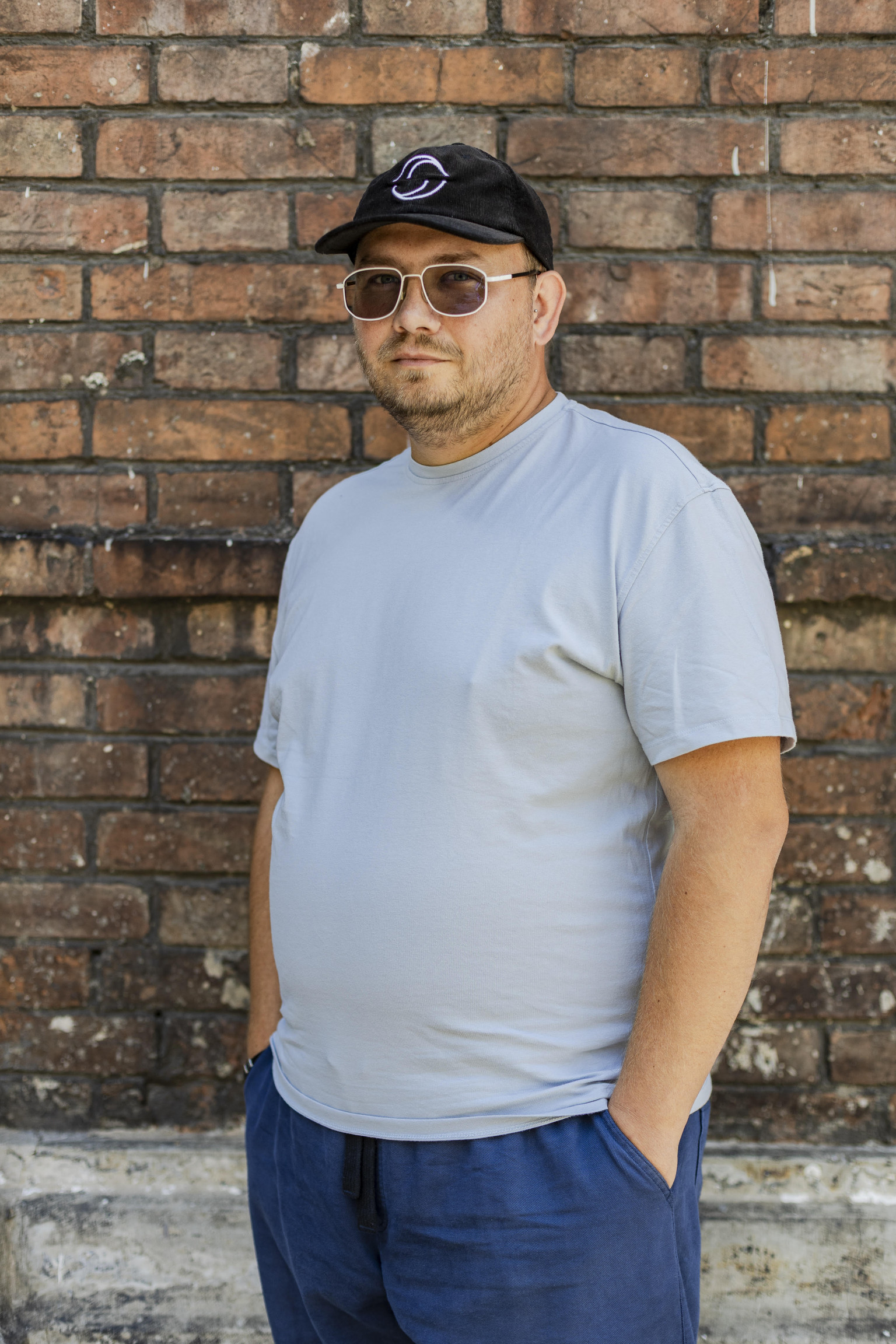
»Music for me is a huge gift and an equally big mystery. I think it's pretty crazy to think about how much music there actually is! Imagine that as a listener you can be let in and get access to the innermost selves and feelings of so many different artists – and how many small details are in the artist's choices, so that it will sound exactly the way it does. It's mind-blowing! And really cool! I listen to a lot of different music and love when it speaks to both the head, the heart and the body – regardless of genre. It can be Radiohead's »Exit Music (For a Film)« or Peter Gabriel's »Sledgehammer«, for example. 

Anja Roar is a Danish singer and songwriter with a career that spans more than three decades. She has, among other things, sung a duet with Peter Belli, worked with DJ Aligator in the 90s band Zoom and participated as a choir singer on a long list of Danish releases. She has just debuted as a solo artist with the album Gratification. The publication thematically revolves around love in many forms – from the romantic and redemptive to the self-loving and socially critical.

in brieflive
13.04

The Harp’s Quiet Slumber

Julianna Barwick & Mary Lattimore
© Mathias Bak Larsen

The harp – one of the oldest string instruments – has always, to me, been closely tied to the floating threshold between sleep and wakefulness. Its quiet paving between night and day became even more palpable when Julianna Barwick and Mary Lattimore brought the ancient instrument to life at DR Concert Hall’s Studio 2. Lattimore’s harp playing and Barwick’s ethereal vocals inhabit a space somewhere between modern ambient and classical nocturne – like an anachronistic lullaby infused with synthesizers and drenched in reverb.

Most of the concert’s pieces were drawn from Barwick and Lattimore’s recent album Tragic Magic (2026), recorded over ten days in a basement beneath the Philharmonie de Paris, with free access to its collection of antique instruments. Both 1970s synthesizers and 18th-century harps are awakened on the album. And although Barwick noted with a smile that the old harp from 1740 unfortunately could not join them that evening, it was clear to feel the two American musicians’ passion for the span between the antique and the contemporary. This tension was most evident in their story about the first rainfall following the devastating wildfires in their hometown of Los Angeles. A field recording of that very rain introduced their subsequent cover of Vangelis’ »Rachel’s Dream« from the Blade Runner (1982) soundtrack, casting the all-consuming fires in a dark science fiction glow. Yet Barwick’s cinematic whistling and Lattimore’s harp arpeggios still found a glimmer of light within the dystopian darkness. Though both musicians have long-standing solo careers behind them, one can only hope this will not be the last we hear of their collaboration.