in brief
04.06.2021

Til rave med Teletubbies

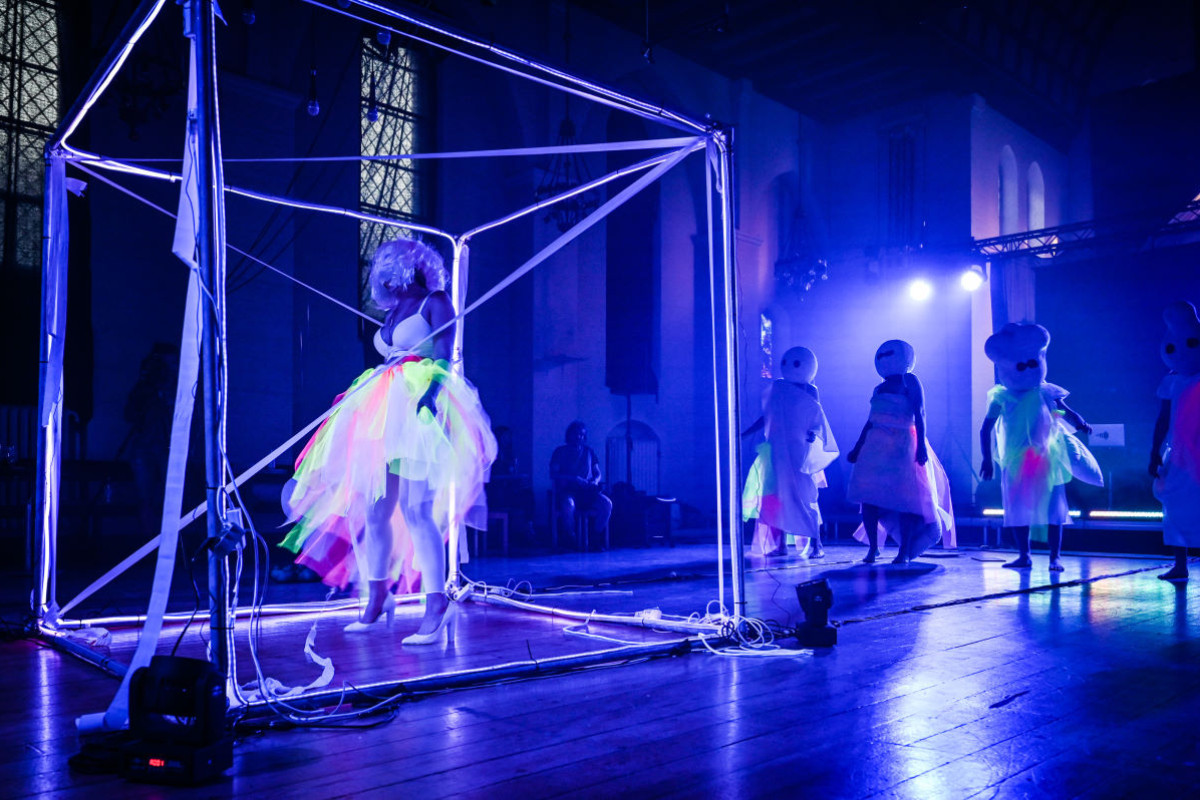
Klang Festival: Alexandra Hallén & Krumbuktus
Alexandra Hallén og Krumbuktus. © Alexander Banck-Petersen
Alexandra Hallén og Krumbuktus opførte en række værker under overskriften »Alexandras Spectacle«. © Alexander Banck-Petersen

»Nu kan alt ske, lige om lidt kommer Alexandra flyvende gennem ruden.« Jeg overhørte denne kommentar, mens vi ventede på at blive lukket ind i Koncertkirken. Døren gik op, og fire væsener med kæmpe papmachéhoveder og tylskørt lukkede os ind. Til en scenografi, der bestod af et bur bygget af neonrør. Oh yes, alt kan ske nu, tænkte jeg og trådte ind i en verden af tyl, pap, neon og teletubbier fra mine dybeste mareridt.

Koncerten vekslede mellem kropsligt performanceteater, hvor lyden kom fra de mange mikrofoner, der var sat i neonburet, og ravemusik af den type, man går til klokken tre om natten på Roskilde. Fire sortklædte mænd i helt hvide høje hæle udførte to forskellige, velkoreograferede serier med hælene som percussion. Senere så vi fire hvidklædte kvinder, bundet sammen i et stort stykke stof, binde snore på kryds og tværs af buret for herved at skabe musik, når de kastede sig mod stoffet og kun blev holdt af de andre. Jeg sad på kanten af mit sæde, hver gang en af performerne var ved at falde, hvilken intensitet!

Men mest fascinerende var kontrasten, da ravemusikken begyndte at spille og de fire stagehands tilfældigt, men effektivt fjernede alle paprørene fra neonburet. Ravets uplanlagte koreografi af kroppe, der intuitivt vidste, hvor de skulle hen, til de elektroniske og prædefinerede rytmer, rundede fint aftenen af, da de nu otte mareridts-teletubbier dansede rundet i salen. Jeg er stadig ikke sikker på, hvad der skete – men nøj!


in briefrelease
26.04

Let Us Sing of Cycles

Adrianna Kubica-Cypek, ÆTLA & Barbara Agertoft: »Månen«
© Saba Lykke Oehlenschlæger

The moon is a fundamental poetic motif. Its cycle pulls at both the tides and at us – within bodies and fluids alike. Composer Adrianna Kubica-Cypek and the vocal ensemble ÆTLA interpret this motif from Barbara Agertoft’s poem »Månen«. The composition is divided into »Månen« I, II, III and IV. It is a successful EP with a clear sense of purpose: the strong textual foundation establishes a distinct compositional direction without digressions, yet musically it cannot stand on its own.

The moon’s power to connect the inner and the outer emerges strongly in Agertoft’s poem: »and we stretched ourselves out, the inner in the outer all that we / bled into.« How better to convey this fundamental mood than through a vocal ensemble – individual bodies that bleed into an external, shared sound? Kubica-Cypek’s interpretation is dynamic, full of contrast and undulating, like flood and ebb. It begins with a piercing timbre of female voices, unfolding into crossing glissandi supported by deep, monotonously chanting male voices. At times, the sounds converge into harmonic chords; more often, the voices move in diverging directions in both volume and pitch, or insist on remaining in dissonance and repetition.

»Månen IV« concludes as an inversion of the sharp opening of »Månen I«, with subdued and dark sonorities that feel partially unresolved – as if the work is meant to be heard again from the beginning. In its form, the choral arrangement is cyclical, bringing out something understated in Agertoft’s poem. It demonstrates the quality of mutual interpretation: the art forms add something to one another.

»Musik er for os en sammensmeltning af forskellige bevidstheder i ét fælles fokuspunkt.«

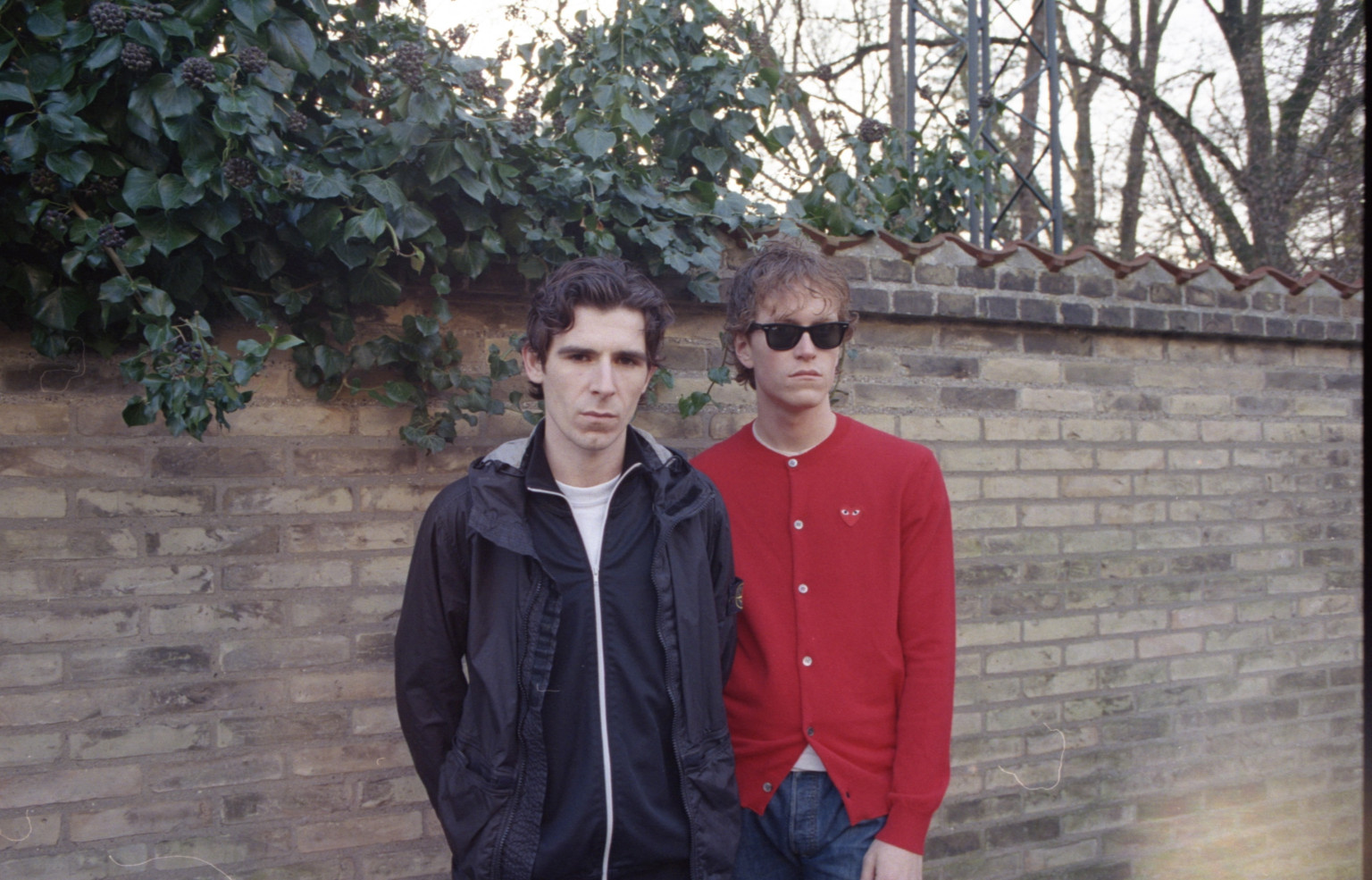
Bandet Selvhenter blev grundlagt i 2010 af trombonist Maria Bertel, saxofonist Sonja LaBianca, violinist Maria Diekmann og trommeslagerne Jaleh Negari og Anja Jacobsen. I 2017 forlod Maria Diekmann gruppen, og Selvhenter fortsatte som kvartet.

Selvhenters lyd udgøres af en kæmpe fascination af klanglige teksturer, rytmiske forskydelser og polyrytmer, akustiske og elektroniske melodier, hårdtslående kompositoriske valg, improviseret skønhed og ren og skær glæde ved at skabe og spille musik. Selvhenter har spillet koncerter i ind- og udland. Selvhenter er også omdrejningspunkt for kunstnerkollektivet Eget Værelse, der huser medlemmernes soloprojekter, og samarbejder som Valby Vokalgruppe, SOLW, Nina Garcia & Maria Bertel og G.E.K.
 

in brieflive
22.04

The Voice in My Head

MØR Collective: »Vildnis – der vokser græs ud af min hovedskal«
© PR
© PR

»Is your head also filled with voices that aren’t your own?« the young man asks. The question forms the central theme of Vildnis (Wilderness], a performance by the theatre group MØR collective, and most people would probably answer yes. But whose voices are they, and where do they come from?

In the introduction, Vildnis is described as »a journey into the engine room of theatre.« Playwright Abelone Koppel has written 80 short texts, and each evening a selection is activated by two performers who do not know in advance which texts they will receive through their earpieces. In a back room, a prompter reads the texts aloud, which the actors immediately translate into movement and voice on stage. It could easily have gone wrong. It doesn’t – and much of the credit goes to the two performers, whose work makes the concept function so well.

Also present on stage is composer Mika Forsling, who, through electronic means and abundant percussion, follows the mood unfolding between the performers – but unfortunately not much more than that. I actually found it somewhat difficult to hear what was going on and, at times, forgot about it altogether, as it felt relatively insignificant. It would have been an obvious choice to use the voice itself as an instrument in a performance centered on inner voices, and it is hard to understand why this opportunity is missed.

One should not see Vildnis for the music alone, even if it becomes more prominent towards the end, when the roles are reversed and Forsling’s rhythms seem to guide the performers’ movements. Nevertheless, Vildnis emerges as a cohesive and engaging experience, despite the unpredictability of the experiment.

English translation: Andreo Michaelo Mielczarek

© Mads Skarsteen, CPF

»Music for me is the fifth dimension of life, connecting all the others.«

For the past 10 years, Maja Dyrehauge Gregersen has been at the helm of the Copenhagen Photo Festival – the largest photography festival in the Nordic region. The Copenhagen Photo Festival is an international platform with over 1000 annual applicants from all over the world – and a clearly curated level that attracts world names and has lifted the festival out of its original, more local and open form.

© Jesper Van

»Music for me is something that’s constantly playing in my head. I can’t switch off that part of my brain where new melodies and rhythms emerge and take shape – hardly even when I’m asleep. For that reason, I’m not really a big music consumer. One exception is live concerts and music festivals, where I love seeking out music I don’t already know and letting myself be surprised – most recently the intriguing band Nebulah, emerging from the Esbjerg Academy of Music. At home, it’s our 19-year-old daughter who controls the playlist. She sings backing vocals on my album and has introduced me to many artists over the past years. Through her, it’s also been great to rediscover classic artists like CV Jørgensen, Stevie Wonder, and Joni Mitchell. Very inspiring.«

LOH is a Danish songwriter and pianist. The piano has been part of his life since childhood, but until recently it was overshadowed by a career in the TV industry, where he worked as a documentary producer, creating hundreds of programs for Danish television. His debut album Logger Ud, released in March 2026, features Danish-language folk-pop songs with a touch of Nordic jazz.