in brief
13.06.2022

Meditative kraftudladninger 

Klang Festival: »Xenakis 100« – Ekkozone
© Alexander Banck-Petersen

Tivolis Koncertsal var rammen for lidt af en begivenhed i dansk musikliv: Fem centrale kammermusikværker af den græsk-franske ærkeavantgardist Iannis Xenakis opført som jubilæumskoncert på dansk grund. Alt i alt af halvanden times varighed, fuldkommen suverænt kurateret og fremført af Ekkozone anført af Mathias Reumert. 

Xenakis' værker regnes med god grund for noget af det mest komplekse, der er skrevet i 1900-tallets anden halvdel, men de virker aldrig til at være skrevet med kompleksiteten som et mål i sig selv, sådan som man ellers har kunnet mistænke andre i hans generation for. 

Det indledende værk, en sats fra det marimba-dominerede værk Pléïdades (1978), fik mig til at ærgre mig over, at jeg ikke havde taget min fire år gamle dreng med: For han ville utvivlsomt have sat højlydt pris på værkets mylder af runde, mættede og meditative lyde, der lød som bløde kugler, som i en uendelig varm strøm flød hen ad gulvet. 

De to efterfølgende soloværker for henholdsvis percussion og klaver, Rebonds B/A (1989) og Mists (1980), blev opført attacca efter hinanden, dvs. uden pause. Det bidrog til at gøre deres ellers fundamentalt forskellige klangverdener forbløffende beslægtede med hinanden. I de første minutter af det sidste værk var det endda som om, at klaveret var blevet et slagtøjsinstrument. 

Koncertens ældste værk for klaver og fem koreograferede messingblæsere, Eonta (1964), blev her opført for første gang herhjemme. Dets tilsyneladende uforenelige modstilling mellem den pointilistiske, rationelle klaverstemme og de flydende, undertiden drømmende blæsere fik det næsten til at lyde som et kakofonisk remake af Charles Ives' The Unanswered Question. Værkets performative elementer, hvor blæserne ofte vandrede rundt på scenen, gav det samtidig et skær af noget fuldkommen uvirkeligt. Det værk ville jeg meget gerne se og høre opført igen. 

Endelig gav Okho (1989) for tre djember koncerten en medrivende afslutning. Anvendelsen af dette vestafrikanske instrument kan muligvis ses i et postkolonialt perspektiv, det vil sige som en kritik af Xenakis' adapterede hjemland Frankrigs stærkt problematiske historiske relation til kontinentet. I så fald lød værket som en dyster formaning om at lade kontinentet helt i fred. Og derved fik instrumentationen en selvironisk farve, der her blev skærpet af en langt senere tids Black Lives Matter-bevægelse. Jeg krympede mig i stolen, samtidig med at jeg var revet med af musikken og fremførelsen: Det var tæt på at være ulideligt.

Efter koncerten var mine ører godt gennembanket af al den lyd, men det var som om, jeg kunne have fortsat hele aftenen med at lytte til Xenakis' univers, spændt ud som det er mellem på den ene side aggression og raseri, på den anden tilbagelænethed og resignation. Jeg var overloadet og forklaret på samme tid. Og den følelse har for mig ellers været sjælden efter en avantgardekoncert.


© Lou Mouw

»For me, music is a non-figurative process that cannot be definitively categorised.«

Kristoffer Raasted graduated as a visual artist from the Media School at the Royal Danish Academy of Fine Arts in 2018 and is currently completing a PhD in practice-based and artistic research. Raasted has been an artist in residence at the Danish Institute in Rome and a visiting researcher at UdK Sound Studies in Berlin as part of his PhD.

© Iain Forbes

»When I search for new music, I search for sound that evokes images in my mind. It is fuel, a gateway to emotion, and my most important writing companion. When inspiration lapses, music is the tool that always jumpstarts it.«

Iain Forbes is a Scottish/Norwegian film director based in Oslo. He has studied film directing at Nordland College of Art and Film and the Norwegian Film School. His graduation film Revisited won a Student Academy Award in 2023. He has previously directed short films such as Snowman (2015) and Semper Fi (2017). His latest short After Dark won Best International Short Film at the Oscar-qualifying Foyle Film Festival in 2024

Nikolaj Nørlund. © Agnete Schlichtkrull

»Music, to me, is a companion through life, a premise, an excuse, a mystery, an explanation, a point of departure. It is old ideas, overlooked treasure chests, new angles, long concerts, doubt and conviction. It is words, tones, cracked voices, different points of departure, bass in the diaphragm, falsetto in the hair, challenges, rewards, and love.«

Nikolaj Nørlund made his solo debut with Navnløs (1996), an interpretation of poems by Michael Strunge, and released Nye Optagelser (1997) the following year, his first Danish-language singer-songwriter album. He has since worked broadly across music and poetry and is behind around 20 releases, both solo and in various band constellations. Nørlund’s projects range from collaborations with Copenhagen Phil on two orchestral albums, created together with author Naja Marie Aidt. His most recent release is the single »Englenes Park (nu ikke saa dark)«, the forerunner to the album Himlen skiftet ud, due for release at the end of November. In addition to his own work, Nørlund has, through the record label Auditorium, produced and released a number of Danish artists, including Niels Skousen, Ulige Numre, Jens Unmack, I Got You On Tape, and Martin Ryum. He was previously a member of Trains And Boats And Planes and periodically works with the English-language project Rhonda Harris. Nørlund has received a Danish Music Award (2003) and a Steppeulv (2006), both as Producer of the Year, as well as the Niels Mathiassen Cultural Award (2012).

© Mari Liis

»Music and sound for me is a language, the most present and fleeting one. It’s something that passes through your heart and becomes the past in a second. Music amplifies every emotion, love, happiness, anger, sadness a thousand times over, making me feel everything more deeply and sensitively.«

Sophia Sagaradze is a sound artist, composer, and performer from Georgia, based in Denmark. She experiments with space, multichannel electronics and audio-visual installations. Sagaradze is interested in creating works that explore the boundary between external and internal experiences of space. She holds a bachelor’s degree in classical composition from Tbilisi State Conservatory and a master’s degree in electronic composition from DIEM Royal Academy of Music, Aarhus/Aalborg. In 2022, she received the Carl Nielsen and Anne Marie Carl-Nielsen Foundation’s Talent Award in Composition. Sagaradze has performed in several countries, received commissioned works for ensembles, performed live and created audio-visual installations. She is a founder and artistic director of Aarhus Sound Association (Aarhus Lydforening), Project leader at ROSA  and a lecturer at the Royal Academy of Music, Aarhus/Aalborg.

»Like all art, music is a language for emotions, dreams, and the search for meaning—but for us it is just as crucial that music is a path to community.«

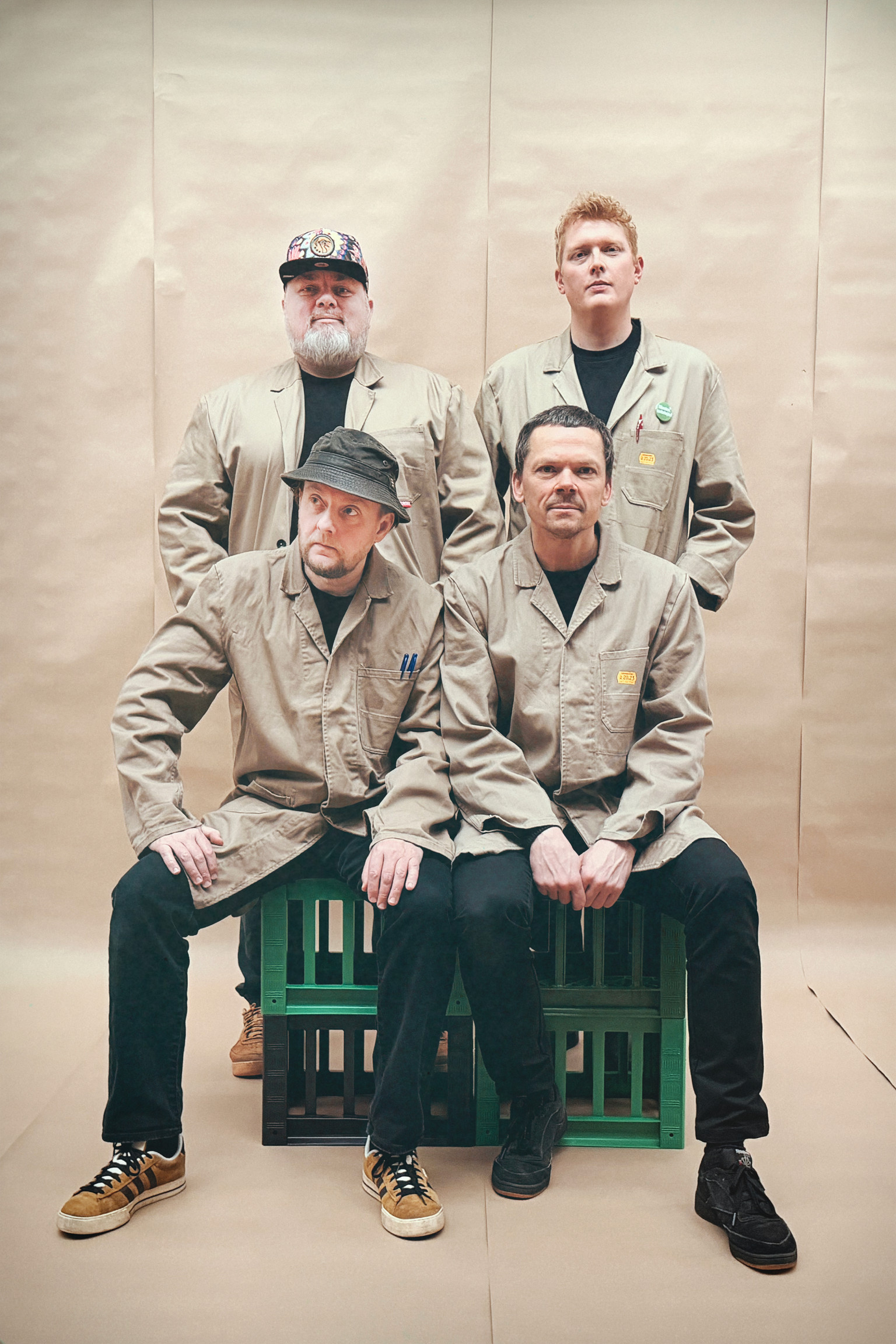
Girls in Airports is a Danish instrumental band with a palette that draws in particular on jazz, electronic music, and sounds from distant horizons. Since their debut album in 2010, they have created a sonic universe in which saxophones, synths, and pulsating grooves meet in a collective and dreamlike expression. Recently, the band has focused on artistic collaborations with, among others, Teitur and Aarhus Jazz Orchestra, and they are now on their way with a new album created in collaboration with the string trio Halvcirkel.