In brief
13.06.2022

Meditative kraftudladninger 

Klang Festival: »Xenakis 100« – Ekkozone
© Alexander Banck-Petersen

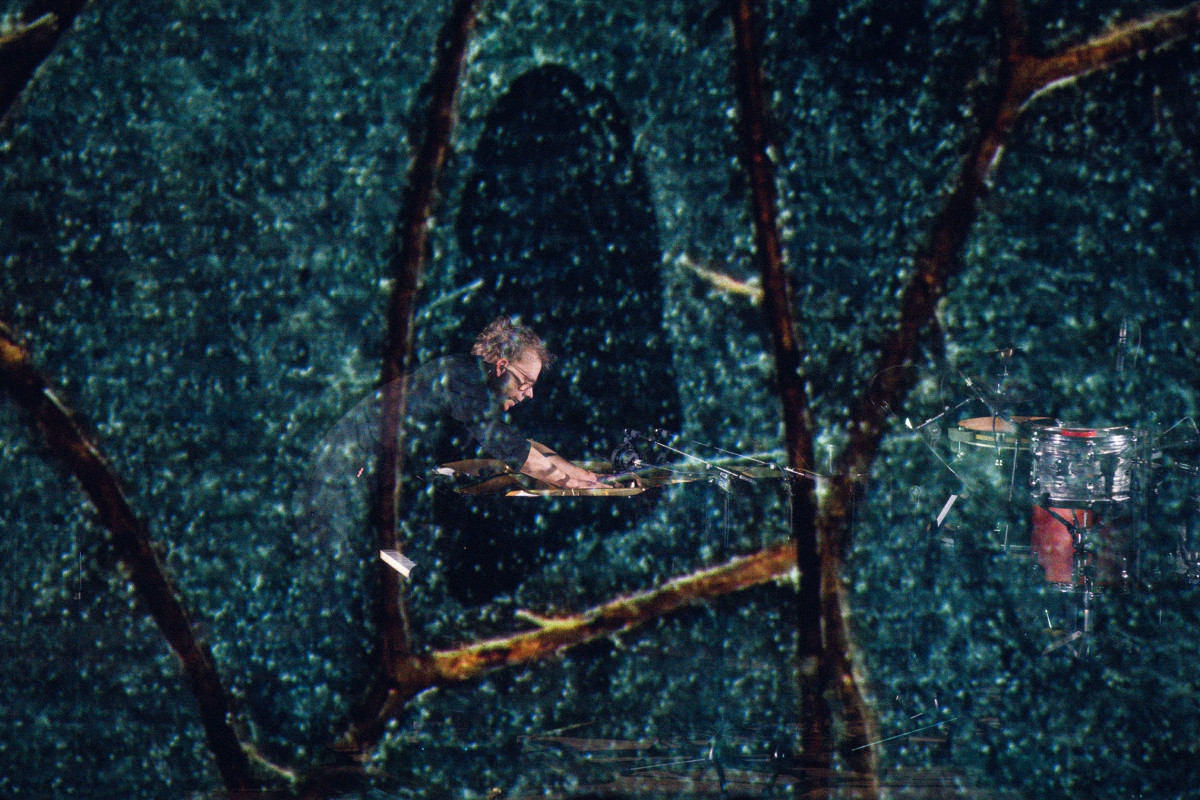
Tivolis Koncertsal var rammen for lidt af en begivenhed i dansk musikliv: Fem centrale kammermusikværker af den græsk-franske ærkeavantgardist Iannis Xenakis opført som jubilæumskoncert på dansk grund. Alt i alt af halvanden times varighed, fuldkommen suverænt kurateret og fremført af Ekkozone anført af Mathias Reumert. 

Xenakis' værker regnes med god grund for noget af det mest komplekse, der er skrevet i 1900-tallets anden halvdel, men de virker aldrig til at være skrevet med kompleksiteten som et mål i sig selv, sådan som man ellers har kunnet mistænke andre i hans generation for. 

Det indledende værk, en sats fra det marimba-dominerede værk Pléïdades (1978), fik mig til at ærgre mig over, at jeg ikke havde taget min fire år gamle dreng med: For han ville utvivlsomt have sat højlydt pris på værkets mylder af runde, mættede og meditative lyde, der lød som bløde kugler, som i en uendelig varm strøm flød hen ad gulvet. 

De to efterfølgende soloværker for henholdsvis percussion og klaver, Rebonds B/A (1989) og Mists (1980), blev opført attacca efter hinanden, dvs. uden pause. Det bidrog til at gøre deres ellers fundamentalt forskellige klangverdener forbløffende beslægtede med hinanden. I de første minutter af det sidste værk var det endda som om, at klaveret var blevet et slagtøjsinstrument. 

Koncertens ældste værk for klaver og fem koreograferede messingblæsere, Eonta (1964), blev her opført for første gang herhjemme. Dets tilsyneladende uforenelige modstilling mellem den pointilistiske, rationelle klaverstemme og de flydende, undertiden drømmende blæsere fik det næsten til at lyde som et kakofonisk remake af Charles Ives' The Unanswered Question. Værkets performative elementer, hvor blæserne ofte vandrede rundt på scenen, gav det samtidig et skær af noget fuldkommen uvirkeligt. Det værk ville jeg meget gerne se og høre opført igen. 

Endelig gav Okho (1989) for tre djember koncerten en medrivende afslutning. Anvendelsen af dette vestafrikanske instrument kan muligvis ses i et postkolonialt perspektiv, det vil sige som en kritik af Xenakis' adapterede hjemland Frankrigs stærkt problematiske historiske relation til kontinentet. I så fald lød værket som en dyster formaning om at lade kontinentet helt i fred. Og derved fik instrumentationen en selvironisk farve, der her blev skærpet af en langt senere tids Black Lives Matter-bevægelse. Jeg krympede mig i stolen, samtidig med at jeg var revet med af musikken og fremførelsen: Det var tæt på at være ulideligt.

Efter koncerten var mine ører godt gennembanket af al den lyd, men det var som om, jeg kunne have fortsat hele aftenen med at lytte til Xenakis' univers, spændt ud som det er mellem på den ene side aggression og raseri, på den anden tilbagelænethed og resignation. Jeg var overloadet og forklaret på samme tid. Og den følelse har for mig ellers været sjælden efter en avantgardekoncert.


In brieflive
24.02

Dido and Doom

Vinterjazz: Alice: Slim0
© Slim0

Doom was in the air when Slim0 took the stage on Saturday night at a sold-out Alice. In October, the band released the 17-track album FORGIVENESS—an album that takes a slow step into the riff-laden terrain of stoner rock. For this evening’s occasion, the Slim0 trio had been expanded with a lineup featuring Agnete Hannibal on cello, Aase Nielsen on saxophone, and Johan Polder on bass.

The sound exists somewhere between the English singer Dido, the drone-metal band Earth, and the drill trio Shooter Gang from Trillegården – an abstract comparison that hardly does justice to the uniqueness of the songs, as Slim0’s long referential tentacles stretch far beyond the music’s sharp contrasts. With its sacral-sounding choir and heavy drum passages, the single »Trenches« fit perfectly into the live setting. The darkness and the shifts between the three vocalists – from shared harmonies to growl – intensified the theatrical metal expression.

In a similar way, a nostalgic sigh arose when Dido’s catchy vocal lines from the hit »Thank You« emerged in the double cover »I Have But One Heart.« The perhaps lesser-known instrumental part, consisting of Earth’s »Coda Maestro in F Flat Minor«, turned the piece into a prime example of Slim0’s referential swamp brew. Although the many contrasts made for a rather epic concert, they also left me feeling somewhat conflicted. Conflicted because I genuinely enjoy Slim0’s heavy and fragmented universe, yet the lack of voluminous weight left me craving a more bone-rattling sound that could carve the sharp contrasts even more deeply. Hunger for more doom is certainly not a bad feeling, and I look forward to hearing the epic expression grow louder and even heavier.

In brief
13.02

Jeppe's Soundtrack

Christian Lollike: »Jeppe på bjerget«
© Rumle Skafte
© Rumle Skafte

During the opening blowjob – before anyone even says a word in the concrete ghetto—opera is heard. And when Jeppe (Thure Lindhardt), in dramatic fashion, settles accounts at the end during the Royal Couple’s Awards 2025, soprano Lina Valantiejute once again sings Purcell’s Dido’s Lament. Because a lament from around 1688 is about as authentic as it gets. Christian Lollike’s Holberg classic portrays the search for the genuine in a mendacious age. The PTSD-stricken war veteran Jeppe falls into the clutches of the Baron, a contemporary artist who subjects him to an art project – a »mental time journey« meant to transcend/heal him.

Sonically, Lollike is precise. The sounds amplify the reality-show-like ride Jeppe is trapped in: Mozart, Kingo, heavy metal, video-game sounds, hotel ambient music, and Aarhus Theatre’s Choir singing »I Danmark er jeg født« with emotions worn on their sleeves. The country songs in the final part of the play – set in a Western town in the 19th century – lend weight to the story of loser Jeppe. Lollike knows his reality-TV tricks (camera crews even film Jeppe leaving the theatre and heading to the nearest bar), and in a time when everything chimes and clamours, nothing feels more authentic than a real opera singer on stage and true songs from the prairie sung by genuine people in cowboy gear. It happens right before our eyes, live.

The sound design is sharp, just as in Lollike’s Orfeo (2023), where Monteverdi contributed to the atmosphere of doom. Jeppe on the Mountain is such a high (it also contains a good deal of humour) that one ends up thinking: if I woke up in a golden bed with a crowd of strangers around me, I would love to listen to the same soundtrack as Jeppe.

»Music is to me the subcutaneous holy matter. Finding each other in ourselves and ourselves in each other. The murk. The dust. The stars keep expanding. What is personal anyways? We’re all just touching each others’ faces and slowly speaking love poems in every action.«

Laura is the executive director and flutist of TAK ensemble. They are also a member of Talea Ensemble, and a frequent collaborator of musicians such as DoYeon Kim, Timothy Anguglo, yuniya edi kwon, Wendy Eisenberg, Lester St. Louis, Ryan Sawyer, Brandon Lopez, the International Contemporary Ensemble, Wet Ink Ensemble, and many others. Their recent solo album, field anatomies (Carrier Records), noted as one of Stereogum’s top-ten experimental releases of the year, charted in the Billboard top ten Classical Crossover releases Their duo with Weston Olencki, Music for Two Flutes, was released on Hideous Replica, and their upcoming solo release, FATHM, will come out on Out Of Your Head and Relative Pitch at the end of February. Laura can be heard on labels such as ECM, Denovali Records, Catalytic Sound, Pi Recordings TAK editions, Tripticks Tapes, and many others.

In briefrelease
07.02

The Shadow of a Soundtrack

Søren Gemmer & Jessie Kleemann: »Lone Wolf Runner«
© PR
© PR

As is often the case with soundtracks, musician and composer Søren Gemmer and the Greenlandic-Danish visual artist Jessie Kleemann tread a fine line on Lone Wolf Runner, whose music was originally written as the soundtrack to Kleemann’s performances of the same name in 2023 at the National Museum. How much of the original purpose (here, Kleemann’s performances) can and should be taken out of the equation for an album release to make sense?

In the PR material, the album is presented, among other things, as a postcolonial critique and an exploration of transcultural questions, which at first glance seems highly compelling – not least in light of the current geopolitical situation in which Greenland suddenly finds itself at the center. On a purely musical level, however, the release is not as gripping as one might have hoped. It lacks a stronger anchoring in a sense of purpose behind the music. Without having experienced Kleemann’s original performance, my impression is that the absence of precisely this aspect has left gaps too large for the otherwise, in many ways, intriguing music to fill on its own. Lone Wolf Runner is filled with references and hints of drama and storytelling that never quite come into their own.

There are nevertheless many interesting and exciting moments: Kleemann’s poetic voice, shifting not only between Greenlandic and Danish, but also between heavily vocoder-processed and seemingly untreated vocals. The atonal, hesitant, yet beautiful piano melodies in, among others, »The Dancer« and »Marble«, which create calm moments infused with tension. The industrial »The Skin«, halfway through the album, plants doubt about which direction the music is leading the listener. But in the end, Lone Wolf Runner lacks precisely what was cut away in the album’s process of becoming: a performance that can bind it all together.

In briefrelease
07.02

The Sinister Mastery of Shame

Ethel Cain: »Perverts«
© Silken Weinberg
© Silken Weinberg

To describe American Ethel Cain’s (Hayden Silas Anhedönia) stylistic shift from her debut Preacher’s Daughter (2022) to Perverts as an extreme U-turn would almost be an understatement. The distance from the debut’s gothic lo-fi pop to this monstrous work – combining dark ambient, noise, and dystopian ballads – is vast, all the while continuing Cain’s familiar reckoning with her religious upbringing and her struggle for sexual liberation.

On paper, Perverts is an EP running 89 minutes, but it feels like far more than that. Crushing noise drones, dusty piano strikes, and distant preacher voices from crackling radios are woven together with acoustic spaces. And although the record also contains more conventional ballads such as »Punish« and the beautiful »Vacillator« – which even features a clearly defined rhythmic progression – it is the long, epic ambient tracks that draw the listener into the often harrowing darkness.

One thing is that Cain suddenly makes dark ambient; another is just how good she is at it. Perverts is not only a profoundly unsettling insight into the friction between sexuality and religious fanaticism, but also an immediate, creative, and fully realized homage to a fascinating niche genre. A necessary album for anyone unafraid of the dark.