In brief
02.08.2022

En vild chat

TLF Trio: »Sweet Harmony«
© TLF Trio
© TLF Trio

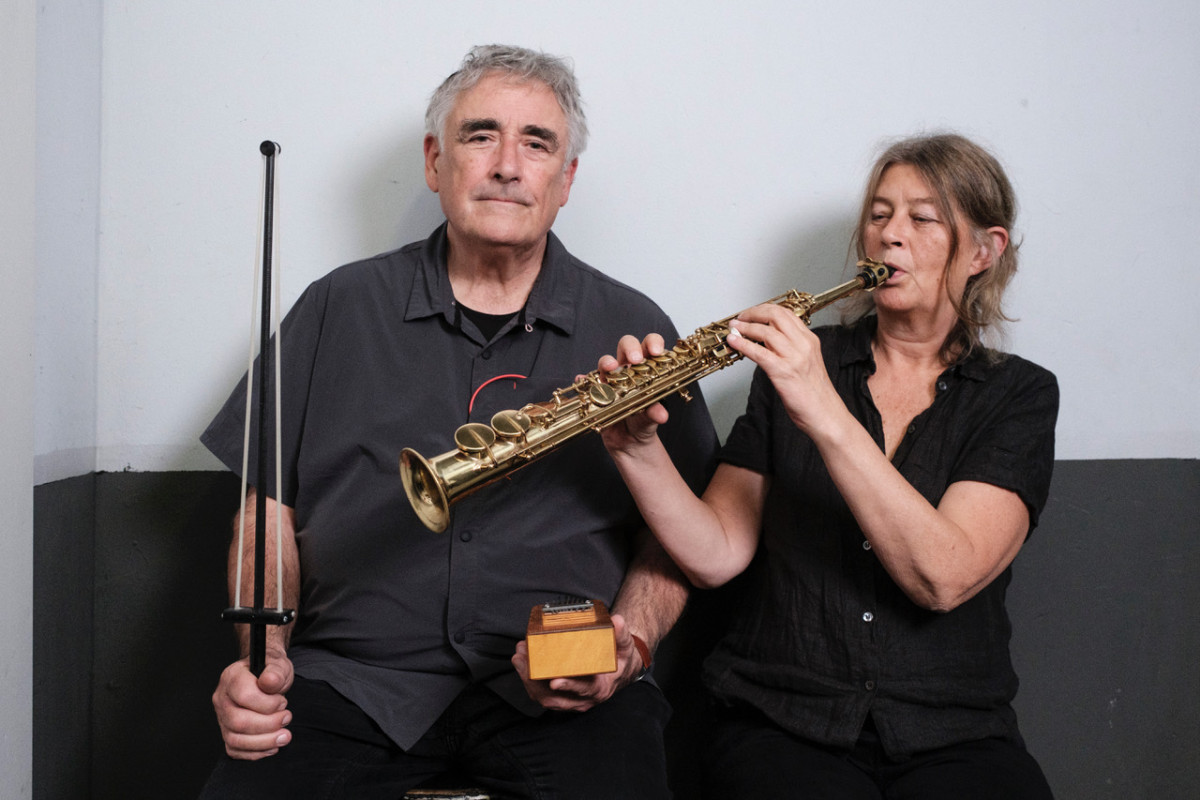
Det siges, at Goethe beskrev kammermusik som »fire fornuftige menneskers samtale«. Erstattes »fornuftige« med »legesyge« opstår freejazz.

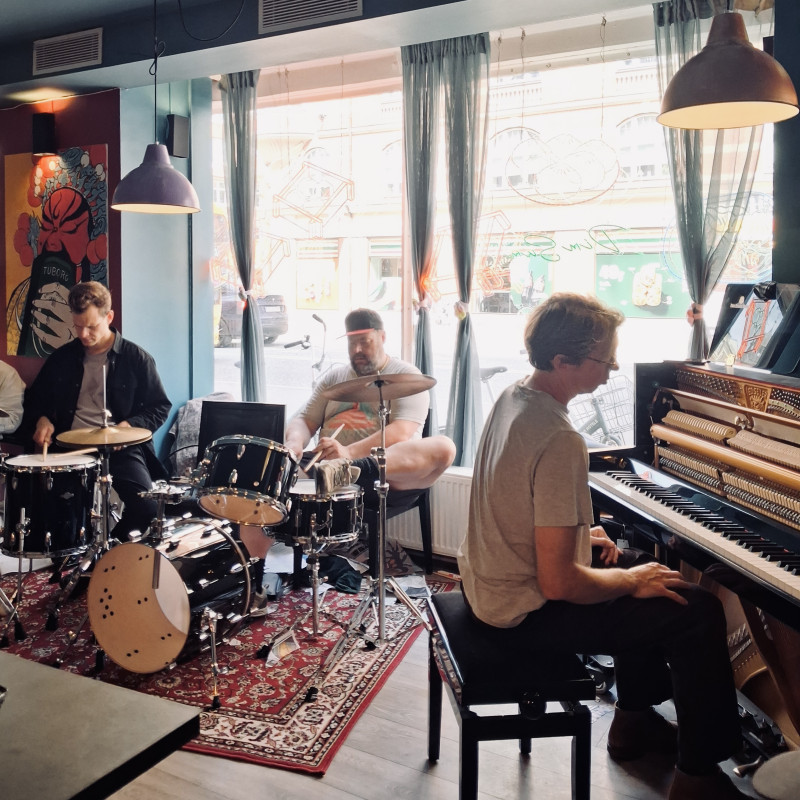
Hvor vi lever i en tid af fomo, angst for pauser og tomhed, skaber den københavnske TLF Trio det lydforladte rum, netop hvor vi ikke søgte. Stilheden gør sig bemærket på »Late August Early September«, hvor instrumenterne skiftevis taler, og efter en pause afløses af den næste, der giver sit besyv med. I enkelte passager spiller alle samtidig, dog uden at nogen hævder sig eller hæver stemmen.

Samtidig bryder albummet med en kontemporær musikalsk diskurs indenfor den rytmiske musik, hvor alt kan skemalægges, og hits opstår efter opskrift. Sweet Harmony er ikke en blid og harmonisk oplevelse, hvilket demonstreres på »March-like, Wild«, hvor Cæcilie Trier på sin cello knipser en insisterende rytme, der fletter sig sammen med klaver og guitar, og densiteten i nummeret løbende ændrer sig fra fyldt soundscape til enkel pizzicato. 

Avantgardeprojekter kan stikke af og blive til selvrefererende og smagløs kedsommelighed, men TLF Trio formår på fineste vis at kombinere genrerne på et album, der vil kede den traditionelle lytter og glæde mennesker med hang til eksperimenter og den gode samtale. 

© Inga Records

»For me music is life. It contains everything and carries the strongest healing powers there is.«

Mika Akim is the solo project of the viola player, composer and songwriter Mika Persdotter. The project started when Mika found a viola d'amore outside of Prague and started writing songs for it, about and for the body. Exploring open forms, minimalistic approach and mixing influences from folk music, baroque and experimenting with sound. The music is cyclic and honest. Since the project started Mika Akim has released two albums and now the third solo album feb 28 will be released on the 27th of February on Inga Records. 

Besides the solo project Mika Persdotter is an active musician in the experimental music scene as well as the contemporary and baroque fields in Copenhagen. Member of Halvcirkel, Damkapellet, Wolfskin Ensemble and Stök among others. 

Bobo Moreno. © Thomas Roger Henrichsen

»Music is an element for me, along with earth, wind, fire and water. Music is a nutrient that is part of my personal food pyramid, along with cheese, eggs and tomatoes. Music is a relationship in my life that is just as important as the people I have around me. Music is like an extra organ through which I perceive the world.« 

Growing up surrounded by his parents’ eclectic record collection, Bobo Moreno developed a love for music across genres. Named after his stepfather, jazz and rock bassist Bo Stief, Bobo started out on the electric bass before, at the age of 22, finding his true instrument – ​​his voice. Self-taught, he developed his craft through countless live performances and garnered recognition for his expressive voice and stylistic range. His national breakthrough came with the pop duo Peaches & Bobo in 1993. After decades of performing, at the age of 60, Bobo now releases Missing Pieces – his deeply personal debut album, reflecting a life of musical exploration and self-discovery, while marking a new chapter in a lifelong musical journey.

© PR

»Music for me is the purest communication! We are constantly trying to understand each other, completely in vain, with our inadequate language, while music speaks pure. I can’t think of a more powerful and influential form of expression. It surpasses visual art, film, theatre, everything. Music is without exception the start of all my work; I often think, if this work were a song, what song would it be?« 

ihsan saad ihsan tahir (b. 1995, UK/DK) graduated from the Royal Danish Academy of Fine Arts (2025) and Goldsmiths University of London (2025) and lives and works in Copenhagen. tahir has previously exhibited at, among others, Kunsthal Kongegaarden, Korsør (2026), SKAL Contemporary, Skagen (2025); 13 Vitrine, Lausanne (2024); Kunsthal Aarhus, Aarhus (2023;2024); Collega, Copenhagen (2024); and All All All, Copenhagen (2023). tahir opens a new, large solo exhibition at O ​​– Overgaden (February 20–May 3, 2026).

© Mira Campau

»Music to me is like water to plants. And a space to connect us, to ourselves, others and the world.«

Astrid Engberg is a contemporary artist with roots in the past, blending electronic-organic jazz, soul and percussive minimalism. Her sound combines heavy, minimal productions with personal storytelling and a spiritual edge, carried by a voice that balances sensitivity and strength. Since releasing her debut album Tulpa in 2020, highlighted by Bandcamp as one of the summer’s best releases, she has received the Steppeulven award as Producer of the Year 2021 and won Vocal Jazz Release of the Year at Danish Music Awards Jazz, alongside a nomination for Experimental Album of the Year.

Engberg has performed live and as a DJ at major Danish festivals and venues, including SPOT, Heartland, Roskilde Festival, DR Koncerthuset and SMK – Statens Museum for Kunst.

In brieflive
13.02

Ash in the Ear

Farvel & Peter Laugesen
© PR
© PR

There was something liberating about watching 83-year-old Peter Laugesen step onto the stage at Phono with a new band and not a trace of nostalgia. There was no hint of a poetic lap of honour. But plenty of noise. The trio Farvel – Halfdan Magnus Stefansson (guitar), Gustav M.K. Lauridsen (bass) and Jens Højbøge Mosegaard (drums) – did not play politely around the poet. They laid down a massive carpet of stoner rock and free improvisation beneath him, as if the words had to be wrenched free from gravel and distortion. At first the music moved heavy and viscous. For a long time. Then it accelerated. And Laugesen accelerated with it.

He sat on a chair in the corner, leafing through his books, speaking of dawn, of children at play before they disappear, of Finnegans Wake, Winnie-the-Pooh and an irate »then thaw, for fuck’s sake.« The words did not fall in rhythm – they landed like bolts on a workshop floor. Laugesen’s baritone is still as coarse as steel wire; the Brabrand accent refuses to be polished. He played the harmonica. It sounded more than off-kilter – a twisted blues.

Farvel emerged from a jazz ambition that dissolved and found another path in the abrasive aesthetics of 1990s noise rock. It suits Laugesen. The three young musicians did not play behind him, but with him, across generations, on equal footing. This was no solemn celebration of an ageing poet. It was a workplace filled with friction. At Phono, Laugesen sang – yes, sang – the prose of life across a wall of sound. His voice cut in between the rumbling bass and the grit of the snare drum. He spoke of »ash in the ear«. You left carrying precisely that: a tremor in your hearing. When language meets resistance, it can still strike sparks.

Phono. 12.02