Per Nørgård
45




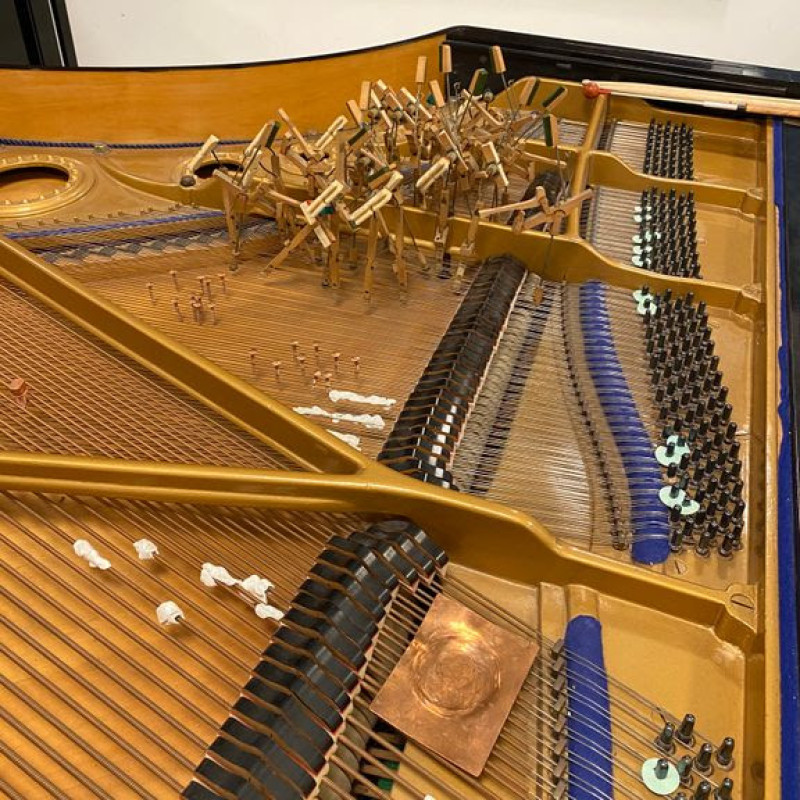
Følte de sig på en eller anden måde sat fri? I hvert fald mødte de to slagtøjssolister, Jakob Weber og Gert Sørensen, op i excentriske kostumer – hvidt jakkesæt og en ternet dragt, der duftede af dyr pyjamas – til uropførelsen af Line Tjørnhøjs orkesterværk Ør, hvor komponisten netop havde skrevet en vis frihed ind i deres noder.
DR Symfoniorkestret var skåret over på midten, men hvinede og stemplede af sted som et svedende maskineri. Til venstre for dem tastede Weber løs på et stumt flygel, mens Sørensen lod køllerne falde over et arsenal af pauker, gong og håndholdt percussion. Man fornemmede klart, at der var et angreb i gang; Tjørnhøj hvirvlede drama op af orkestrale tuttibrøl, som langsomt fortyndedes til træblæserklang og spinkel guiro.
Så satte det, der lød som en cirklende citatmusik, i gang. Et dramatisk faldmotiv med kontrafagot som dybt anker, sidenhen romantiske strygere og modernistiske orkestersløjfer. En slags halvmanisk kulisse for solisternes anderledes egensindige manøvrer? Halvvejs gennem andensatsen gik de over til orkestret og spillede umiskendeligt Safri Duo-boblende op til dans, mens kollegerne ligesom befandt sig et andet sted i musikken.
Ør blev man vel faktisk i mødet med denne argumenterende og hele tiden uroligt afsøgende, men også på den anden side glansfulde musik. Kontrastspil, meddelelsesbehov, spilopper. Værket var inspireret af Per Nørgård og levede fuldt op til hans credo om at forvirre på en fortryllende måde. Touché, Tjørnhøj!
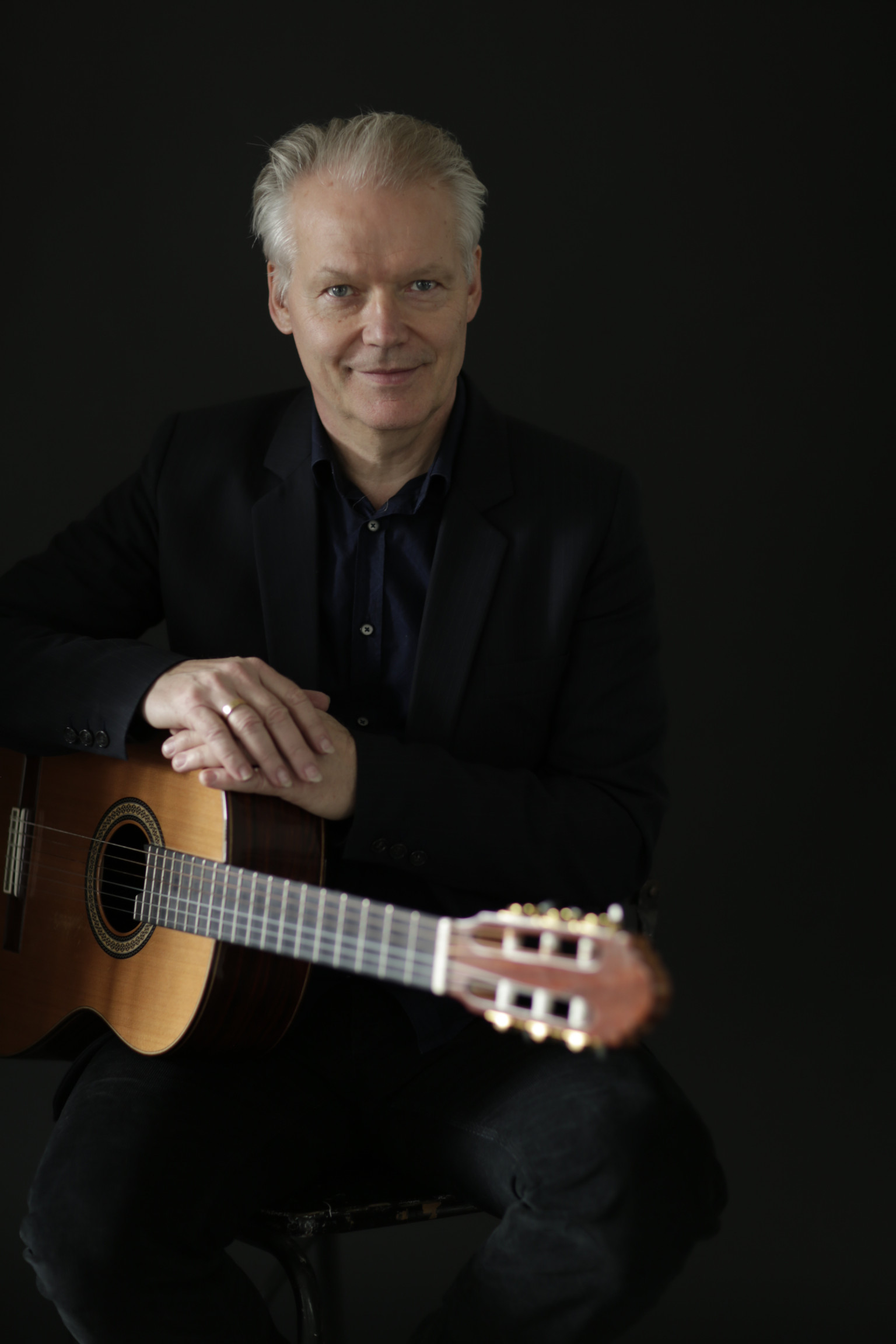
»Making a playlist is not an easy task for me. Music occupies most of my waking hours. It is a condition that began to grow when I was a teenager. If I am not playing myself, or working with the music I release or compose, music is still present, reaching out to me. I have always found it difficult to experience music in boxes or genres, so I listen very broadly and take pleasure in any music I can feel and that moves me. Music is a condition of life, and expressing oneself through music is a gift – but being able to experience music with openness is perhaps an even greater gift. I have chosen a list in which the guitar plays a part.«
Lars Hannibal began – like many others of his generation – playing folk and rock guitar at the age of fifteen. But when he heard the Spanish guitar master Andrés Segovia perform the gavotte from Bach’s Partita in E major, his musical life took a new direction, and he decided to devote himself to the classical guitar.
Since the early 1970s, Lars Hannibal has also composed songs and instrumental works. Today he performs primarily as a member of the Petri/Hannibal Duo and works alongside this as managing director of the record label OUR Recordings, which he founded together with Michala Petri in 2006, as well as a consultant for Edition Borup-Jørgensen.
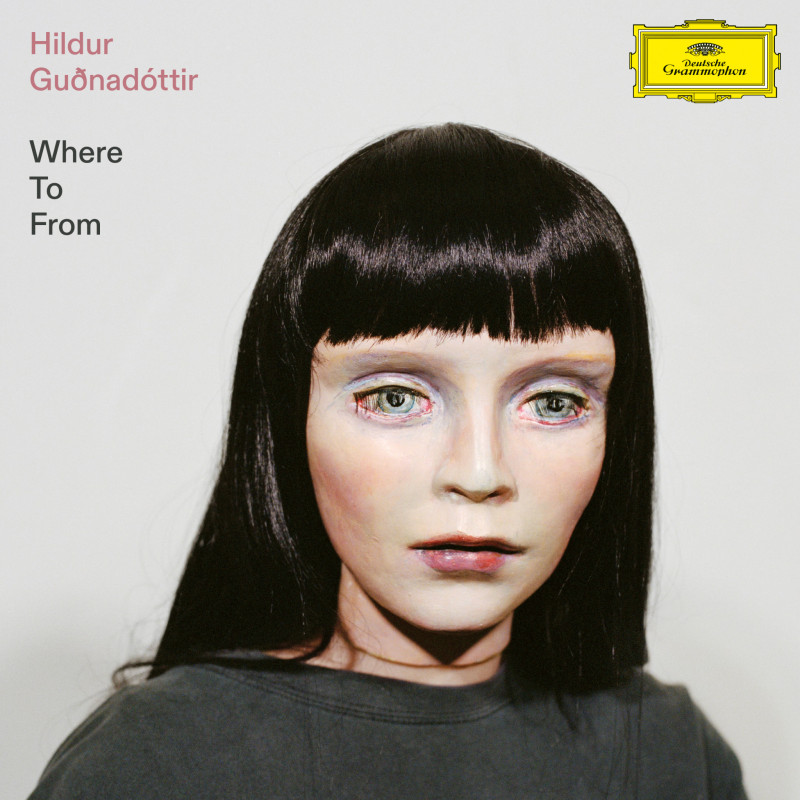
It seemed to come like a bolt from the blue when the Icelandic cellist and composer Hildur Guðnadóttir broke the sound barrier with an uncompromising, inward-looking sound situated between contemporary classical and experimental music – most widely recognised through her suffocating soundtracks for Chernobyl and Joker.
Yet on her Deutsche Grammophon debut Where to From, it is the personal spaces we are invited into. The instrumentation is pared right back to a chamber ensemble, voices, and extended passages of near-absolute silence. The result is often achingly beautiful – and deeply affecting.
The work unfolds in small vignettes, rarely lasting more than a couple of minutes, before vocals are introduced in the album’s second half – most notably in »Make Space« and the exquisite a cappella hymn »I Hold Close«. The equally beautiful »Melody of Not Knowing« explores the cello’s darkest registers, striking blue midnight tones in the echo of the heart, especially as it glides into »All Along«, where voice and strings merge.
Where to From is a powerfully mood-saturated work that moves effortlessly between chamber music and neoclassicism, finding its uncompromising character in the quietest, most intimate sighs between human and instrument. It is neither too little nor too much – always precisely measured. And for that very reason, Guðnadóttir remains such a compelling musical presence.
English translation: Andreo Michaelo Mielczarek

Varve – from the Danish varv – refers to the annual layers of sediment, a quiet geological archive of time’s passage. Lukas Lauermann’s album carries this meaning into its very sonic core. Here, organ and vocal samples taken from worn cassette tapes meet an inquisitive, almost ascetic cello that moves like fine strokes across a flickering, dust-filled soundscape.
The cello is restrained but never passive. It slips in and out of the cassette’s white noise, of fragmented voices and the organ’s gentle currents of air, until all elements ultimately merge into a single, organic texture. Lauermann himself describes the music as a depiction of irregularities, and it is precisely in these small shifts that Varve finds its quiet strength. The album’s idea of sonic sedimentation becomes an image of our longing to reconnect with nature’s tempo. The compositional motifs seem repetitive, yet they never repeat themselves entirely; they build layer upon layer, like organic growth. As a listener, one becomes witness to microscopic changes slowly unfolding – a process that can bring about an almost meditative state.
Varve is an album for those who prefer listening experiences at an unhurried pace; for those who find Hans Zimmer too grandiose and would rather follow the patient growth of grass than an orchestra’s emotional climaxes.
»Music for me is the purest transformation of any energy hiding inside. Through the sound it can become anything we need. It is a form of a bond and connection, it's subtle and it is direct at the same time. For me it was always the biggest exploration machine I could learn about myself, people and environments.«
Gintė Preisaitė is a Lithuanian artist based in Copenhagen who works across piano, electronics, composition and improvisation. Classically trained, she has moved steadily toward electronics, noise, free improvisation and jazz, performing in numerous constellations in recent years.
Working with prepared acoustic instruments, electronics and tape, she bridges her classical background with contemporary sonic experimentation. Through shifting timbres, textures, collaged melodies and percussive figures, she seeks to push acoustic and electronic sound into a space that feels both personal and deeply connected.
Last year she released the EP Spring Mass under the name Baraboro, followed this September by Kaiko, her trio release with Amalie Dahl and Jan Philipp Treen. She is currently developing a new project under her own name for release next year. Gintė performs widely as both a solo artist and a member of various ensembles in Copenhagen and abroad.

The organ, one of Christianity’s most powerful liturgical markers, runs like a red thread through Swedish artist Anna von Hausswolff’s work. But on her latest album Iconoclasts, the long, piercing drones are toned down in favour of a sharper, driving energy. It was an energy that came through strongly at Hausswolff’s concert in Vega last night, where she was, as usual, joined by a large band. The evening opened with Swedish noise musician Klara Lewis, whose mumbling cassette-loop textures set a brutally atmospheric tone from the start.
Hausswolff’s band was this time expanded with saxophone and percussion, both central on Iconoclasts and both contributing to the slight eurodance tinge that colours several tracks. Unfortunately, the saxophone was at times swallowed by the dense soundscape. Fortunately, Hausswolff’s radiant voice cut through clearly. So did the small organetto – a kind of bellows-driven organ with long pipes. It stood like a totem at the centre of the stage and was almost embraced by Hausswolff whenever she played it. A piece like »The Whole Woman« (a waltzing duet with Iggy Pop on the album) became, in concert, a touching love ode, carried by the organ’s gentle breath as its pulse.
In recent years, a number of musicians have used the organ’s distinctive resonances to wrest it free from the weight of Christian liturgy, giving the instrument an almost iconoclastic status. Despite a slightly muddy sound mix, Hausswolff’s concert was a clear example of this contrast – still deeply rooted in ecclesiastical connotations, yet now an accomplice in large-scale modern productions and a central instrument on major stages.
English translation: Andreo Michaelo Mielczarek