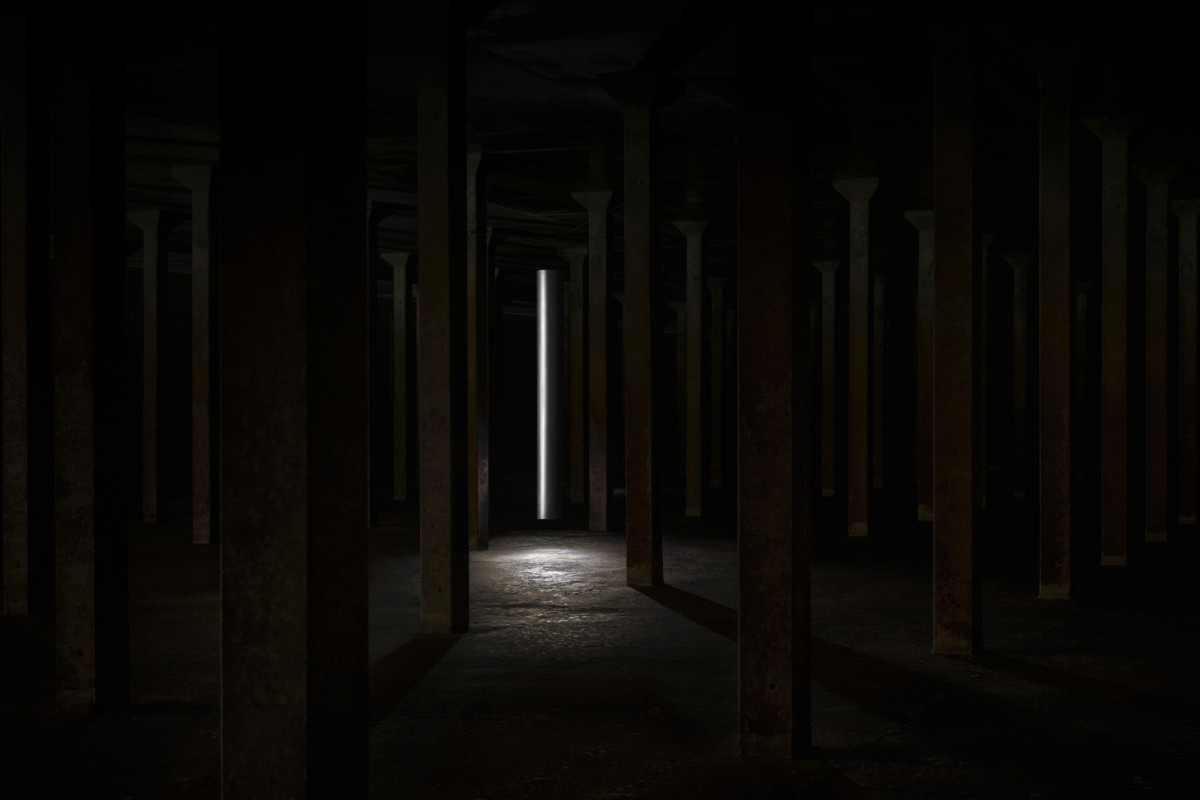
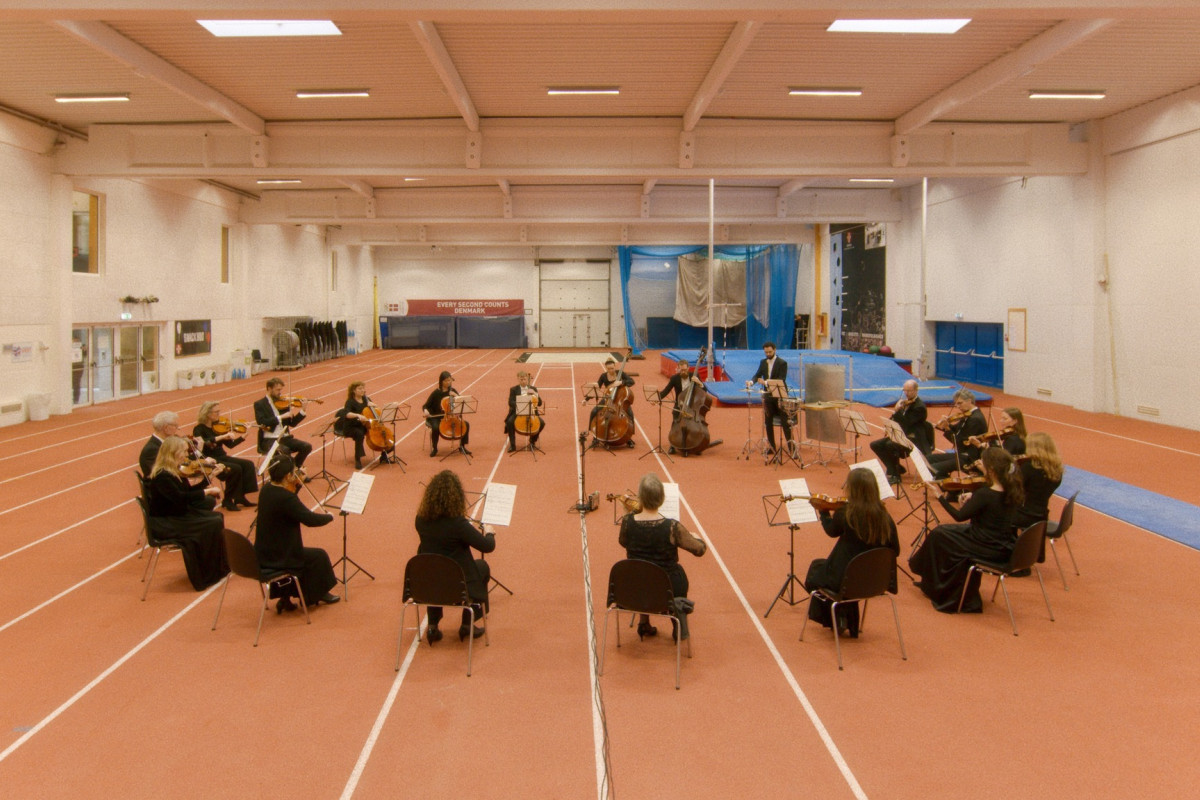
Allan Gravgaard Madsen’s and Morten Riis’s Away is a »mixed media« orchestral work. The physical orchestra is supplemented by sound and video recordings from the basement of Aarhus Theatre (woodwind quintet), Aarhus Cathedral (brass quintet), and Marselisborghallen (string orchestra). All of these locations have, at various points over the past 90 years, housed the Aarhus Symphony Orchestra.
Away opens with the final two chords of the overture to Rossini’s William Tell (1829), which are explored throughout the orchestra. Gradually, musicians leave the ensemble, only to reappear later in smaller constellations in recordings from the aforementioned locations. Through technology, the orchestra plays across time and space in a highly successful manner.
The work explores stasis and movement, with air as a central device: the wind players often blow into their instruments without producing tones, while the string players imitate the sound of wind using plastic bags. For me, Away has three highlights. Trumpets and percussion play phrases that turn out to anticipate a video of a flutist walking through the city. The trumpets mimic the sound of a truck – »beep-bop-beep-bop« – and the percussion becomes the flutist’s stilettos. Musique concrète turned on its head! At one point, half of the string players are seen sitting in a circle, playing intensely dissonant chords, only to kill them again – the physical shock activated my ears. The third highlight comes when the entire orchestra plays together again while all three projections are running simultaneously. Here, the work can truly begin, and one clearly senses the energy rising in the room. But – unfortunately – as soon as this climax is reached, the intensity drops again.
At just under 45 minutes, Away is, unfortunately, slightly too long and static for my taste. The effect of the aforementioned ruptures might not have been as strong in a shorter format, but I would have wished for just a bit more of the intensity the work so clearly was capable of delivering. I was left with a somewhat flat feeling. The piece also ended so quietly that several people were unsure whether it had actually finished and whether we could applaud.