

In brief
08.02.2023

Paradisisk bedjævlet kontrabas

Bára Gísladóttir: »Silva«
© Anna Maggý
© Anna Maggý

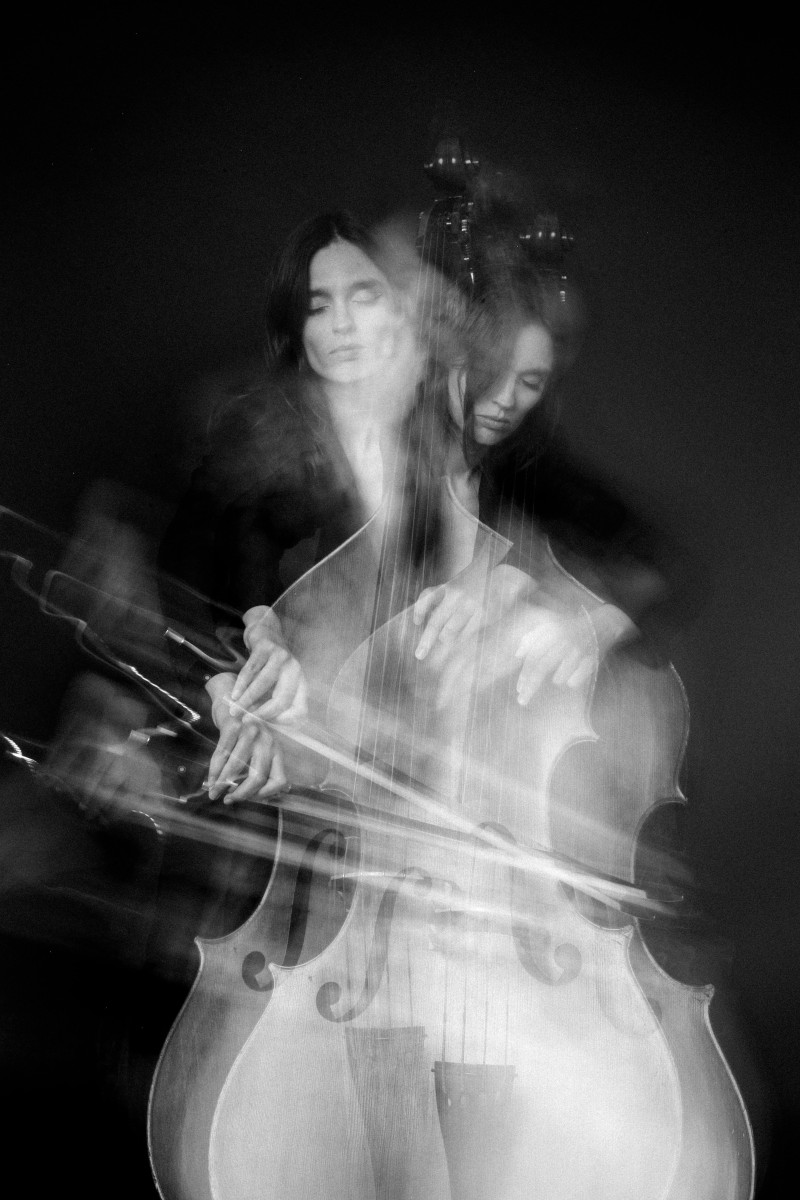
Gennem en ond, mørk skov slæber man sig i første del af Bára Gísladóttirs farligt suggererende og luksuriøst klingende meditation for bedjævlet kontrabas, det timelange rodværk Silva (2022). Lukker man øjnene, begynder verden at bølge om en.

Dybe glidninger på strengene lyder som et uhyre i smerte, omgivet af en let dis af overtoner. Et mulmende rum, som to støjkorn løsriver sig fra, og mens dybet under dem bliver til et valsende stempel af tunge tryk, cirkler kornene synthsvirrende rundt og kaster fra den underjordiske slyngverden en line ud efter lys.

Og jo, minsandten: Mørket flænges af lysglimt. En skinnende tone sniger sig ind, mangedobles til et skurrende hyl og følges op af hæse dursignaler. Det dybe stempel sætter sig fast i en hård rille, mens Gísladóttir begynder at file rundt i et lyst register med ren instrumentklang.

Værket spjætter, søger at trænge igennem en hinde til et lysere sted. Til sidst, efter alt omkring den ensomt søgende er fortæret af en rasende ild, lander Silva i et limbo af fjerne overtoner, klange, der får lov at rinde ud.

Vi har nået overfladen, nu lyder en klar, lys drone og den fineste dæmpede støj som et svagt, men insisterende ekko af, at livet buldrer videre i underskoven. Bedre mindes jeg ikke at have hørt Bára Gísladóttir: så fokuseret og alligevel hengiven, fri; tilmed i en overrumplende optagelse, der indfanger dybets tonerigdom.

Så kan man godt finde årslisterne frem.

© PR

»Music to me is… my work. I've landed in the best job in the world, where a core task is to discover new music, to learn its internal logic and aesthetics, who created it, and why. I'm a music researcher and have just returned from the island of Java in Indonesia with my research partner and husband Nils, where we've been visiting experimental musicians in Yogyakarta – artists we've now followed for seven years.
One recurring theme is the trance/horse dance jathilan (or jaranan), which several of the artists have introduced us to. Jathilan is on one hand an old Javanese ritual, and on the other hand a contemporary (village) culture in full development. There is no single historically 'correct' jathilan. It's a practice that follows an old spiritual ritual, but is also open to current Indonesian influences.

The playlist consists of three tracks by Senyawa, Gabber Modus Operandi, and Raja Kirik, all of whom have incorporated the ritual into their music. The fourth track was supposed to be a 'traditional' jathilan, but as far as I know, no such recording exists on Spotify. Instead, I found a related jaranan piece that includes a dangdut song – an ultra-popular genre that is often performed as part of a jathilan event. The final track is one of the most popular dangdut songs at the moment.«

Sanne Krogh Groth is Associate Professor of Musicology at Lund University, Sweden, where she conducts research on electronic music and sound art, currently with a focus on Indonesia. Sanne was editor-in-chief of Seismograf from 2011–2019. In 2015, she established Seismograf Peer, which she is still the managing editor of.

© Henry Detweiler

»For me, music is work and a way to escape it. Music is the fanciest way of communication and therefore the most delicious food for analysis. It is what prolongs your feeling for longer than you can physically hold. Music is something after which you say: 'I’m glad you didn’t use words'. After all, it’s something that makes your commute or chores shorter, and this time-controlling function is the very first and foremost mystery I love about it.«

Liza Sirenko is a music theorist and music critic from Kharkiv, Ukraine. She is a co-founder and board member of the Ukrainian media about classical music The Claquers. She is a former Fulbright Visiting Scholar at the Graduate Center, CUNY (New York, USA), and a graduate of National Music Academy of Ukraine (Kyiv, Ukraine). Her current interests include processes in the classical music industry, contemporary opera in Ukraine, and a role of postcolonial moves in these. Liza is a former PR Director of the Kyiv Symphony Orchestra, currently working as a Program Officer at the Goethe-Institut Ukraine.

In brieflive
12.04

Feel Yourself Becoming Nature Again

Cecilia Fiona, Sophie Søs Meyer: »Ghost Flower Ritual« 
© Farzad Soleimani
© Farzad Soleimani

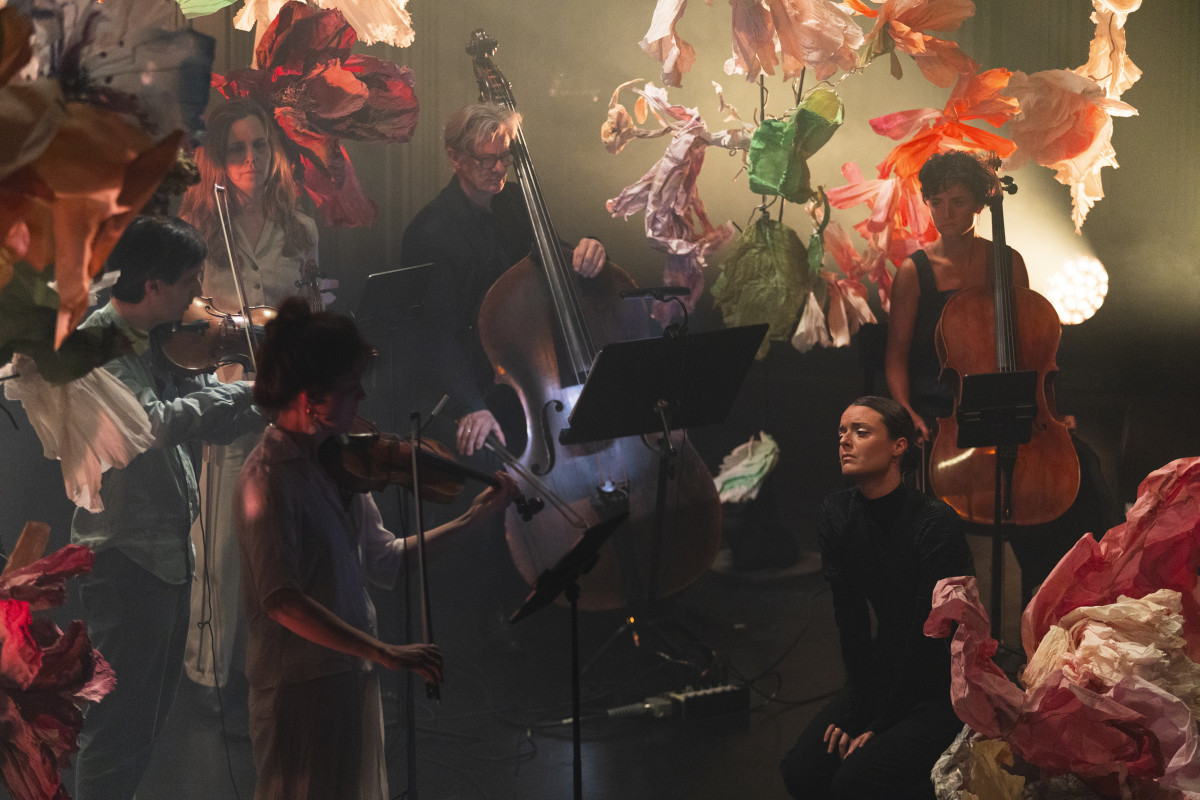
Frozen human bodies and faces shaped and painted like ceramics are meticulously carried around by flower sculptures that have abandoned their static nature. The roles are reversed. Nature becomes the living environment that grants the clay humans small, temporary lives in Ghost Flower Ritual at Copenhagen Contemporary.

The piece is a live installation with musicians and performers, where 34-year-old composer Sophie Søs Meyer has collaborated with visual artist Cecilia Fiona, who is of the same age. It’s a sensorially overwhelming, yet dramatically subdued ritual. Over the course of forty-five minutes, we sit together beneath a giant flower and sense the performers’ meticulous, slow movements. Meanwhile, soundscapes and small pulsating figures from four string players and a flute shape a landscape of colors, tones, and movements that melt together – filling the high-ceilinged room with auditory and visual presence. We are part of a whole.

I love the wild costumes that descend strangely from the sky. I love being part of the ritual that heals our forgotten connection to nature, which is the very foundation of our lives. I love the sound of stroked, plucked, and blown wood from Athelas’ musicians. Culture is nature. The human animals and the flowers are part of the greater consciousness. It’s all a hyper-complex mechanism. Cecilia Fiona possesses an extraordinary visual and creative abundance in her intricate details, and Sophie Søs Meyer is precise and intriguing in her swaying tonal figures that change slowly and meticulously. Until one flower blows into the large conch shell. Then the ritual is over.

English translation: Andreo Michaelo Mielczarek 

In brieflive
09.04

Beneath the Restless Canopies

Ask Kjærgaard, Jens Albinus, Rasmus Kjær, LiveStrings: »Store træers grønne mørke«
© PR
© PR

An inner soundscape characterises being in love. You walk through the city with a new rhythm, a different melody. The same is true of depression, though here major gives way to minor. Yet the early phases of love, too, can contain moments of doubt and dark foreboding. In composer and guitarist Ask Kjærgaard’s musical staging of Naja Marie Aidt’s 2006 short story Store træers grønne mørke (The Green Darkness of Large Trees), released as an LP last year, this same interplay is palpable as the music moves us from gentle strokes through melancholy to a rougher sound. The recording features the trio LiveStrings – cello, violin and viola – with actor Jens Albinus as the first-person narrator.

In the concert version of Kjærgaard’s work in Aarhus, featuring Rasmus Kjær on keyboards, Albinus’s voice appeared even more exposed. The piece introduces us to a depressed man who, wandering through a park, finds moments of calm beneath the trees—and at times up in them. For when despair causes you to fall out of the system’s sky, through sickness benefits and social assistance, only to land at the roots of the trees, perhaps there is only one thing to do: climb into the treetops? But then our anti-hero meets a woman in the park, and the drama begins. Can infatuation lift him out of depression, or will it end up short-circuiting him?

At first, the music crept in quietly. Kjærgaard’s ability to support the flow of the text revealed his experience as a film composer, particularly in his blending of classical music, meditative new age, and piercing guitar. Words and music carried the narrative together. When Albinus fell silent, the music became the voice of the inner landscape. The strings, in particular, delivered the dreamlike tones of infatuation, but when the gloom returned with renewed force, it was Kjærgaard who, with a roaring guitar, sprawled across the emotional abyss. It was beautiful and brutal.

English translation: Andreo Michaelo Mielczarek

In briefrelease
04.04

Explosive Jazz Builds Up and Burns Down

Amalie Dahl: »Breaking/Building Habits«
© Margit Rønning Omholt

From the very first downbeat, I sense a special energy – saxophonist and composer Amalie Dahl, in interplay with vibraphonist Viktoria Søndergaard, guitarist Viktor Bomstad, and drummer Tore Ljøkelsøy, unfolds a unique balance between calm and restrained wildness. Take, for instance, the album’s second track, which opens at a lingering tempo with a duet between Søndergaard’s vibraphone and Dahl’s saxophone. At times their playing merges into harmonic dialogue; at others, the interaction is disrupted by contrasting movements. Like a conversation, the instruments alternate between gentle suggestions and lively outbursts. It is a joy to listen to music that flows so effortlessly. Halfway through, Bomstad suddenly kicks the door open with his guitar, hurling himself into the conversation with explosive force. Where moments earlier I was savouring the finely tuned interplay between Søndergaard and Dahl, I am now overwhelmed by the flaming, noise-rock chaos Bomstad ignites – and I love every second of it.

All three tracks on the album are thus imbued with sheer joy of playing, confident compositions, and impressively free excursions. The listener is kept on the edge of their seat, knowing that at any moment the four musicians can cause an otherwise cosy passage to detonate. With Breaking/Building Habits, Dahl and her collaborators exemplify the unique vitality of partially composed, partially improvised jazz. They build up and burn down, again and again – and as a listener, there is nothing to do but surrender to their compelling show of force.

English translation: Andreo Michaelo Mielczarek