in brief
17.03.2023

Virkelighedens elektricitet

Grand River: »All Above«
© PR
© PR

Der er lagt blod, sved og tårer i Grand Rivers nyeste album All Above. Det kan man høre i detaljerigdommen i de elektroniske cut-ups, som gang på gang svæver ind og ud af lytterens opmærksomhed i de små 40 minutter, som pladen varer. Berlin-baserede Aimée Portioli nedbryder grænserne for elektronik og akustik på denne samling af kompositioner, der ligger et sted mellem lydinstallation og klassisk elektronik. Der synes langt fra de intime klaverforløb på den indledende »Quasicristallo« til den stakåndende »In the Present As the Future«, som vokser fra en kold blanding af oscillationer, sinusbølger og stemme-samples til et afsluttende rytmisk forløb, der ligger tættere på dansegulvet end kunstinstallationen.

Portioli formår at føje en magisk realisme til den ellers udtrådte blanding af ambient og klangkunst, for selvom man oftest genkender en lydkilde som analog eller akustisk, går der ikke længe, før lyden warpes, forvrænges og smadres, hvorefter den muterer og skifter karakter, som eksempelvis blæseorglet på den smukke »Seventy One Percent« eller de skærende violiner på den eminente »Kura«.

På All Above holder Grand River et sonisk spejl op foran lytteren og sætter spørgsmålstegn ved, hvornår noget i virkeligheden er virkeligt. Er det snart umuligt at vide, hvor lyden reelt kommer fra? Er alt musik ikke elektronisk her i det 21. århundrede?

© PR
© PR

It was officially confirmed only recently that Icelandic avant-garde star Björk is visiting Bielsko-Biała today. After keeping it under wraps until the last moment, the organizers of the Wędrujący Festiwal (Wandering Festival) have revealed that Björk is the artist closing out the festival's grand finale.

© Kåre Viemose

»Recently, I discovered that when a couple of thousand people clap their thick gloves in minus 30 degrees, it sounds like the softest techno – a freezing space where the cold air turns into a wave of warmth, and we, in a moment of collective devotion, become one with the rhythm, one with the invisible bond that connects us in the warmth of silence. Music is not just sounds, but a vain attempt to capture the infinite, which has always been and always will be.«

Andreo Michaelo Mielczarek has been the editor-in-chief of Seismograf since 2021. He is also a music critic and cultural journalist at Kristeligt Dagblad and Århus Stiftstidende/Avisen Danmark and has over the years written to publications such as Kunsten.nu, Glissando (Poland), Neural (Italy), Raw Vision (UK), Nutida Musik (Sweden), Kunstkritikk (DK/Sweden), Iscene.dk, B.T., and Jazz Special. He is the author (together with Lars Muhl) of the book HVA' SAA! En guidet rutsjebanetur gennem Aarhus – før, nu og i fremtiden (2024) and has also contributed to the anthology on music criticism Man skal høre meget (ed. Thomas Michelsen and Claus Røllum-Larsen, 2024). He is a founder and partner in the Polish-Danish cultural organization Kultur(a), and wherever there is a piano, he will be there, eager to coax a melody from it.
© Aria Leth Schütze

»For me, music is an opportunity for transformation.«

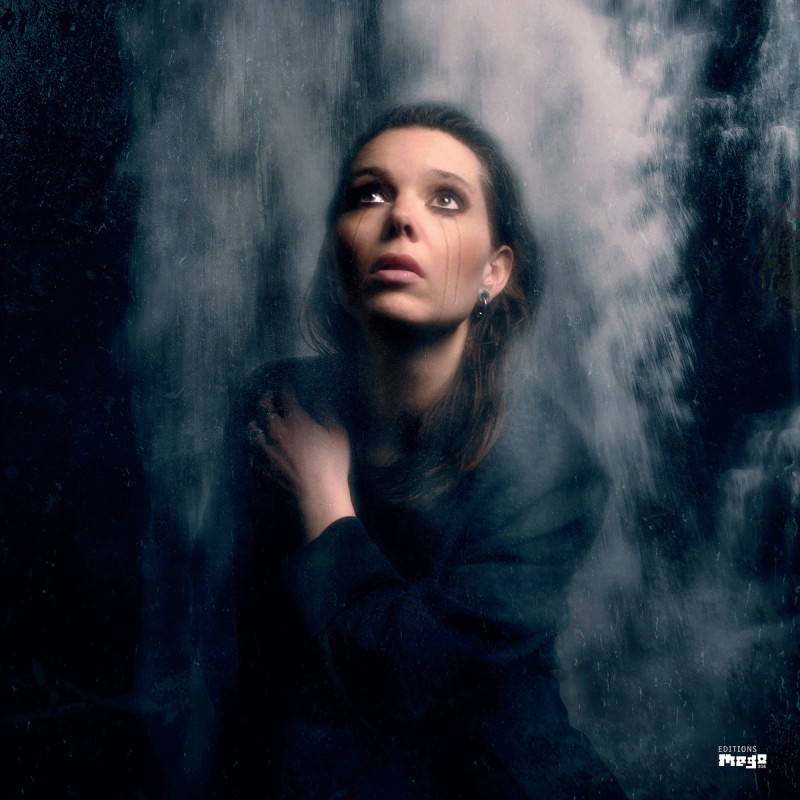
Aria Leth Schütze is based in Copenhagen and is the creative force behind the music projects Alto Aria and Samler På Dig. They are a co-founder of the record label Rhizome and a co-editor of the music magazine Passive/Aggressive. Their practice brings together electronic and acoustic music in an exploration of transformation.
 

© PR

»For me, music is the art form that – if measured in hours and minutes – occupies by far the greatest part of my life. I cannot sing, nor can I play an instrument, but I can listen – as a happy amateur – while cycling, on the dance floor, and, above all, at the office. I almost always work – that is, write – to music.« 

Mikkel Krause Frantzen (b. 1983) is an associate professor at the Department of Arts and Cultural Studies, a literary critic for Politiken, and the author of several books in English and Danish, such as En fremtid uden Fremtid (2018), Klodens Fald (2021), and Slutspil (2024).

© Mads Nissen
»Music is what gets my gears turning. It sets both my body and mind in motion – and on a good day, even gets them up to speed. My listening habits are entirely shaped by my mood... and by the musical tastes of my two children, which shift every eight minutes... so the home stereo gets exposed to a bit of everything. In a way, that’s exactly how it should be. Room for everything and everyone.«
 
David Dyrholm (b. 1990) is a food and music critic for Politiken, focusing on jazz – ranging from the traditional to the modern—and avant-garde music. Alongside this, he has worked for the Modern Jazz Days festival, served on the jury for the DMA Jazz awards, and previously released a number of records with the hip-hop collective DoktorDoktor.