
Godt nyt fra krøllede finner
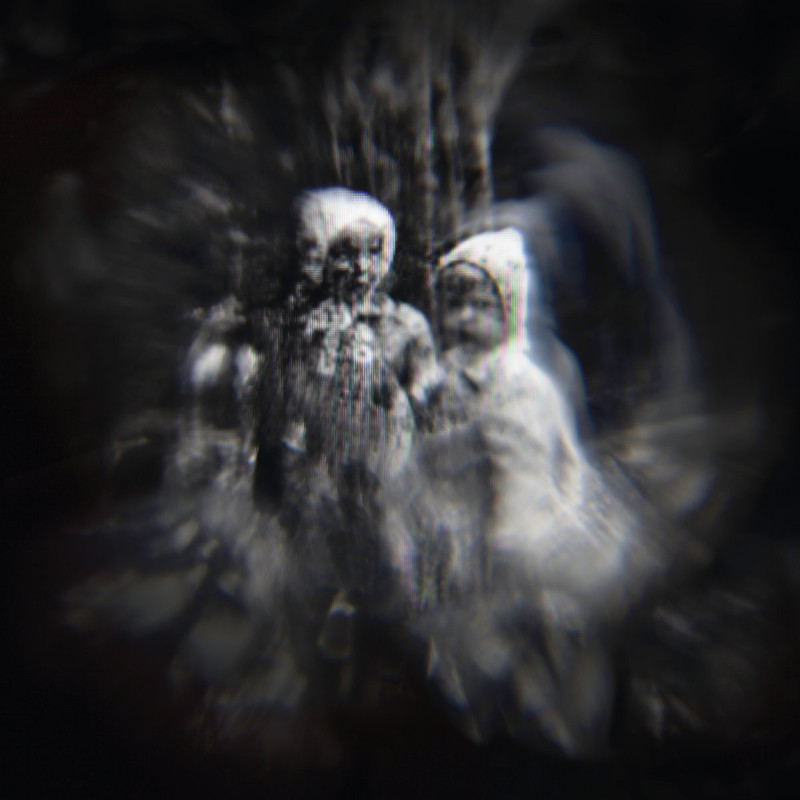
Med Yön mustia kukkia har finske Lauri Ainala og hans altid foranderlige mytisk-mystiske orkester Paavoharju udgivet, hvad de selv kalder tredje kapitel i en serie af albums, hvoraf de to foregående blev udgivet helt tilbage i 2005 og 2008. Der er altså løbet en anselig mængde vand under broen, siden man sidst kunne lytte til Paavoharju i denne type konstellation.
Som tidligere lyder musikken, som er den hjemsøgt af venlige spøgelser. Man kan høre, at lydene kommer fra et land højt mod nord, hvor man lærer at være på god fod med mørket. Skurrende båndstøj, dirrende strenge, virrende samples og helt og halvt hviskede sangstemmer skaber en kalejdoskopisk melankolsk atmosfære. Som brudstykker af folkemusik fra flere forskellige verdner på én gang, der alle kæmper imod hinanden for at trænge igennem den kakofoni, de tilsammen skaber. Dette kan opleves i nummeret »Haihtuu« med Teemu Eerolas violin, der summer i stereo som en bi omkring lytterens hoved, mens rytmiske samples og Anniina Saksas vemodige sangstemme skaber en fremdrift, der tilnærmer sig en popsang. Mindre poppede er numre som »Marian kierto«, hvor en operaagtig vokal bølger frem og tilbage over en fugtigt skovbund af synths og samples.
Lauri Ainala har stadig et helt særligt talent for at bakse lyde sammen, som i andres hænder bare ikke ville kunne fungere. Sammen med sine medsammensvorne har han med Yön mustia kukkia formået at skabe ikke bare et kærkomment genhør med fortidens spøgelser, men også et spændende nyt kapitel i Paavoharjus krøllede historie.
What a Dial Tone Tells Us About Life
Crazy about phones? Then listen up. For British artist Beachers spent a day in his London office, and with his smartphone, recorded the sound of a landline waiting for you to dial a number after lifting the receiver. An innocent, yet somewhat insistent sound: Use me, beep-beep-beep-boop, now!
He cut up the recording, panned it around, shifted the pitch here and there, and dabbed it with delays. Turned it into musical material, in other words. And from the effort, Off the Hook grows small tones and harmonies like those from a self-built organ. But the office noises follow along, making the little album feel oddly haunted.
There are white creaks, maybe from a chair. Treble screams like distant, escaped parakeets. Short keystrokes, mysterious silences. After the harmonic organ opening, Beachers lets a deep bass rumble beneath chopped-up beeps. Layers are added, or sudden shifts occur. It’s not meant to be perfectly polished; you’re meant to feel that a human is playing with the digital.
Patiently, small pulses build, maybe even a beat. Listen to the hidden parties and drives of everyday life, the music seems to say—but also: see what we can do to pass the waiting time while forgetting what we’re actually waiting for—someone to pick up, the boss to let us off, death catching up to us.
In the end, only the raw recording is heard. A minute of beeps, boops, and random noise. As if each motif bows to its audience. What a strange release, nostalgically so in its way. And how creative.
Cortini – the Electronic John Williams
Alessandro Cortini is best known as a member of Nine Inch Nails, and as I discreetly listened in on conversations before the concert, it was clear that several people had shown up because of the connection to the famous band and its noisy, confrontational music – music that is worlds apart from the feather-light ambient universe that characterises most of Cortini’s solo work.
At ALICE, however, we were presented with a very different side of Cortini: Cortini the film composer. The artist was positioned far out at the edge of the stage, where he could tinker with his synthesizers in peace without stealing attention from the film projected onto the back wall of the stage. Contrasting, tactile images slowly sliding into and out of one another. Abstract, amorphous shapes that at times resembled misty memories from the real world: raindrops on a car window, a city seen from above, stars in the night sky; tar, metal shavings, crushed crystal.
Cortini reminded me of a kind of electronic John Williams, enveloping the images in an unusually grand, almost symphonic universe that elevated the black-and-white light forms into hieroglyphs of infinite wisdom. The atmosphere was so sacral and gripping that, with closed eyes, one could easily forget that Cortini was not singing Michelangelo’s paintings from behind the organ in the Sistine Chapel, but instead setting analogue synth tones to what looked like an image of a granite block. Some of the Nine Inch Nails fans, I could hear, were slightly confused by the emotionally charged, almost romantic aesthetic, but I myself truly admired Cortini for his uncompromising maximalism. There was no affected distance or feigned coolness – only pure, unadulterated musical beauty.
Shouldn’t Selvhenter be playing the Orange Stage next year?”
It is not the first time Selvhenter have shown Roskilde how a saxophone can scream. Even the most avant-garde-ready listeners were left gasping for air. It was hard not to let your own lungs empathise with the long passages and unruly energy that the experimental Copenhagen quartet excelled in, wielding an instrumentarium consisting of two drum kits, synth, trombone, saxophone and assorted extras.
And the more the band – positioned in the centre of the Avalon tent, surrounded by the audience – wove their collective patchwork carpet, the more the individual character of the instruments was erased. Selvhenter could just as well have been playing entirely different instruments. You could see Sonja LaBianca standing there, forcing tones out of a wind instrument, yet it sounded more like a harp from outer space. It was astonishing how her saxophone fanfares resembled distress signals beamed into the cosmos. Meanwhile, the drums drove very grounded rhythms: Steve Reich-like pulses colliding with freer passages.
Selvhenter inflated the tent with full-fat punked and jazzy noise. Without pauses (not even when a snare drum went dead and had to be replaced mid-set) and without water for the crowd. Being so close to the musicians was a plus; on their small central stage they looked like giants in a battle arena. This was new music that was deeply physical. For about an hour we breathed together (and perhaps even sweated?) in sync. And it is profoundly good to do something together at a festival.
Selvhenter on the Orange Stage next year. Come on!
It is difficult to keep pace with Masami Akita. The 69-year-old Japanese noise artist, who since 1979 under the name Merzbow has helped shape the genre, released no fewer than a dozen albums in 2025 alone. On a rare mini-tour with stops in Helsinki, Stockholm and Aarhus, he showed that his energy remains intact. At Radar he gathered an audience that had travelled far to experience the godfather of noise – an artist who has consistently insisted on noise as a physical, almost tactile experience. Wearing a bucket hat, Akita constructed his trajectories with clear architectural precision. Layer upon layer of distortion and feedback took shape and struck like a brush of metal: hard, cutting, physical – uncompromising, yet at the same time remarkably nuanced.
Akita worked not only with electronics, but also with homemade metal instruments – first a banjo-shaped device, then a square musical saw – lending the sound a raw, tangible materiality. Everywhere, microscopic shifts in texture emerged, small fissures of tone within the massive pressure.
The opening set by frã (Francisco Moura) began the evening with a more fragile, yet persistent electronic texture, a precise counterpoint to Merzbow’s compact blocks of sound. Some might have wished for a gentler entry into the musical year 2026, but the concert underscored the ambitions Radar is currently pursuing.
English translation: Andreo Michaelo Mielczarek
The Excess of Attention
A steady stream of musicians enters the Xenon stage on Wednesday night at Vinterjazz. No fewer than 33 musicians take part in the mosaic of instruments assembled by the label Aar & Dag to celebrate the release of their cassette A MAJOR CELEBRATION. A release consisting of no less than three concerts, performed according to special composition cards, then mixed on top of one another and now issued on cassette. A major release calls for a major celebration, and rarely have I seen a more ambitious and idiosyncratic release concert.
The concert unfolded at a calm, unhurried pace – patient and attentive, the many musicians gave one another space to open up the broad soundscape. Double bass and electric bass, guitars, saxophones, synthesizers, percussion, cassette tapes, piano, and cello are just a selection of the orchestra’s many voices. Like a kaleidoscope, the ensemble shifted again and again, drifting between crooked, meandering passages and bubbling harmonies that only just brushed against a peculiar sense of tempo.
The word »soundscape« truly comes into its own in this context. For much like Hieronymus Bosch’s surreal monumental paintings or Sven Nordqvist’s Pettson and Findus illustrations, the concert – with its many people on stage – was filled with an impressive level of detail and a multitude of small scenes unfolding across one another. Each time my attention settled on a particular point in the music, I missed a new development elsewhere in the orchestra. An excess of attention, and a fine demonstration of a boundary-disrupting musical expression that one can only hope to encounter more of.