



in brieflive
04.03.2024

Til dybet vi skal gå

Anne Zacho Søgaard, Alexandra Moltke Johansen, Nini Julia Bang, Hanne Uldal, Mathias Monrad Møller, Matilde Böcher m.fl.: »Dansedybet«
© Emilia Therese
© Emilia Therese

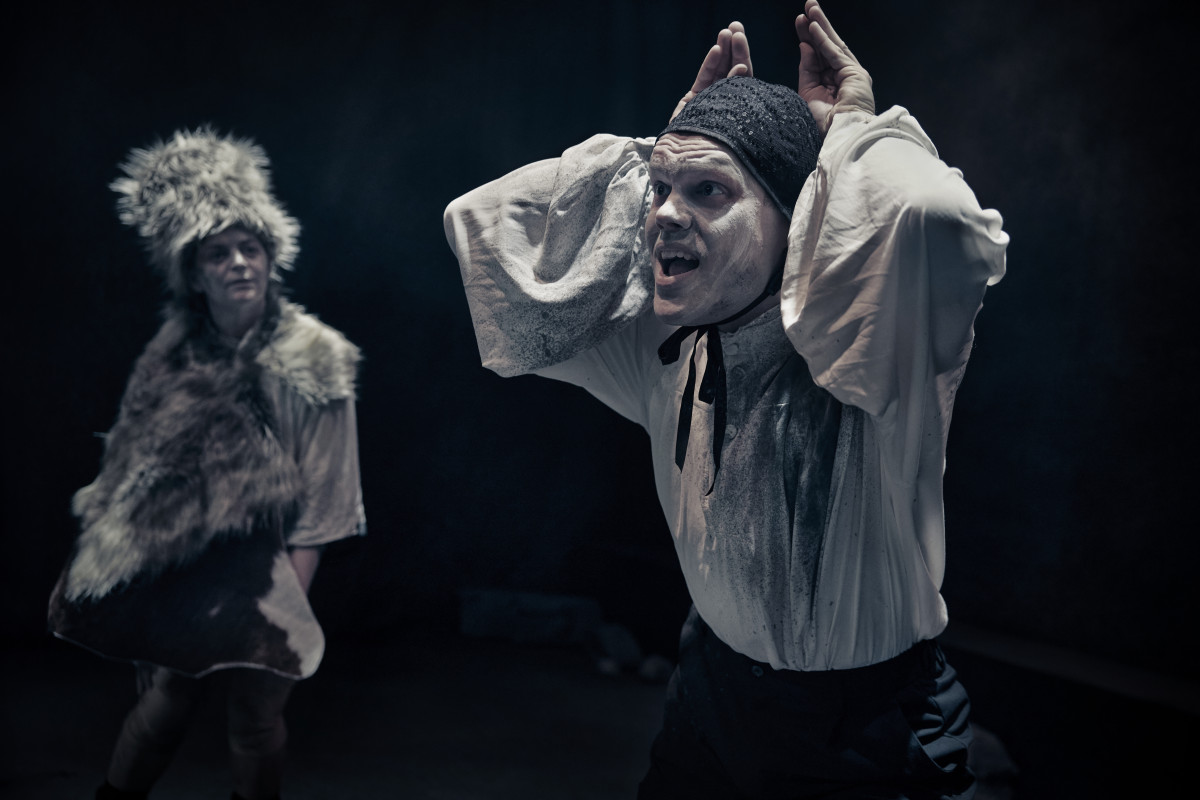
Dansedybet på Sort/Hvid er intet levende. Alt er støv og aske. Performerne er ligblege og viklet ind i gazebind, som om deres kroppe er gået i stykker, eller måske allerede er døde. Sammen fører de publikum igennem en slags grotesk danse macabre mod fællesgraven. Opløftende og forløsende er det ikke, og ritualet befinder sig langt fra den kollektive, transformative heling og forbundethed, værket lægger op til. 

»Tag min hånd, lad benene gå. Træd den dans, til dybet vi skal gå.« Vi inviteres til at bevæge os ned til dybet i en lang kædedans med simple, svingende fodtrin. Musikken har menneskestemmen i fokus og synges hovedsagligt a cappella, hvilket giver et ærligt, ritualistisk udtryk. En operasanger, en verdensmusiksanger og en skuespiller fortæller om dengang, høsten slog fejl og om den dansepest, der rasede i byens gader.

Rustikke folkeviser blander sig med stemmens perkussive potentialer, og historien intensiveres. En mand i præstekrave slikker en svedig pølse, mens han tænker på Satan og bliver mere og mere urolig. En kvinde kollapser i heftige spasmer og ufrivillig latter. Det er vist meningen, at vi også skal grine med. Få noget ud af systemet. Vi står dog efterhånden mest stille og iagttagende. Dansedybet er visuelt smuk og har stærke enkeltperformances, men det sker mest i dryp i en noget fragmenteret oplevelse. Den sporadiske fællesdans forbliver også mild og munter, uden nogen umiddelbar sammenhæng til pestens kropslige ekstase og revolution. Dansesmitten udebliver.

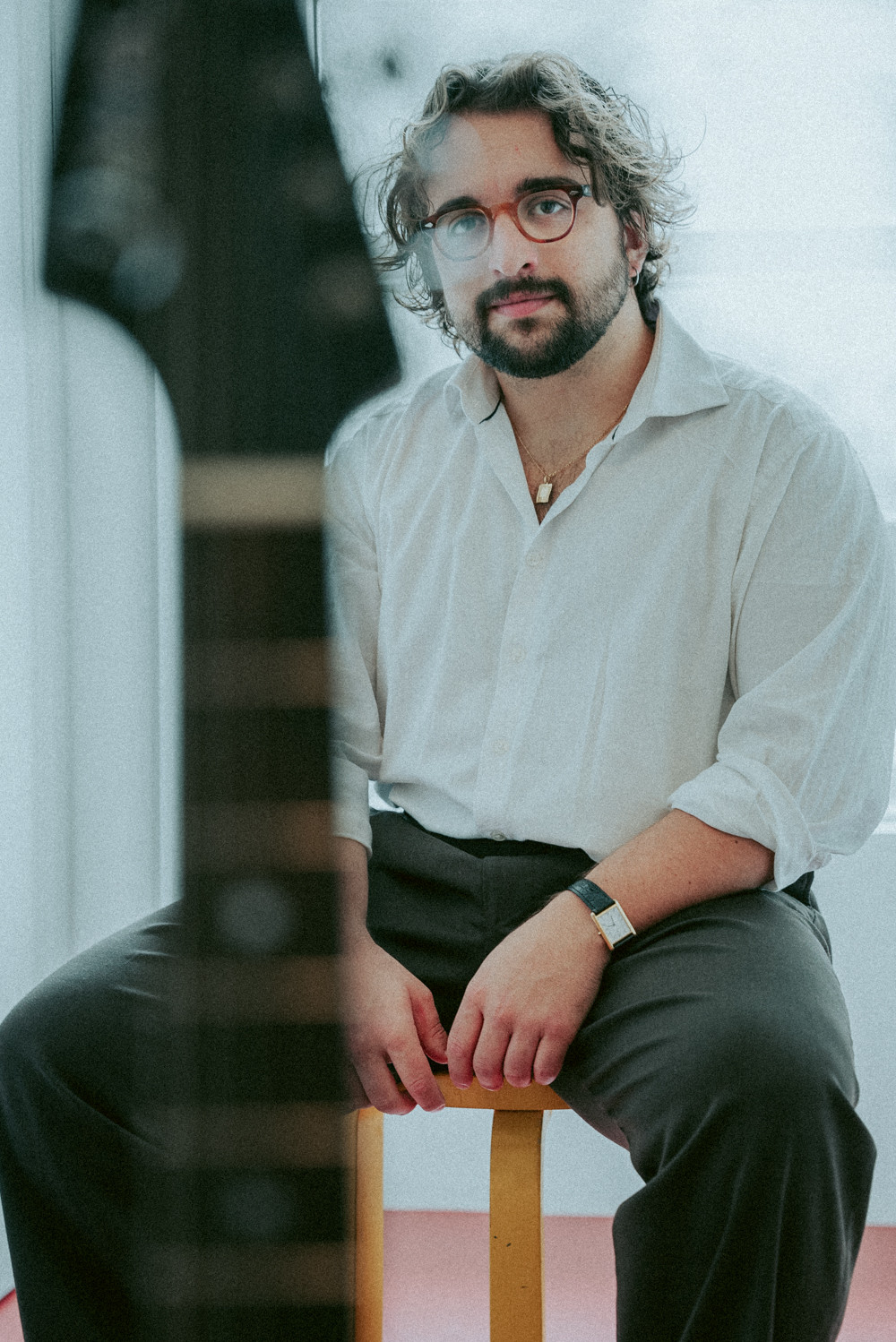
»Music for us is a way to create a connection and community with other people.« 

Although Schæfer has only released three singles so far, the band has already made a mark on the Danish music scene. The duo and their friends, Anna Skov (vocals) and Emil Mors (keyboards), write socially relevant, subtle and humorous songs that point fingers at both the outside world and themselves.

in brieflive
06.03

Labour of Birth

Katinka Fogh Vindelev, Sankt Annæ Pigekor, Kind of Opera et al.: »Elegier over jorden«
© PR

»This pain is not only yours,« chants a choir standing in a circle around the woman in labour. »This pain is not only yours,« comes the enveloping echo from the rest of the choir, positioned along the walls of the ceremonial hall, forming a circle around the audience and inscribing us into the labour of female fertility.

Elegier over Jorden (Elegies over the Earth) is based on Sofie Isager Ahl’s reworking of the myth of Persephone, daughter of the goddess of agriculture and queen of the underworld. The Greek myth is one of those that explains the barrenness of winter by Persephone’s descent into the underworld, but in this reinterpretation she returns to earth to give birth. We follow her labour over nine months while members of the choir work in the fields, struggling for crops under pressure from the current climate collapse. Here, the regeneration of nature is not a matter for higher powers but a struggle that begins in the body and in the soil – much like that of the woman giving birth.

The ecofeminist interconnectedness of the female body and nature has been a hot topic for several years now, and I am unsure what Elegies over the Earth adds to it. My hesitation stems mainly from the harsh acoustics of the ceremonial hall at Ny Carlsberg Glyptotek which, combined with Marie Topp’s choreography – often positioning singers with their backs turned to parts of the audience – makes it difficult to hear Ahl’s words.

When Elegies over the Earth works best, it is in the dialogue and timing between the choir, the soprano and composer Katinka Fogh Vindelev in the role of the labouring Persephone, and the minimal ensemble of two violins and a cello. When the voices of Sankt Annæ Girls’ Choir curl around the cello’s dark timbre, and when the primordial woman Persephone’s lament is allowed to hang in the room for a moment before the choir resumes, the performance touches on something real. Yet the experience never quite settles in the body, and the painful struggle of birth – despite the choir’s insistent chanting – never truly becomes mine.

Performances on 5, 7 and 8 March

English translation: Andreo Michaelo Mielczarek

© PR

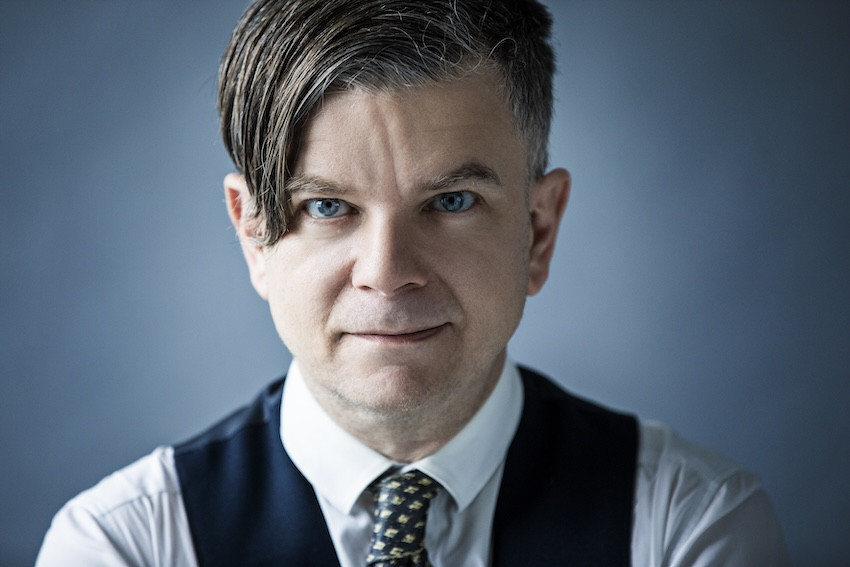
»For me, music is... I was about to say everything, but that's still an exaggeration. I'm a sensitive person, and therefore all art - but especially music - affects me in different ways. Music has both a therapeutic and an artistic meaning for me. Music affects my mood and gives me energy. It can also put me in a certain state where I see things differently and reflect in a different way than I would otherwise. I always have headphones in when I'm alone, I sleep to music, I work to music. The first thing I did as a new councilor was to set up my father-in-law's old B&O system in the councilor's office. It plays every day, and I very rarely close the door.« 

Jesper Kjeldsen is councilor for Culture and Citizen Service in Aarhus and a member of the city council for the Social Democrats. He graduated from Kaospiloterne and has a background as an entrepreneur, including with the company Postevand. Before his political career, he worked creatively with culture and music – he has released music, been a DJ and taught as a dance teacher. Jesper Kjeldsen has lived and worked in Greenland for a long period of time, which has influenced his view of community, culture, climate and society.

© Cecilie Frost

»Music is for me a silent but powerful weapon. It is crucial for preserving identity and culture. Throughout history, dominant powers have often tried to suppress people by wiping out their language, their traditions and their art. But in places where this failed, it was precisely the survival of art that preserved the soul and pride of the people.« 

Anastasia is a Danish indie artist with glamour in her eyes and punk in her blood. Together with her all-female band, she creates a sound universe carried by raw energy, bittersweet rock melodies and cheeky, flirtatious lyrics about love, loss and everything chaotic in between. She debuted in 2022 with a series of charity concerts in support of Ukraine and has since taken over stages across the country – from Debutfest in Copenhagen to SPOT Festival in Aarhus. All songs are written and produced by Anastasia herself and take their final form in a close and intense interaction with the band, where personal expression meets collective power.


© Diana Aud

»For me, music is both the beat that gets me through my run, sets the mood for everyday life, but not least my personal soundtrack that evokes past events and moods throughout my life.« 

Lasse Andersson is the museum director of Kunsten Museum of Modern Art and Utzon Center, as well as the chairman of the board of Krabbesholm Højskole and the Packness Foundation. Before museums took up all his time, he wrote his PhD thesis The City and the Creative Entrepreneurs, co-founded the art and technology house Platform4, and was behind both the LasseVegas office and the technology project Nulkommafem. He has also headed the Urban Design department at Aalborg University. Today, he works purposefully to develop cultural institutions as modern spaces for learning: places where people meet and connect through aesthetic experiences that move, challenge, and open new perspectives on the society we share. For Lasse Andersson, art and architecture are not just mirrors of the world – they help shape it. With that ambition, he has curated exhibitions such as Fatamorgana – Utzon møder Jorn (2016) I Arkitektens Verden – Reiulf Ramstad (2019), Pierre Huyghe – Offspring (2022), Tal R & Mamma Andersson – omkring Hill (2023) og Michael Kvium – Knudepunkt (2025).