© PR

»Music for me at the moment is a heaven for non-believers.«

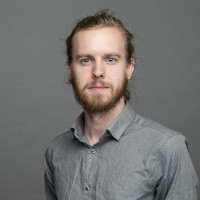
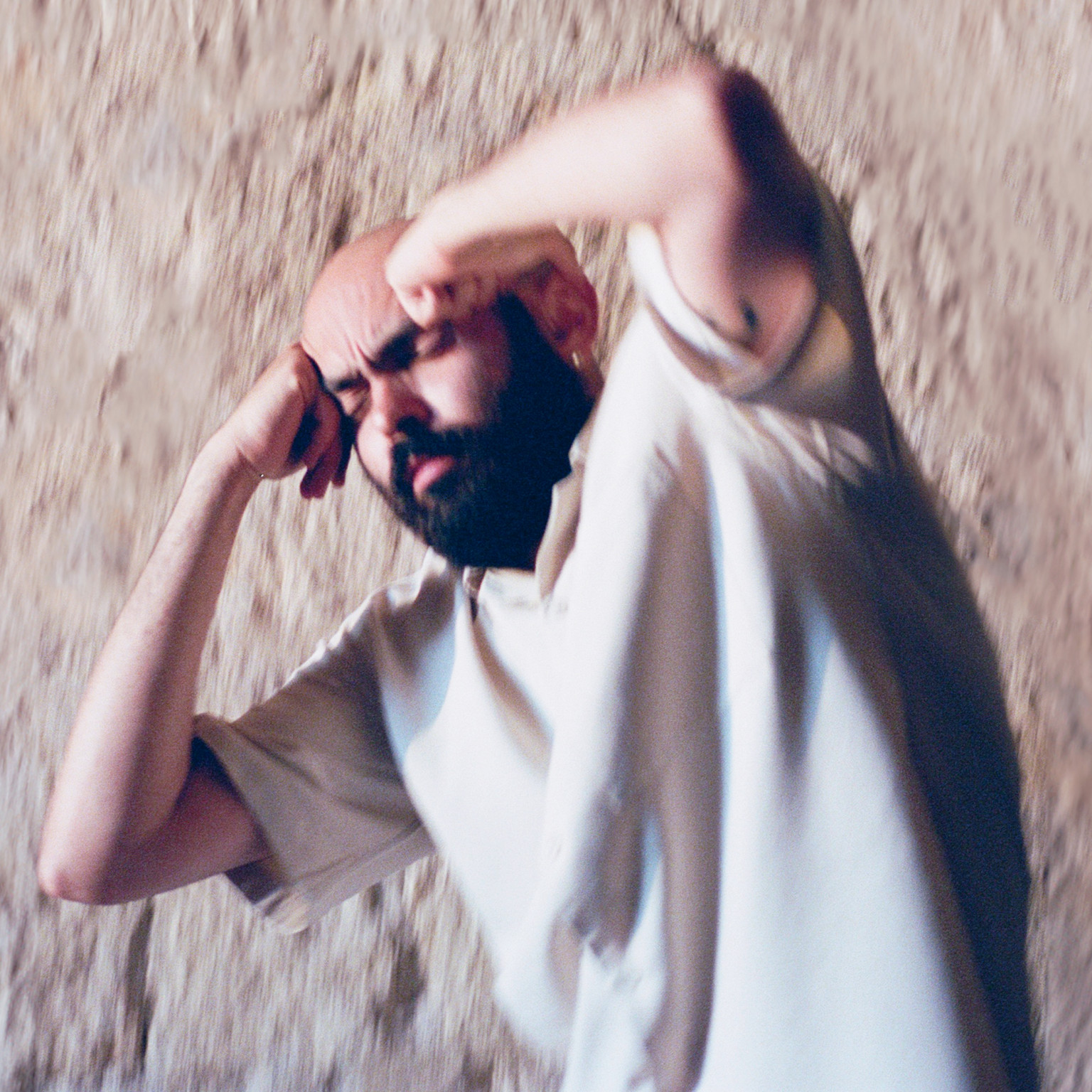
Abdullah Miniawy (born 1994) is an Egyptian expressionist, a writer, singer, composer, and actor. Over the years, he has shared the stage with acclaimed artists such as Erik Truffaz, Kamilya Jubran, Yom, Médéric Collignon, Aly Talibab, A Filetta, Hvad, Ziur, Simo Cell, and many others. Miniawy's performances have graced prestigious international stages and venues, including the Festival d’Avignon edition 72, French national theaters, Institute of Contemporary Arts London, Haus Der Kunst museum in Munich, Mao Asian Museum in Turin, even the Louvre in Paris.


In addition to his music career, Abdullah proved his natural acting talent in Alaadine Slim's Tlamess, a Tunisian feature film featured at the Directors' Fortnight at the Cannes Film Festival in 2019. Miniawy was also recognized with a nomination and shortlisting for the Best Actor Award from the Arab Cinema Center at Cannes.


As a composer, Miniawy has created different soundtracks for dance shows, theater productions, and exhibitions, including notable works like Cabaret Crusade III by Wael Shawki premiered at Moma PS1, AMDUAT by Kirsten Dehlholm premiered at Hotel Pro Forma, and Insurrection by Jilani Saadi.


Abdullah Miniawy's influence extends beyond the arts; he was selected by the European Parliament in Strasbourg as one of three change makers from the Schengen area to offer a French-Egyptian artist's perspective on pressing contemporary challenges at the European Youth Event 2021 in the Live Fully section. He also participated in Europe Takes Part, a gathering of 30 diverse speakers discussing new economic models and digital solutions for artists in a post-pandemic world.


Since 2016, Miniawy has collaborated with the German trio Carl Gari, blending avant-garde electronic soundscapes with poetic lyrics. Their debut album, Darraje, was recognized as one of the top 50 albums of 2016 by the American NPR. Their recent release, The Act of Falling from the 8th Floor, garnered attention from Pitchfork, The Quietus, and Wire Magazine, with Zawaj ranking at the top of Resident Advisor's list of Deep Listening tracks in 2019.


Most recently, Abdullah's album Le Cri Du Caire, featuring Erik Truffaz, won Les Victoires du Jazz 2023 award – the French equivalent of the Grammy Awards.  


As a writer, his lyrics have left a mark in the Middle East region, notably during the Arab Spring, where they were displayed in places like the Yarmouk camp in Syria.
in briefrelease
04.04.2025

Explosive Jazz Builds Up and Burns Down

Amalie Dahl: »Breaking/Building Habits«
© Margit Rønning Omholt

From the very first downbeat, I sense a special energy – saxophonist and composer Amalie Dahl, in interplay with vibraphonist Viktoria Søndergaard, guitarist Viktor Bomstad, and drummer Tore Ljøkelsøy, unfolds a unique balance between calm and restrained wildness. Take, for instance, the album’s second track, which opens at a lingering tempo with a duet between Søndergaard’s vibraphone and Dahl’s saxophone. At times their playing merges into harmonic dialogue; at others, the interaction is disrupted by contrasting movements. Like a conversation, the instruments alternate between gentle suggestions and lively outbursts. It is a joy to listen to music that flows so effortlessly. Halfway through, Bomstad suddenly kicks the door open with his guitar, hurling himself into the conversation with explosive force. Where moments earlier I was savouring the finely tuned interplay between Søndergaard and Dahl, I am now overwhelmed by the flaming, noise-rock chaos Bomstad ignites – and I love every second of it.

All three tracks on the album are thus imbued with sheer joy of playing, confident compositions, and impressively free excursions. The listener is kept on the edge of their seat, knowing that at any moment the four musicians can cause an otherwise cosy passage to detonate. With Breaking/Building Habits, Dahl and her collaborators exemplify the unique vitality of partially composed, partially improvised jazz. They build up and burn down, again and again – and as a listener, there is nothing to do but surrender to their compelling show of force.

English translation: Andreo Michaelo Mielczarek

in briefrelease
30.03.2025

Mathias Reumert Group Masters the Art of Playing with Sound

Mathias Reumert Group feat. Anna Caroline Olesen & Hsiao-Tung Yuan
© PR
© PR

Mathias Reumert Group is a playful and tightly knit percussion ensemble. This was already evident upon entering KoncertKirken: the long side of the hall was densely packed with an impressive arsenal of percussion instruments, ready to bring the space to life. The programme opened with a delightful performance of György Ligeti’s Síppal, Dobbal, Nádihegedüvel featuring soprano Anna Caroline Olesen. A work driven by humour and constantly shifting yet precisely placed sounds – harmonica, referee whistles, marimba, tubular bells, and much more. We were even fortunate enough to hear the final movement twice.

The early encore loosened up the otherwise somewhat conventional concert format – one piece followed by the next, and so on. In new-music ensembles, one increasingly encounters curatorial and conceptual frameworks for concerts. Perhaps this is a development from which this curious ensemble could benefit?

The concert concluded with Chiung-Ying Chang’s Solar Myth – a piece of music theatre rooted in Taiwanese culture, where prop and instrument became one. Three masked beings played softly on a bass drum, initiating what felt like a ritual. But the ritual was abruptly disrupted when a fourth percussionist stepped forward, offering resistance through the tones of a marimba. The three beings responded with sharp, piercing cracks from their bright red fans – but the marimba did not yield. What followed was an explosive soundscape of metallic percussion, bright, clattering, and dancing. The dramaturgy seemed shaped by a deep understanding of the nature of music itself. Enchanting. One left KoncertKirken a little taller, happier, and more playful.

English translation: Andreo Michaelo Mielczarek

in briefrelease
27.03.2025

The Cello Within the Comfort Zone

Josefine Opsahl: »Cytropia«
© Lis Kasper Bang
© Lis Kasper Bang

There are twelve tracks on Josefine Opsahl’s album Cytropia, each with the duration of a rock song. Remarkably, there is a straight line from the first to the last – both in timbre, rhythm, melody, atmosphere, and playing. The ears are embraced by a gentle melancholy created by small cello figures in long sequences, with a slow-moving cello melody on top. Some parts in minor, others more open.

She is receiving quite a lot of praise these days for her many projects – an opera and a ballet – alongside her work as a cellist-composer, and it must almost be due to the highly accessible, cohesive, and dreamy sound she consistently delivers. I must admit that I have become somewhat skeptical along the way. Both as a musician and as a composer, I wish she would challenge herself with new approaches and new visions for the stories her music should tell. On Cytropia, we approach a constant state of uniform sound, evoking thoughts of the deliberate inertia of New Age composers.

There are quite beautiful moments along the way. The track »Cyborg« is crystal-clear in its surface. A piece like »Leaverecalls«, in its mechanics, the American minimalism of Philip Glass. But once again, one misses displacements and rhythmic additions that could challenge the static soundscape. The last hundred years of experimentation have expanded the battlefield of cello playing. Opsahl draws on some of these experiences to create her own small mechanical accompaniments for herself. Yet, the setup with a sequencer and a cello seems limiting in allowing Opsahl to explore timbres and ideas where the gravity of melancholy can truly be felt.

»Music is like an ancient mineral, containing a history of wisdom reaching over centuries, stratifying and evolving into new forms. It is like a black hole, wrapping around us and allowing us to temporarily escape the noise of the world.
An emotional safe zone, a place for solace, a bringer of light, a unifying factor. It is us.«
 
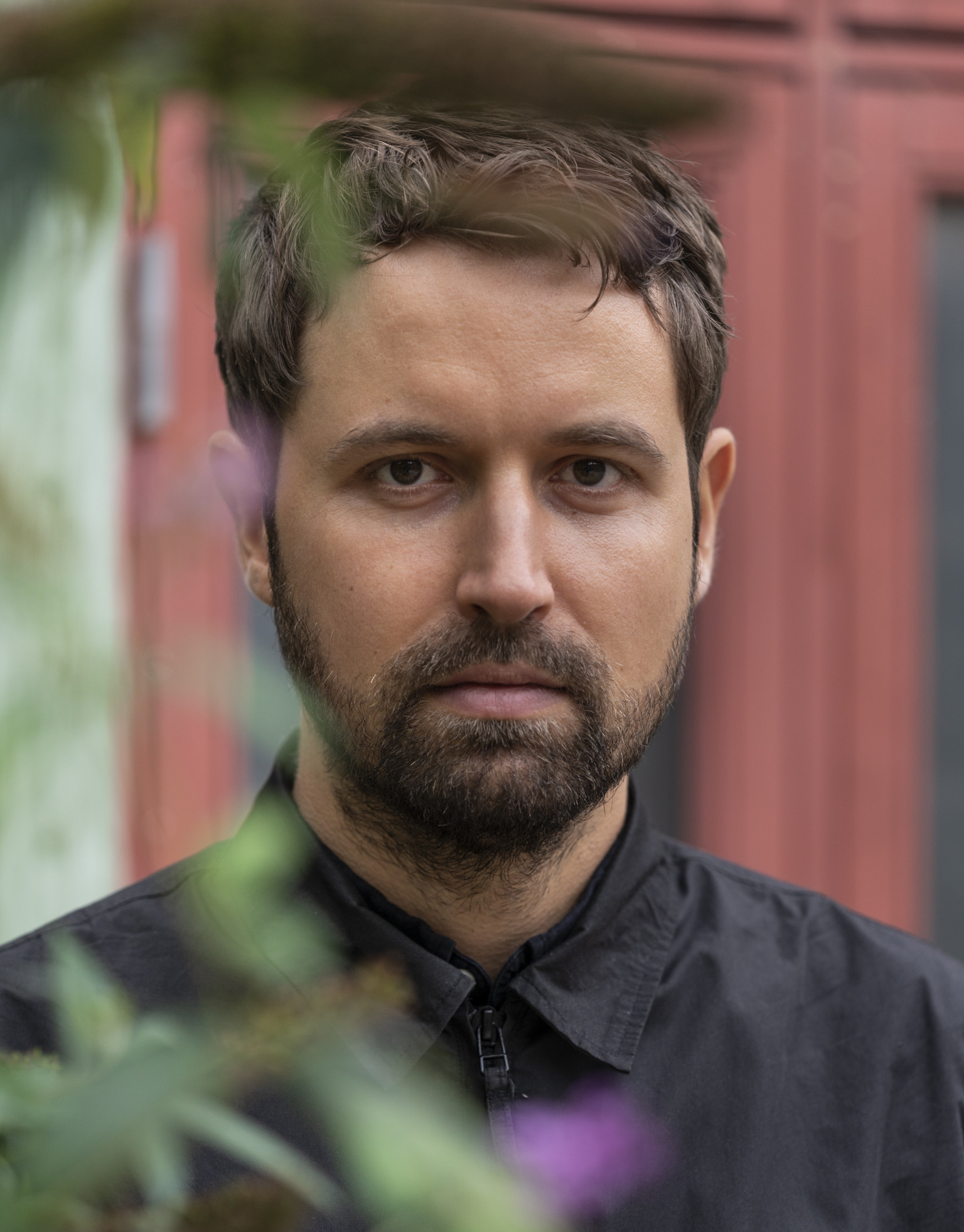
NEKO3 is a Copenhagen-based experimental music group consisting of: Fei Nie, Lorenzo Colombo and Kalle Hakosalo. The group is working towards the creation of a new musical language, flexibly moving between various performance media and artistic expressions. Continuously collaborating with composers and other creators of art, it seeks to integrate music and other forms of art into one conceptual whole.

NEKO3 has performed at Festival Internacional de la Imagen, SONICA Glasgow, cresc... Biennale, Time Of Music, Rondò, MINU festival, Copenhagen Light Festival, Unerhörte Musik and Spor Festival. They have been featured as soloists with the Danish National Symphony Orchestra and the Aarhus Sinfonietta, and given workshops and presentations at ie. Standford University, the Royal Danish Academy of Music, Hochschule für Musik und Theater Hamburg, University of California San Diego and Kungliga Musikhögskolan (SE). The ensemble has recorded multiple EP’s and released their first full length album Angel Death Traps in collaboration with Alexander Schubert in 2024.
in briefrelease
23.03.2025

New Central American Tales

Xenia Xamanek: »Germinate [Imprint] Wilt [Stay]«
© PR
© PR

There is plenty of space around the many different sounds and voices narrating Central American horror stories on Honduran-Danish artist Xenia Xamanek’s album Germinate. The words »germinate« and »wilt« appear in the title, serving as fitting markers for the blossoming, bubbling, futuristic, and slightly eerie soundscape. A handful of voices fill the ears with mechanical, intense connections, swirling impressions of nature and language into the brain.

The album is a rare reinvention of the oratorio, the 18th-century religious opera genre featuring sung text fragments and wordless music. A significant departure from the dance floors Xamanek used to curate. Here, singers and an electro-acoustic soundscape tell stories through two simple, word-heavy recitatives, two arias with chanting narration, and electronic soundscapes.

There’s a calmness in Xenia Xamanek’s approach that can become utterly addictive. The material from their ancestral storytelling – and perhaps even the chanting narrative style – sets a scene that feels both warm and familiar. Yet at the same time, it turns original and alien as the calm of the words is challenged by dense patterns of simple sonic elements interacting with each other.

Oratorios in the 18th century lasted three hours and can easily feel distant and irrelevant today. But Xamanek’s album, rooted in the cuentos y leyendas de Honduras they heard in their childhood, offers three-quarters of an hour of presence – one that unexpectedly points forward.