© Esben Aarup

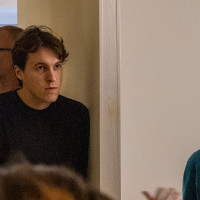
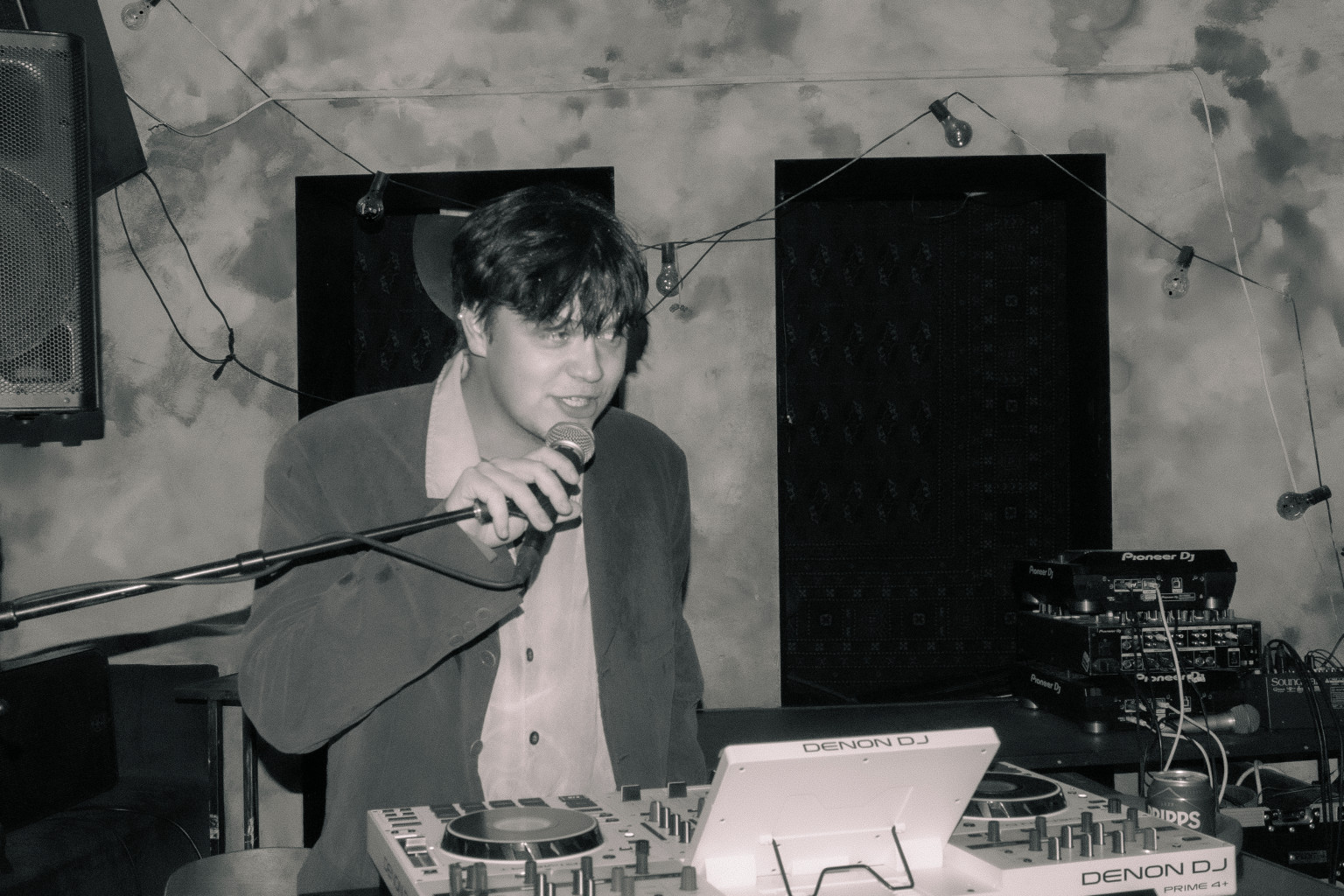
»Music, for me, is the rhythm, the pulse, and the energy of my life. It’s what drives me and can always energize me or colour my day in exactly the way I need. In a very busy, confusing, and chaotic life like the one I find myself in right now, music can be almost the only thing that slows my pace down, gives me access to actually feeling my emotions, and creates space for reflection. Music is history – it remembers moments and moods. It reflects cultures and can become the voice of a generation or an entire group that struggles to break through the mainstream or challenge the status quo. For me, music is one of the primary ways I can influence the society I’m part of – whether by supporting important art that we can see ourselves in, or by bringing large groups of people together around something meaningful and communal. Music, to me, is freedom. Freedom to dance without inhibition, to let the tears flow freely, and the freedom to play air drums at full speed on my yellow racing bike as I ride down Mejlgade.«

Oscar O’Shea is a graduate of the Kaospilot programme, with a focus on innovation in the cultural and music industries. Through SPOT Festival, he works as project manager for the international initiative Live Incubator and the hyper-local event cSPOT at Bowlinghallen. Oscar is a documentary filmmaker and will graduate this summer as part of the first cohort of documentary producers from the independent film school DOKTRIN.

He recently founded the independent Aarhus-based agency Okay Management, which works with artist management, booking, film production, and music releases for a wide range of artists. Through the agency, the venue Okay is opening in the new Stenbro district near Nørreport in Aarhus. The space will showcase Aarhus talent, with a focus on bringing together the city’s emerging cultural scene and building a sustainable music industry from the ground up through knowledge sharing, transparency, and collaboration across the underground and grassroots levels.

In recent years, he has worked as a booker and programme curator for Sydhavns Festival, Gemini Festival, and a wide range of other events and initiatives. His heart beats for DIY and indie culture—for independence and collaboration rather than competition. And although Oscar has lived in many different countries and worked around the world, he always returns to Aarhus—precisely because of the sense of community and the city’s DIY spirit.
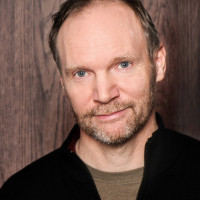
Bobo Moreno. © Thomas Roger Henrichsen

»Music is an element for me, along with earth, wind, fire and water. Music is a nutrient that is part of my personal food pyramid, along with cheese, eggs and tomatoes. Music is a relationship in my life that is just as important as the people I have around me. Music is like an extra organ through which I perceive the world.« 

Growing up surrounded by his parents’ eclectic record collection, Bobo Moreno developed a love for music across genres. Named after his stepfather, jazz and rock bassist Bo Stief, Bobo started out on the electric bass before, at the age of 22, finding his true instrument – ​​his voice. Self-taught, he developed his craft through countless live performances and garnered recognition for his expressive voice and stylistic range. His national breakthrough came with the pop duo Peaches & Bobo in 1993. After decades of performing, at the age of 60, Bobo now releases Missing Pieces – his deeply personal debut album, reflecting a life of musical exploration and self-discovery, while marking a new chapter in a lifelong musical journey.

© Mira Campau

»Music to me is like water to plants. And a space to connect us, to ourselves, others and the world.«

Astrid Engberg is a contemporary artist with roots in the past, blending electronic-organic jazz, soul and percussive minimalism. Her sound combines heavy, minimal productions with personal storytelling and a spiritual edge, carried by a voice that balances sensitivity and strength. Since releasing her debut album Tulpa in 2020, highlighted by Bandcamp as one of the summer’s best releases, she has received the Steppeulven award as Producer of the Year 2021 and won Vocal Jazz Release of the Year at Danish Music Awards Jazz, alongside a nomination for Experimental Album of the Year.

Engberg has performed live and as a DJ at major Danish festivals and venues, including SPOT, Heartland, Roskilde Festival, DR Koncerthuset and SMK – Statens Museum for Kunst.

in brieflive
13.02

Ash in the Ear

Farvel & Peter Laugesen
© PR
© PR

There was something liberating about watching 83-year-old Peter Laugesen step onto the stage at Phono with a new band and not a trace of nostalgia. There was no hint of a poetic lap of honour. But plenty of noise. The trio Farvel – Halfdan Magnus Stefansson (guitar), Gustav M.K. Lauridsen (bass) and Jens Højbøge Mosegaard (drums) – did not play politely around the poet. They laid down a massive carpet of stoner rock and free improvisation beneath him, as if the words had to be wrenched free from gravel and distortion. At first the music moved heavy and viscous. For a long time. Then it accelerated. And Laugesen accelerated with it.

He sat on a chair in the corner, leafing through his books, speaking of dawn, of children at play before they disappear, of Finnegans Wake, Winnie-the-Pooh and an irate »then thaw, for fuck’s sake.« The words did not fall in rhythm – they landed like bolts on a workshop floor. Laugesen’s baritone is still as coarse as steel wire; the Brabrand accent refuses to be polished. He played the harmonica. It sounded more than off-kilter – a twisted blues.

Farvel emerged from a jazz ambition that dissolved and found another path in the abrasive aesthetics of 1990s noise rock. It suits Laugesen. The three young musicians did not play behind him, but with him, across generations, on equal footing. This was no solemn celebration of an ageing poet. It was a workplace filled with friction. At Phono, Laugesen sang – yes, sang – the prose of life across a wall of sound. His voice cut in between the rumbling bass and the grit of the snare drum. He spoke of »ash in the ear«. You left carrying precisely that: a tremor in your hearing. When language meets resistance, it can still strike sparks.

Phono. 12.02

in briefrelease
11.02

Echoes from the Olive Trees

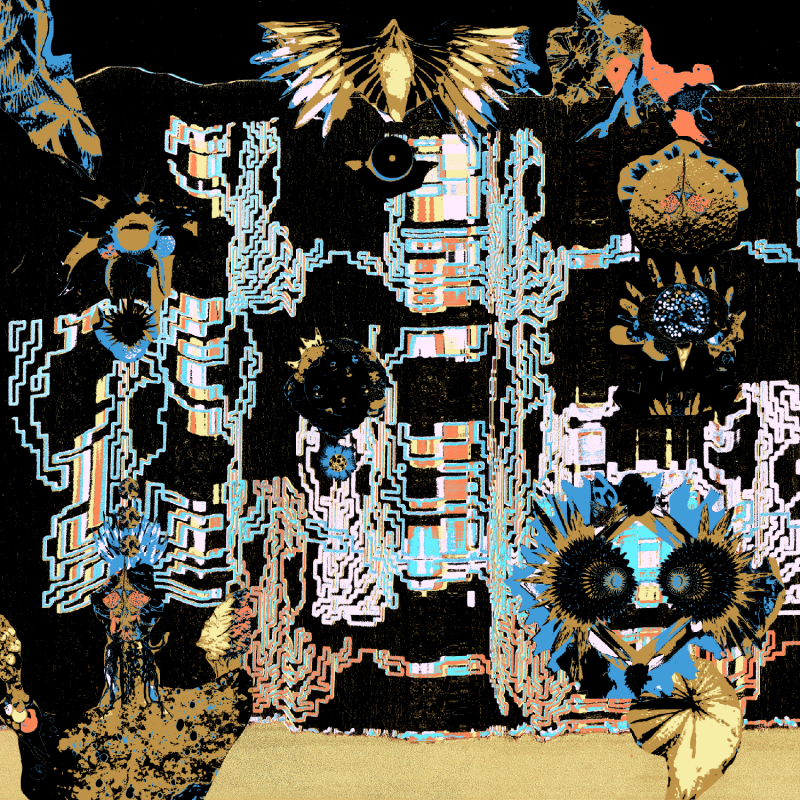
Mai Mai Mai: »Karakoz«
© PR
© PR

Grief is hereditary. It is collective and more than mere streams of tears – as countless generations of oppressed Palestinians can attest. On the album Karakoz, the Rome-based musician Mai Mai Mai creates a resonance of this collective sorrow and attempts to grasp the desperate hope of the Palestinian people. Not through political slogans, but through dark spiritualism and synthesizers.

Karakoz is an ancient form of shadow theatre with roots in the Ottoman Empire, and the album title serves as an omen of the musical pulse that sets in from the opening track, »Grief«. Here the music sounds like an archaic folk hymn: slow, repetitive percussion creates a tear-soaked minimalism, and the piece feels like a ceremony passed down through generations. With synthesizers slowly coiling around Maya Al Khaldi’s yearning vocals, »Grief« becomes a cultural bridge between forgotten traditions and the painfully current tragedy that today envelops Palestine in an all-consuming darkness.

Across the seven tracks, one hears trauma like a wind murmuring through the streets and among the olive trees. This may be because the album was created in collaboration with local artists and includes archival material from The Palestinian Sound Archive – an archive of decades of forgotten music, poetry, and album covers. Karakoz is a reinterpretation of Middle Eastern spiritualism and forgotten music. It is a testament to grief as lived experience, and as an archival bulwark, Karakoz thus takes part in the struggle for a free Palestine.

English translation: Andreo Michaelo Mielczarek

© PR

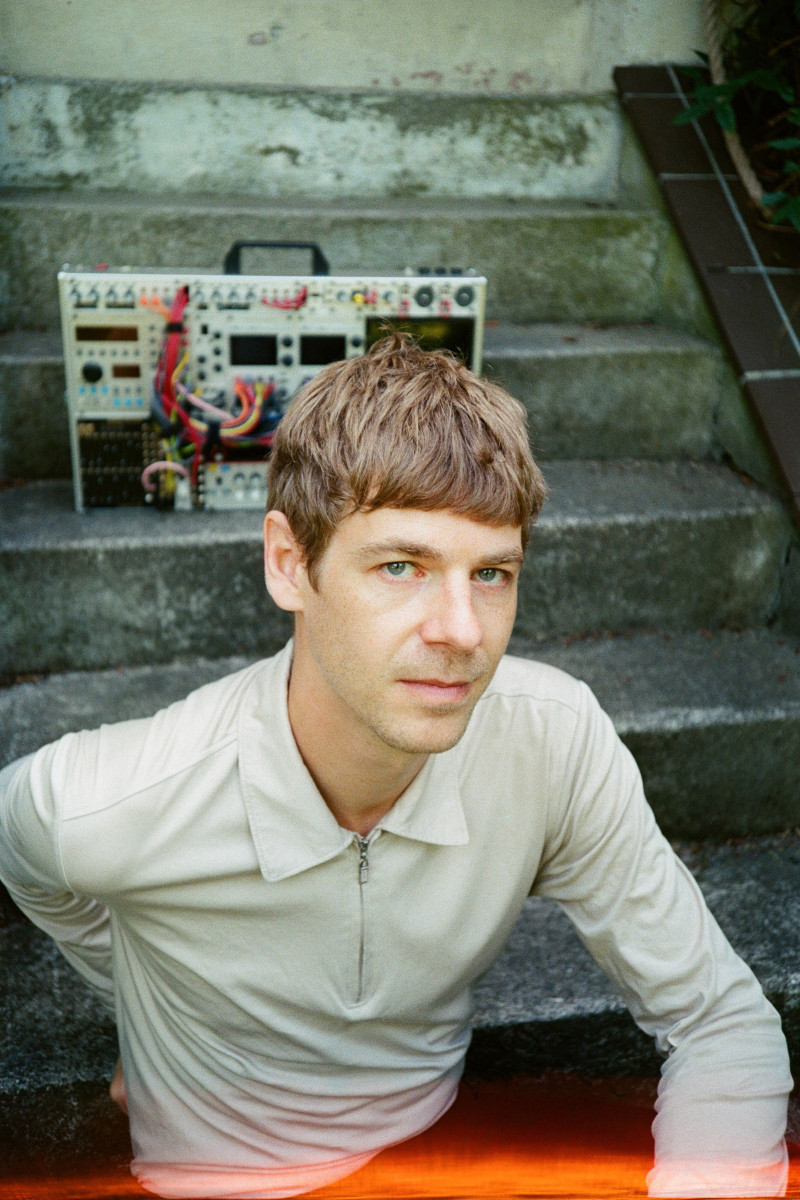
»For me, music is a secret safe place. It is a refuge from society, from who you're expected to be, and from the idea of belonging. It is a space where you're free from conflict and dualistic ways of thinking. It is a place to feel the world without needing to understand it.«

Masaya Ozaki is a composer born in Niigata, Japan. His work is deeply influenced by the transient nature of space and the subtleties of sound within physical environments.  Ozaki views sound not just as a medium, but as a form deeply intertwined with the spaces it inhabits, something that he explores extensively in site-specific projects like Echoes, which involved live performances inside a lighthouse. 

Ozaki’s latest album, Mizukara (2024), is a reflection of his personal and artistic journey, primarily shaped by his experiences in Iceland. The album embraces minimalism and introspection, incorporating field recordings, sparse instrumentals, and the textures of the Icelandic landscape to explore the fluid relationship between self and environment. In recent interviews, he emphasized his shift from purely sound-based compositions to ones that deeply consider the environment and space. His relocation to Iceland has profoundly influenced his work, encouraging him to further merge the boundaries between music, nature, and architecture.  He is also a member of the Reykjavík-based emo anime doom metal band MC Myasnoi.