Rune Glerup
15




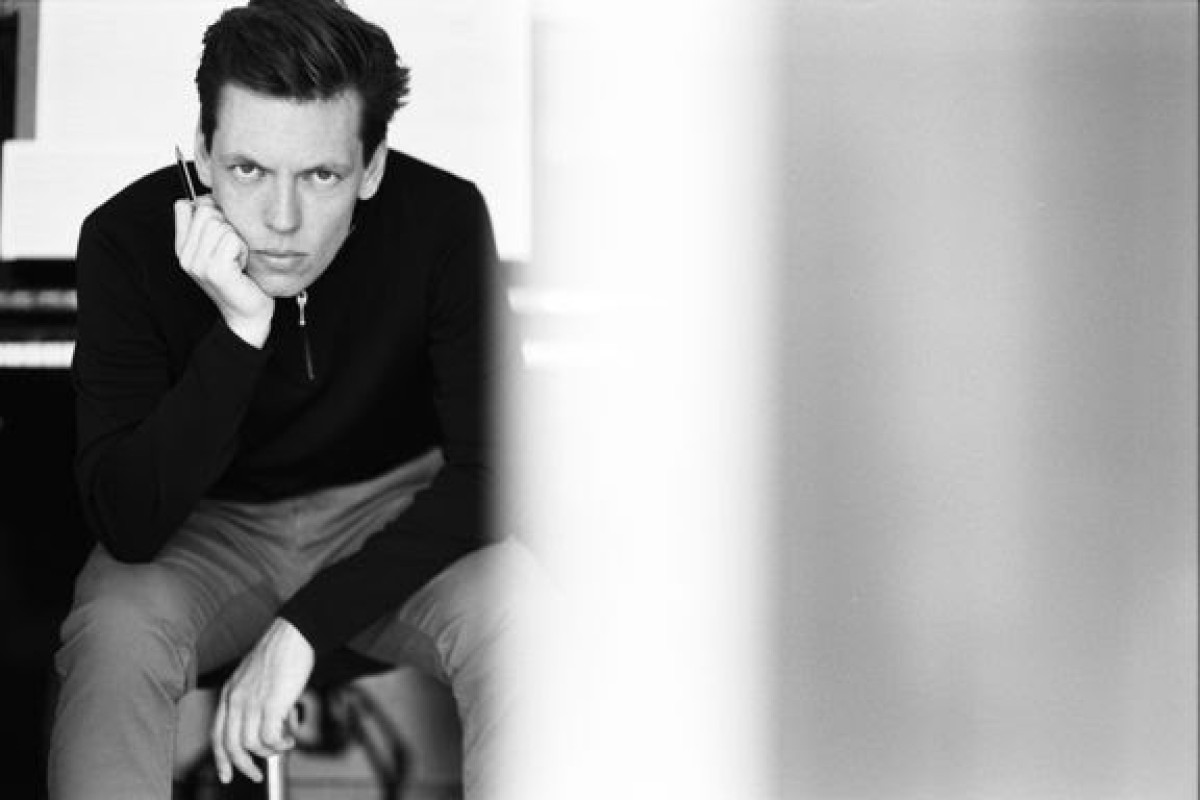
A string quartet consists of four players, and a clarinet quintet five, though the Danish composer Rune Glerup (b. 1981)’s newly recorded works for both ensembles would have you believe their ranks are vastly undercounted. The recipient of last year’s Nordic Council Music Prize for his violin concerto Om lys og lethed (About Light and Lightness), Glerup writes pieces for chamber and orchestra that are often characterized by their multidimensionality: a sonic idea will persistently recur in altered guises, for a sense that one is feeling around different facets of a physical form. Yet the two works on Perhaps Thus the End – brought to life by the impeccable Quatour Diotima and clarinetist Jonas Frølund – are just as potent a demonstration of expansive interiority as they are of surface area.
In the titular string quartet, whose seven movements are named for lines from Beckett’s late prose work Stirrings Still, long tones and galloping motives are seamlessly shuffled amongst the ensemble, generating such a sonority that the group seems to have doubled in size. The language is sometimes mechanical but never automatic, bending rather into balletic shapes. Glerup is a careful manager of texture, finding grace in unintuitive sounds through skillful layering – to speak merely of how, in a later movement, a harmonic pizzicato punctuates the string equivalent of vocal fry before the group pivots suddenly into stillness.
On the unexpectedly addictive »Still Leaning Towards this Machine«, which is surely among the few times a contemporary clarinet quintet has received that distinction, electronics magnify the ensemble through a subtle stuttering resonance. As a result, across three spunky movements, the group is occasionally transmuted into a sort of paranormal accordion. It’s a wonderfully weird effect that, just as weirdly, the score seems to deliver with a straight face – just one more satisfying surprise among many others on this excellent record.
»Recently, I discovered that when a couple of thousand people clap their thick gloves in minus 30 degrees, it sounds like the softest techno – a freezing space where the cold air turns into a wave of warmth, and we, in a moment of collective devotion, become one with the rhythm, one with the invisible bond that connects us in the warmth of silence. Music is not just sounds, but a vain attempt to capture the infinite, which has always been and always will be.«
Andreo Michaelo Mielczarek has been the editor-in-chief of Seismograf since 2021. He is also a music critic and cultural journalist at Kristeligt Dagblad and Århus Stiftstidende/Avisen Danmark and has over the years written to publications such as Kunsten.nu, Glissando (Poland), Neural (Italy), Raw Vision (UK), Nutida Musik (Sweden), Kunstkritikk (DK/Sweden), Iscene.dk, B.T., and Jazz Special. He is the author (together with Lars Muhl) of the book HVA' SAA! En guidet rutsjebanetur gennem Aarhus – før, nu og i fremtiden (2024) and has also contributed to the anthology on music criticism Man skal høre meget (ed. Thomas Michelsen and Claus Røllum-Larsen, 2024). He is a founder and partner in the Polish-Danish cultural organization Kultur(a), and wherever there is a piano, he will be there, eager to coax a melody from it.

»For me, music is an opportunity for transformation.«
Aria Leth Schütze is based in Copenhagen and is the creative force behind the music projects Alto Aria and Samler På Dig. They are a co-founder of the record label Rhizome and a co-editor of the music magazine Passive/Aggressive. Their practice brings together electronic and acoustic music in an exploration of transformation.
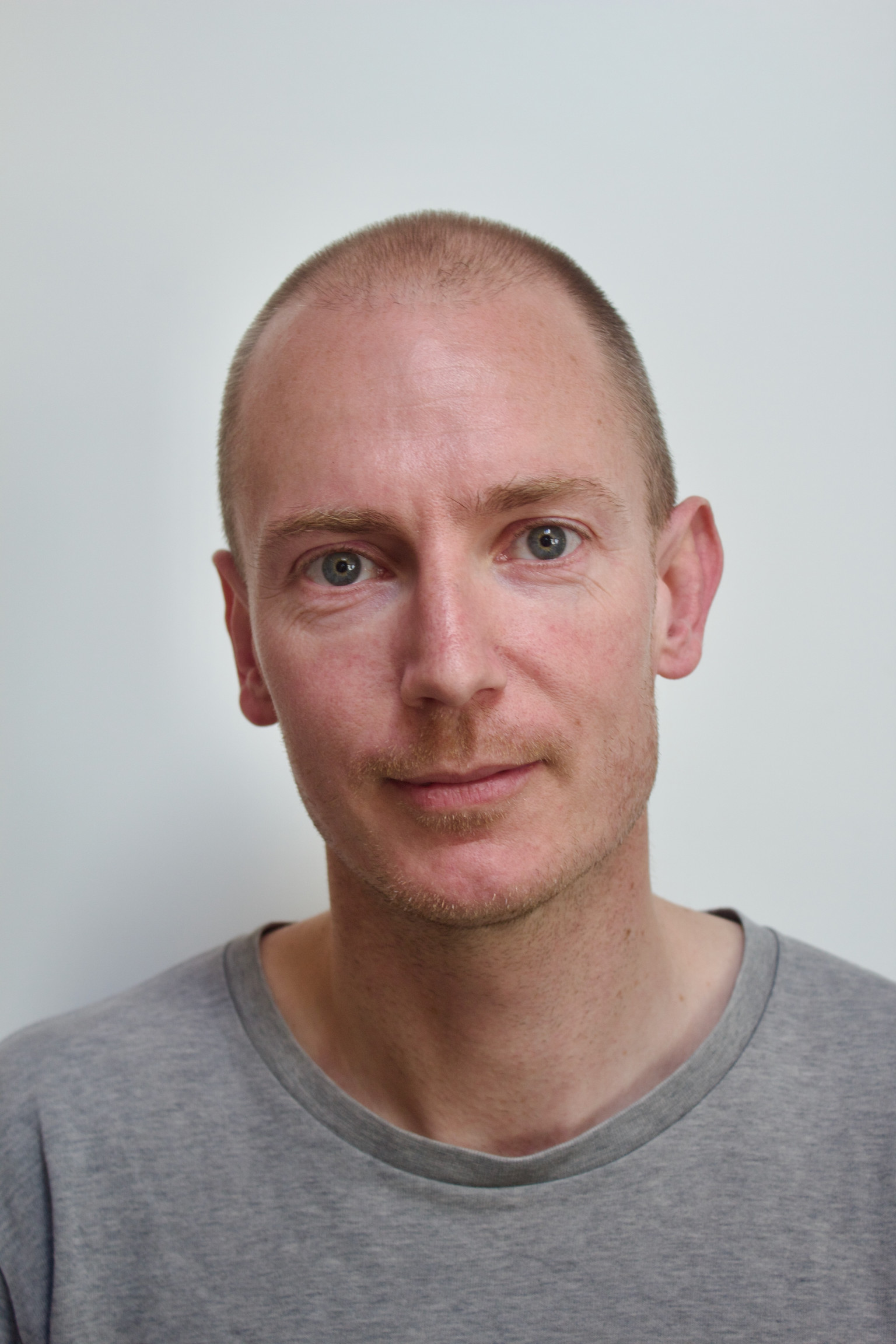
»For me, music is the art form that – if measured in hours and minutes – occupies by far the greatest part of my life. I cannot sing, nor can I play an instrument, but I can listen – as a happy amateur – while cycling, on the dance floor, and, above all, at the office. I almost always work – that is, write – to music.«
Mikkel Krause Frantzen (b. 1983) is an associate professor at the Department of Arts and Cultural Studies, a literary critic for Politiken, and the author of several books in English and Danish, such as En fremtid uden Fremtid (2018), Klodens Fald (2021), and Slutspil (2024).

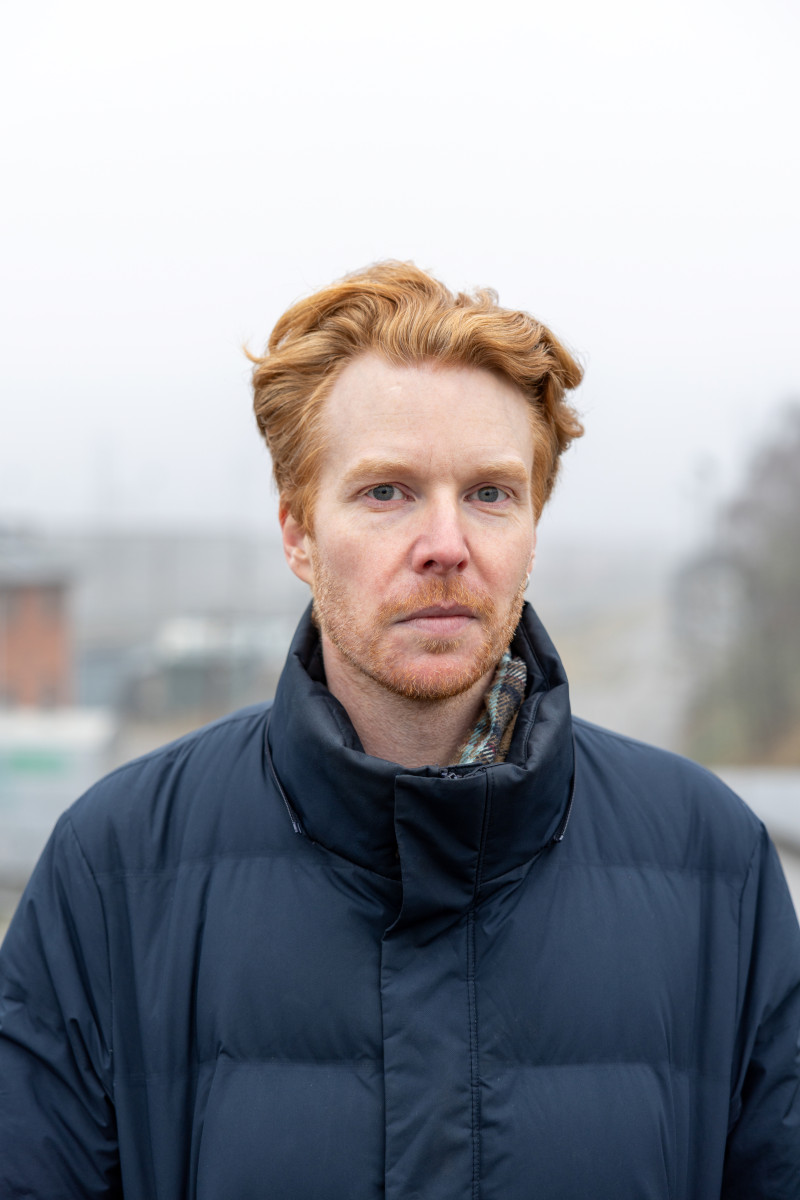
Last year, Builder released Poor_in_Spirit, an album in which he explored, on his own, the sonic possibilities of his self-built organ. It was an album shaped by this exploration, but ultimately also by the limitations of the organ itself. On Although Changed, I Arise the Same, the composer finds a way beyond them.
The organ is now joined by three additions: Builder’s own alto saxophone, along with the voices of Zola Mennenöh and Johanna Sulkunen. It makes all the difference, providing the diversity of instrumentation that Builder has repeatedly demonstrated his ability to compose for. At times, the organ’s bass sinks beneath the voices and saxophone like a light haze; at others, it envelops them in a heavy fog. It howls like wind in the trees and roars like a train in the night. Mennenöh and Sulkunen sing, chant and breathe simple, repetitive phrases about spiritual uncertainty and searching, as though lost in the dark forest of doubt.
It is a Spartan form of storytelling, giving the listener enough lyricism and atmosphere to set the mind in motion, but never so much that it becomes overwhelming. This is where Builder’s strength lies: his music clearly grows out of his life and experiences, yet he composes in such a way that the listener is invited to enter the story with their own imagination.
Builder determines the colours, but leaves part of the picture to the listener. It is an album that is far more restrained in its dramaturgy than previous releases. No less beautiful or inspiring for it.
English translation: Andreo Michaelo Mielczarek