in briefrelease
21.05

Artificial Intelligence on Autoplay

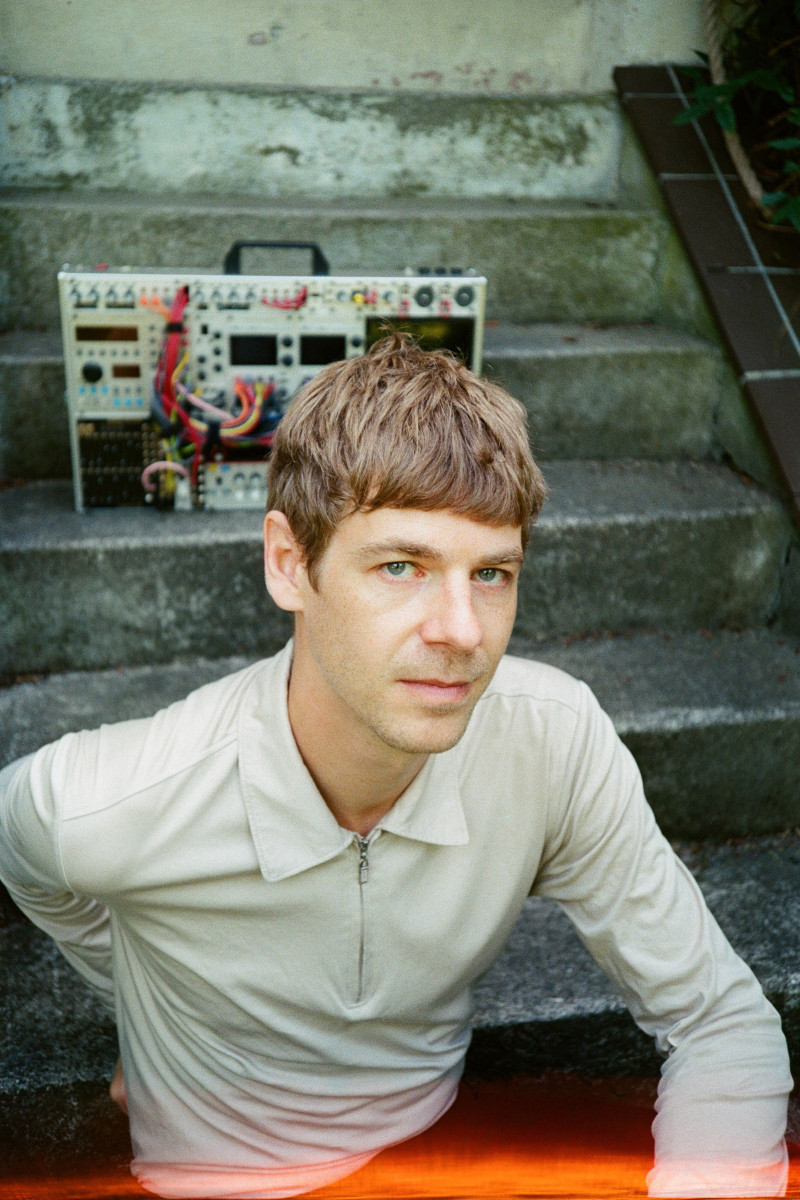
Slopcore: »Simon Littauer«
© PR
© PR

The logic of automation has long been part of modern music production. But what happens when it no longer merely assists, but takes over the creative process and artistic execution itself? Simon Littauer’s Slopcore is one of the latest attempts to answer that question. The sound of the AI-driven project is not radical as such, but it is interesting because Slopcore is several things at once: both a concrete take on an artistic practice shaped by recent developments in AI, and a symptom of the all-encompassing data models currently being debated so intensely.

Slopcore mimics the logic of a familiar streaming platform, except that the music here is generated in real time, with the audio stream continuously adapting to the listener’s behaviour, allowing users to proactively like the output or skip ahead whenever they want. The simple interface – featuring play, pause, and a heart icon – is accompanied by a pointillistic waveform that visually emphasises how Slopcore’s aesthetic winds its way through recognisable electronic terrains of house, 2000s electronica, IDM, techno, drum’n’bass, ambient synth textures, etc. etc. Most of it is rhythmically, harmonically, and melodically coherent, without being overly experimental.

As an AI-boosted extension of Littauer’s broader musical practice – which already contains strong aleatoric and algorithmic elements – the whole thing makes perfect sense. AI is not disappearing as a technology, and the parallels to Spotify’s growing AI ambitions or platforms like Suno are obvious enough. Littauer’s position as an established electronic musician becomes entangled in a deeply commercial and opaque data architecture (read: Google’s). And the title clearly references – perhaps ironically – the concept of »AI slop«, the term used to describe the generic, soulless overproduction of images and sound flooding digital platforms. Beyond being an entertaining listening experience, Slopcore can also be seen as a relevant – perhaps, in the current climate, even courageous – contribution to an ongoing and confusing debate about artistic integrity and authenticity in a cultural world that cannot decide whether it wants to resist or simply log in.

English translation: Andreo Michaelo Mielczarek

in brieflive
05.12

Anna von Hausswolff: The Path to the Organ’s Modern Resurrection

Klara Lewis, Anna von Hausswolff
© PR
© PR

The organ, one of Christianity’s most powerful liturgical markers, runs like a red thread through Swedish artist Anna von Hausswolff’s work. But on her latest album Iconoclasts, the long, piercing drones are toned down in favour of a sharper, driving energy. It was an energy that came through strongly at Hausswolff’s concert in Vega last night, where she was, as usual, joined by a large band. The evening opened with Swedish noise musician Klara Lewis, whose mumbling cassette-loop textures set a brutally atmospheric tone from the start.

Hausswolff’s band was this time expanded with saxophone and percussion, both central on Iconoclasts and both contributing to the slight eurodance tinge that colours several tracks. Unfortunately, the saxophone was at times swallowed by the dense soundscape. Fortunately, Hausswolff’s radiant voice cut through clearly. So did the small organetto – a kind of bellows-driven organ with long pipes. It stood like a totem at the centre of the stage and was almost embraced by Hausswolff whenever she played it. A piece like »The Whole Woman« (a waltzing duet with Iggy Pop on the album) became, in concert, a touching love ode, carried by the organ’s gentle breath as its pulse.

In recent years, a number of musicians have used the organ’s distinctive resonances to wrest it free from the weight of Christian liturgy, giving the instrument an almost iconoclastic status. Despite a slightly muddy sound mix, Hausswolff’s concert was a clear example of this contrast – still deeply rooted in ecclesiastical connotations, yet now an accomplice in large-scale modern productions and a central instrument on major stages.

English translation: Andreo Michaelo Mielczarek

© PR

»Music, to me, is … the silence that gropes – like yourself – across a black canvas.
In moments, a hissing emerges.
Nuts are cracked.«

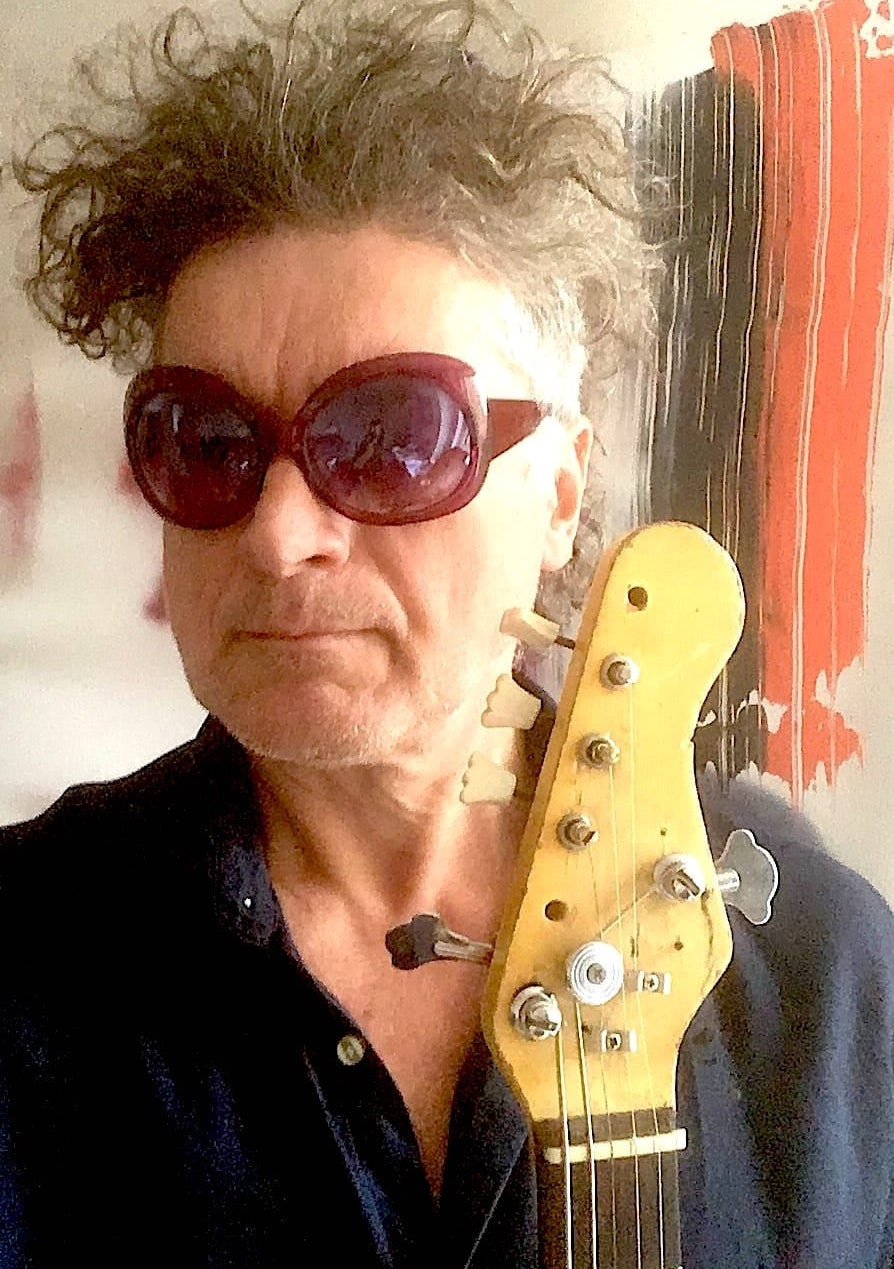
Jørgen Teller has a long career as an electric guitarist, vocalist, electronic musician, and performer. He has released records solo as Static Teller and with Jørgen Teller & The Empty Stairs, Kaptajn Ørentvist … He frequently collaborates with local and international musicians.

© Lou Mouw

»For me, music is a non-figurative process that cannot be definitively categorised.«

Kristoffer Raasted graduated as a visual artist from the Media School at the Royal Danish Academy of Fine Arts in 2018 and is currently completing a PhD in practice-based and artistic research. Raasted has been an artist in residence at the Danish Institute in Rome and a visiting researcher at UdK Sound Studies in Berlin as part of his PhD.

© Iain Forbes

»When I search for new music, I search for sound that evokes images in my mind. It is fuel, a gateway to emotion, and my most important writing companion. When inspiration lapses, music is the tool that always jumpstarts it.«

Iain Forbes is a Scottish/Norwegian film director based in Oslo. He has studied film directing at Nordland College of Art and Film and the Norwegian Film School. His graduation film Revisited won a Student Academy Award in 2023. He has previously directed short films such as Snowman (2015) and Semper Fi (2017). His latest short After Dark won Best International Short Film at the Oscar-qualifying Foyle Film Festival in 2024

Nikolaj Nørlund. © Agnete Schlichtkrull

»Music, to me, is a companion through life, a premise, an excuse, a mystery, an explanation, a point of departure. It is old ideas, overlooked treasure chests, new angles, long concerts, doubt and conviction. It is words, tones, cracked voices, different points of departure, bass in the diaphragm, falsetto in the hair, challenges, rewards, and love.«

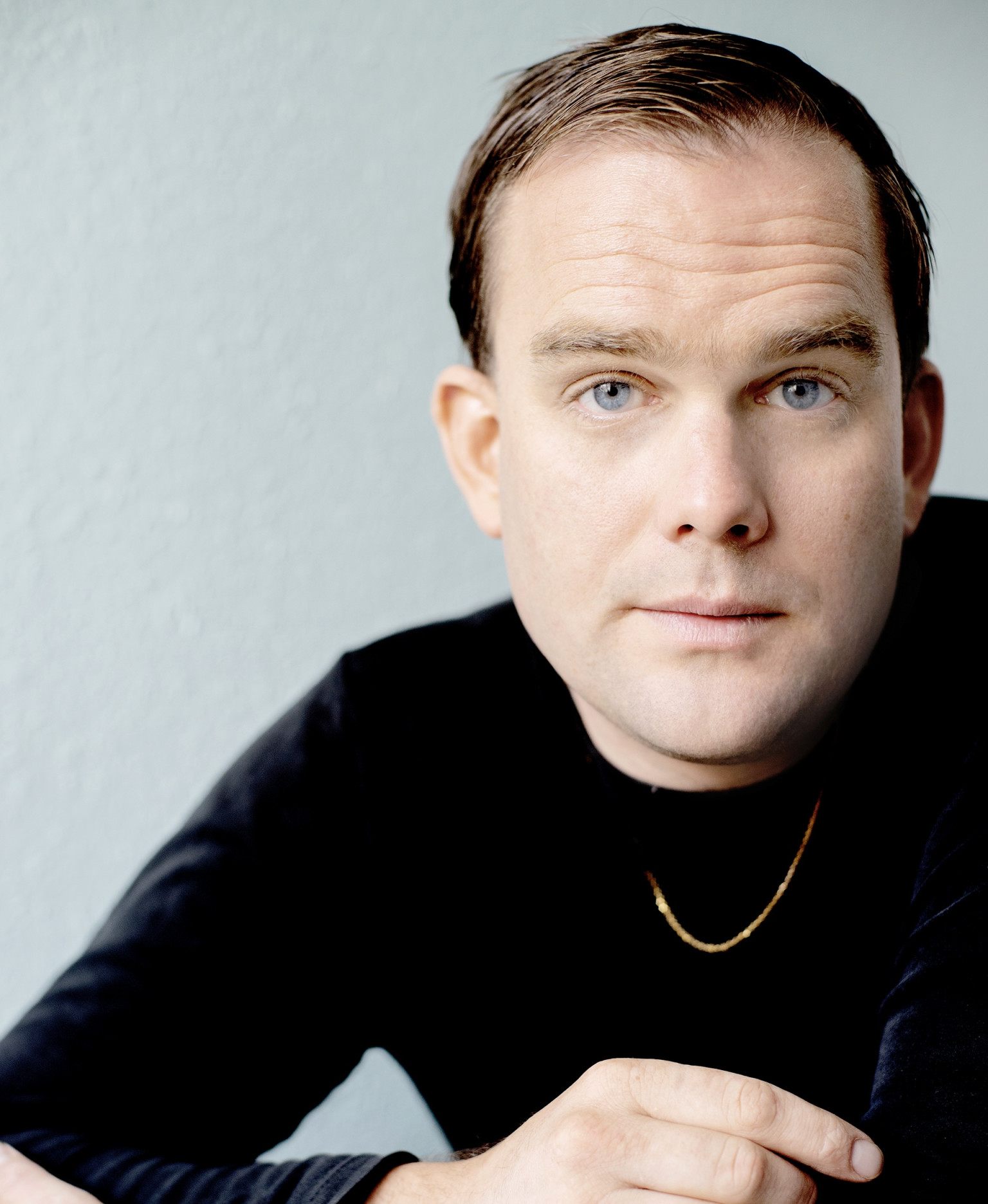
Nikolaj Nørlund made his solo debut with Navnløs (1996), an interpretation of poems by Michael Strunge, and released Nye Optagelser (1997) the following year, his first Danish-language singer-songwriter album. He has since worked broadly across music and poetry and is behind around 20 releases, both solo and in various band constellations. Nørlund’s projects range from collaborations with Copenhagen Phil on two orchestral albums, created together with author Naja Marie Aidt. His most recent release is the single »Englenes Park (nu ikke saa dark)«, the forerunner to the album Himlen skiftet ud, due for release at the end of November. In addition to his own work, Nørlund has, through the record label Auditorium, produced and released a number of Danish artists, including Niels Skousen, Ulige Numre, Jens Unmack, I Got You On Tape, and Martin Ryum. He was previously a member of Trains And Boats And Planes and periodically works with the English-language project Rhonda Harris. Nørlund has received a Danish Music Award (2003) and a Steppeulv (2006), both as Producer of the Year, as well as the Niels Mathiassen Cultural Award (2012).