in brieflive
09.03

Beauty in Decay

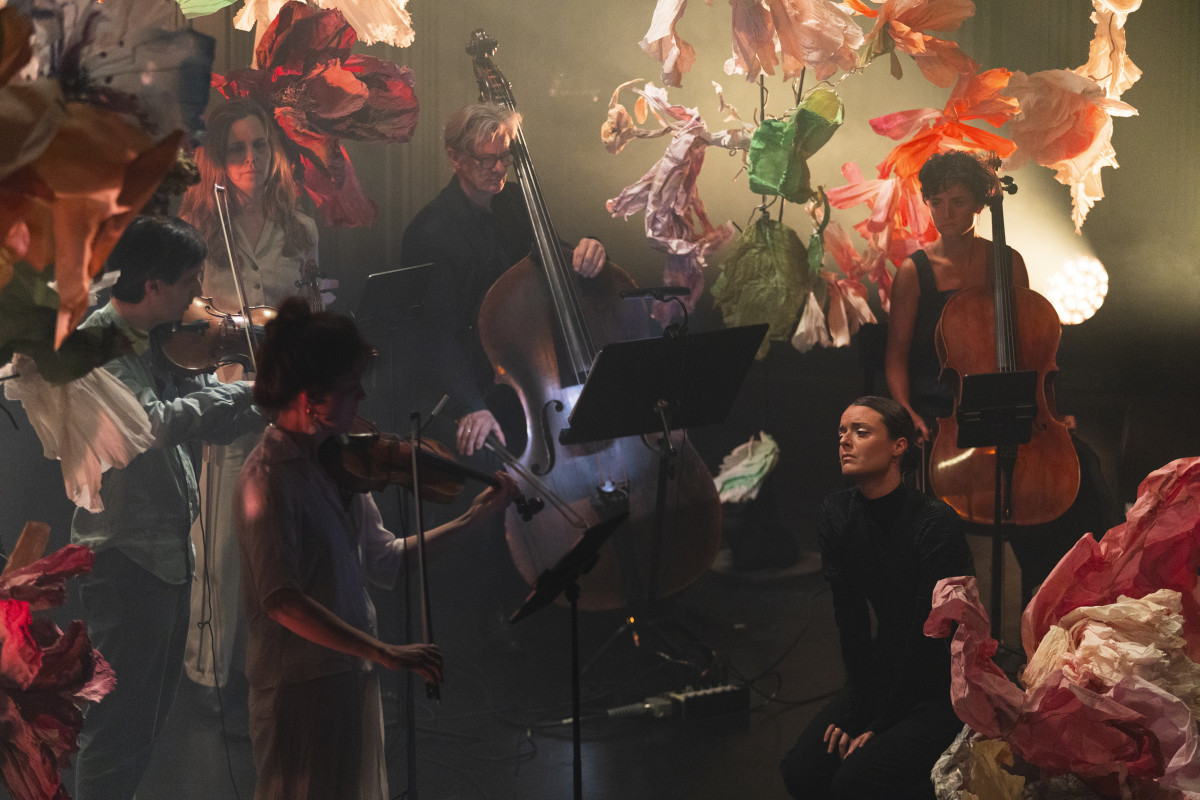
Thure Lindhardt, Ensemble Hermes, Sophie Haagen & Mikkel B. Grevsen: »Helvedesblomsterne«
© Anders Hede, Musikhuset

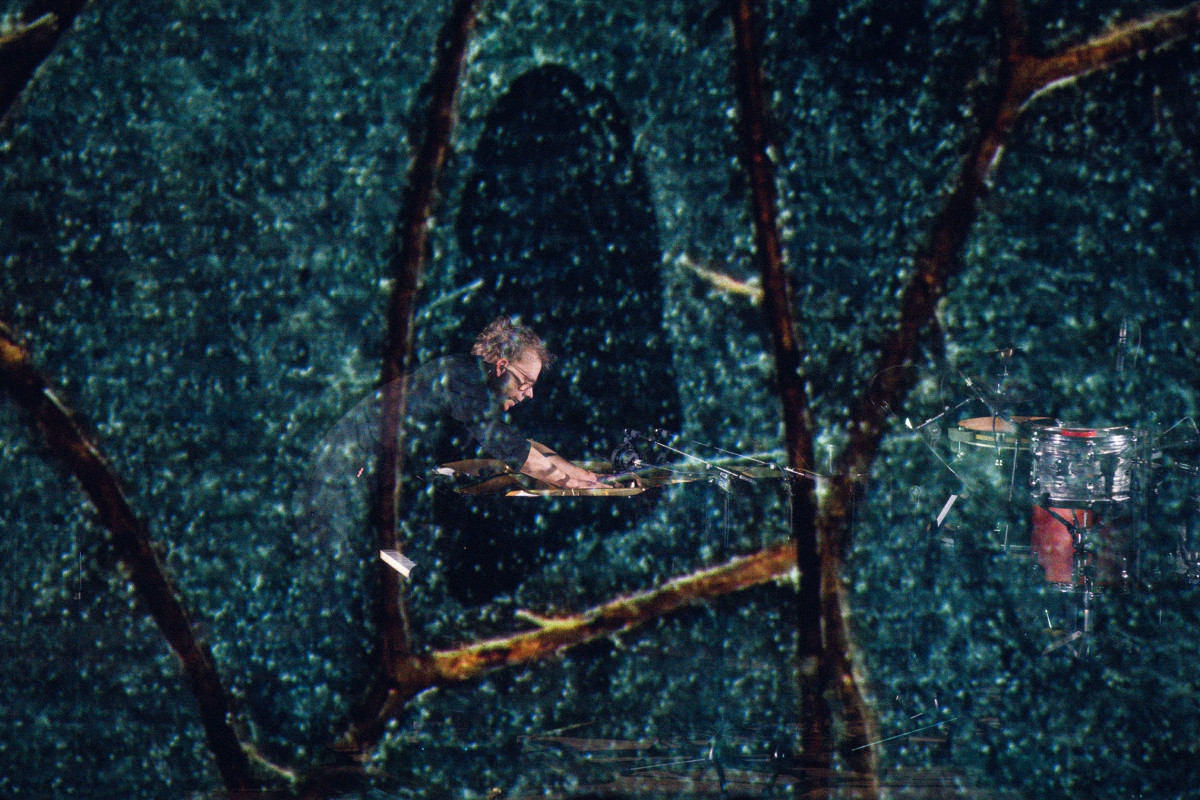
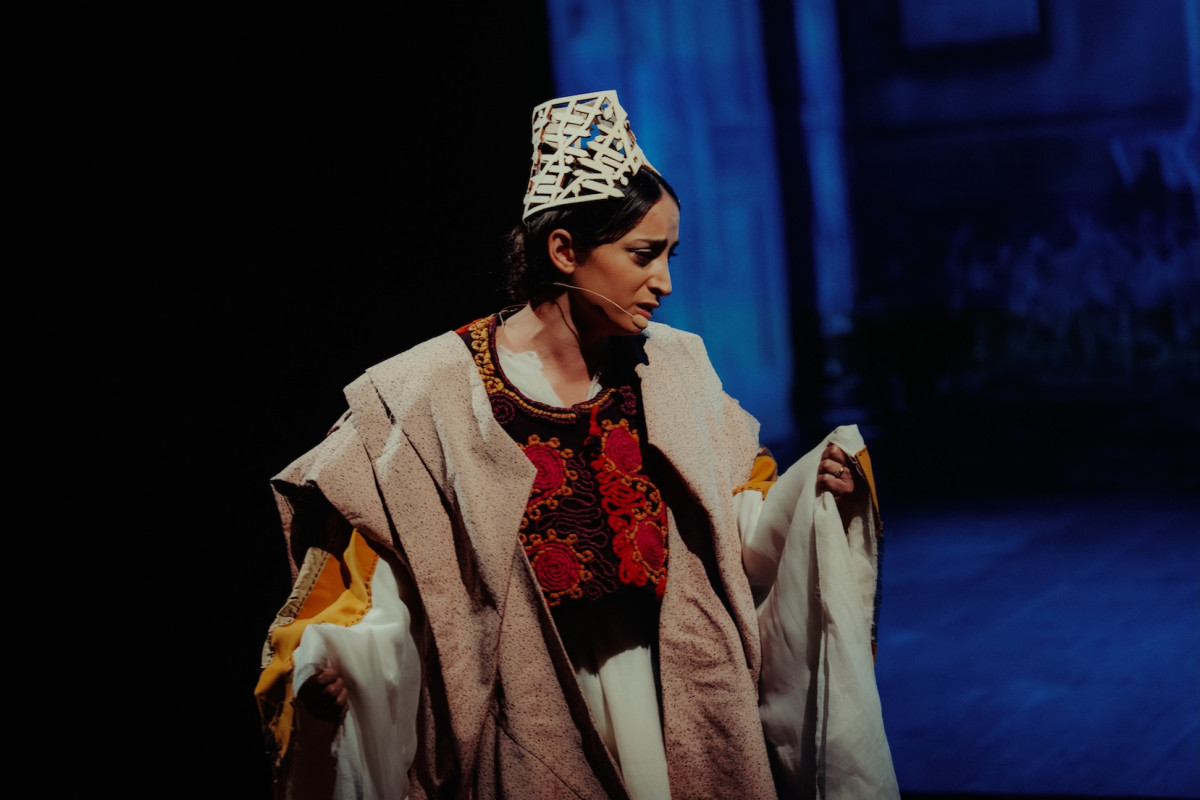
We sat in slow decay for an evening in the vestibule of Hell. It was during an ambitious, multisensory interpretation of Charles Baudelaire’s poetry collection Les Fleurs du mal (1857) – Helvedesblomsterne (The Flowers of Evil). Director Anna Schulin-Zeuthen and composer Mikkel B. Grevsen brought together mezzo-soprano Sophie Haagen and actor Thure Lindhardt with the six string players of Ensemble Hermes, adding electronic music to the mix. This Frankenstein-like staging transported modernist poetry into 2026, where the motifs stretching between beauty and decay still – despite many scientific advances – remain a fundamental condition.

In Musikhuset Aarhus, the stage was decorated with lush and withered flowers as vanitas symbols. Lindhardt opened with a recitation that shattered the fourth wall: with both humour and intensity he addressed us directly in the audience – hypocrites and future corpses.

In contrast to the almost seamless sonic unity of Haagen’s dark voice, the string players’ sustained textures and the ghostly distortions of the electronics, Lindhardt’s reading appeared as a strange but necessary disturbance. He prowled about with a folder tucked under his arm like an awkward outsider – the poet as eternal observer.

For my part, I dutifully tried to follow the printed programme sheet, but soon gave up and instead – quite in the spirit of the work – allowed myself, hypocritically, to be intoxicated and seduced. Helvedesblomsterne succeeds as a bold and grand project. Yet the performance also balances a little too cautiously between harmonic beauty and the nineteenth-century uncanniness that in Baudelaire crawls with death all the way into the bones.

English translation: Andreo Michaelo Mielczarek

in briefrelease
21.05

Emergent Music

Lauri Supponen: »Dwell«
© Tuomas Tenkanen
© Tuomas Tenkanen

As an abstract micro manifesto Lauri Supponen describes his interest in »music that inhabits a second space and lingers there«, an invitation for us to dwell in the moment and discover music in its quiet emergence. 

»Gaz aux étages«, the first composition on Supponen’s breathtaking album, seems to test this idea as it unfolds with whispered bow strokes devoid of pitch. It is as if the piece itself is an entity wondering if it will prove to be music as it tentatively investigates its own constituent components. A subtle opening to an album that answers this question with clarity in its eponymous second work »Dwell« (tracks 2–5), exploring a fascinating microtonal realm. In virtuoso performances of astonishing accuracy, guitarist Petri Kumela and vocalist Tuuli Lindeberg bring Supponen’s demanding four-movement duo to life. The guitar writing in Dwell recalls Norwegian composer Martin Rane Bauck’s Fretted with Golden Fire with its drone-like microtonal strumming – a connection substantiated by the album notes, which reveal both composers know each other and have collaborated with bass clarinetist Madison Greenstone. 

The dwelling-space Supponen offers in »Eau & gaz à tous les étages« and »Opus Nen«, return the listener to a more remote sonic space, reminiscent of the album’s opening albeit with tighter compositional sense. Performed with intensity by Madison Greenstone and baritone saxophonist Sikri Lehko, they consolidate the pervasive feeling that Dwell is a uniquely inspired collaboration.

© PR

»Every moment is nothing but the uttermost end of the past. Music makes this edge wide and beautiful.«

Sven Helbig is a German composer and producer known for combining orchestral and choral music with electronic elements and a strong poetic sensibility. A self-taught musician raised in Eisenhüttenstadt, he released his debut album Pocket Symphonies on Deutsche Grammophon to critical acclaim for its emotional depth and formal precision. Helbig has collaborated with ensembles such as the BBC Singers, Fauré Quartett, and Staatskapelle Dresden, as well as with artists like Rammstein and the Pet Shop Boys. He just released REQUIEM A on Deutsche Grammophon. It is a deeply personal and reflective composition, intertwining classical Latin liturgical texts with new ones written by Helbig himself. The work revolves around themes of loss, memory, and the possibility of renewal – with the »A« in the title symbolizing Anfang (beginning) and the belief in a new start after devastation.

© Kåre Viemose

»Recently, I discovered that when a couple of thousand people clap their thick gloves in minus 30 degrees, it sounds like the softest techno – a freezing space where the cold air turns into a wave of warmth, and we, in a moment of collective devotion, become one with the rhythm, one with the invisible bond that connects us in the warmth of silence. Music is not just sounds, but a vain attempt to capture the infinite, which has always been and always will be.«

Andreo Michaelo Mielczarek has been the editor-in-chief of Seismograf since 2021. He is also a music critic and cultural journalist at Kristeligt Dagblad and Århus Stiftstidende/Avisen Danmark and has over the years written to publications such as Kunsten.nu, Glissando (Poland), Neural (Italy), Raw Vision (UK), Nutida Musik (Sweden), Kunstkritikk (DK/Sweden), Iscene.dk, B.T., and Jazz Special. He is the author (together with Lars Muhl) of the book HVA' SAA! En guidet rutsjebanetur gennem Aarhus – før, nu og i fremtiden (2024) and has also contributed to the anthology on music criticism Man skal høre meget (ed. Thomas Michelsen and Claus Røllum-Larsen, 2024). He is a founder and partner in the Polish-Danish cultural organization Kultur(a), and wherever there is a piano, he will be there, eager to coax a melody from it.
© PR

»A lot is projected onto music and making music – I'm careful, singing doesn't make you more intelligent and certainly doesn't make you a better person. It's like in sexuality. A lot of things go very consciously wrong for some people. Music like sex are means of communication, people come into contact and negotiate with each other and their instruments/tools and meet themselves in it. This is also the case when I listen to music – from every conceivable genre and context, even if I always notice that as a teenager I used to play a lot of jazz guitar.«

Bastian Zimmermann lives in Munich and works freelance in the areas of music and performance. As a dramaturge, he works with artists such as the soloist ensemble Kaleidoskop, Yael Ronen and Neo Hülcker. He is editor of the German speaking magazine Positionen – Texts on Current Music and curates projects such as »Music for Hotel Bars« and the festival Music Installations Nuremberg festival. His focus is on social aspects of making music, experimental music concepts and the questioning of bourgeois structures in contemporary music. In Spring 2025 he will take over the Wolke Verlag publishing house for books on music with Patrick Becker.