





in brieflive
29.09

Composition for Stone Walls

Bjarke Mogensen – concert in the exhibition »Psychosphere«
© David Stjernholm
© David Stjernholm

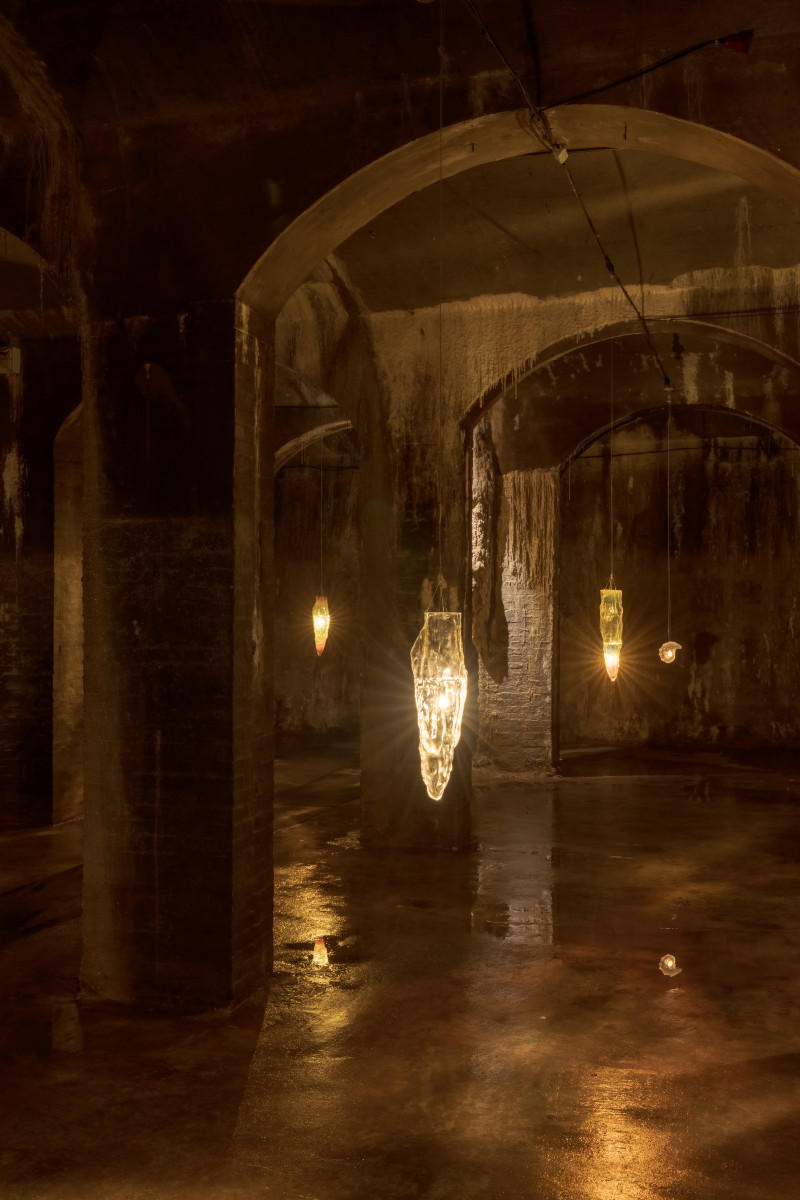
The contrast is striking when, on the hottest day of the year, you step down from the green lawns of Søndermarken into the underground world of the Cisterns, Copenhagen’s old water reservoir. The humidity is high, the light sparse, and stalactites hang from the vaulted ceilings, casting shadows in the puddles on the floor. And then there is the sound: in the empty columned halls, the reverberation can last up to 17 seconds. Even the slightest scrape echoes down here.

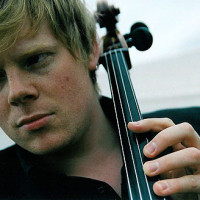
Since 2016, the Cisterns have functioned as an exhibition space, and this year Jakob Kudsk Steensen has transformed the halls into an underwater landscape of video projections, sculptural objects, and a soundscape created by Lugh O’Neill featuring Bjarke Mogensen on accordion. Mogensen, who is performing this evening, has a versatile taste. Perhaps a bit too versatile, I think to myself as I read the evening’s program, which spans from Bach to folk melodies from Bornholm. It turns out to hold together better than one might expect. These are compositions that seem to stretch time itself, where long tones – amplified and extended by the reverberation – form a murky foundation for short, pearling attacks, like marble balls ricocheting off a stone wall.

A shimmering, sorrowful composition by Nick Martin, inspired by Michelangelo’s Pietà – marble again – is followed by a meditation on echo among the cliffs of Bornholm by Frederiksberg-based composer Martin Lohse. Another piece rises slender and sacred like high vaults, while Mogensen’s own Passage crackles, snaps, and crunches like stones being broken. Mogensen’s accordion is in constant dialogue with the space; he calls, and the dark colonnades answer back – or is it the other way around?

The audience sits petrified, completely absorbed in the sound, as Mogensen masterfully makes his instrument sound like everything from a rapid breath to a thunderclap. When we finally emerge, heavy clouds hang over Søndermarken, and the heat is gone. The park feels transformed. The contrast is tangible.

English translation: Andreo Michaelo Mielczarek

Bill Frisell. © Carole D'Inverno

»I like when it's impossible to tell at first if something is black or white, or country or blues, or whatever.«

Bill Frisell’s career as a guitarist and composer has spanned more than 40 years and many celebrated recordings. From Aaron Copeland and Charles Ives to Bob Dylan and Madonna. Born in Baltimore, Bill Frisell played clarinet throughout his childhood in Denver, Colorado. His interest in guitar began with his exposure to pop music on the radio.

© PR

»Music has been a healing balm for me.«

John William Grant is an American singer, musician, and songwriter holding both American and Icelandic citizenship. He first came to prominence as a co-founder, lead vocalist, pianist, and primary songwriter of the alternative rock band The Czars. After releasing six albums between 1994 and 2006, the band disbanded, and Grant withdrew from music for four years before embarking on a solo career.

He returned in April 2010 with a critically acclaimed debut album recorded in collaboration with Midlake. Queen of Denmark was named Album of the Year 2010 by Mojo magazine and was also selected as one of the ten best albums of 2010 by The Guardian’s music critics and writers.

© Malthe Folke Ivarsson

»In his music, composer Allan Gravgaard Madsen tries to create a better version of himself.« 

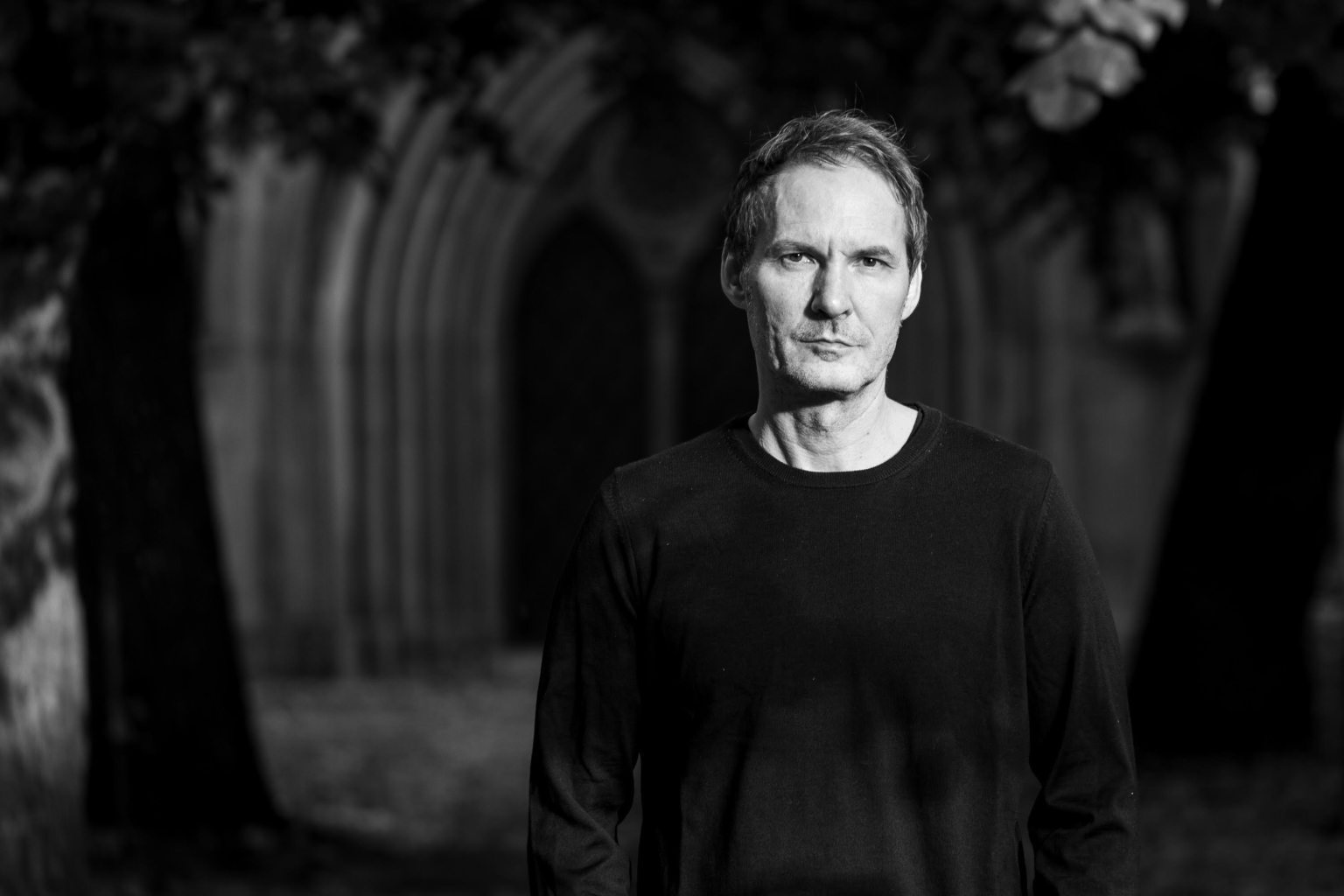
Allan Gravgaard Madsen is a Danish composer based in Copenhagen. His most recent works include Träume nicht and Nachtmusik. He tries to create a better version of himself in his music – where his personality tends to be restless, chatty and has an active inner life, his music is controlled, simple and merciless in its expression. He is the recipient of the Carl Nielsen & Anne Marie Carl-Nielsens Hæderspris 2022.

in briefrelease
23.01.2022

Finnish Space Travel

Tomutonttu: »Hoshi«
© Tomutonttu: »Hoshi«

The Finnish multimedia artist Jan Anderzén has, with the album Hoshi, released under the solo moniker Tomutonttu, created a true little star. Not only because »hoshi« literally means »star« in Japanese, but above all due to the music itself. There is something cosmic, yet infinitely minute, about the sonic worlds Anderzén conjures—like a galaxy reflected in a puddle, or a space journey in a rocket carved from a hollow tree trunk. Synths emit busy, warm blips and bloops, while ultra-short vocal and instrumental samples create a recognizable blur. At once artificial and organic – soft, rounded, jagged, crackling.

Anderzén approaches sound with a playfulness I simply adore. His music is strange in an incredibly comforting way. It places me in a kind of colorful, trance-like state, only interrupted when, several times over the course of the album, I find myself smiling in delight at a particularly great sound. The synths on »Katse osuu sähköön!« The choral samples on »Kesä oli äkkiä ohi!« Milo Linnovaara’s flute on »Malta lausua ‘AH’!« And many more. Hoshi is an album packed with microscopic moments that together form a frayed, exploding, radiant, idiosyncratic whole—a stellar moment of just under 38 minutes.