In briefrelease
29.09

Drums of Dissent

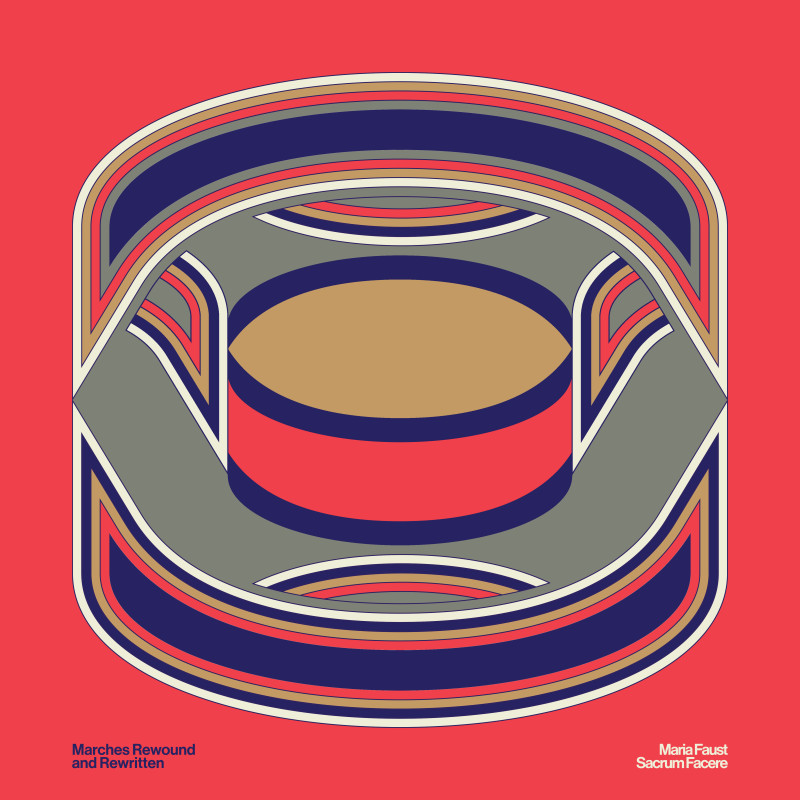
Maria Faust Sacrum Facere: »Marches Rewound and Rewritten«
© PR

With her latest album, saxofonist and composer Maria Faust has put the political at the center of jazz, in the long tradition of Ornette Coleman, Miles Davis, Charlie Haden, Fred Frith and Tom Cora, just to name a few. What is surprising is her choice of genre, marches, which is not a per se a traditional jazz form. If Charles Mingus, for instance, payed his tribute to New Orleans marching bands, Faust’s choice is definitely antagonistic. The marches she manipulates and destroys from the inside are not of the entertaining sort, unless you’re a general, as they are of the military and nationalistic kind.

Faust’s score would be a perfect fit for plays like Alphonse Allais’s Père Ubu and Bertold Brecht’s The Resistible Ascension of Arturo Ui, in its use of the grotesque as a creative driving force. Faust’s genius however doesn’t lie in turning these marches into farcical circus fanfares, but in creating a truly threatening space within the music, through chaos but also heart-breaking dissonances, which could be heard as a reminiscence of the wailers mourning their dead fallen in the war. Her fairly large ensemble – seven musicians, plus herself – which is composed of six horns and two drums/percussion creates a perfect harmony-disharmony universe, as if Charles Mingus and Sun Ra had worked together.

Marches Rewound and Rewritten is a seminal and important album which shines darkly in these difficult times and reminds us that everything is political – especially music.

Katarina Gryvul. © Sam Clarke

»For me music is meditative chaos.«

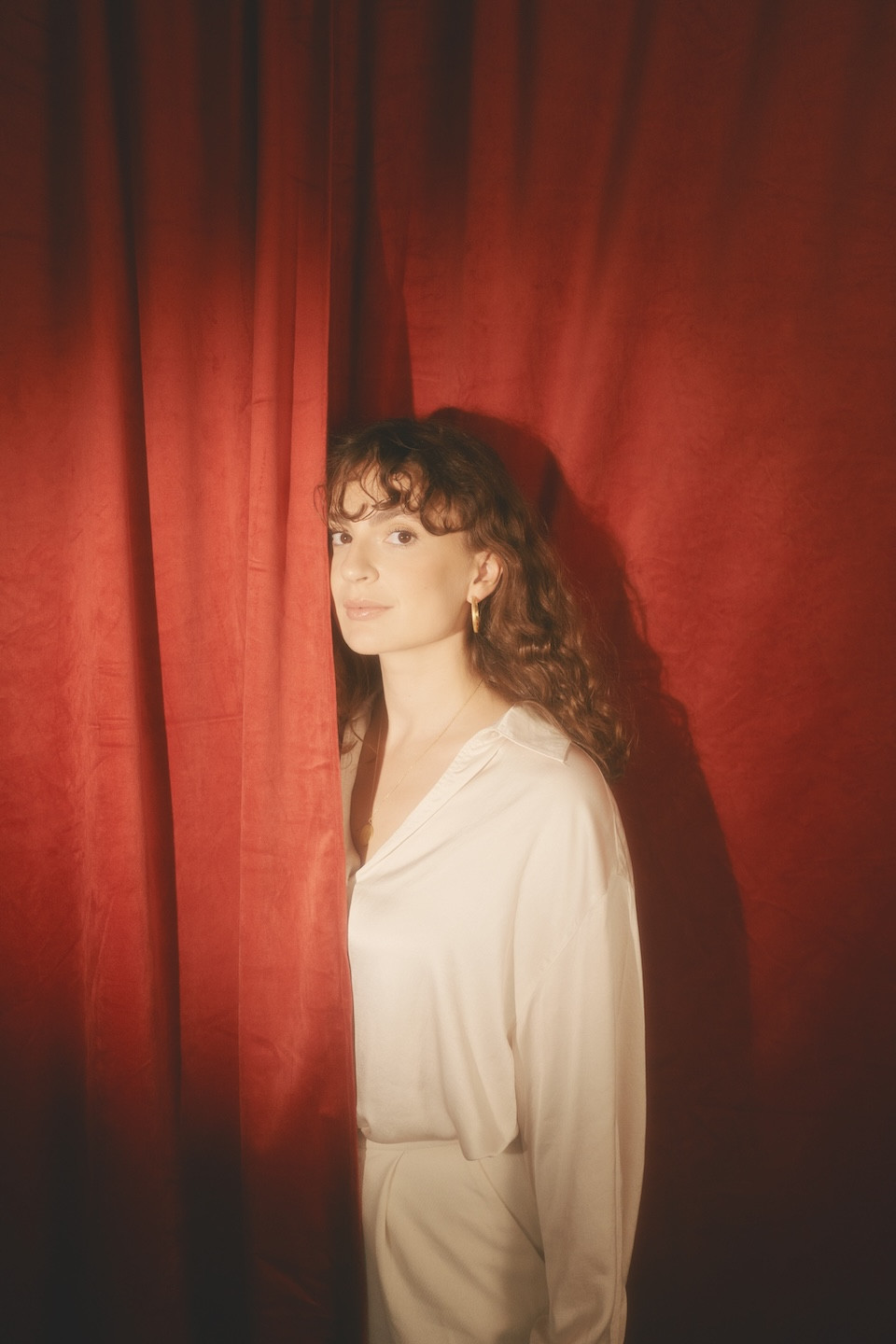
Katarina Gryvul is a Ukrainian composer, violinist, music producer, and founder of Gryvul School. She emphasizes timbre as the primary element of form in her compositions. positioned between classical and electronic scenes, she has developed a unique way of composing that melds classical contemporary approaches with modern music technology. Gryvul works in the field of ambisonics and multichannel composition, utilizing live electronics for instruments and voice alongside analog modular synths. At the heart of her artistic vision lies the concept of duality, a theme intricately woven into every facet of her musical expression.


© Klaudia Krupa

»I can’t say what music is but I can say what music does: it is an experience, it travels through all my bodily senses, it brings energy (not only power but also tranquilizing and soothing, even peaceful energy); above all, it revives the memory of frozen moments, not unlike the scent of perfume, and yet it remains in the moment, the 'now' – in a recording a 'now' conserved from the past which we can relive whenever we press 'play' – and thus my playlist is a selection of moments related to person or event that was important to me.« 

Rei Nakamura is a pianist specialized in contemporary music. Her career has a wide range as solo pianist, ensemble player, improviser as well as writer. Through her on-going project Movement to Sound, Sound to Movement for piano and multimedia, she has worked in close collaboration with  composers as Annesley Black, Malin Bång, Christian Winther Christensen and Simon Steen-Andersen. Her observations and theoretical approaches are expressed in published texts in Neue Zeitschrift für Musik thematizing parallels in music, art and performance. 2021 she published the book Movement to sound, sound to Movement – Interpreting Multimedia Piano Compositions by Wolke Edition. As a Soloist she has premiered piano concertos with orchestras such as the SWR Symphonieorchester, WDR Synfonieorchester, RSO Berlin, Polish Nation Radio Symphony Orchestra and RAI National Radio Symphony Orchestra with conductor as Brad Lubman, Robert Treviño, Yaroslav Shemet, Michael Wendeberg and Bas Wiegers. She performed in Warsaw Philharmonic (Warsaw) and Arturo Toscanini Hall (Turin) and music festivals such as Eclat Festival Stuttgart, Ultraschall Berlin, Festival Acht Brücken Colon, MITO Festival (Turin), Warsaw Autumn (Poland) , Sound of Stockholm (Sweden), Monday Evening Concerts (USA).  She was was born in Japan, grew up in Brazil and is based in Germany.

In brieflive
12.10.2024

You Just Want to Disappear into These Cosmic Hordes of Sound

Christian Skjødt Hasselstrøm: »Myriader«
© Niels Nygaard
© Niels Nygaard

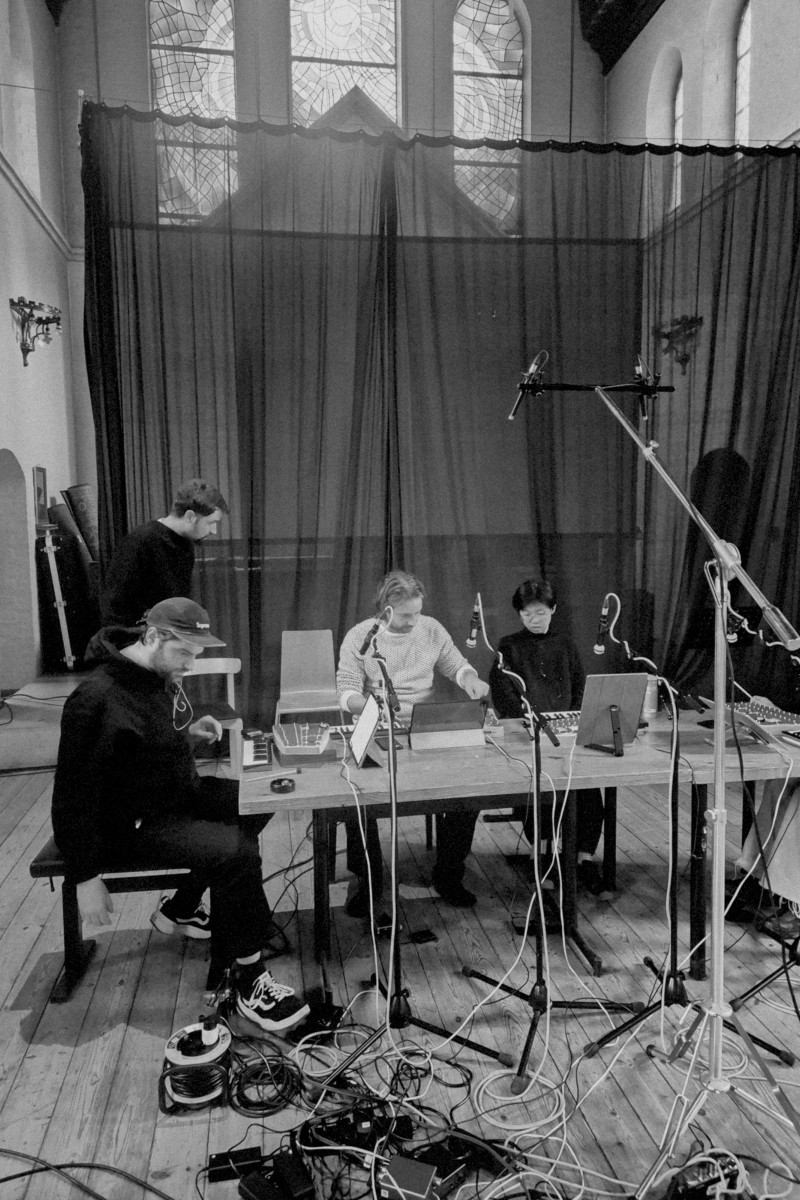
British Burial should have once said that in his music he strives to reproduce the experience of standing outside a club and feeling the rhythms on the asphalt. Distances are fascinating. The sounds in Christian Skjødt Hasselstrøm's work Myriads in an enormous water container at the Ole Rømer Observatory comes from afar. It is rain from space, cosmic radiation or high-energy particles, which are translated into sound via three detectors. They also flash with light in the pillared hall, and when you grope your way to them through the darkness, they puff softly and innocently. But when you walk around the 1,662 square meter room, the sounds still seem a little bit threatening – like artillery drums, sounds from modern wars or warning signals from ancient warlords... The sounds are always very far away and rumble at a low frequency in the room with a reverberation of 40 seconds. But they are just peaceful phenomena from distant galaxies, and they hardly want us any harm. They just make us feel so infinitely small. Hasselstrøm did the same to us in a former cereal silo in the city of Struer.

»You can get salt and minerals on your clothes. It can be washed off,« warned the guide, now ringing a bell. But what if you don't want to get rid of that sound at all and don't want to go home to Aarhus, but just want to stay deep underground for more than the given 15 minutes and disappear into the cosmic and very delicious hordes of sound? Distances are fascinating, and Myriads is better – more enriching – than any club in Aarhus’ Latin Quarter.

In brieflive
09.09.2024

Every Ending Is Also a New Beginning

Aarhus Symfoniorkester, Allan Gravgaard Madsen and Morten Riis: »Away« 
© Alexis Rodríguez Cancino

Allan Gravgaard Madsen’s and Morten Riis’s Away is a »mixed media« orchestral work. The physical orchestra is supplemented by sound and video recordings from the basement of Aarhus Theatre (woodwind quintet), Aarhus Cathedral (brass quintet), and Marselisborghallen (string orchestra). All of these locations have, at various points over the past 90 years, housed the Aarhus Symphony Orchestra.

Away opens with the final two chords of the overture to Rossini’s William Tell (1829), which are explored throughout the orchestra. Gradually, musicians leave the ensemble, only to reappear later in smaller constellations in recordings from the aforementioned locations. Through technology, the orchestra plays across time and space in a highly successful manner.

The work explores stasis and movement, with air as a central device: the wind players often blow into their instruments without producing tones, while the string players imitate the sound of wind using plastic bags. For me, Away has three highlights. Trumpets and percussion play phrases that turn out to anticipate a video of a flutist walking through the city. The trumpets mimic the sound of a truck – »beep-bop-beep-bop« – and the percussion becomes the flutist’s stilettos. Musique concrète turned on its head! At one point, half of the string players are seen sitting in a circle, playing intensely dissonant chords, only to kill them again – the physical shock activated my ears. The third highlight comes when the entire orchestra plays together again while all three projections are running simultaneously. Here, the work can truly begin, and one clearly senses the energy rising in the room. But – unfortunately – as soon as this climax is reached, the intensity drops again.

At just under 45 minutes, Away is, unfortunately, slightly too long and static for my taste. The effect of the aforementioned ruptures might not have been as strong in a shorter format, but I would have wished for just a bit more of the intensity the work so clearly was capable of delivering. I was left with a somewhat flat feeling. The piece also ended so quietly that several people were unsure whether it had actually finished and whether we could applaud.