In briefrelease
11.02

Echoes from the Olive Trees

Mai Mai Mai: »Karakoz«
© PR
© PR

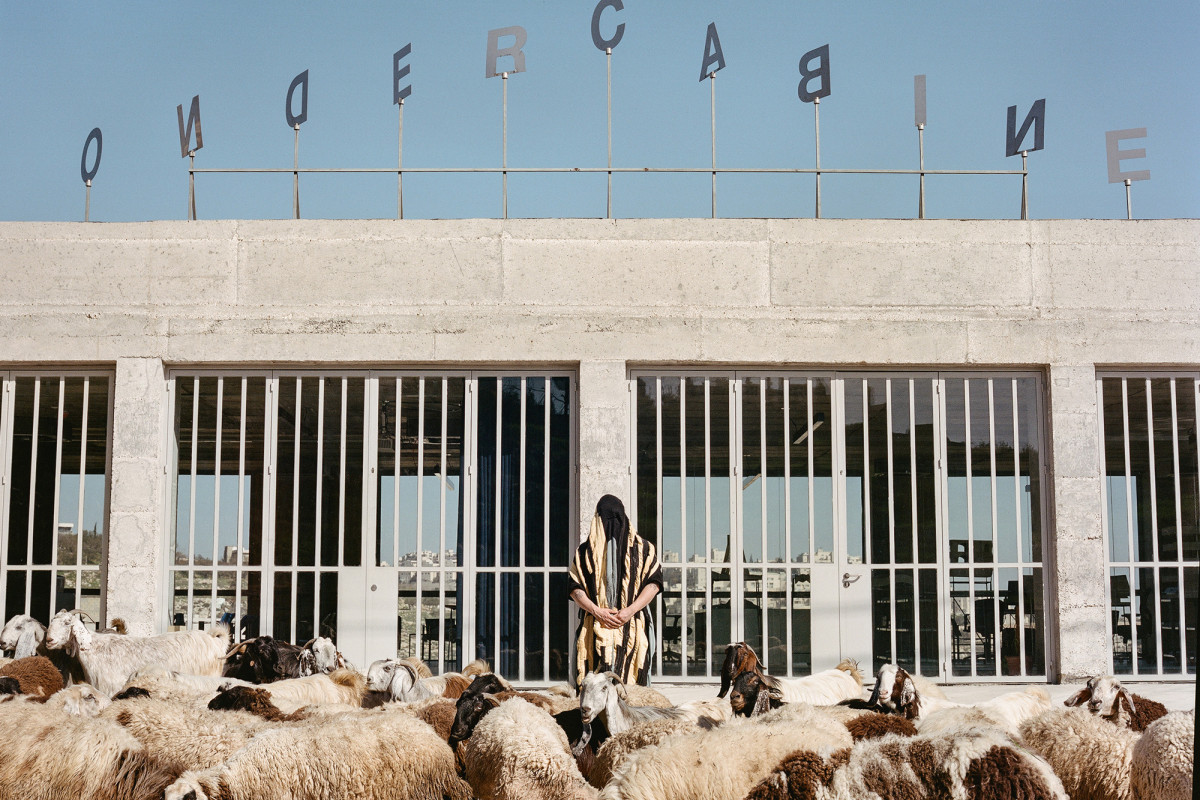
Grief is hereditary. It is collective and more than mere streams of tears – as countless generations of oppressed Palestinians can attest. On the album Karakoz, the Rome-based musician Mai Mai Mai creates a resonance of this collective sorrow and attempts to grasp the desperate hope of the Palestinian people. Not through political slogans, but through dark spiritualism and synthesizers.

Karakoz is an ancient form of shadow theatre with roots in the Ottoman Empire, and the album title serves as an omen of the musical pulse that sets in from the opening track, »Grief«. Here the music sounds like an archaic folk hymn: slow, repetitive percussion creates a tear-soaked minimalism, and the piece feels like a ceremony passed down through generations. With synthesizers slowly coiling around Maya Al Khaldi’s yearning vocals, »Grief« becomes a cultural bridge between forgotten traditions and the painfully current tragedy that today envelops Palestine in an all-consuming darkness.

Across the seven tracks, one hears trauma like a wind murmuring through the streets and among the olive trees. This may be because the album was created in collaboration with local artists and includes archival material from The Palestinian Sound Archive – an archive of decades of forgotten music, poetry, and album covers. Karakoz is a reinterpretation of Middle Eastern spiritualism and forgotten music. It is a testament to grief as lived experience, and as an archival bulwark, Karakoz thus takes part in the struggle for a free Palestine.

English translation: Andreo Michaelo Mielczarek

© PR

»For me, music is a rush in the chest – a way of understanding and expressing emotions.«

Cecilie Penney (b. 1990, Denmark) will be presenting the exhibition Rest and Routine – Duet for Sanatorium and Modern Hospital at Nikolaj Kunsthal from February. She is a visual artist and electronic composer working across sound, installation, video, and text. Her practice explores how infrastructure and cultural norms shape human behaviour, and how emotions and empathy unfold within structural, linguistic, and technological systems.

In recent years, Penney has focused in particular on the Scandinavian healthcare system and on how patients navigate institutions that can be difficult to access and understand. Through a conceptual approach, she examines how patients are often expected to conform to rigid frameworks that fail to accommodate individual needs. By creating imagined or alternative worlds, Penney explores new possibilities for healing and transformation within bureaucratic systems, while inviting reflection on how systemic change might emerge from emotional insight and collective rethinking.

Penney holds an MFA from the Royal Danish Academy of Fine Arts in Copenhagen and a BFA in Fine Art Photography from HDK-Valand in Gothenburg.

© Mishael Oladipo Fapohunda

»As Bertolt Brecht once wrote: 'In dark times, will there also be singing? Yes · there will be singing, about the dark times'.«

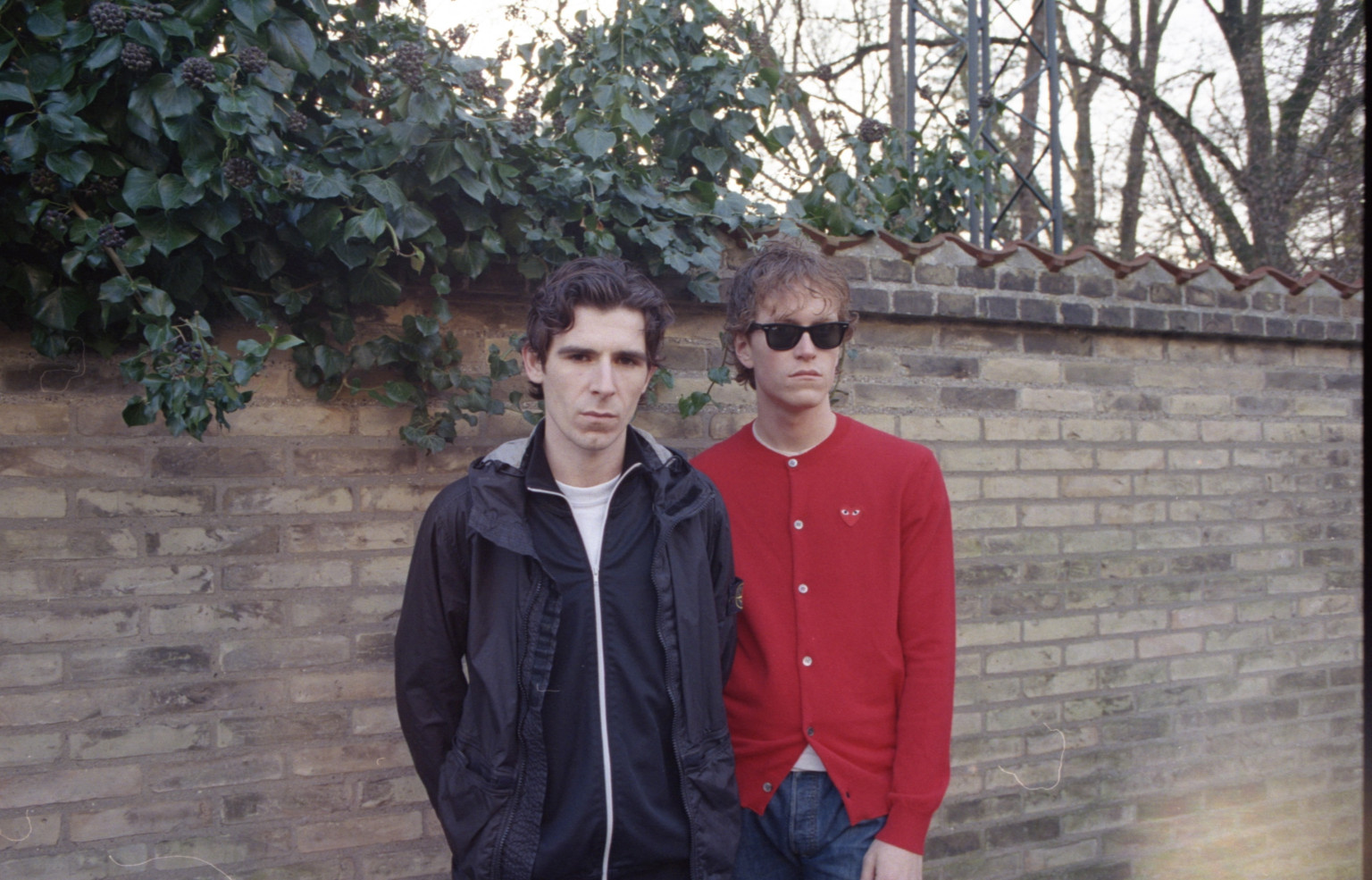
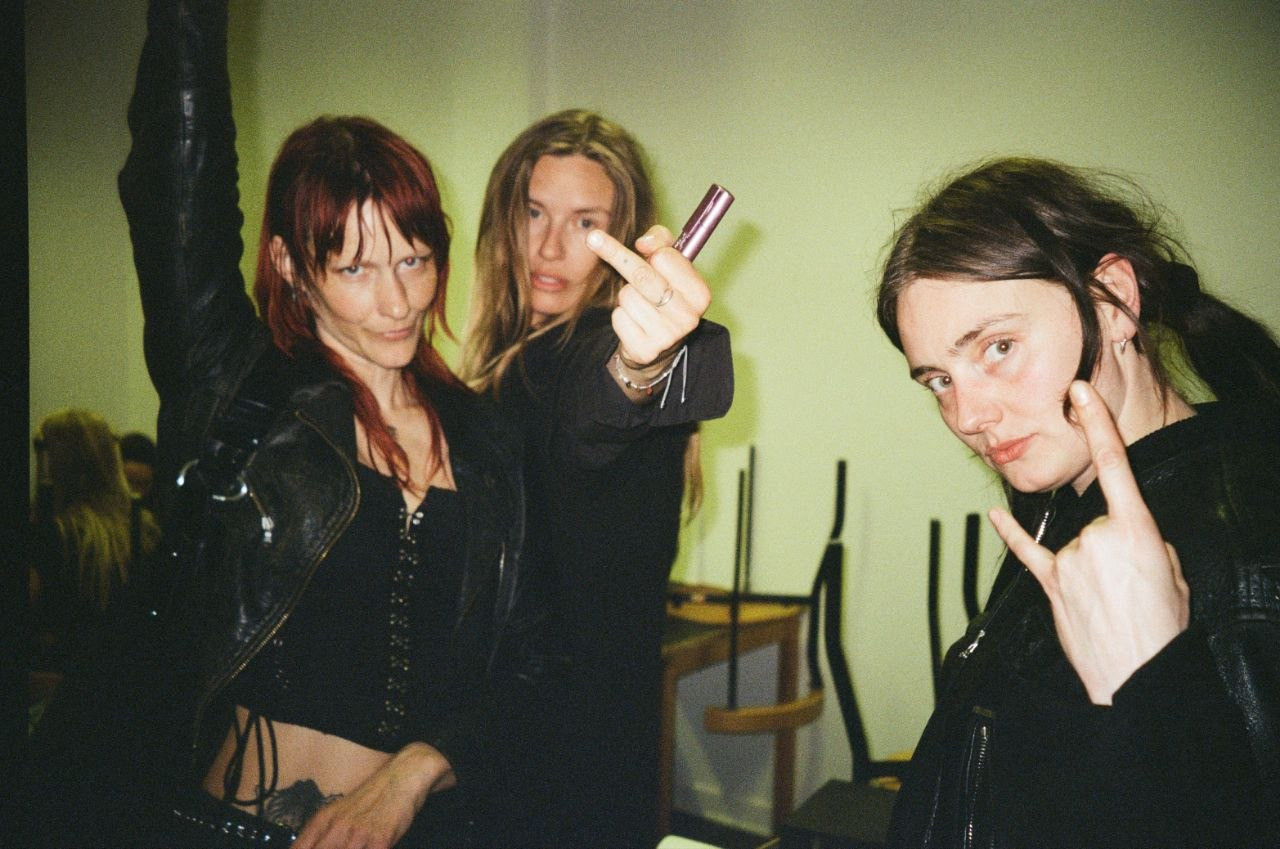
SLIM0 is a Copenhagen based doom/grunge/punk trio consisting of Mija Milovic (guitar), Lena Milovic (guitar) and Simin Stine Ramezanali (drums). The vocals of all three members can be heard throughout, the voice being a central element to the band's practice. SLIM0 uses minimal, albeit feisty arrangements to convey a strong sense of ominousness. Through crashed cymbals, distorted guitars and voices in unison, they present a full body of work hailing from personal takes on classic punk/rock tropes with SLIM0 as the omniscient narrator. Their debut album FORGIVENESS was released in October 2024 via 15 love. 

© Søren Lynggaard
© Søren Lynggaard

It is difficult not to read a great deal into trumpeter, composer and all-round musical visionary Palle Mikkelborg’s new solo album Light. He has long since passed retirement age, withdrew from touring in 2024, and with this release has presented something that very much feels like a kind of farewell.

The opening track, Per Nørgård’s »At tænde lys« (»To Light a Candle«), is pure Mikkelborg: his lyrical, elevated and elegiac solo trumpet, in both form and expression, speaks directly to the listener’s heart. Elsewhere, he draws on old soundscape recordings, combining them with piano and trumpet. The interplay between the old and the new creates a compelling mystique and casts a subtle, unsettling shadow over the music.

»Capricorn« perhaps stands out most strongly: a tender and romantic reimagining for solo piano of one of his own pieces, like a loving glance back at bygone times and former triumphs. And then, of course, the closing track, Thomas Laub’s »Stille, hjerte, sol går ned« (»Be Still, Heart, the Sun is Setting«), where Mikkelborg’s melancholic trumpet is joined by Jakob Bro’s guitar, Helen Davies’ harp and Thomas Lis’s choral soundscape. Together they create a piece of music that truly feels like a farewell, marked by both uncertainty and sorrow, but also acceptance and gratitude.

All in all, Light is the perfect distillation of Mikkelborg’s musical life – a cavalcade of the qualities that have always defined him as a musician: light, colour, life, mysticism, love. Whether this will be the final release from Mikkelborg’s hand, I do not know, but if it should prove to be the case, few swan songs have ever sounded so beautiful.

© Bjørn Giesenbauer
© Bjørn Giesenbauer

It is difficult to keep pace with Masami Akita. The 69-year-old Japanese noise artist, who since 1979 under the name Merzbow has helped shape the genre, released no fewer than a dozen albums in 2025 alone. On a rare mini-tour with stops in Helsinki, Stockholm and Aarhus, he showed that his energy remains intact. At Radar he gathered an audience that had travelled far to experience the godfather of noise – an artist who has consistently insisted on noise as a physical, almost tactile experience. Wearing a bucket hat, Akita constructed his trajectories with clear architectural precision. Layer upon layer of distortion and feedback took shape and struck like a brush of metal: hard, cutting, physical – uncompromising, yet at the same time remarkably nuanced.

Akita worked not only with electronics, but also with homemade metal instruments – first a banjo-shaped device, then a square musical saw – lending the sound a raw, tangible materiality. Everywhere, microscopic shifts in texture emerged, small fissures of tone within the massive pressure.

The opening set by frã (Francisco Moura) began the evening with a more fragile, yet persistent electronic texture, a precise counterpoint to Merzbow’s compact blocks of sound. Some might have wished for a gentler entry into the musical year 2026, but the concert underscored the ambitions Radar is currently pursuing.

English translation: Andreo Michaelo Mielczarek

In brieflive
14.01

The Excess of Attention

Aar & Dag: »A MAJOR CELEBRATION«
© Emilia Jasmin
© Emilia Jasmin

A steady stream of musicians enters the Xenon stage on Wednesday night at Vinterjazz. No fewer than 33 musicians take part in the mosaic of instruments assembled by the label Aar & Dag to celebrate the release of their cassette A MAJOR CELEBRATION. A release consisting of no less than three concerts, performed according to special composition cards, then mixed on top of one another and now issued on cassette. A major release calls for a major celebration, and rarely have I seen a more ambitious and idiosyncratic release concert.

The concert unfolded at a calm, unhurried pace – patient and attentive, the many musicians gave one another space to open up the broad soundscape. Double bass and electric bass, guitars, saxophones, synthesizers, percussion, cassette tapes, piano, and cello are just a selection of the orchestra’s many voices. Like a kaleidoscope, the ensemble shifted again and again, drifting between crooked, meandering passages and bubbling harmonies that only just brushed against a peculiar sense of tempo.

The word »soundscape« truly comes into its own in this context. For much like Hieronymus Bosch’s surreal monumental paintings or Sven Nordqvist’s Pettson and Findus illustrations, the concert – with its many people on stage – was filled with an impressive level of detail and a multitude of small scenes unfolding across one another. Each time my attention settled on a particular point in the music, I missed a new development elsewhere in the orchestra. An excess of attention, and a fine demonstration of a boundary-disrupting musical expression that one can only hope to encounter more of.