Allan Gravgaard Madsen
27




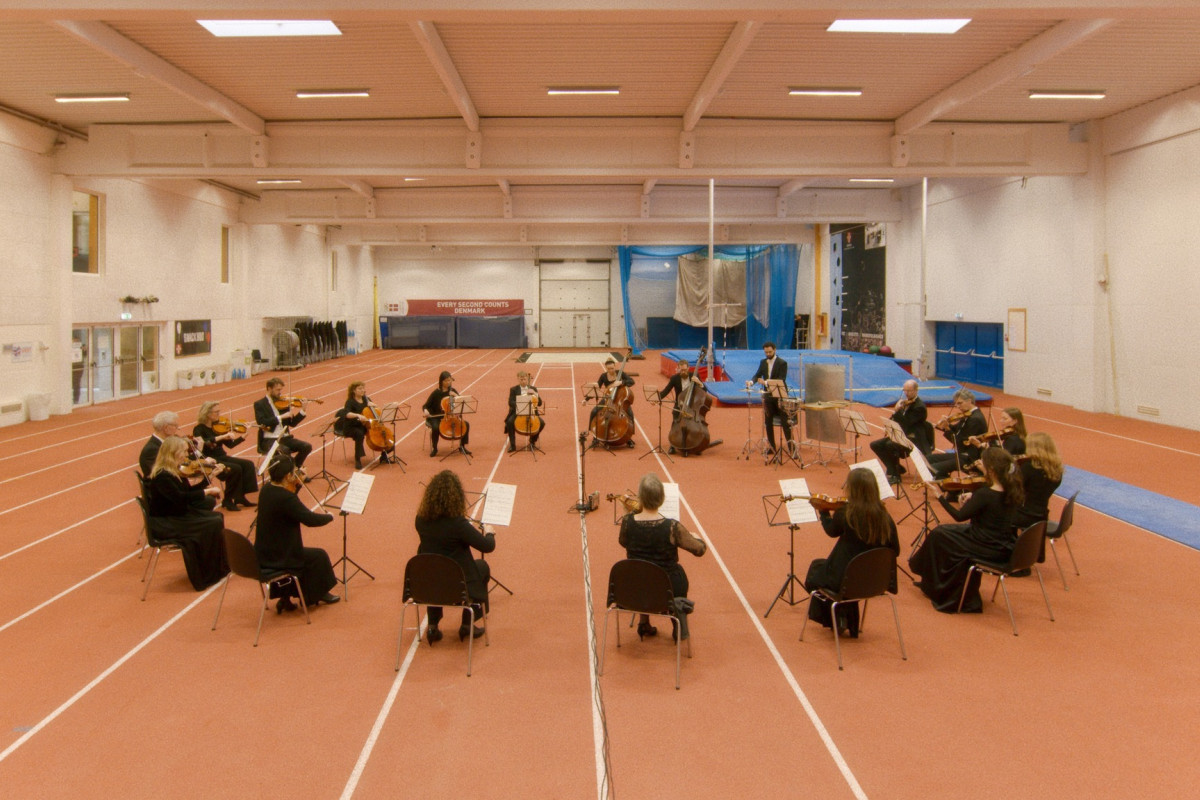
Allan Gravgaard Madsen’s and Morten Riis’s Away is a »mixed media« orchestral work. The physical orchestra is supplemented by sound and video recordings from the basement of Aarhus Theatre (woodwind quintet), Aarhus Cathedral (brass quintet), and Marselisborghallen (string orchestra). All of these locations have, at various points over the past 90 years, housed the Aarhus Symphony Orchestra.
Away opens with the final two chords of the overture to Rossini’s William Tell (1829), which are explored throughout the orchestra. Gradually, musicians leave the ensemble, only to reappear later in smaller constellations in recordings from the aforementioned locations. Through technology, the orchestra plays across time and space in a highly successful manner.
The work explores stasis and movement, with air as a central device: the wind players often blow into their instruments without producing tones, while the string players imitate the sound of wind using plastic bags. For me, Away has three highlights. Trumpets and percussion play phrases that turn out to anticipate a video of a flutist walking through the city. The trumpets mimic the sound of a truck – »beep-bop-beep-bop« – and the percussion becomes the flutist’s stilettos. Musique concrète turned on its head! At one point, half of the string players are seen sitting in a circle, playing intensely dissonant chords, only to kill them again – the physical shock activated my ears. The third highlight comes when the entire orchestra plays together again while all three projections are running simultaneously. Here, the work can truly begin, and one clearly senses the energy rising in the room. But – unfortunately – as soon as this climax is reached, the intensity drops again.
At just under 45 minutes, Away is, unfortunately, slightly too long and static for my taste. The effect of the aforementioned ruptures might not have been as strong in a shorter format, but I would have wished for just a bit more of the intensity the work so clearly was capable of delivering. I was left with a somewhat flat feeling. The piece also ended so quietly that several people were unsure whether it had actually finished and whether we could applaud.
»For me, music is about curiosity and surprises – yet it’s also something in which you can feel right at home. Music resides within us all, in a physical way that sets it apart from any other art form. To me, music is something greater than the individual – something that will always outlive the individual. The good stuff, in other words ;) «
Kaspar Kaae is an award-winning film composer, music producer, and songwriter, known for his work with bands such as CODY and Bug Chaser. He holds a Master’s degree in film composition from SDMK. He has previously been a guitarist in a number of bands on the Danish indie scene, such as CODY, Broken Twin, and Bug Chaser. The latter is releasing the album My First Crippled Love in November. He was born in 1983 on Bornholm, but has lived in Copenhagen and Berlin throughout his adult life.
»Music is like a black hole that sucks you in and shoots you out on the other side of the universe.«
Francesco Rista is a guitarist working across classical and electric guitar. His recordings have been reviewed by international music magazines and broadcast on BBC and RAI Radio 3. After studying at the Royal Danish Academy of Music and Lund University, he focused on studio recordings, exploring guitar repertoire from the Baroque and Romantic periods to contemporary music, as well as the instrument’s varied tonal possibilities. Rista is currently based in Iceland, where he teaches guitar, composes music, and collaborates with contemporary composers.

Percussionist and composer David Hildebrandt is honoured for his virtuosic work with new music and his efforts to push the boundaries of what rhythm can be.
David Hildebrandt is among the recipients of this year’s honorary awards from the Wilhelm Hansen Foundation. He receives DKK 200,000 in recognition of his uncompromising work with new music and multi-percussion, as well as his ability to challenge conventional ideas about rhythm.

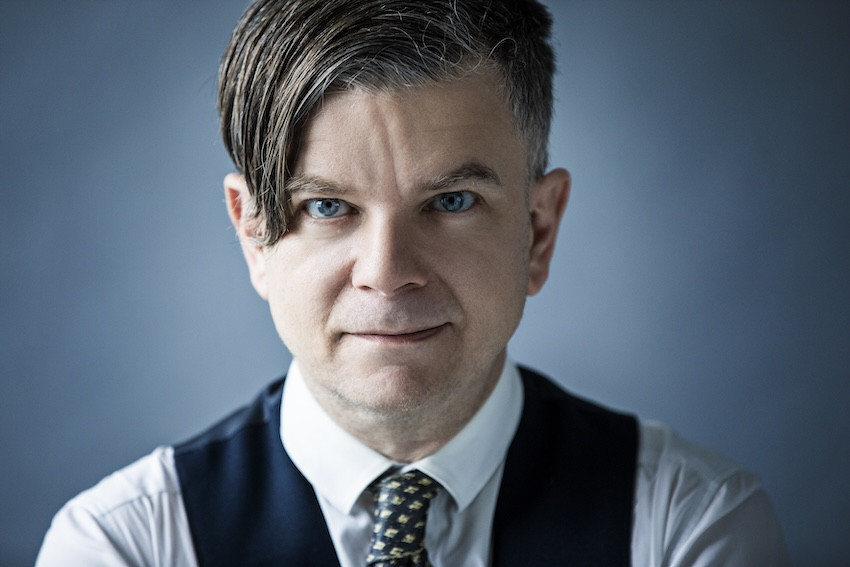
»Who ever said that music is ‘just’ music? To me, it is anything but that: an urge to understand and explain it all. A piece of jewelry I wear every single day. A joy that can, at times, run deep. An ever-changing imprint of millions of stitches in my heart. A longing to disappear.«
Henrik Marstal is a musician, author, and music researcher. He holds a PhD in musicology, is a senior lecturer at the Rhythmic Music Conservatory, and frequently appears in the media as an expert source on music. His areas of interest include contemporary music, such as electronic music. This winter, he will release both a new album with the pop group ibens and a book about Else Marie Pade, published by the British publishing house Bloomsbury.