Allan Gravgaard Madsen
27




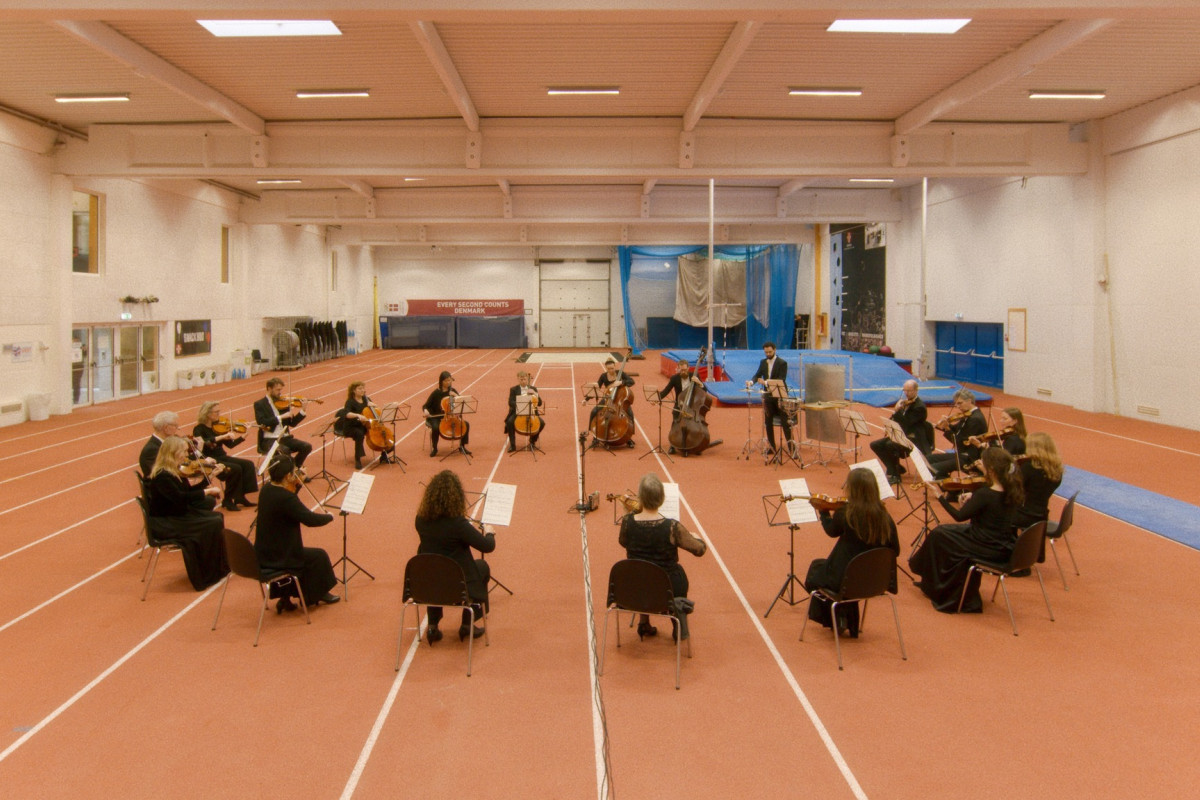
Allan Gravgaard Madsen’s and Morten Riis’s Away is a »mixed media« orchestral work. The physical orchestra is supplemented by sound and video recordings from the basement of Aarhus Theatre (woodwind quintet), Aarhus Cathedral (brass quintet), and Marselisborghallen (string orchestra). All of these locations have, at various points over the past 90 years, housed the Aarhus Symphony Orchestra.
Away opens with the final two chords of the overture to Rossini’s William Tell (1829), which are explored throughout the orchestra. Gradually, musicians leave the ensemble, only to reappear later in smaller constellations in recordings from the aforementioned locations. Through technology, the orchestra plays across time and space in a highly successful manner.
The work explores stasis and movement, with air as a central device: the wind players often blow into their instruments without producing tones, while the string players imitate the sound of wind using plastic bags. For me, Away has three highlights. Trumpets and percussion play phrases that turn out to anticipate a video of a flutist walking through the city. The trumpets mimic the sound of a truck – »beep-bop-beep-bop« – and the percussion becomes the flutist’s stilettos. Musique concrète turned on its head! At one point, half of the string players are seen sitting in a circle, playing intensely dissonant chords, only to kill them again – the physical shock activated my ears. The third highlight comes when the entire orchestra plays together again while all three projections are running simultaneously. Here, the work can truly begin, and one clearly senses the energy rising in the room. But – unfortunately – as soon as this climax is reached, the intensity drops again.
At just under 45 minutes, Away is, unfortunately, slightly too long and static for my taste. The effect of the aforementioned ruptures might not have been as strong in a shorter format, but I would have wished for just a bit more of the intensity the work so clearly was capable of delivering. I was left with a somewhat flat feeling. The piece also ended so quietly that several people were unsure whether it had actually finished and whether we could applaud.
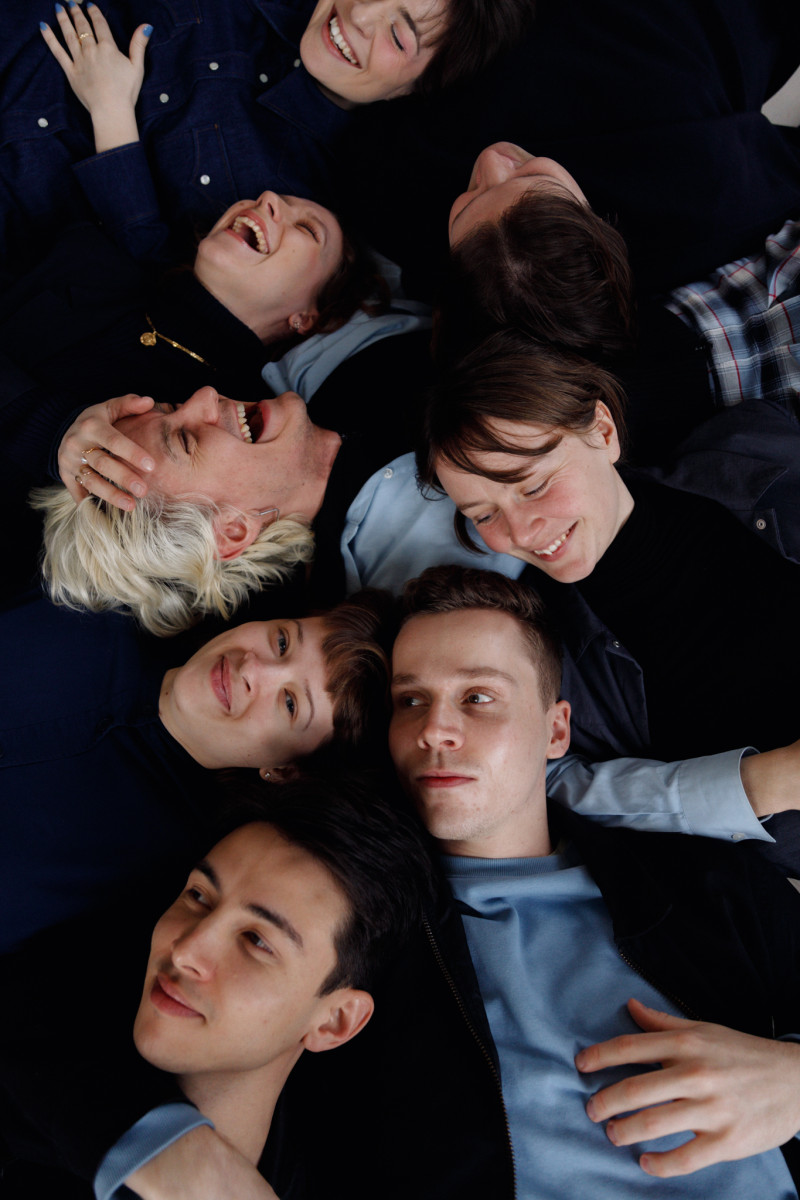
The moon is a fundamental poetic motif. Its cycle pulls at both the tides and at us – within bodies and fluids alike. Composer Adrianna Kubica-Cypek and the vocal ensemble ÆTLA interpret this motif from Barbara Agertoft’s poem »Månen«. The composition is divided into »Månen« I, II, III and IV. It is a successful EP with a clear sense of purpose: the strong textual foundation establishes a distinct compositional direction without digressions, yet musically it cannot stand on its own.
The moon’s power to connect the inner and the outer emerges strongly in Agertoft’s poem: »and we stretched ourselves out, the inner in the outer all that we / bled into.« How better to convey this fundamental mood than through a vocal ensemble – individual bodies that bleed into an external, shared sound? Kubica-Cypek’s interpretation is dynamic, full of contrast and undulating, like flood and ebb. It begins with a piercing timbre of female voices, unfolding into crossing glissandi supported by deep, monotonously chanting male voices. At times, the sounds converge into harmonic chords; more often, the voices move in diverging directions in both volume and pitch, or insist on remaining in dissonance and repetition.
»Månen IV« concludes as an inversion of the sharp opening of »Månen I«, with subdued and dark sonorities that feel partially unresolved – as if the work is meant to be heard again from the beginning. In its form, the choral arrangement is cyclical, bringing out something understated in Agertoft’s poem. It demonstrates the quality of mutual interpretation: the art forms add something to one another.
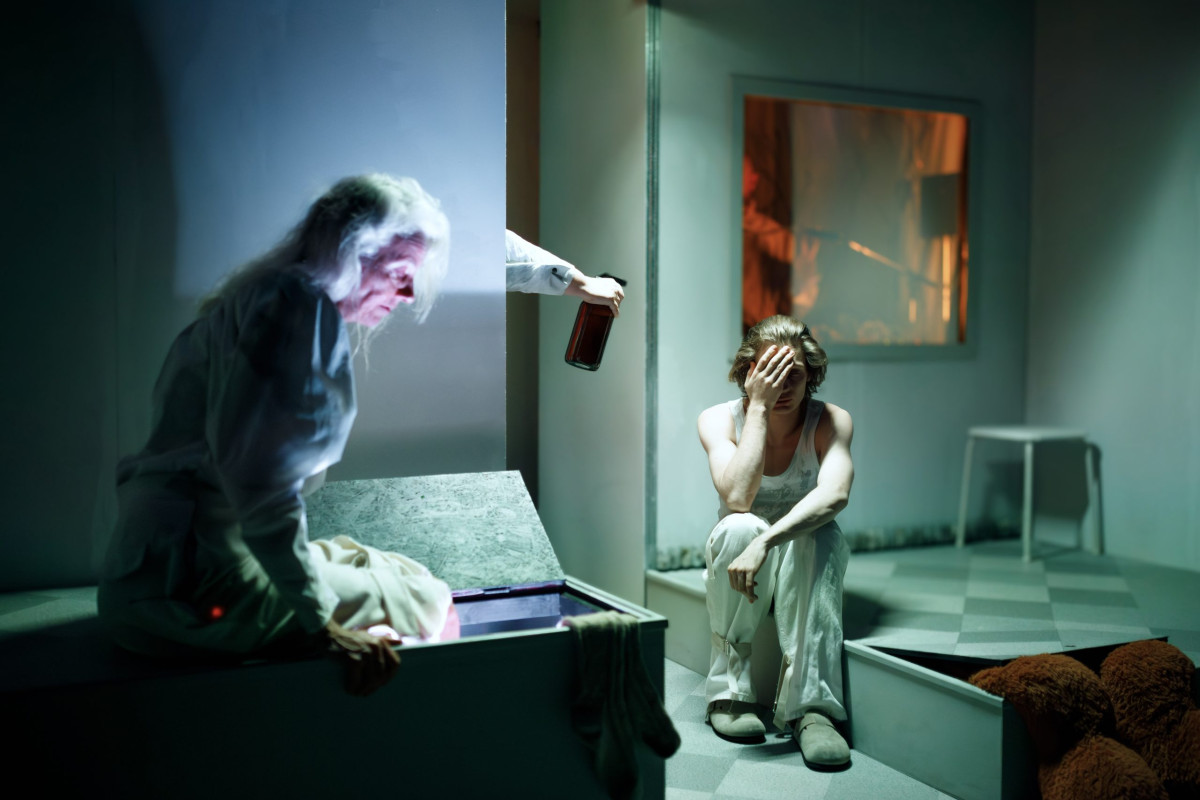
»Is your head also filled with voices that aren’t your own?« the young man asks. The question forms the central theme of Vildnis (Wilderness], a performance by the theatre group MØR collective, and most people would probably answer yes. But whose voices are they, and where do they come from?
In the introduction, Vildnis is described as »a journey into the engine room of theatre.« Playwright Abelone Koppel has written 80 short texts, and each evening a selection is activated by two performers who do not know in advance which texts they will receive through their earpieces. In a back room, a prompter reads the texts aloud, which the actors immediately translate into movement and voice on stage. It could easily have gone wrong. It doesn’t – and much of the credit goes to the two performers, whose work makes the concept function so well.
Also present on stage is composer Mika Forsling, who, through electronic means and abundant percussion, follows the mood unfolding between the performers – but unfortunately not much more than that. I actually found it somewhat difficult to hear what was going on and, at times, forgot about it altogether, as it felt relatively insignificant. It would have been an obvious choice to use the voice itself as an instrument in a performance centered on inner voices, and it is hard to understand why this opportunity is missed.
One should not see Vildnis for the music alone, even if it becomes more prominent towards the end, when the roles are reversed and Forsling’s rhythms seem to guide the performers’ movements. Nevertheless, Vildnis emerges as a cohesive and engaging experience, despite the unpredictability of the experiment.
English translation: Andreo Michaelo Mielczarek
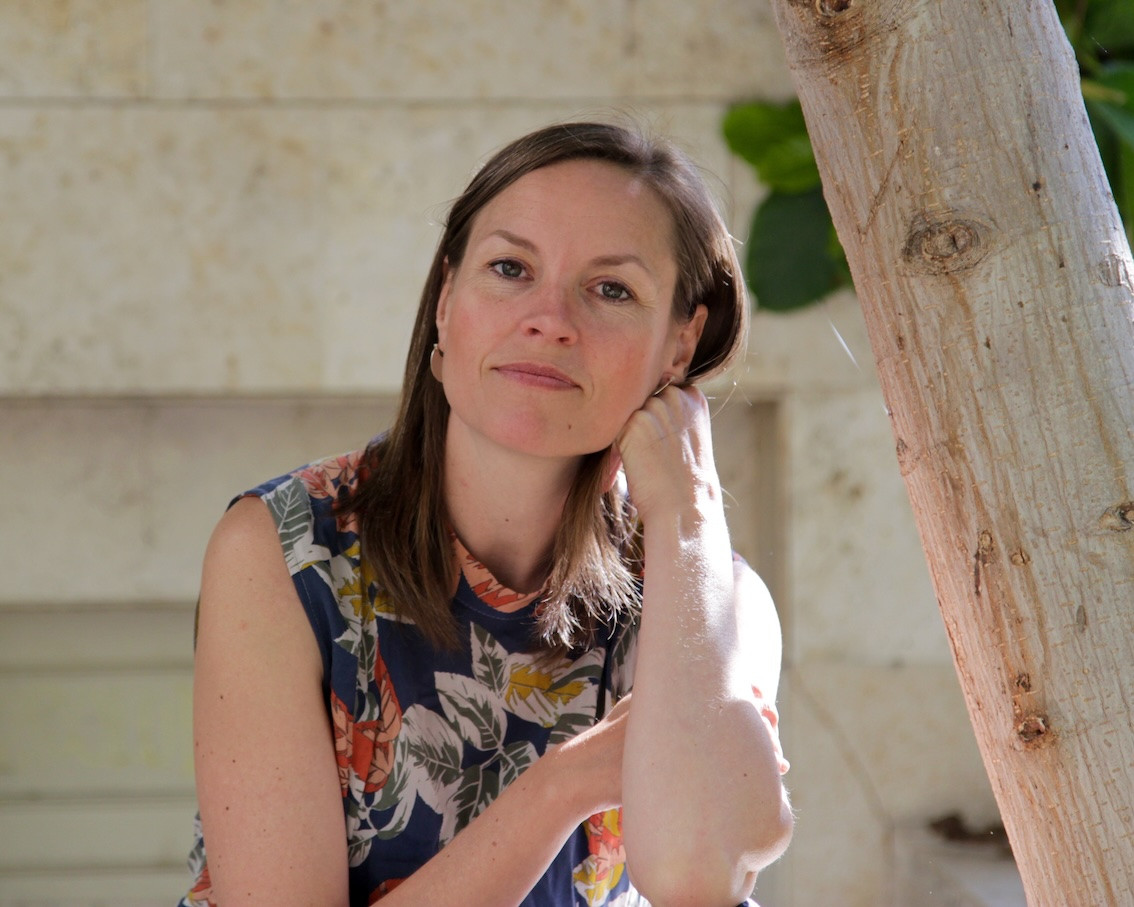
»Music for me is the fifth dimension of life, connecting all the others.«
For the past 10 years, Maja Dyrehauge Gregersen has been at the helm of the Copenhagen Photo Festival – the largest photography festival in the Nordic region. The Copenhagen Photo Festival is an international platform with over 1000 annual applicants from all over the world – and a clearly curated level that attracts world names and has lifted the festival out of its original, more local and open form.
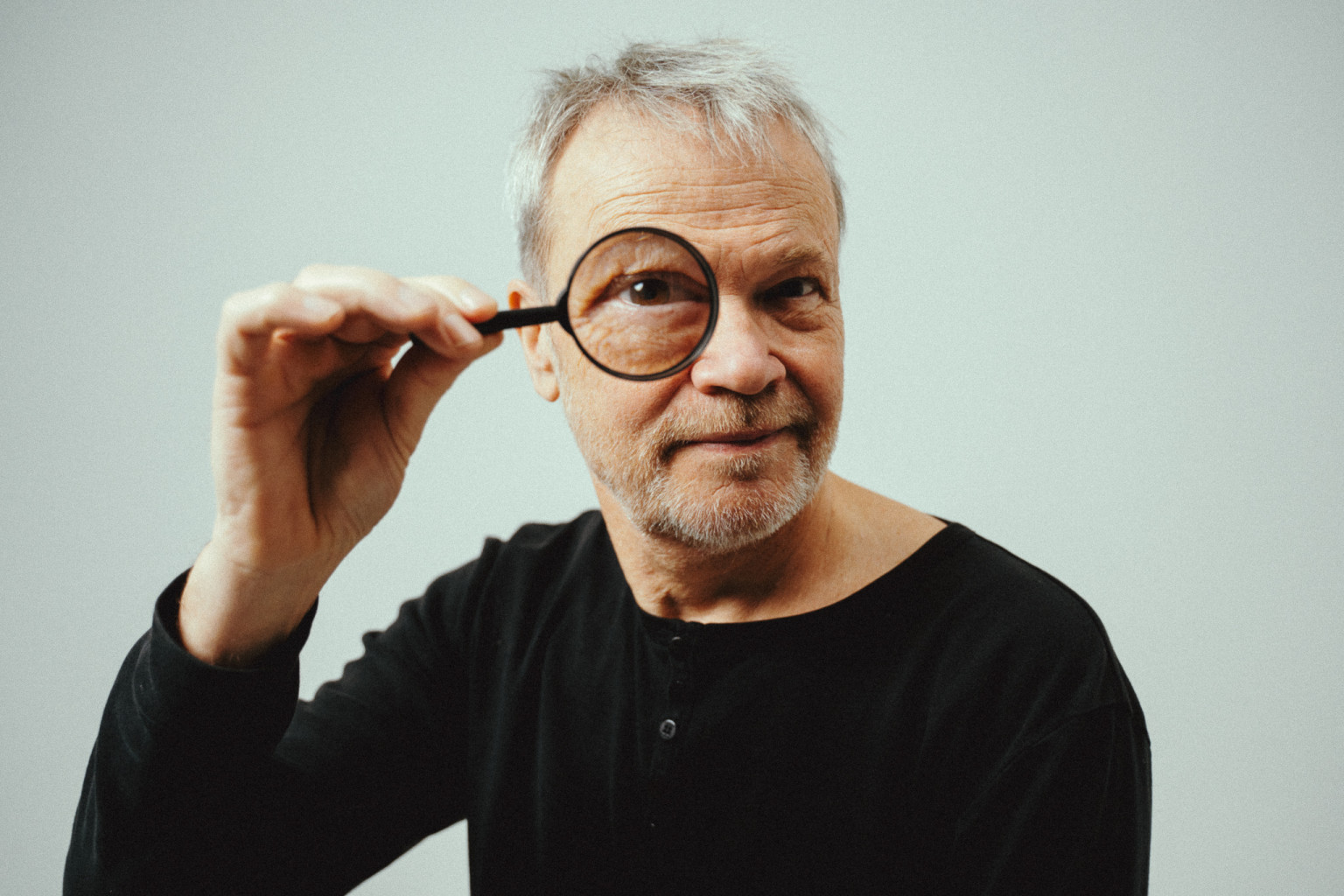
»Music for me is something that’s constantly playing in my head. I can’t switch off that part of my brain where new melodies and rhythms emerge and take shape – hardly even when I’m asleep. For that reason, I’m not really a big music consumer. One exception is live concerts and music festivals, where I love seeking out music I don’t already know and letting myself be surprised – most recently the intriguing band Nebulah, emerging from the Esbjerg Academy of Music. At home, it’s our 19-year-old daughter who controls the playlist. She sings backing vocals on my album and has introduced me to many artists over the past years. Through her, it’s also been great to rediscover classic artists like CV Jørgensen, Stevie Wonder, and Joni Mitchell. Very inspiring.«
LOH is a Danish songwriter and pianist. The piano has been part of his life since childhood, but until recently it was overshadowed by a career in the TV industry, where he worked as a documentary producer, creating hundreds of programs for Danish television. His debut album Logger Ud, released in March 2026, features Danish-language folk-pop songs with a touch of Nordic jazz.

I know, I know. A workshop concert at the conservatory: yawn. And no, hardly anyone showed up – apart from Bent Sørensen. Fair enough. But yes, you missed out. Especially on young Albert Laubel, who did exactly what you hope someone will do at this kind of concert: suddenly step forward, make a mark, and promise something for the future.
It was the English Ligeti Quartet visiting the Royal Danish Academy of Music for the seventh time to work with the students. And they did so with both commitment and precision. (Someone should really give them a prize one day – say, someone sitting on a fortune they clearly don’t know what to do with.)
Lucas Fagervik’s Bells & Canons set up stark oppositions, as composers tend to do in exercises of style: a bright, slightly fractured minor chord set against gentle baroque pastiche in increasingly rapid alternations. Then a movement with brutal – almost banal – glissandi, another with heavy bow strokes, and a final one in which the strings took turns trying to keep a single tone alive. A beautiful, constructive, and Jürg Frey–porous landing.
A different kind of circus instinct drove Yifan Shao’s ultra-short Dreams Evaporated Too Soon, which sounded like abused sounds dragged across a floor. The ending was ultra-theatrical: the quartet froze mid-air for a moment before scraping the last traces of life out of the strings.
»I can make this even more mannered,« Jonas Wiinblad must have thought, opening his String Trio with Viola – not a quartet, of course! – with silent playing. But cliché turned into quiet poetry as small, innocent intervals slowly emerged in tight patterns. When the viola was finally allowed to join, it went against the grain: a virtuosic solo cadenza with falling bow strokes, shimmering overtones, and temperament. Boom! A striking contrast. Less convincing was the piece’s apparent need for a final, unnecessary layer of electronic distortion. Still, points for mannerism.
What remained was Albert Laubel’s String Quartet as the most fully realized work of the concert. Not overthought, just a seamless movement between dynamic extremes. Distinctive trills were elegantly disarmed by inserted snaps, glissandi sounded like part of an internal logic rather than mere effect, and the sound world shifted with calm dramatic overview. Substance and maturity in 2026 – well, well.
English translation: Andreo Michaelo Mielczarek