Niels Rønsholdt
51




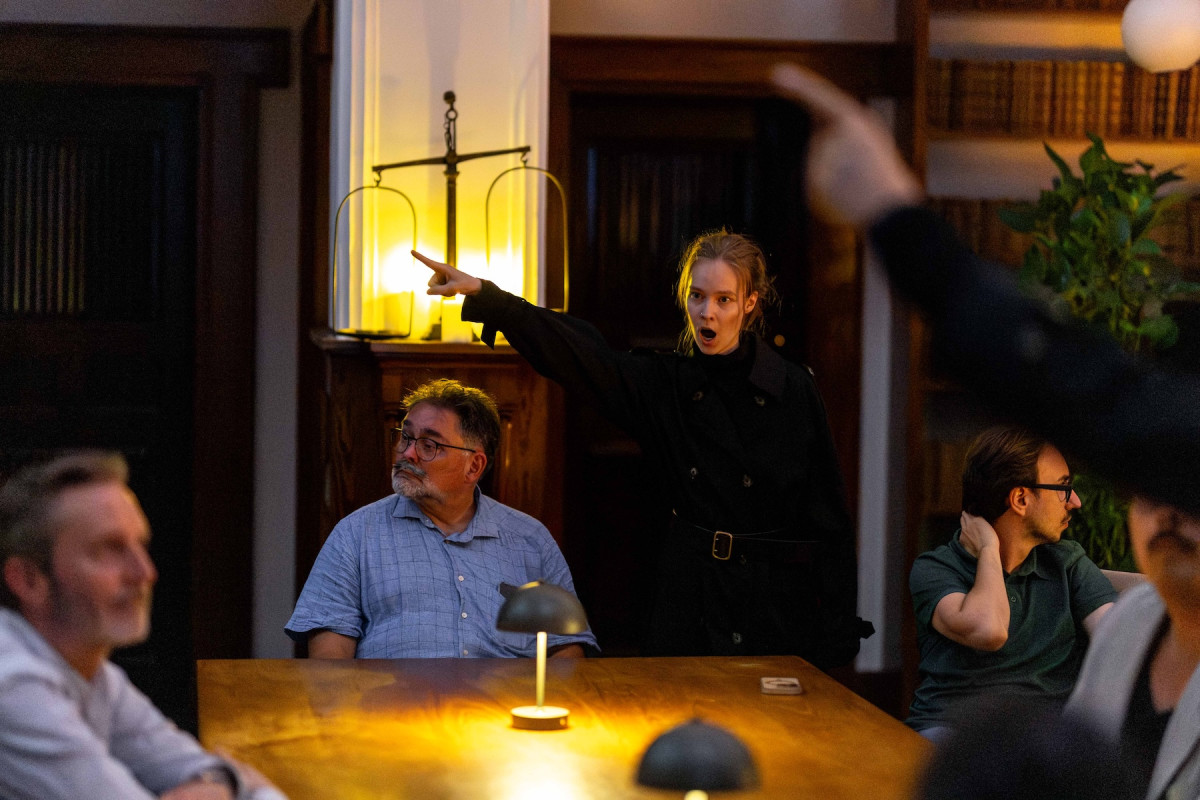
A newly composed opera staged in a courtroom may sound like a banal trick. But as I step into the waiting hall of the Aarhus Courthouse for Niels Rønsholdt and Louise Beck’s Den Stærkes Ret – Den Svages Pligt (The Right of the Strong – The Duty of the Weak), I wonder for a moment if I’ve come to the wrong place. An oblong room, tables scattered about, a balcony above – and then a sheet of music in a glass display case that normally would hold old legal documents. The scenography is discreet, but the legal framework immediately sparks reflections on law, power, and justice.
Soon, nearly 20 singers appear on the balcony. The music is tonal, carried by resonance and repeated phrases that gradually shift like a canon. You sense borrowings from minimalism, but also a near-folklike simplicity that makes the choir both enchanting and unsettling. The plot – a daughter confronting her father’s ghost to claim his weapon – emerges only in fragments. It is the atmosphere that drives the work, and it changes radically when the singers leave the balcony and place themselves among the audience, while three dancers move through the hall.
A pivotal moment comes when the choir suddenly strikes tuning forks and places them on the tables, sending a vibrating »wuu-uu« through the room. Goosebumps arrive instantly. Moments later, the singers address us directly, holding intense eye contact. It feels both intimate and transgressive, like being spoken to in court with no chance to reply. I wanted to look away, but felt compelled to hold their gaze. Here, the title became physical: the duty of the weak to submit.
As the work fades out, all the singers turn against the father and side with the daughter. Books are torn from the shelves, pages ripped out, and as »Listen and learn« is sung, Orwell’s 1984 flickers in the back of my mind. It is both disturbing and uncannily timely in an era where obedience to authority and manipulation again shape public discourse.
Den Stærkes Ret is one of the most intense musical experiences I have had in years. It unites aesthetics, body, and social commentary in a way that makes you shudder. I am already waiting for acts two and three.
English translation: Andreo Michaelo Mielczarek
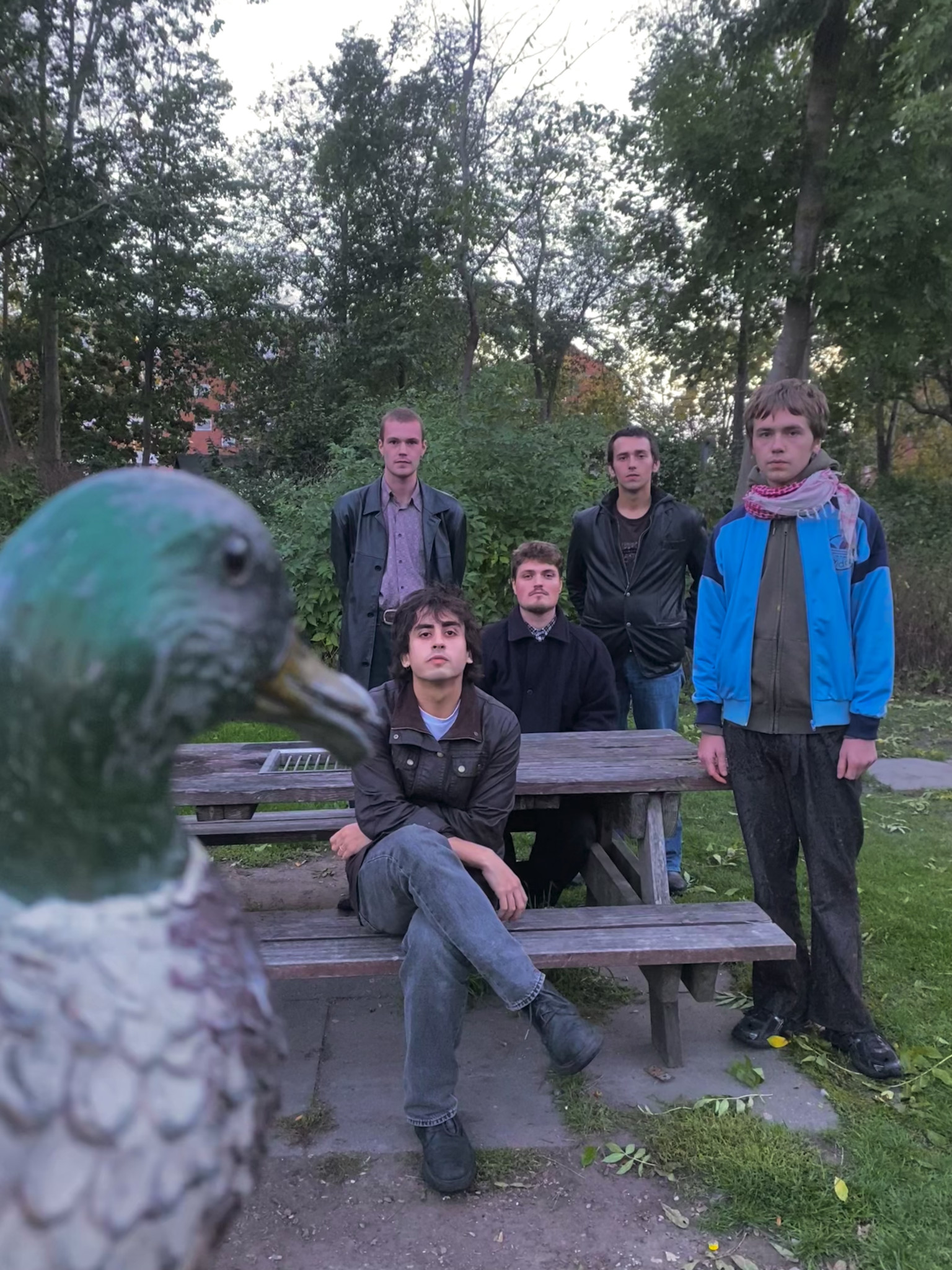
»For us, music is a transcendent force with transformative potential – something we get to experience and shape when we create sound together. It is an opportunity to describe one’s innermost universes without words, and the best way for an introvert to express intense emotions at full volume.«
With roots in Copenhagen’s experimental jazz and punk scene, Echo, Bravo challenges the notion of what a rock band can sound like. The quintet blends post-punk, free punk, and noise rock into a raw and unpredictable soundscape. They describe the music themselves as a kind of »empty-the-fridge soup,« where various leftovers come together. »Best enjoyed as a hot meal in a cold industry.«

Thorbjørn Tønder Hansen has died. With Thorbjørn’s passing, the art music community has lost one of the Nordic region’s most significant producers, curators and cultural leaders.
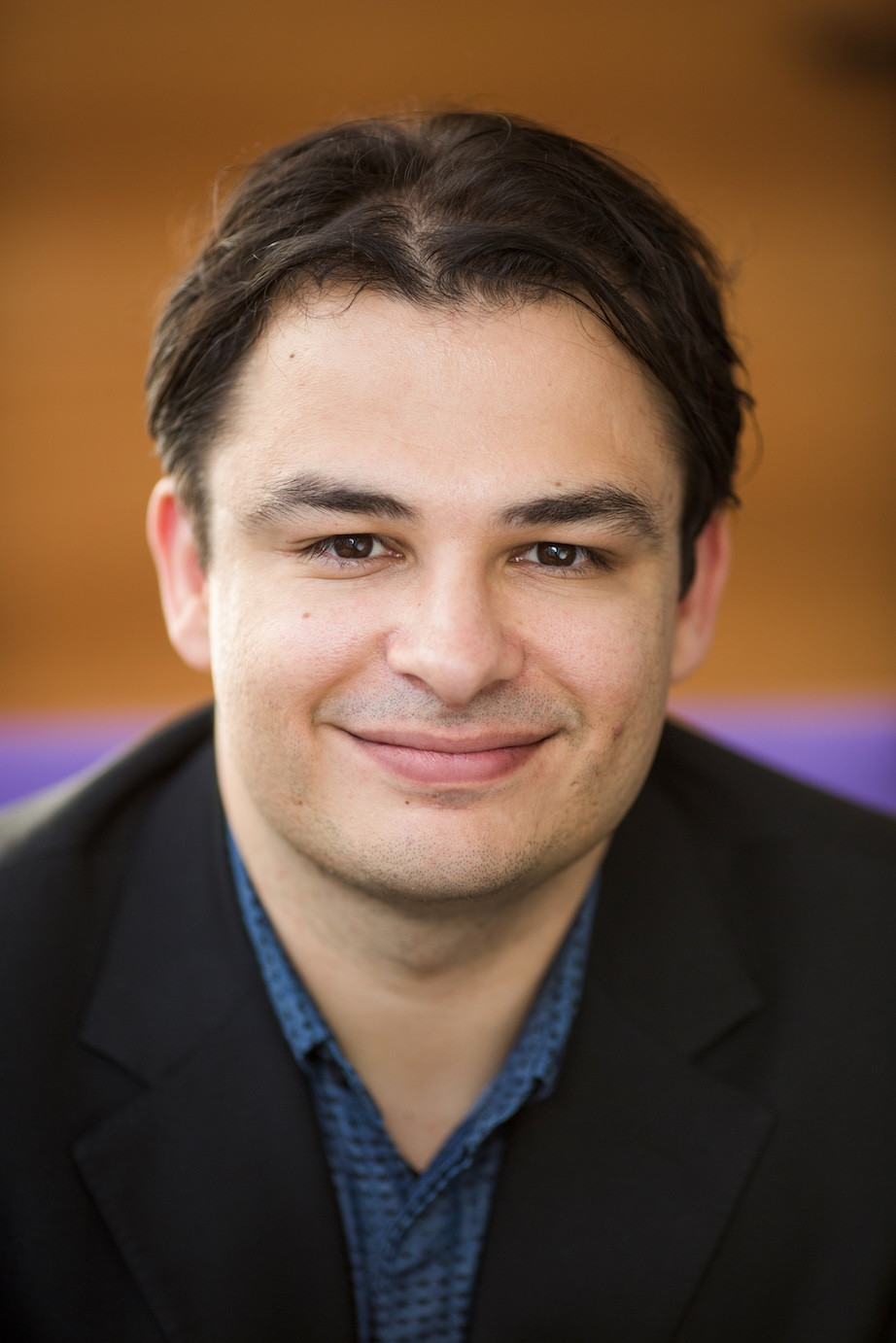
»Music is the best way to discover myself and understand the world around me.«
Luca Quintavalle is a harpsichordist, fortepianist and conductor. He has performed with ensembles including Concerto Köln, Harmonie Universelle, the Mozarteum Orchestra Salzburg and the Kölner Kammerorchester at venues and festivals such as the Kölner Philharmonie, Salzburg Festival and Enescu Festival. He was harpsichordist of Les Musiciens du Prince, led by Cecilia Bartoli, for over five years, and has conducted ensembles including the Orchestra and Chorus of Teatro dell’Opera di Roma, Concerto Köln and Deutsche Kammerakademie Neuss. His recordings include Mirrors, released by Berlin Classics and awarded an OPUS KLASSIK.
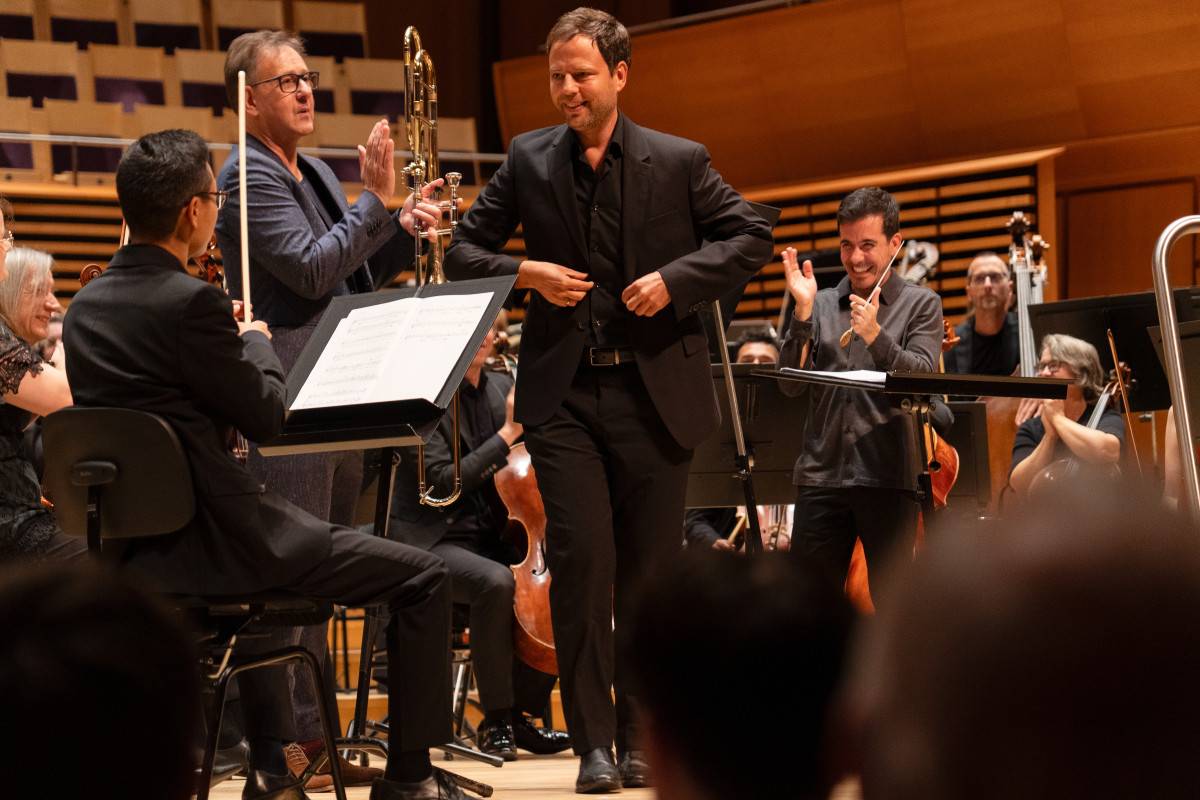
At 19, the Spanish composer (and trombonist) Francisco Coll wrote a wild-child of a trombone concerto that pushed the instrument out of its comfort zone. 22 years later he has created a new piece from some of that material. Its priorities are the opposite.
Tapias embraces the lyrical, ethereal qualities of the trombone. It is not a concerto, insists Coll. Perhaps it could be described as a set of frescoes for trombone and orchestra. Whatever the category, it’s a beguiling piece that was gorgeously birthed on Thursday by Ian Bousfield, conductor Nuno Coelho and a sumptuous-sounding Stavanger Symphony Orchestra.
Composers from Sibelius to Turnage have reacted against caricatures of the trombone as brusque and clowning by exploring its dark-hued lyricism. Coll does something more, setting his soloist’s introspective, intervallic melodies in evocative and provocative orchestral contexts. The soloist’s lines can resemble spray-canned tracings on walls already heavy with the patina of history, decoration and graffiti.
Initially the trombone appears to seek repose. The second movement draws it into more agility but the dancing is suppressed: a layered burying of all manner of rhythms from flamenco to Hiphop. Great wodges of rich harmony weigh the boogying down for good.
The trombone does find peace in the final movement – its long, soulful melodies more yielding. But not before Coll has conjured up moments of huge harmonic strain and conscious orchestral magnificence. They sat well next to Coelho’s fierce performance of Shostakovich’s Symphony No 5 after the interval. But Bousfield’s heartfelt journey through Tapias, sounding entirely at one with the orchestra, will linger longest in the mind.
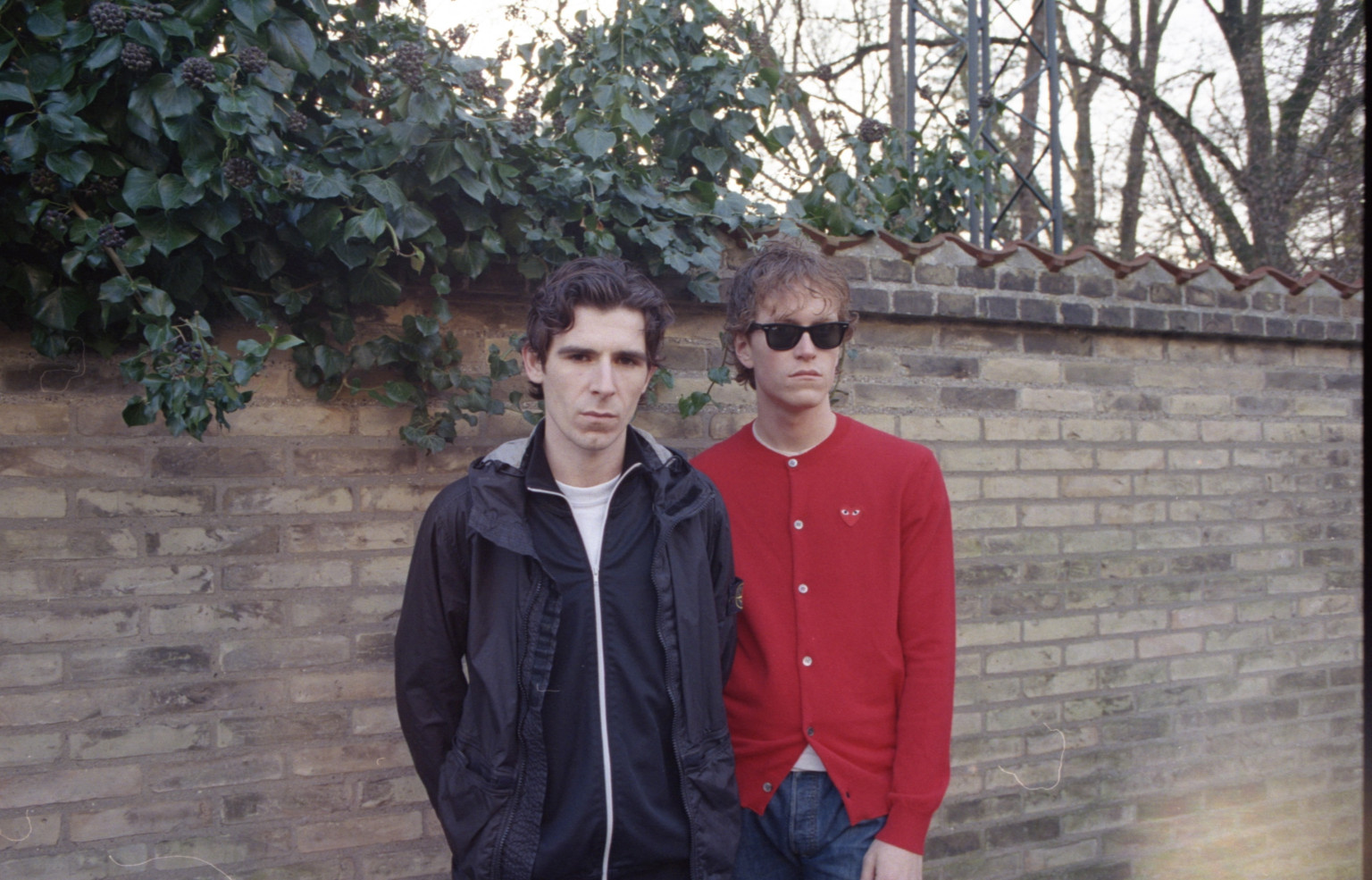
»For us, music is a passion, a livelihood, and a focal point for us and our best friends in the band.«
Barselona consists of Rud Aslak and Rasmus Theodor. The band was formed in 2016 after a year at Ollerup Musikefterskole and has since released five albums and two EPs, most recently the album *Tag Min Hånd, Så Slipper Vi*, which is set for release in September 2026.