Niels Rønsholdt
51




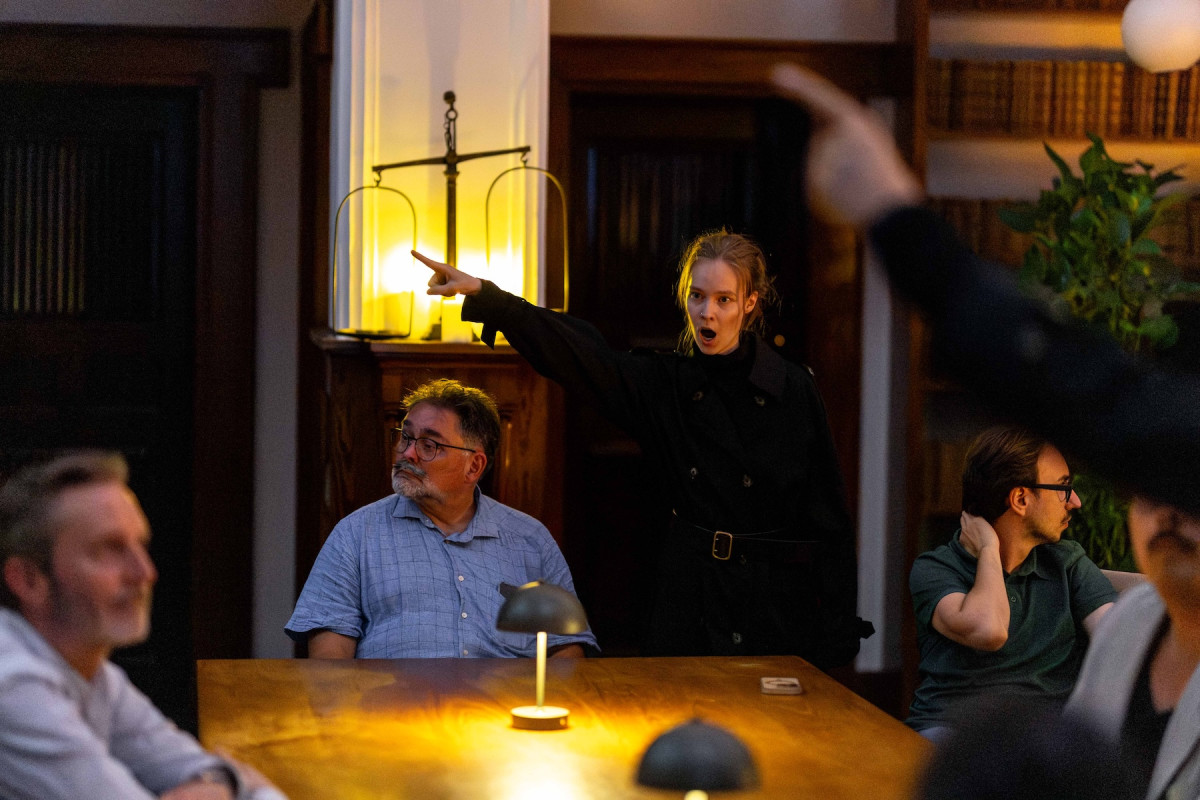
A newly composed opera staged in a courtroom may sound like a banal trick. But as I step into the waiting hall of the Aarhus Courthouse for Niels Rønsholdt and Louise Beck’s Den Stærkes Ret – Den Svages Pligt (The Right of the Strong – The Duty of the Weak), I wonder for a moment if I’ve come to the wrong place. An oblong room, tables scattered about, a balcony above – and then a sheet of music in a glass display case that normally would hold old legal documents. The scenography is discreet, but the legal framework immediately sparks reflections on law, power, and justice.
Soon, nearly 20 singers appear on the balcony. The music is tonal, carried by resonance and repeated phrases that gradually shift like a canon. You sense borrowings from minimalism, but also a near-folklike simplicity that makes the choir both enchanting and unsettling. The plot – a daughter confronting her father’s ghost to claim his weapon – emerges only in fragments. It is the atmosphere that drives the work, and it changes radically when the singers leave the balcony and place themselves among the audience, while three dancers move through the hall.
A pivotal moment comes when the choir suddenly strikes tuning forks and places them on the tables, sending a vibrating »wuu-uu« through the room. Goosebumps arrive instantly. Moments later, the singers address us directly, holding intense eye contact. It feels both intimate and transgressive, like being spoken to in court with no chance to reply. I wanted to look away, but felt compelled to hold their gaze. Here, the title became physical: the duty of the weak to submit.
As the work fades out, all the singers turn against the father and side with the daughter. Books are torn from the shelves, pages ripped out, and as »Listen and learn« is sung, Orwell’s 1984 flickers in the back of my mind. It is both disturbing and uncannily timely in an era where obedience to authority and manipulation again shape public discourse.
Den Stærkes Ret is one of the most intense musical experiences I have had in years. It unites aesthetics, body, and social commentary in a way that makes you shudder. I am already waiting for acts two and three.
English translation: Andreo Michaelo Mielczarek
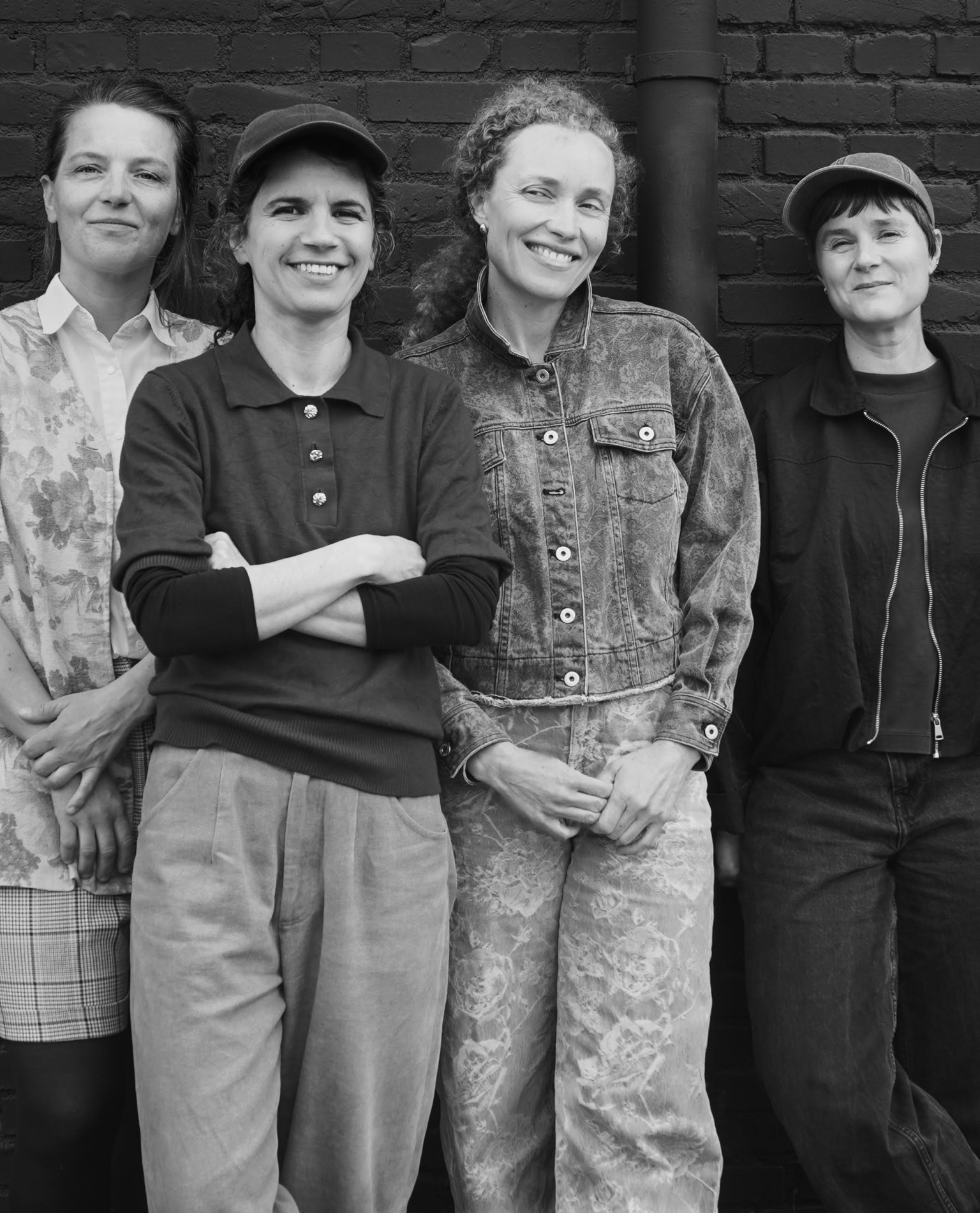
»Music, for us, is a fusion of different consciousnesses into a single shared focal point.«
The band Selvhenter was founded in 2010 by trombonist Maria Bertel, saxophonist Sonja LaBianca, violinist Maria Diekmann, and drummers Jaleh Negari and Anja Jacobsen. In 2017, Maria Diekmann left the group, and Selvhenter continued as a quartet.
Selvhenter’s sound is driven by a deep fascination with sonic textures, rhythmic displacements and polyrhythms, acoustic and electronic melodies, hard-hitting compositional choices, improvised beauty, and a sheer joy of creating and performing music. Selvhenter has played concerts both in Denmark and internationally. The group is also the nucleus of the artist collective Eget Værelse, which houses the members’ solo projects as well as collaborations such as Valby Vokalgruppe, SOLW, Nina Garcia & Maria Bertel, and G.E.K.
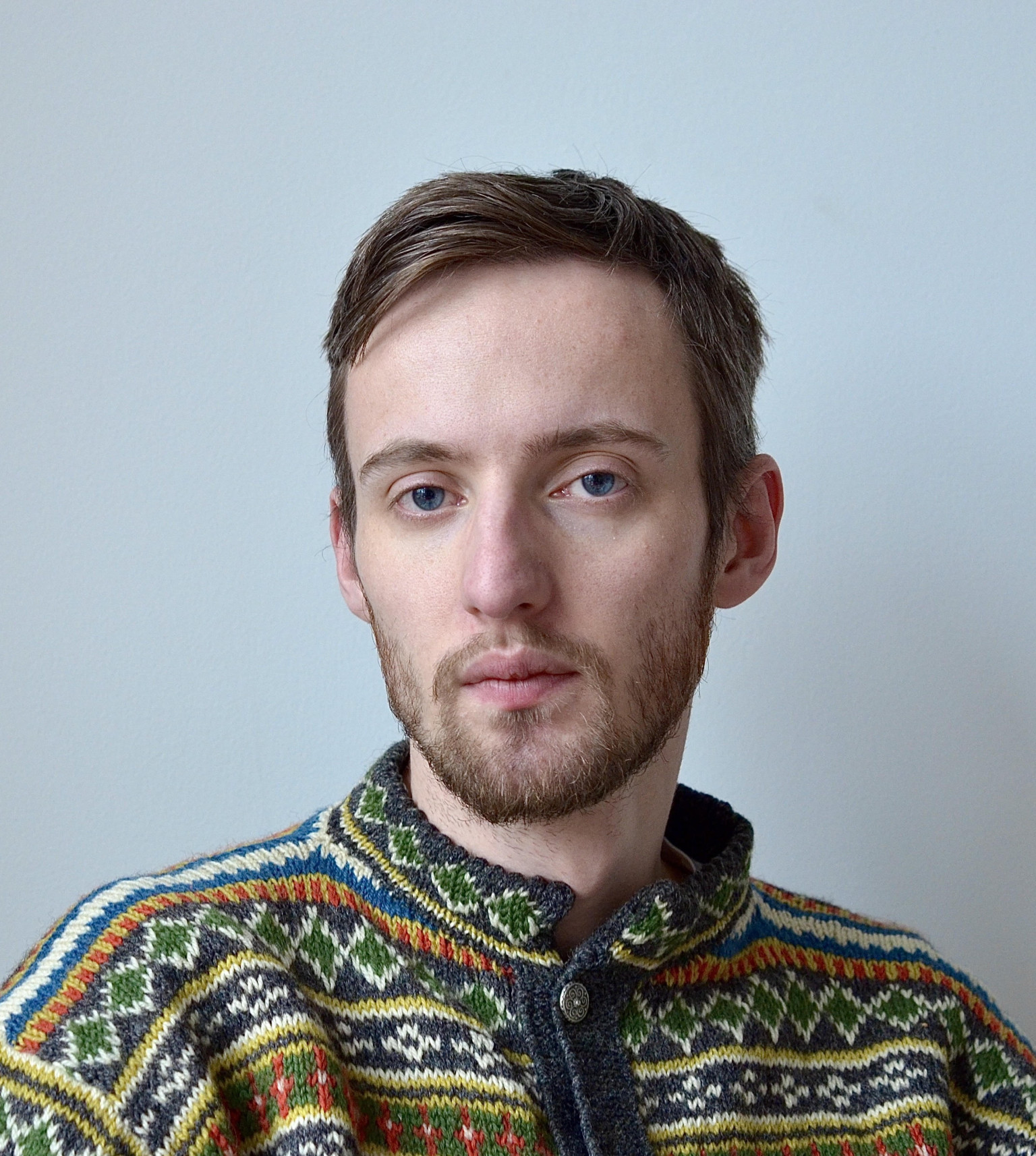
»Music for me remembers.«
Håkon Guttormsen is a Norwegian composer and trumpeter living in Copenhagen. He is educated at the Royal Danish Academy of Music and the Royal Academy of Rhythmic Music. He primarily composes scores for ensembles as well as music drama and opera. He is currently working on a work for solo violin and electronics for ILK Music’s concert series during CPH Jazz 2026 and on his first symphonic work, which will premiere at the academy in 2027. He is a member of nyMusik’s composer group in Norway and a board member of UNM Denmark.
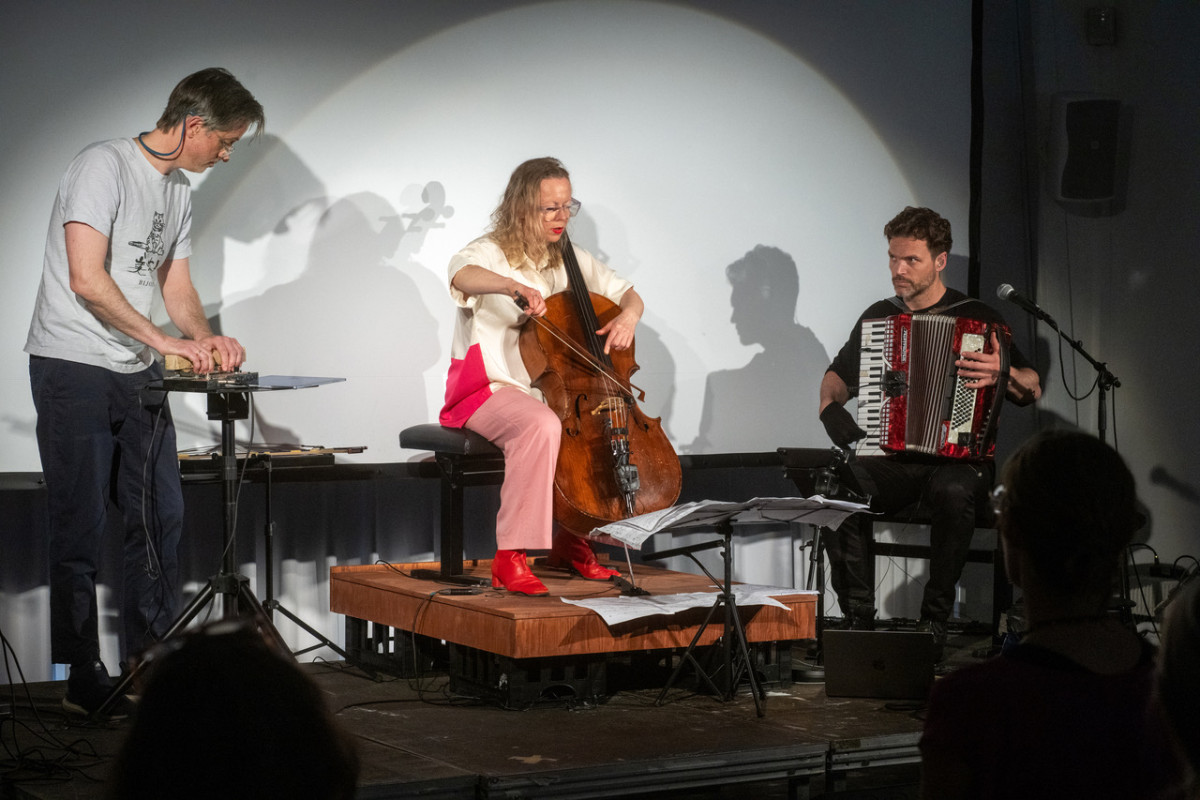
New Sounds at Louisiana is an initiative in which the Louisiana Museum of Modern Art has invited the record label Dacapo and the music publisher Edition S to curate concerts featuring living composers. Simon Steen-Andersen was the first composer in the series, and he seized the opportunity to assemble a programme that was not only overwhelming and exhilarating, but also deeply unsettling. Lasting an hour, the concert unfolded as a continuous sequence in which each work flowed seamlessly into the next, forming a single extended statement of at least part of the composer’s artistic practice and philosophy.
Combining video and live performance, the concert served as a manifestation of several of Steen-Andersen’s key artistic strategies. Central among them are techniques of estrangement and defamiliarisation, exemplified by Asthma (2017) for accordion, air pumps, and video, a work that explores and interrogates human breathing in all its positive and negative dimensions. Amid the many grotesque and humorous scenes – accompanied by Håkon Stene’s brilliant Foley-style soundtrack of air noises, sound effects, and spoken commentary – a brief clip of brutal police violence suddenly appears. In it, an officer methodically sprays pepper spray into the faces of handcuffed demonstrators. In that instant, everything else no longer seems quite so funny, and the crooked smile freezes.
The concert was a veritable sensory bombardment. Presenting all the works attacca undoubtedly created a powerful sense of flow, but it also left the audience almost saturated with impressions. Even so, the subsequent conversation between Simon Steen-Andersen and music critic and author Thomas Michelsen felt far too brief. Yet the composer succeeded in making his point: everything he does, he said, is a form of »deadly serious play.« Exactly.