in brieflive
29.10

Islands Of Sound Rising From the Sea

Athelas Sinfonietta: »Nordic Sounds«
© Kasper Vindeløv
© Kasper Vindeløv

Veroníque Vaka’s ongoing project to pin some of earth’s most momentous geological processes down in notated music is proving beguiling. The latest fruit was premiered on Saturday at Nordatlantens Brygge. Eyland (»Island«) was inspired by the formation of the island of Surtsey, which appeared 33km of Iceland’s coast on 14 November 1963 following a volcanic eruption.

Much of the Canadian-Icelandic composer’s work charts decline; its musical movement tracing harvested data around ecological destruction and decay. Eyland is about creation, and Vaka seemed to revel in the wonder and grandeur of it. The 15-strong Athelas Sinfonietta sounded with the sweep of a symphony orchestra under Bjarni Frímann and Jónas Ásgeir Ásgeirsson’s solo accordion like the emergent island itself, edging up from the spray with magnificent, slow force.

Some of the other five pieces in this concert focusing on music of the North Atlantic could feel like a ritualistic preparation for Vaka’s – a testament to the composers’ focus more than their lack of weight. Around the clear long lines of Eli Tausen a Láva’s Álvan are distinctive North Atlantic sparkle and harmonic depth; Daníel Bjarnason’s Skelja is a miniature sonic romance between harp and percussion and Friðrik Margrétar-Guðmundsson's Fikta a smudged chorale, played with shamanistic intensity by Ásgeirsson. Anna Thorvaldsdottir’s Entropic Arrows focused the mind with its threading of long string tendrils from out of frantic wind and percussion action.  

The other premiere was Aya Yoshida’s Song of the Voice – a non-vocal echo of the Faroese song tradition for cello and ensemble in which, at one point, you hear a chain-dance ratcheting round. The work is not without some imagination and effectiveness, but it was made to sound incoherent and unfocused by what surrounded it here. 

in briefrelease
13.03

When Joik Meets Drill

Zak Norman & Charlie Miller: »Takkuuk«
© PR
© PR

The Greenlandic word Takkuuk means »attention«, and it is the slightly ironic title of one of the more chaotic projects at this year’s CPH:DOX. The film is a collaboration between visual artist Zak Norman, film director Charlie Miller, and the Belfast-based electronic duo BICEP, and it also features seven musicians from Kalaallit Nunaat and Sápmi. In other words, a multitude of voices and agendas are at play, and the project clearly bears the marks of that.

The process leading up to the film sounds more interesting than the work itself. Norman and Miller travelled around the Arctic, seeking out musicians and researchers while filming glaciers and ice. The film’s seven young musicians then entered the studio with BICEP to create a shared soundtrack: a kind of club-oriented remix of seven very different practices, ranging from drill and heavy metal to joik, throat singing and drum dance. It might have been fascinating to follow those encounters, but instead the film takes us in another direction.

The editing shifts between a documentary strand of interviews and a surreal music-video aesthetic, where specially built cameras pan across the surface of the ice, bathing it in coloured filters referencing the northern lights and club lighting. In the interview track, the participants are allowed to steer the conversation themselves, which sends it in many directions. We touch on the spiritual undertones of traditional musical expressions, and here one would have liked the film to linger longer. One intriguing sequence explains how drum dance relates to the performer’s heartbeat, and how that rhythm is almost the same as the pulse of drill. More of that, please.

In a subsequent talk, the filmmakers explained that the work was originally produced as an audiovisual installation for five screens. That makes sense and might have worked better. Considered as a documentary film, Takkuuk is fragmentary, chaotic and directionless, which is a shame, because the young musicians seem to have much more to offer.

»Takkuuk«, Zak Norman & Charlie Miller (UK), 2025 (67 min). Screenings: 12, 17 and 19 March

in briefrelease
13.03

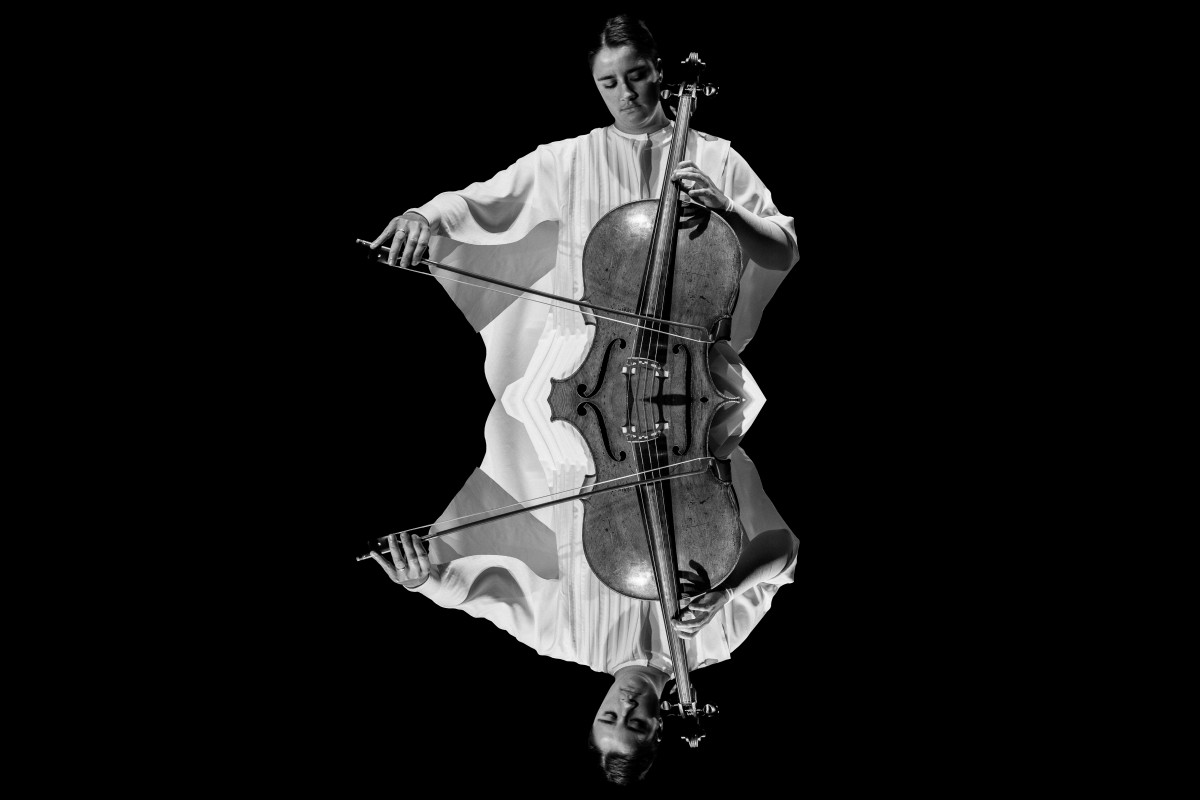
Cello Among Cows and a Love of Music

Katrine Philp: »A Classical Life«
© Carsten Snejbjerg
© Carsten Snejbjerg

A farm near Rødvig on the Stevns peninsula, home to both pigs and cows, also houses an elite music school for cellists, the Scandinavian Cello School. The school was founded by the British cellist and professor Jacob Shaw, who is also a farmer and lives here with his family. It is a place where the young people in residence are expected to take part in the work on the farm as in a collective, when they are not working on their musical projects.

According to Shaw, this is very much an innovation. In one of the many scenes featuring the thoughtful, idealistic and selfless mentor, he remarks that the classical music world places great emphasis on competition and perhaps on musical development, but only rarely concerns itself with something as essential as well-being.

It is fascinating to follow not only the teaching and competitions on Stevns and elsewhere, but also to listen to the young musicians’ accounts of playing, alongside the many uncommented sequences in which large amounts of music – especially from the classical cello repertoire – are performed. Among them is an outdoor scene where the musicians have attracted a group of cows, who appear to be listening when they are not mooing.

This is a film about self-realisation through discipline, but also about discipline through self-realisation. The film continually circles around the human effort to become better at something, and it does so in a way that consistently places the participants’ love of music at the centre. This also applies to Shaw himself, whose previous serious illness, briefly referred to, forms a kind of counterpoint to the lightness that otherwise characterises the film.

Katrine Philp’s documentary A Classical Life is therefore warmly recommended – not only to parents of musically inclined children, but to anyone interested in music. Classical music? No. Music.

CPH:DOX, 14, 17 and 21 March

in briefrelease
12.03

Do Whales Actually Want to Listen to Us?

Valentin Paoli: »The Musician and The Whale / La Baleine et le Musicien«
© PR
© PR

The French electronic musician Rone finds it difficult to express emotions verbally. In Valentin Paoli’s rather touching documentary The Musician and The Whale, he reflects on music’s ability to create connections and convey moods to an audience – whether human or interspecies.

One day, Rone receives a video from a sailor who is playing his music at sea. Whales gather around the boat, seemingly drawn to the sounds, and this becomes the starting point for an exploration of whether the musician might be able to communicate with the animals through sound. Rone seeks out an expert in whale vocalizations, who points to certain high-pitched synth elements in his EDM compositions that resemble whale song. He then has a girls’ choir record the whale sounds with human voices and travels to Réunion to play the sounds back to the whales.

At first, the attempt proves futile: the whales appear indifferent to the girls’ choir. Quoting Johann Wolfgang von Goethe, Rone realizes that if one wishes to move others, one must begin with what moves oneself. It is a Disney-like insight in a slightly sentimental film that speaks to the human desire to communicate with animals.

But are we actually sure that animals want to communicate with us? As the film’s central figure, Rone briefly reflects on a few ethical questions concerning animals, yet his infectious enthusiasm for the sounds of whales prevents him from asking the most fundamental questions about the relationship between humans and animals. Instead, we get a portrait of the musician that is almost as polished and warm-hearted as his music. The whale, wisely, remains beneath the surface of the sea.

»The Musician and The Whale« / »La Baleine et le Musicien« (83 min.)
Valentin Paoli (FR), 2026. Screening at CPH:DOX, March 11, 12 and 20

© Cecilie Frost

»Music is for me a silent but powerful weapon. It is crucial for preserving identity and culture. Throughout history, dominant powers have often tried to suppress people by wiping out their language, their traditions and their art. But in places where this failed, it was precisely the survival of art that preserved the soul and pride of the people.« 

Anastasia is a Danish indie artist with glamour in her eyes and punk in her blood. Together with her all-female band, she creates a sound universe carried by raw energy, bittersweet rock melodies and cheeky, flirtatious lyrics about love, loss and everything chaotic in between. She debuted in 2022 with a series of charity concerts in support of Ukraine and has since taken over stages across the country – from Debutfest in Copenhagen to SPOT Festival in Aarhus. All songs are written and produced by Anastasia herself and take their final form in a close and intense interaction with the band, where personal expression meets collective power.


in briefrelease
09.03

Everything a Snare Drum Can Do

Ryan Scott: »21th-Century Canadian Snare Drum«
© PR
© PR

Let’s be honest: when you think of composed music for solo instruments, the snare drum is probably not the first thing that comes to mind. It may be the noisiest member of the percussion family and has been setting the volume level in everything from classical music to pop for decades. That’s why I pricked up my ears when the Canadian percussionist Ryan Scott announced an entire album of works for snare drum – written by 14 different composers. A full hour and a half of music, no less. And yes, that sounds like a lot for a record that mainly consists of a single drum. But there is definitely something to discover here.

The opening, Andrew Staniland's »ANTIGRAVITYDRUM«, blends free jazz with inspired use of percussive vibraphone, while Beka Shapps’ »Skinscape IV« sends the drum strokes through ring modulation and extensive sound processing, bringing us close to musique concrète. Christina Volpini’s »only ghost« slips into horror territory with march-drum-inspired bursts and ghostly use of the snare drum’s high register, while Amy Brandon’s »Time and Effort« almost becomes a demonstration of the instrument’s technical possibilities.

Fourteen works over ninety minutes is a substantial mouthful. The snare drum’s limited tonal vocabulary means that you occasionally lose focus, even after several listens, and the contrast between drum strokes and silence is repeated a little too often. That said, Ryan Scott and the composers get just about as much out of what is essentially a glorified marching drum as one could hope for. I was both entertained and intrigued along the way. As an experiment, the idea is strong – but in the long run also a bit too insistent for me to return to often. Still, one should not underestimate the versatility of a good old-fashioned snare drum.

English translation: Andreo Michaelo Mielczarek