in brief
08.01.2025

Love and Poetry under Black Streetlights

Jørgensen/Botes: »Dråberne 5, 7, 8 og 11«
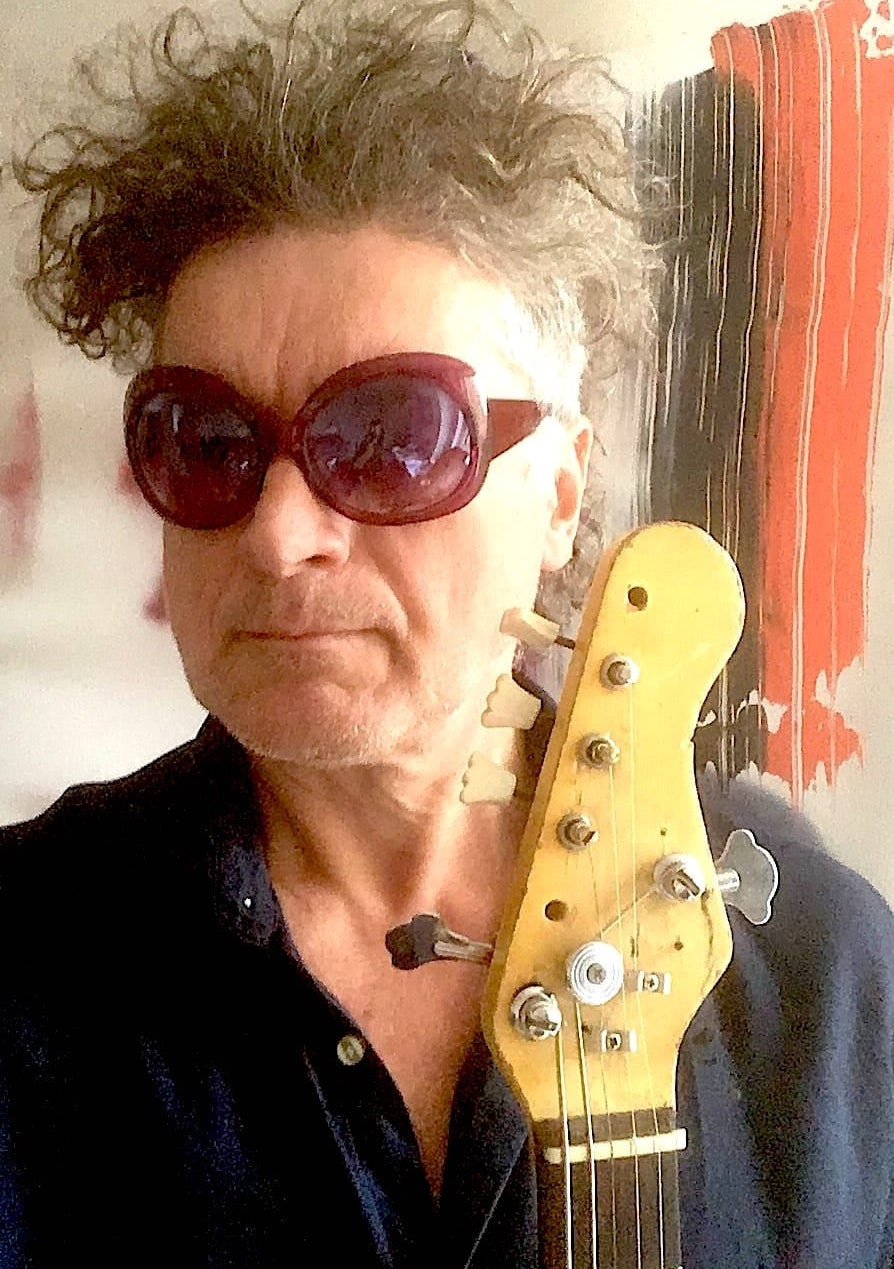
Marina Botes og Steen Jørgensen. © Isak Hoffmeyer

While many still sigh at the thought of seeing a full Sort Sol once again illuminate the dark grey Danish sky, the band’s eternal crooner Steen Jørgensen, together with his equally strong other half, pianist Marina Botes, has created music that is something entirely different – something deeper. And yes, I have seen words like »pretentious« and »boring« hurled at the duo, but none of that sticks to their new release, which consists of a series of intimate suites where Jørgensen’s spoken word is woven together with Botes’ magnificent piano playing. If the ambition is to build a bridge between the classical and the electronic, it succeeds convincingly.

As a lyricist who moves through the same pitch-black landscape as Jørgensen, I tip my hat to the strong poetic imagery that characterizes Dråberne 5, 7, 8, and 11 – especially on the album’s longest track, the dramatic »Hul – Dråberne 7«. As Jørgensen muses on the luminous melancholy of the inner city, the music becomes a transformation, a sphere of change made of ambient surfaces, muted strings, and a female vocal that slips in like a shadow—until the song rises in dramatic momentum, centering on the line »En nat i indre kvarter«.

The music is primarily grounded in piano-heavy terrain, where Botes’ keys find repose in muted pedal strikes and light strings. Only in rare moments do the compositions break free, as on the opener »Glemsel – Dråberne 5«, where chamber orchestra and jazzy breakbeats create a compelling and almost cinematic atmosphere.

Dråberne 5, 7, 8, and 11 is a seductive, inspiring, and downright sumptuous experiment in which the love between the two artists can be felt in every tone. If this is Jørgensen’s career winter, I will gladly accept more dark, warm moments.

© PR

»Music to me is… my work. I've landed in the best job in the world, where a core task is to discover new music, to learn its internal logic and aesthetics, who created it, and why. I'm a music researcher and have just returned from the island of Java in Indonesia with my research partner and husband Nils, where we've been visiting experimental musicians in Yogyakarta – artists we've now followed for seven years.
One recurring theme is the trance/horse dance jathilan (or jaranan), which several of the artists have introduced us to. Jathilan is on one hand an old Javanese ritual, and on the other hand a contemporary (village) culture in full development. There is no single historically 'correct' jathilan. It's a practice that follows an old spiritual ritual, but is also open to current Indonesian influences.

The playlist consists of three tracks by Senyawa, Gabber Modus Operandi, and Raja Kirik, all of whom have incorporated the ritual into their music. The fourth track was supposed to be a 'traditional' jathilan, but as far as I know, no such recording exists on Spotify. Instead, I found a related jaranan piece that includes a dangdut song – an ultra-popular genre that is often performed as part of a jathilan event. The final track is one of the most popular dangdut songs at the moment.«

Sanne Krogh Groth is Associate Professor of Musicology at Lund University, Sweden, where she conducts research on electronic music and sound art, currently with a focus on Indonesia. Sanne was editor-in-chief of Seismograf from 2011–2019. In 2015, she established Seismograf Peer, which she is still the managing editor of.

© Henry Detweiler

»For me, music is work and a way to escape it. Music is the fanciest way of communication and therefore the most delicious food for analysis. It is what prolongs your feeling for longer than you can physically hold. Music is something after which you say: 'I’m glad you didn’t use words'. After all, it’s something that makes your commute or chores shorter, and this time-controlling function is the very first and foremost mystery I love about it.«

Liza Sirenko is a music theorist and music critic from Kharkiv, Ukraine. She is a co-founder and board member of the Ukrainian media about classical music The Claquers. She is a former Fulbright Visiting Scholar at the Graduate Center, CUNY (New York, USA), and a graduate of National Music Academy of Ukraine (Kyiv, Ukraine). Her current interests include processes in the classical music industry, contemporary opera in Ukraine, and a role of postcolonial moves in these. Liza is a former PR Director of the Kyiv Symphony Orchestra, currently working as a Program Officer at the Goethe-Institut Ukraine.

in brieflive
13.04

»Is He Going to Play Three Pianos?«

August Rosenbaum: Klaverkoncert
© Josefine Seifert
© Josefine Seifert

»Is he going to play three pianos?« a boy asks. »Maybe he’s learned to play with his feet?« says an adult man. The audience on their way into the DR Concert Hall’s main auditorium comment on the setup for August Rosenbaum’s piano concert. Three Steinway grand pianos lined up is truly peculiar – actually comical.

When the concert began, I imagined I could hear differences between the instruments, though I would probably fail a blind test. Apart from a bit of playing with staccato on one piano and pedal on another, the setup was, frankly, underused. The piano playing was lacking, dominated by a single approach: pedal pressed all the way down, an active right hand primarily in the middle register, a left hand with a muted accompaniment, and a great deal of repetitive technique.

It felt like a gravity Rosenbaum could not escape. No idea or direction could break free; one always returned to the same place.

When there are two grand pianos for a concert, one of them is usually prepared. Rosenbaum had three (!) without using a single screw, coin, or ping-pong ball. Shouldn’t that be a criminal offense? Nor were any extended techniques employed, such as clusters or playing with the back of the hand.

The light show was charming, at times impressive. Still, it takes more goodwill than I possess to call the evening an audiovisual concert, as the program text told me it was. On the way out, I heard another man say, »It was actually quite exciting to hear him play.« I didn’t think so.

English translation: Andreo Michaelo Mielczarek

in briefrelease
12.04

Bumblebees Come With Punk

Smag På Dig Selv: »SPDS«
© PR
© PR

Smag På Dig is pretty punk. True, the instruments most commonly associated with the genre have been replaced by saxophones, and yes, the music sounds markedly different from what one would normally link with punk. Nevertheless, with their debut release SPDS, tenor saxophonist Oliver Lauridsen, baritone and bass saxophonist Thorbjørn Øllgaard, and drummer Albert Holberg have created a bona fide, high-energy punk album – packed with fun, mischief, seriousness, and anger.

The style is established from the very first track. The trio plays catchy, often pop-inflected melodies built on Øllgaard’s thunderously deep saxophones, Holberg’s tight drumming, and Lauridsen’s high-energy, lyrical tenor sax. Particularly effective is »Middelklassen avler kun skeletter«, which has a comparatively darker tone, a bass sax buzzing like a fat, murderous bumblebee, and a stronger focus on atmosphere than many of the other tracks – without sacrificing melody.

At the other end of the spectrum are tracks like »PGO HOT 50«, with its stomping tempo, cowbells, and an epic sax guyfrom hell, and »Negirî«, which, with Luna Ersahin on vocals and saz in the eleventh hour, lets the horns step into the background – not to mention Thorbjørn’s angry poems, addressing everything from globalization, climate change, and war to the art academy and one’s own worth as a human being. Impressively, it all hangs together; everything works in its diversity. And it convincingly illustrates the age-old punk dictum that you can be angry and still have fun at the same time.

in brieflive
12.04

Feel Yourself Becoming Nature Again

Cecilia Fiona, Sophie Søs Meyer: »Ghost Flower Ritual« 
© Farzad Soleimani
© Farzad Soleimani

Frozen human bodies and faces shaped and painted like ceramics are meticulously carried around by flower sculptures that have abandoned their static nature. The roles are reversed. Nature becomes the living environment that grants the clay humans small, temporary lives in Ghost Flower Ritual at Copenhagen Contemporary.

The piece is a live installation with musicians and performers, where 34-year-old composer Sophie Søs Meyer has collaborated with visual artist Cecilia Fiona, who is of the same age. It’s a sensorially overwhelming, yet dramatically subdued ritual. Over the course of forty-five minutes, we sit together beneath a giant flower and sense the performers’ meticulous, slow movements. Meanwhile, soundscapes and small pulsating figures from four string players and a flute shape a landscape of colors, tones, and movements that melt together – filling the high-ceilinged room with auditory and visual presence. We are part of a whole.

I love the wild costumes that descend strangely from the sky. I love being part of the ritual that heals our forgotten connection to nature, which is the very foundation of our lives. I love the sound of stroked, plucked, and blown wood from Athelas’ musicians. Culture is nature. The human animals and the flowers are part of the greater consciousness. It’s all a hyper-complex mechanism. Cecilia Fiona possesses an extraordinary visual and creative abundance in her intricate details, and Sophie Søs Meyer is precise and intriguing in her swaying tonal figures that change slowly and meticulously. Until one flower blows into the large conch shell. Then the ritual is over.

English translation: Andreo Michaelo Mielczarek