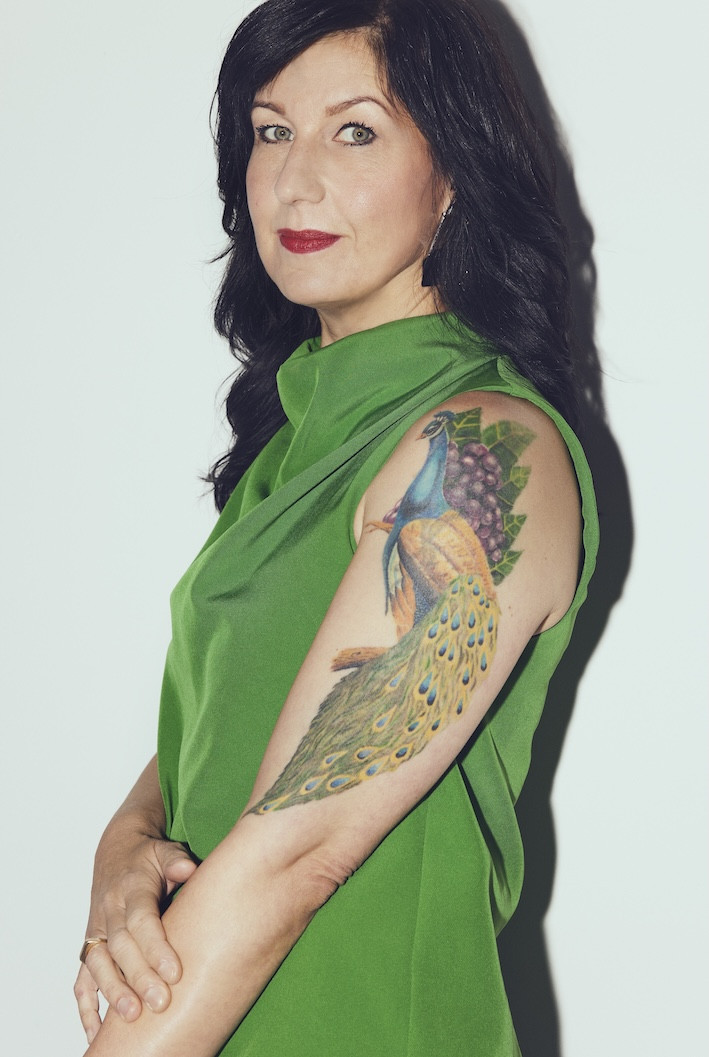
»Who ever said that music is ‘just’ music? To me, it is anything but that: an urge to understand and explain it all. A piece of jewelry I wear every single day. A joy that can, at times, run deep. An ever-changing imprint of millions of stitches in my heart. A longing to disappear.«
Henrik Marstal is a musician, author, and music researcher. He holds a PhD in musicology, is a senior lecturer at the Rhythmic Music Conservatory, and frequently appears in the media as an expert source on music. His areas of interest include contemporary music, such as electronic music. This winter, he will release both a new album with the pop group ibens and a book about Else Marie Pade, published by the British publishing house Bloomsbury.
Only at the End Did the Music Break Free
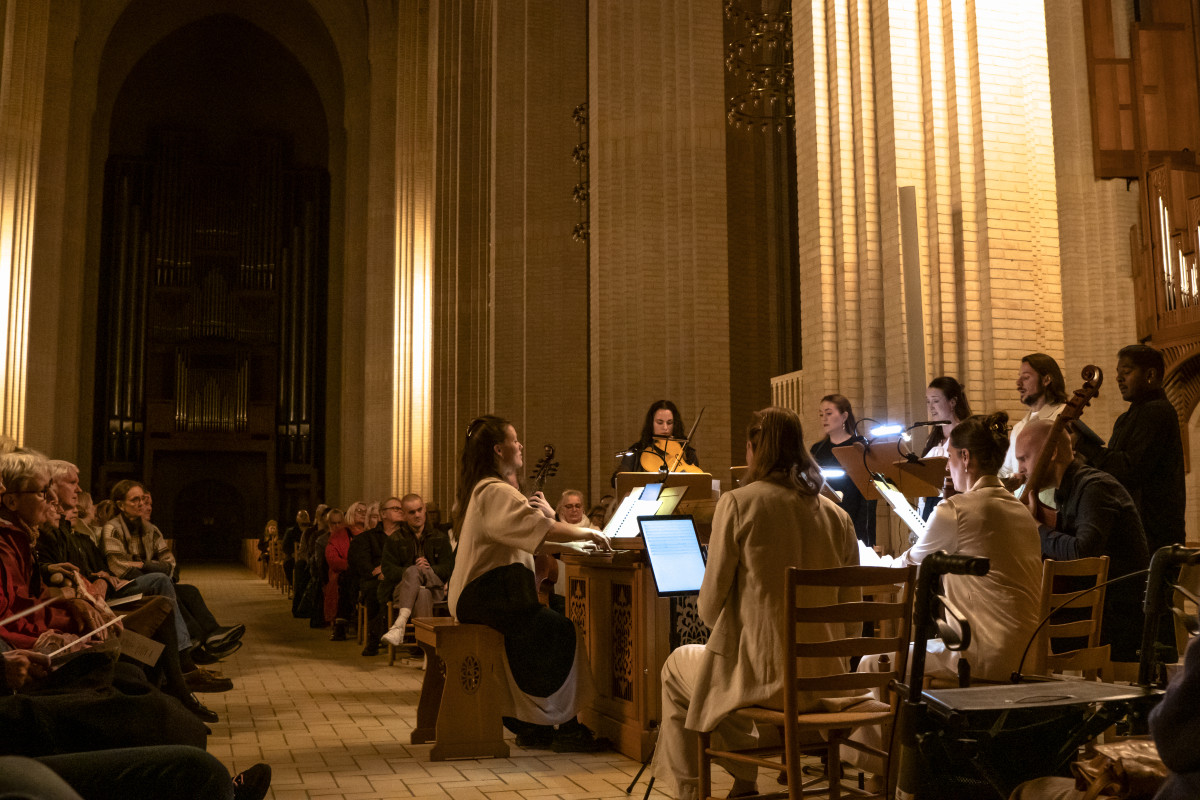
The British composer Nick Martin, who is based in Copenhagen, attempts to give remembrance a sonic form in his brand-new work Remembering, written specifically for The Baroque Society. On Thursday evening at Grundtvig’s Church, he succeeded beautifully in parts of the fifteen-minute work for four singers and a small, intensely focused group of Baroque instruments.
Dense vocal textures lingered over harmonies that unfolded slowly, while allowing the soloists to emerge one by one. The static accompaniment provided a foundation for remembrance, over which the floating voices evoked the lost and departed. The harmonies gradually shifted in colour like clouds in the sky, constantly changing shape – seemingly at random, yet following what felt like a fixed, organic pattern. But the work became too long and passive. Only in its final minutes did the harmonies break apart, making room for welcome rhythmic variation and tantalising silences. Had this shift in form come earlier, Martin might have created a more compelling work. It nevertheless ended with a gem of an open, searching chord which not only demonstrated his gifts as a vocal composer but perhaps also invited us to think of remembrance as something positive and transformative rather than tragic.
Remembering was framed by two works by J.S. Bach (BWV 118 and 106). The latter cantata was later given the title Actus Tragicus, but it was not entirely tragic: for Bach, death primarily offered access to something better. That sense of consolation was harder to find in this performance, where the small orchestra of The Baroque Society lacked energy and momentum. Yngvild Haaland Ruud, seated behind the small organ in the middle of the ensemble, provided insufficient musical direction to bring the players together. The tempo was far too ponderous, and the music lingered too much on the feeling or memory of the sounds just heard. Still, it was refreshing to encounter a new work by Nick Martin – an invitation to remember at All Saints’ Day.
The concert will be repeated in Copenhagen, Helsingør and Gentofte over the coming days
English translation: Andreo Michaelo Mielczarek

»For me, music is at its best when it appeals to both the head and the heart. I love music that plays with language and understands how words create images, while also possessing its own unique sonic quality and mood. It’s an added bonus if the music energizes me during a run, makes me dance in the kitchen, or makes me laugh. Or cry. Music can be like a chocolate-coated marshmallow treat with a surprise inside.«
Lone Hørslev is an author of poetry, novels, and song lyrics, as well as the TV series Den gode stemning. Together with Mads Mouritz, she forms one half of the Mouritz/Hørslev Project, and she recently wrote lyrics for the musical theatre production STOLT in collaboration with Katrine Muff. The songs can be found on the album Jeg ønsker mig.
»For us, music is... magic? Aside from the fact that we are huge fans of silence, the closing line of one of our upcoming singles perfectly captures our relationship with music:
'Music feels like magic to me / A superior art form in a marketplace / Trying to find an empty space'.
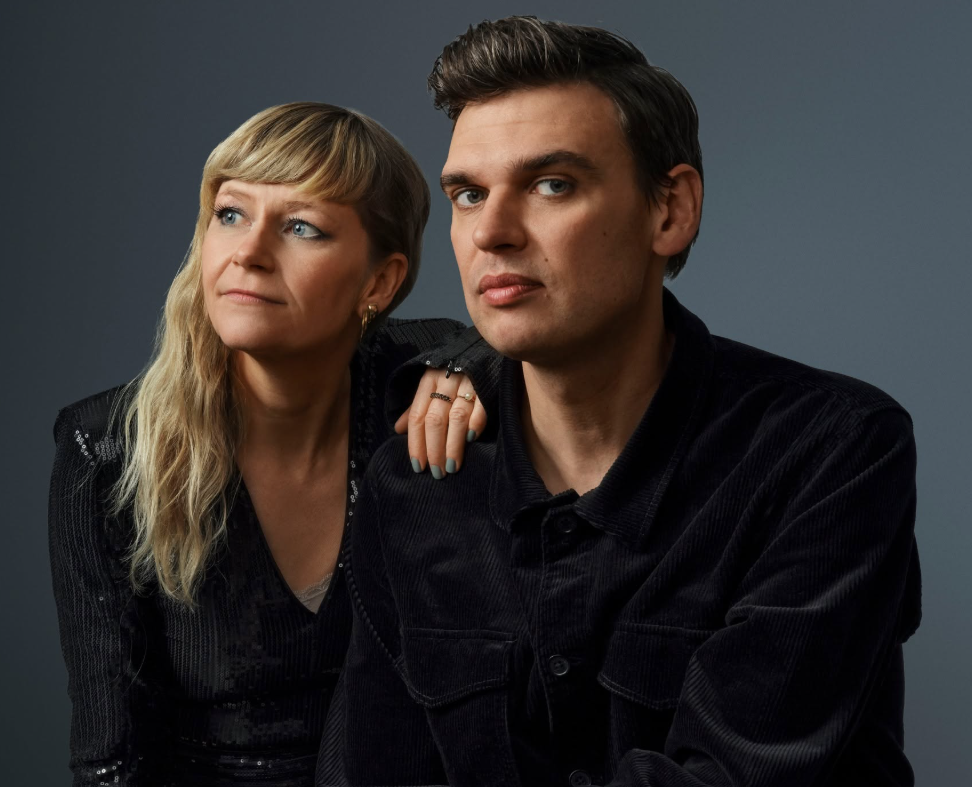
That is what it can feel like as a songwriter and performing musician. We try to hold onto an almost childlike infatuation with music, yet the art form we work in – alternative-leaning pop-rock – was created and has evolved 'in a marketplace' driven by powerful economic forces. As a romantic, that can sometimes be a bit disheartening...«
Late Runner consists of Asger Tarpgaard and Tanja Forsberg Simonsen, both formerly of the bands Superheroes and Private.