in briefrelease
25.09

An Organ in the Dark Forest of Doubt

Calum Builder: »Although Changed, I Arise the Same«
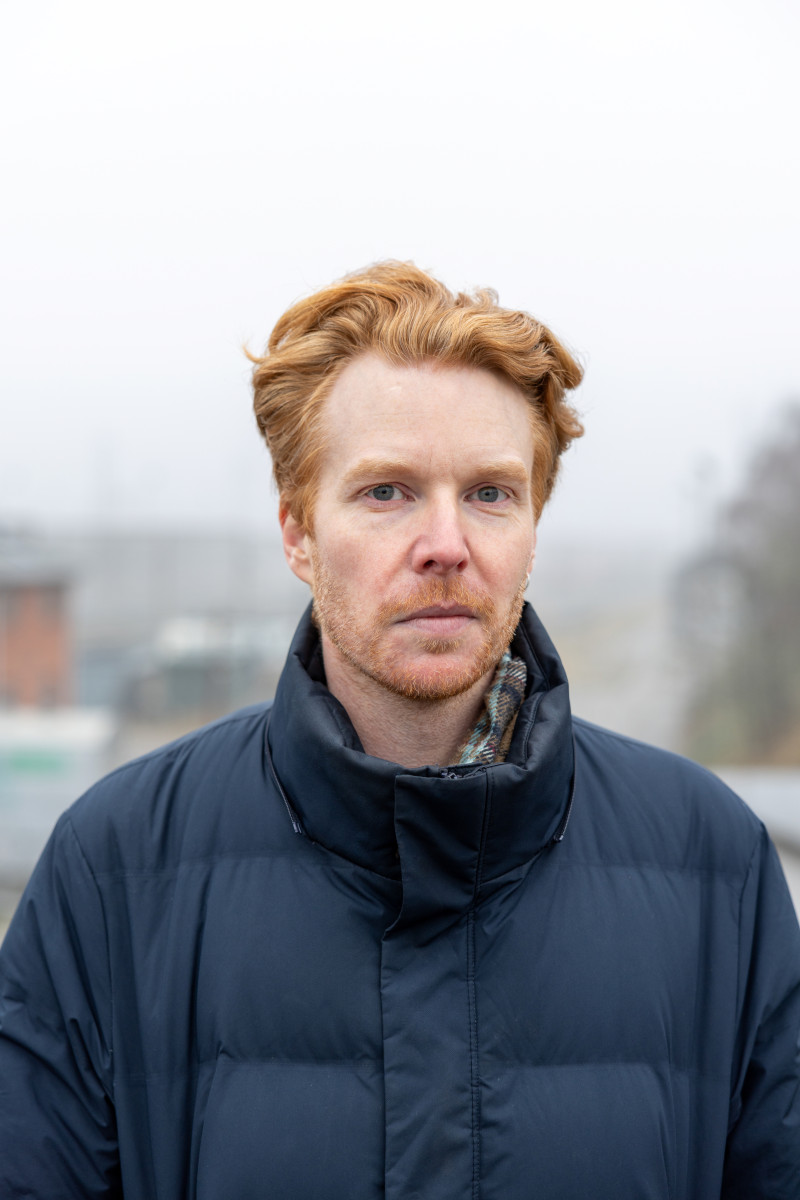
© PR
© PR

Last year, Builder released Poor_in_Spirit, an album in which he explored, on his own, the sonic possibilities of his self-built organ. It was an album shaped by this exploration, but ultimately also by the limitations of the organ itself. On Although Changed, I Arise the Same, the composer finds a way beyond them.

The organ is now joined by three additions: Builder’s own alto saxophone, along with the voices of Zola Mennenöh and Johanna Sulkunen. It makes all the difference, providing the diversity of instrumentation that Builder has repeatedly demonstrated his ability to compose for. At times, the organ’s bass sinks beneath the voices and saxophone like a light haze; at others, it envelops them in a heavy fog. It howls like wind in the trees and roars like a train in the night. Mennenöh and Sulkunen sing, chant and breathe simple, repetitive phrases about spiritual uncertainty and searching, as though lost in the dark forest of doubt.

It is a Spartan form of storytelling, giving the listener enough lyricism and atmosphere to set the mind in motion, but never so much that it becomes overwhelming. This is where Builder’s strength lies: his music clearly grows out of his life and experiences, yet he composes in such a way that the listener is invited to enter the story with their own imagination.

Builder determines the colours, but leaves part of the picture to the listener. It is an album that is far more restrained in its dramaturgy than previous releases. No less beautiful or inspiring for it.

English translation: Andreo Michaelo Mielczarek

in brieflive
08.11

A Quilt of Care and Music

Nan Na Hvass, Katinka Fogh Vindelev: »Et rum at vente i«
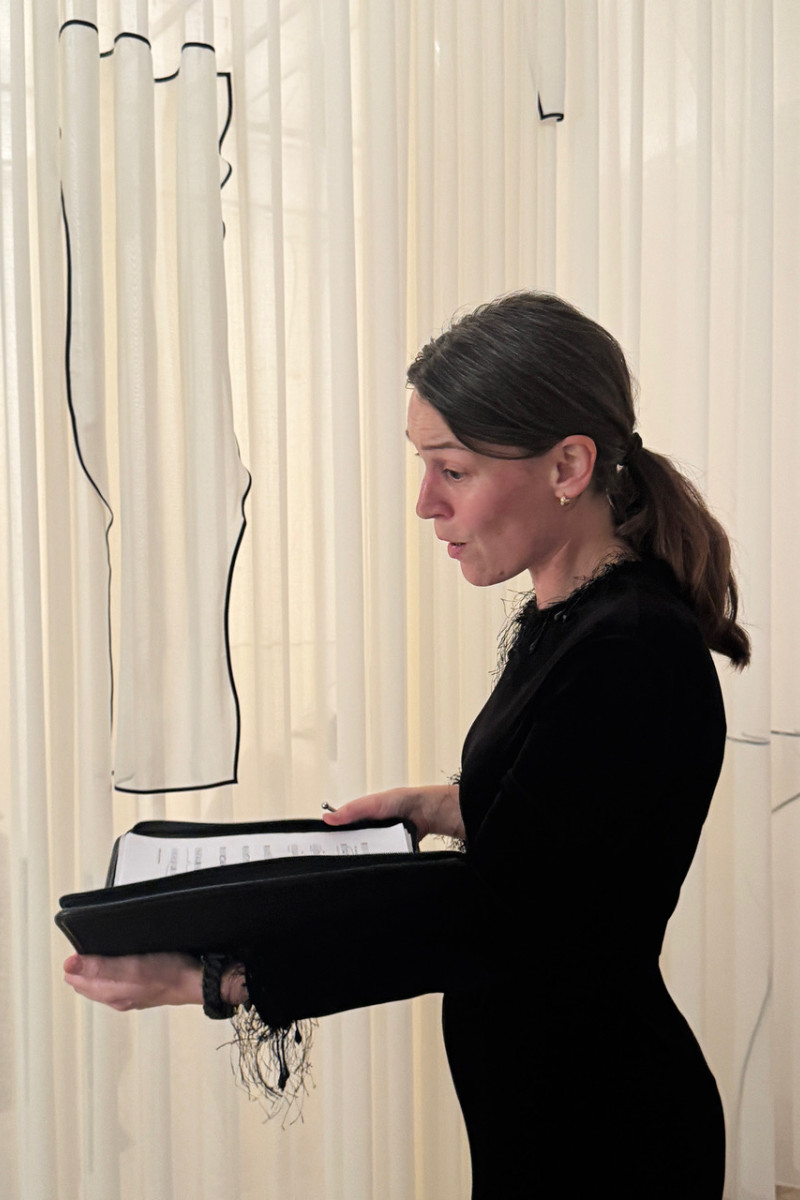
© Sofie Hannibal

We all know the simple act of care involved in placing a blanket around another person. In the installation A Room to Wait In, this gesture is made literal through textiles and song, both carrying a history spanning centuries. Nan Na Hvass has quilted together 150-year-old fabrics with her own emotional experiences and contemporary encounters with waiting rooms during fertility treatment. Her aim is to transform the clinical space in which one wakes after a procedure, drowsy and clinging to a fragile hope, into a more nurturing environment that stitches generations together. And to bring music into the experience. Each quilt bears witness to the bodies it has warmed and the hands that have sewn it.

Soprano and multidisciplinary artist Katinka Fogh Vindelev moved among us as we lay on individual beds, each covered with a quilted bedspread. »This pain is not yours alone,« came the words in her beautiful, deeply intimate voice, set to music by Hildegard von Bingen, the Italian composer Barbara Strozzi and Vindelev herself. Melancholic minor scales descended; elsewhere, small melodies emerged from an earlier musical era, without leading tones – that is, without the sense of causality found in virtually all music since the eighteenth century. Sounds that simply exist, without control or any necessary direction – much like a person living with a fragile hope of fertility.

There were only four places available – an intimate concert in every sense, in which care, expressed through song, textiles and presence, merged in an almost magical way. The person lying on the bed next to me could not stop crying afterwards. The room was anything but clinical – song and textiles had transformed it into a place of care. Thoughtful and beautiful.

English translation: Andreo Michaelo Mielczarek

© Linnea Syversen

»Music, to me, reflects human experience and allows us to find ourselves on an entirely existential level, beyond language. It feels like a shared realm to which we all have access. Music may be the art form that requires the least intellectual processing (although it can certainly involve that, too!). Because it consists of sound unfolding over time, we must recreate its colours and emotions within ourselves. This can happen rapidly, as if we were possessed by a force from outside. Music contains many layers of codes to which we relate in both similar and different ways. Some of these codes, such as pulse, resonate with unconscious levels within us that date back to prehistoric times. Other layers, such as familiar musical references, speak to the modern, cultivated human being. This interplay makes music uniquely stimulating! In cultural policy discourse, art is often reduced to an instrument for something else (which it certainly is and can be, too). In doing so, we forget art’s intrinsic value.«

Solveig Sørbø is a composer, music producer and artist who creates classical music and alternative pop. She composed the music for the documentary Hans pluss Liv (NRK), and a piece from the film was later performed by KORK (the Norwegian Radio Orchestra). On the occasion of the 2026 solar eclipse, she composed an orchestral work connecting Dante’s metaphysics with the physics of celestial bodies.

Solveig has previously worked in academia on innovative projects such as MusicLab (the edition featuring DSQ was named Event of the Year by DR), as well as as a radio journalist and presenter for NRK and radiOrakel. With a methodological approach to art, Solveig seeks to create music that moves people.

Her critically acclaimed opera Heroin chic, with a libretto by award-winning author Maria Kjos Fonn, premiered at the Classix Festival in Romania in 2025 and received its Norwegian premiere at Parkteatret in Oslo in February 2026. Following this, Ballade dubbed her »Music’s Klæbo«. Solveig is currently working on an opera based on Ibsen’s The Wild Duck, among other projects, and preparing a concert with the band Naturhistorisk.
© Ditte Marie Walter Thygesen

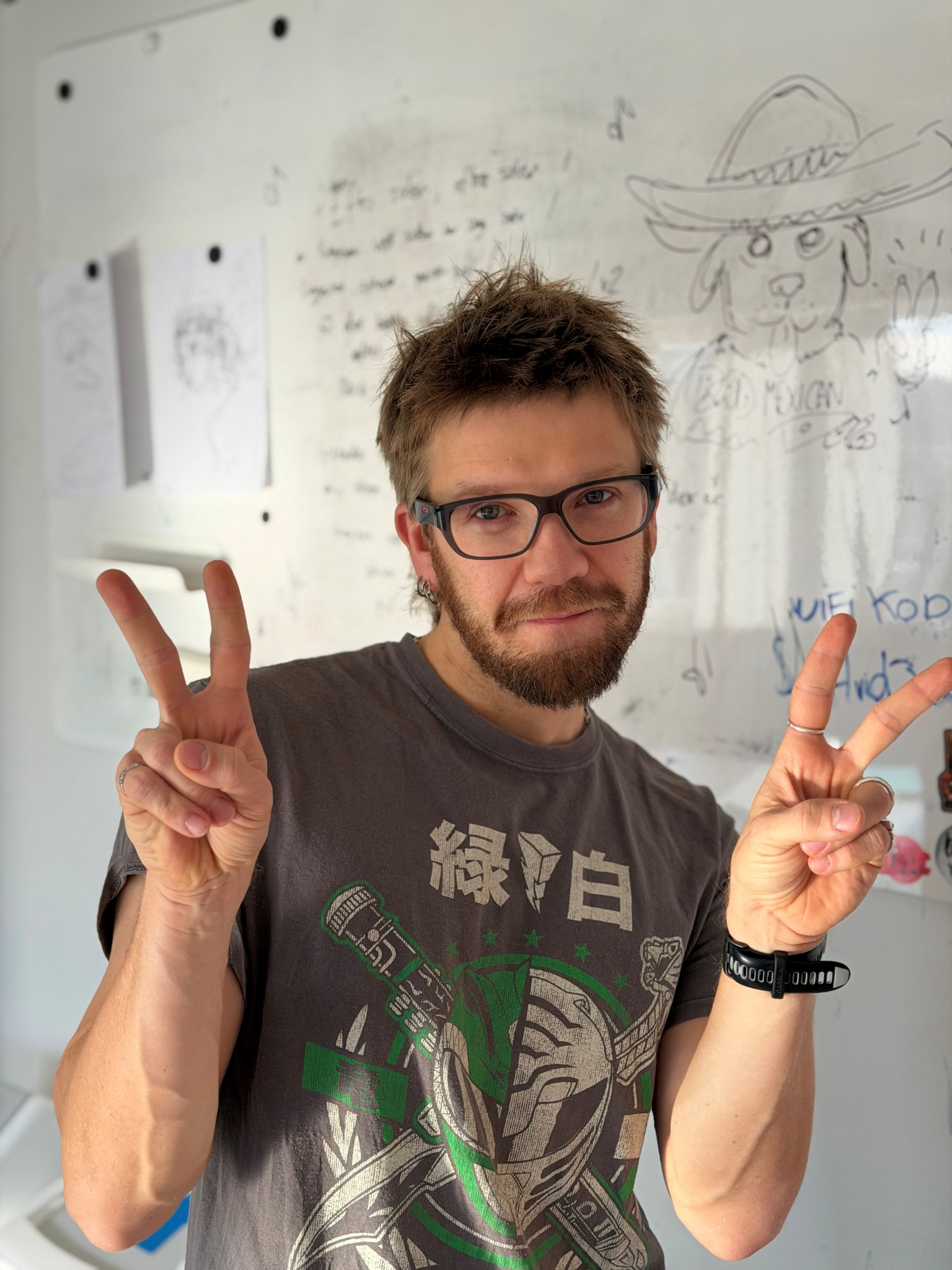
»I listen a lot to music from games that I play myself. Furthermore, through my work as a director, I am introduced to a wealth of fantastic music by my wonderful colleagues on every new project. I use music as a tool in my theatrical processes – both to get into the right mood when preparing to convey meanings and directions to the artists, designers, and performers involved, and simply to wake up in the morning while making my coffee. Music often communicates more clearly than words; much like scenic actions and visual expressions, it can be highly precise in conveying emotional content – often more so than the spoken or written word. I love that kind of affect!«

Emil Rostrup is a theatre director. In recent years, he has directed productions such as Bad Mexican Dog (2026) at Sort/Hvid, Crip (2026) at Revolver, Klodshans og Prinsessen (2026) at Aalborg Teater, Prometheus (2025) at Nørrebro Teater, Vi, de druknede (2025) at Republique, and Pow Pow Pow (2024) at Revolver.

He graduated from the Danish National School of Performing Arts in 2020 as a theatre director. His graduation production was Woyzeck Ehxibited – a devised paraphrase of Georg Büchner’s classic, Woyzeck.

© Carsten Seidel

»Who ever said that music is ‘just’ music? To me, it is anything but that: an urge to understand and explain it all. A piece of jewelry I wear every single day. A joy that can, at times, run deep. An ever-changing imprint of millions of stitches in my heart. A longing to disappear.«

Henrik Marstal is a musician, author, and music researcher. He holds a PhD in musicology, is a senior lecturer at the Rhythmic Music Conservatory, and frequently appears in the media as an expert source on music. His areas of interest include contemporary music, such as electronic music. This winter, he will release both a new album with the pop group ibens and a book about Else Marie Pade, published by the British publishing house Bloomsbury.

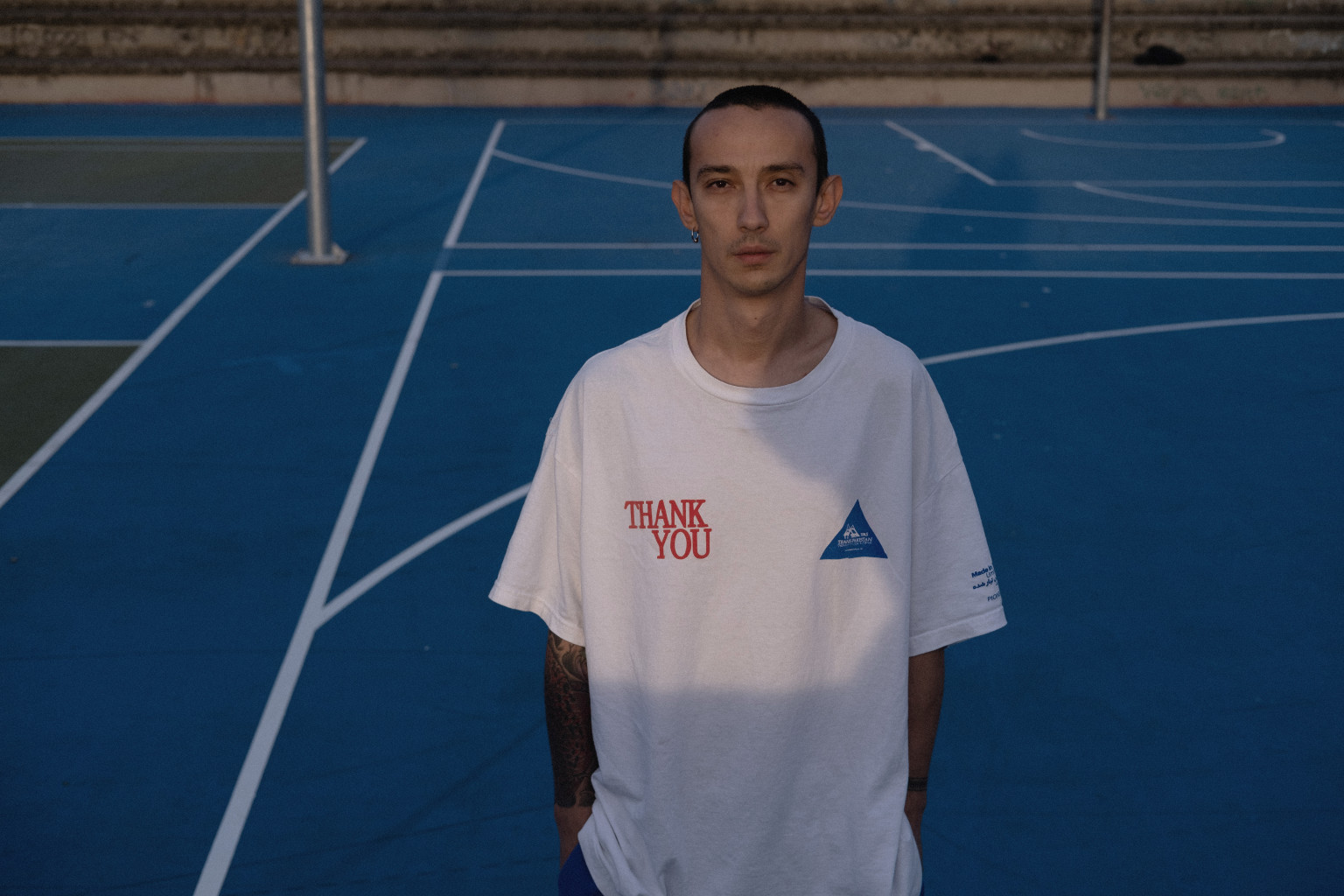
Viner Khaiitov. © Tatita Zhiliaeva
»Music is the opposite of escape for me right now: it’s where the tension gets held, repeated and turned into rhythm.«
 
Viner is a DJ and producer based between Marseille and Barcelona, where he runs the label and art lab PATAR. Born in Ulyanovsk to an Uzbek, Tatar and Bashkir family, he started making music in Kazan. In 2022 he recorded across Uzbekistan: Navruz in Tashkent, the Stihia festival in Muynak (where he was technical director), and street sound in Khiva, Bukhara and Samarkand. On 2330 (PATAR, November 2026) those recordings are cut into fragments of two seconds or less and set into three-beat loops running against the main pulse, »doira« patterns that take several bars to come round, and bass in blunt, distorted blocks. The sources stay half-legible. What carries is the friction, held for five tracks and never quite released.