in brieflive
08.11

A Quilt of Care and Music

Nan Na Hvass, Katinka Fogh Vindelev: »Et rum at vente i«
© Sofie Hannibal

We all know the simple act of care involved in placing a blanket around another person. In the installation A Room to Wait In, this gesture is made literal through textiles and song, both carrying a history spanning centuries. Nan Na Hvass has quilted together 150-year-old fabrics with her own emotional experiences and contemporary encounters with waiting rooms during fertility treatment. Her aim is to transform the clinical space in which one wakes after a procedure, drowsy and clinging to a fragile hope, into a more nurturing environment that stitches generations together. And to bring music into the experience. Each quilt bears witness to the bodies it has warmed and the hands that have sewn it.

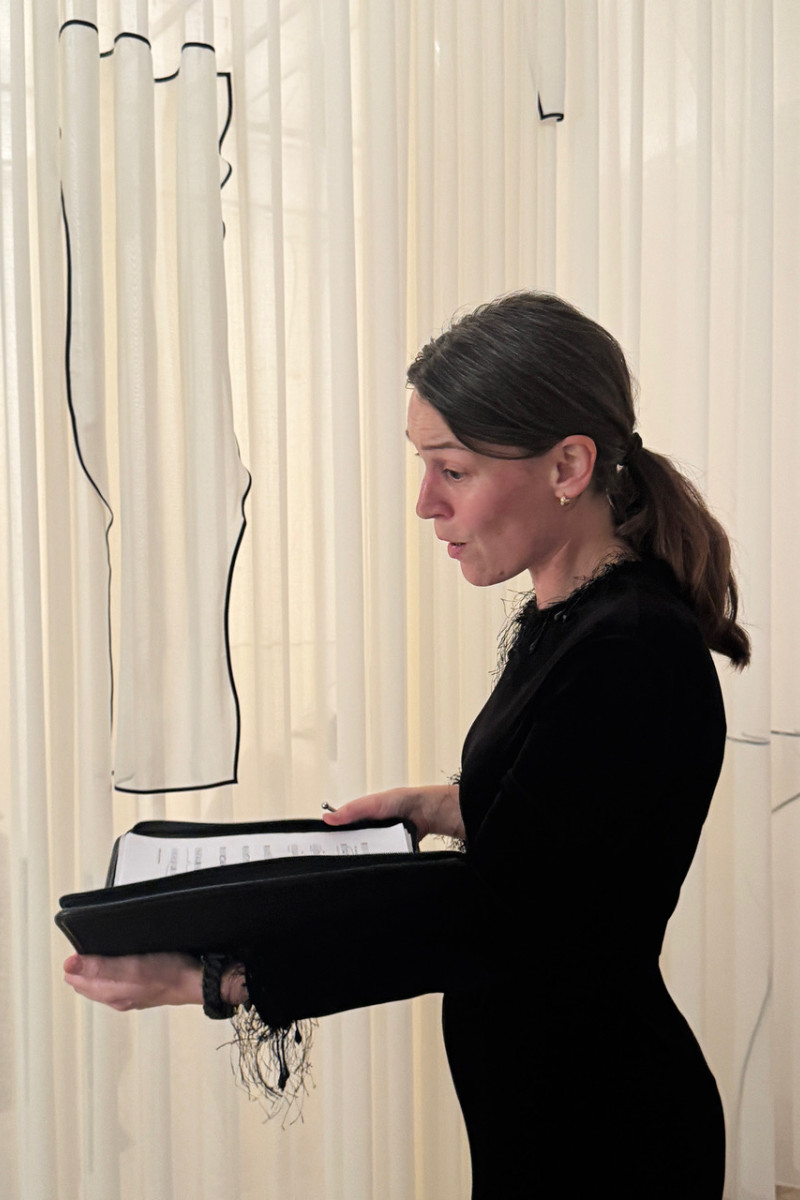
Soprano and multidisciplinary artist Katinka Fogh Vindelev moved among us as we lay on individual beds, each covered with a quilted bedspread. »This pain is not yours alone,« came the words in her beautiful, deeply intimate voice, set to music by Hildegard von Bingen, the Italian composer Barbara Strozzi and Vindelev herself. Melancholic minor scales descended; elsewhere, small melodies emerged from an earlier musical era, without leading tones – that is, without the sense of causality found in virtually all music since the eighteenth century. Sounds that simply exist, without control or any necessary direction – much like a person living with a fragile hope of fertility.

There were only four places available – an intimate concert in every sense, in which care, expressed through song, textiles and presence, merged in an almost magical way. The person lying on the bed next to me could not stop crying afterwards. The room was anything but clinical – song and textiles had transformed it into a place of care. Thoughtful and beautiful.

English translation: Andreo Michaelo Mielczarek

© Motis Necrojam

»Music is the pursuit of original failure...« 

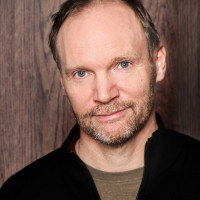
Motis Necrojam is the singer and collager with the Noseflutes and The Clicking Stick, a pair of combos from the old English Birmingham times, adorned with new-times dedication to derailment, approved by Sir John Peel, via their four live sessions for his mighty BBC Radio programme, occasional treaders of the boards, musicians with alias obsessions. One thing Necrojam has is a digit on the diminishing pulse. 

Katrine Muff. © Ditte Capion

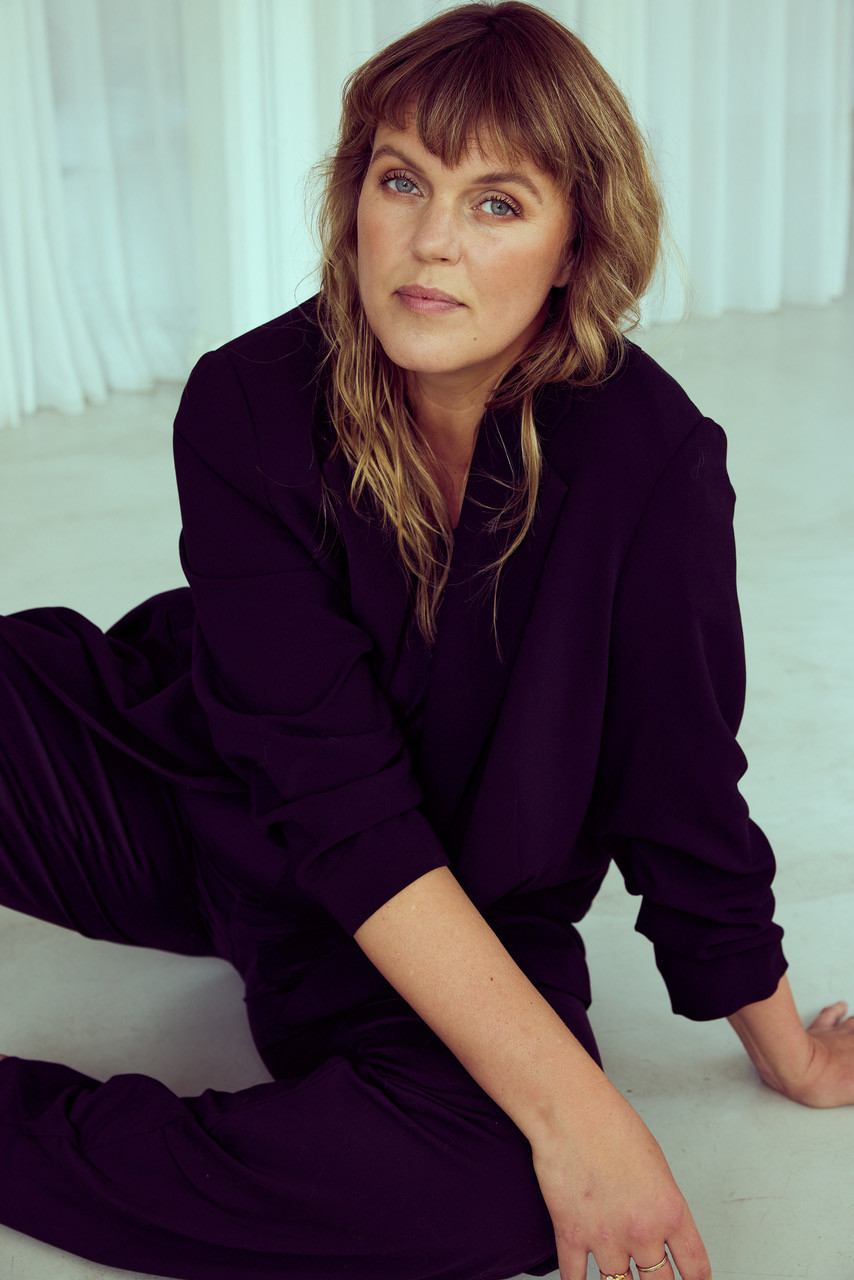
»Music, to me, is the key to – and an extension of – my vocabulary. If I struggle to put ‘spoken words’ to something inside, or if I need release in the form of a proper cry, the right song can put me in the right gear immediately. It can be the lyrics, the melody, or both that give direct access to my emotions, where the brain can simply be put into neutral and carried away.«

Katrine Muff, born in 1985, is a composer and singer. She has set music to texts by, among others, Stine Pilgaard and Suzanne Brøgger, and in 2021 she received the Folk Song Prize (Den Folkelige Sangs Pris). Together with Lone Hørslev, she is currently releasing the album Jeg ønsker mig and working as a songwriter on the theatre concert STOLT (Folketeateret).

in brieflive
04.10.2025

Soap Horse Kept a Tight Rein – Maybe Too Tight

Soap Horse + K Bech
Soap Horse. © Malthe Folke Ivarsson

K Bech – known from the rock band Shiny Darkly – opened Saturday night’s concert at Alice with a raw, unpolished melancholy. A sense of Copenhagen-style urban gloom was palpable, yet the slightly nervous set never really took off. Despite a promising setup of violin, guitar, and electronic tracks, the sensitive lyrics remained more hints than breakthroughs.

Soap Horse then took the stage and truly ignited the evening with an authentic chicken-picking riff. The country-rooted guitar technique was just one example of the musical abundance running through the band, which has just released its debut EP Tooth Inside a Tooth.

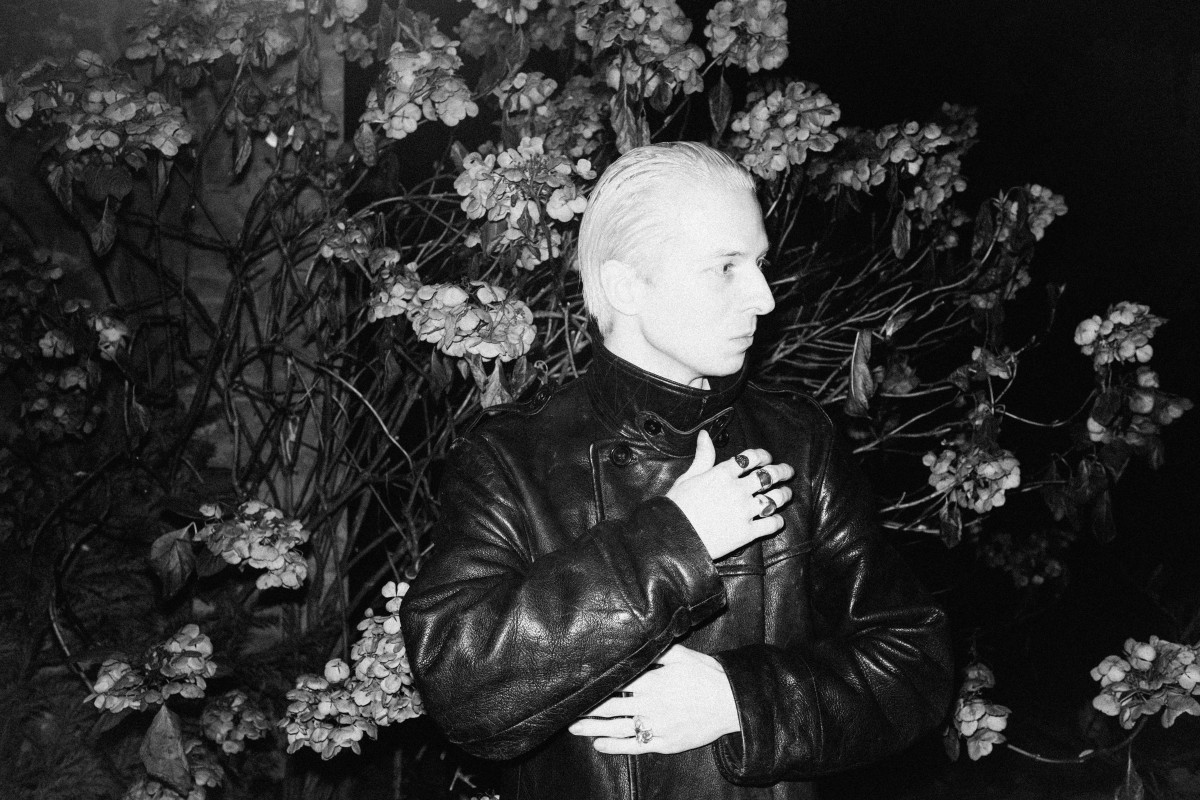
Nothing seemed accidental. From the rust-red gothic tapestry to the carefully chosen instrumentation – violin, saxophone, and pedal steel alongside guitar, bass, and drums – every detail added to a deliberate aesthetic. The sound was dark and alluring, in sharp contrast to frontman Hans Gustav Björklund Moulvad’s shock of white hair and intense stage presence.

The songs were crafted with a refined sense of balance. Simple, repetitive motifs were passed between the instruments, and when massive noise walls and shimmering colors broke through, the already blurred borders of indie rock stretched even further. Moulvad commanded the whole with ease, moving charismatically between the music’s many layers. And yet, I found myself wishing Soap Horse would let go completely. The weightless intermezzos – where the unusual lineup could have truly unfolded – were too often pulled back by a steady drumbeat, returning the music to a safe ground. Soap Horse displayed remarkable control and a firm grasp of both their sonic universe and their audience. Perhaps all that’s left is to prove they dare to loosen their grip.

English translation: Andreo Michaelo Mielczarek

© PR

Illiyeen is visual artist Eliyah Mesayer’s fictional state for the stateless, a group to which the artist herself belonged until just a few years ago. Since 2019, she has continuously added national symbols in Illiyeen’s characteristic black color, and today the state has its own postal service, national anthem, uniform, navy – and a steadily expanding list of collaborators.

It’s a clever concept, at once tightly defined and completely open. Because the state is nomadic and collective, it can arise anywhere and include a wider circle of like-minded artists, such as Angel Wei from Haloplus+ and the poet Zahna Siham Benamour. It is a state of mind.

At Den Frie, it was the drum duo Thicket – Adam »CCsquele« Nielsen and Dan Kjær Nielsen – who performed from opposite sides of a split drum kit. Through an improvised drum solo so energetic that drumsticks flew through the air, they explored the shared rhythm that emerged, broke apart, and shifted character along the way. A fitting symbol of Illiyeen’s community: a constant negotiation and coordination of tempo and movement.

Along the way, the toms gave way to a recorded sound piece, a spherical electronic composition with subdued spoken word woven into the soundscape. The work originated from an earlier installation but was extended for the occasion, with added acoustic elements recorded by Cæcilie Trier and Xenia Xamanek. It carried a mournful, sensitive vibe that stood in sharp contrast to the thundering intensity of the drums. Mesayer’s poetic, black-clad universe and Thicket’s simultaneously tight and improvisational energy bursts blended perfectly into a community one longed to be part of.

English translation: Andreo Michaelo Mielzcarek

in briefrelease
29.09.2025

Gąsiorek Never Looks Back

Cześćtet: »Polofuturyzm«
© PR
© PR

Polish-born Szymon Gąsiorek has done it again – created a cornucopia of an album that both overwhelms and delights with its endless wealth of eclectic ideas, styles, and sound sources. As is often the case with this kind of release, where each track has its own distinct identity, personal favorites quickly emerge.

One clear favorite announces itself right away. The opening track, »TAK TAK NIE NIE«, explodes with an energy reminiscent of early Boredoms – a heavy dose of noise rock with shouted vocals, electric guitar, saxophone, gunshots, screams, synths, piano, and more. The third track, »STRACH LĘK NIEPOKÓJ«, also shines with a zeuhl-like momentum driven by militaristic vocals, insistent drums, jagged guitar, and saxophone. And even beyond the most immediately impressive tracks, Polofuturyzm is so packed with highlights and playful surprises that even half of it would have sufficed. Take, for example, »90s [NADZIEJA]«, featuring a trancey synth quickly and effectively sabotaged by free jazz-style drums and saxophone, or »JEDNOKIERUNKOWY«, which sounds like classic disco polo thrown in a blender and mixed with pitch-shifted vocals and clubby keyboards. Not to forget the eight-second slapstick piano flourish on »RĘCE«.

Polofuturyzm is driven by a manic refusal to ever look back. The only constant is the absence of consistency. Gąsiorek has been here before, but it still feels just as radical and refreshing.

English translation: Andreo Michaelo Mielczarek