In brieflive
27.05

When Orpheus Turns His Head

O Future: »Enter Afterlife«
© PR
© PR

Thorvaldsens Museum is a fitting place to unfold a narrative about the soul’s journey to the underworld. Not only are the halls filled with depictions of Greek mythology, the museum itself is a kind of mausoleum, with Bertel Thorvaldsen’s grave situated at the heart of an inner courtyard. Everything should align perfectly when the multimedia duo O Future stages the descent into Hades through sound and animated video projections. But it doesn’t.

Through eight rooms and five sound works, we move from the banks of the River Styx, through the underworld, and finally to Elysium, where the blissful afterlife awaits. Along the way, we are confronted with judgment, choice, and struggle – existential themes played out on the grandest scale. The electronic soundscape, delivered through headphones, begins with a simmering, oppressive digital lament and accelerates through the rooms to a heavy electronic beat layered with symphonic undertones. We hear jazzy saxophones, looped synths, and white noise, before safely arriving in a spherical, almost sacred, digital choir.

There’s an intriguing theme in the collision between digital voices and the idea of death, but it is drowned out by the many loose ends of the exhibition. Why, for instance, is there no synchronicity between sound and visuals? Why are videos consistently projected onto sculptures that bear no relation to Greek mythology? And why the oddly synthetic color palette that evokes 1990s MTV more than it does the vast drama the story seeks to evoke? I hurriedly close my eyes and try to focus on the beat – but it’s too late. Orpheus has turned his head, and Eurydice is lost. So is this exhibition.

English translation: Andreo Michaelo Mielczarek

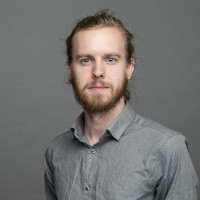
Bjarke Niemann. © Frederik Barasinski

»Music is everything that can only be described far more poorly with words.«

Bjarke Niemann is the lead singer, songwriter, and producer of the Danish band Spleen United. The group broke through with Godspeed Into The Mainstream in 2005 and has performed at, among other places, Roskilde Festival and the Copenhagen Opera House. Bjarke Niemann has also composed and developed music for TV and video games – including the international game series Hitman – and has produced albums with artists such as Soleima, Statisk, Afskum, and Hugorm.

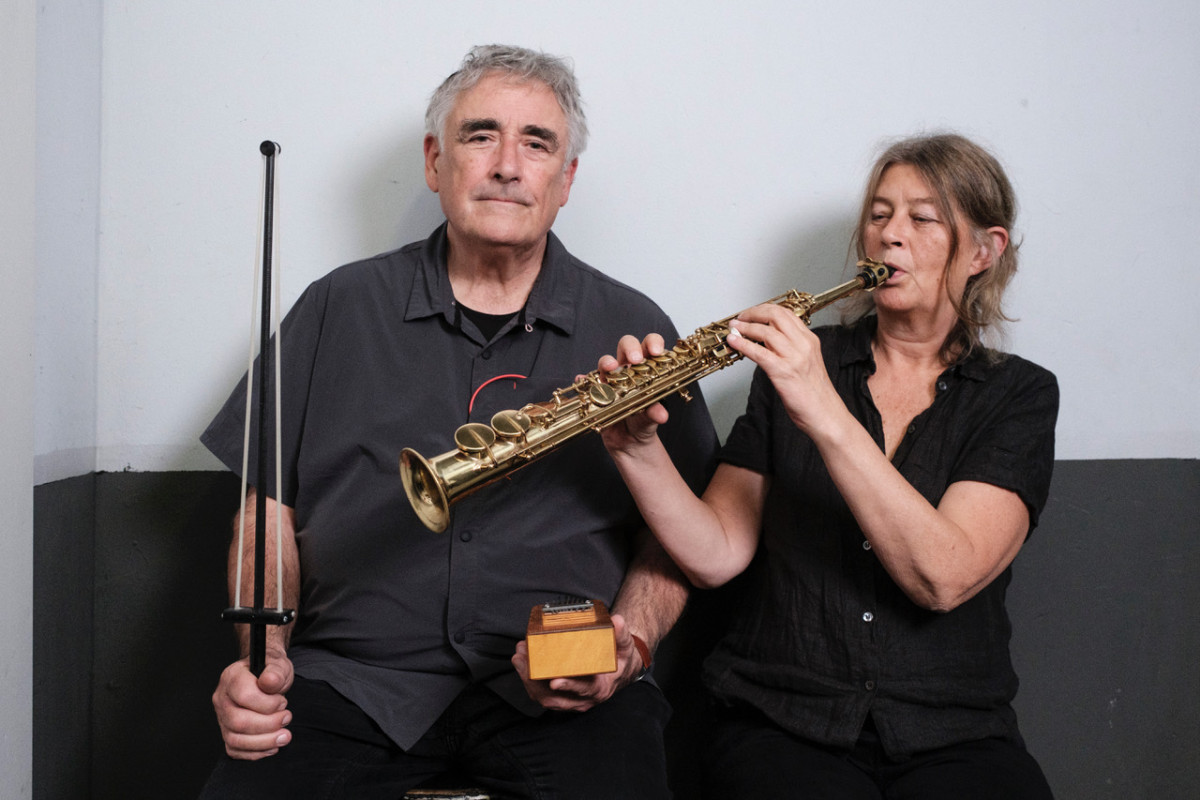
© Motis Necrojam

»Music is the pursuit of original failure...« 

Motis Necrojam is the singer and collager with the Noseflutes and The Clicking Stick, a pair of combos from the old English Birmingham times, adorned with new-times dedication to derailment, approved by Sir John Peel, via their four live sessions for his mighty BBC Radio programme, occasional treaders of the boards, musicians with alias obsessions. One thing Necrojam has is a digit on the diminishing pulse. 

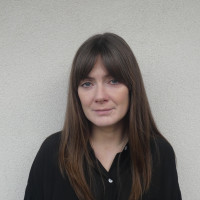
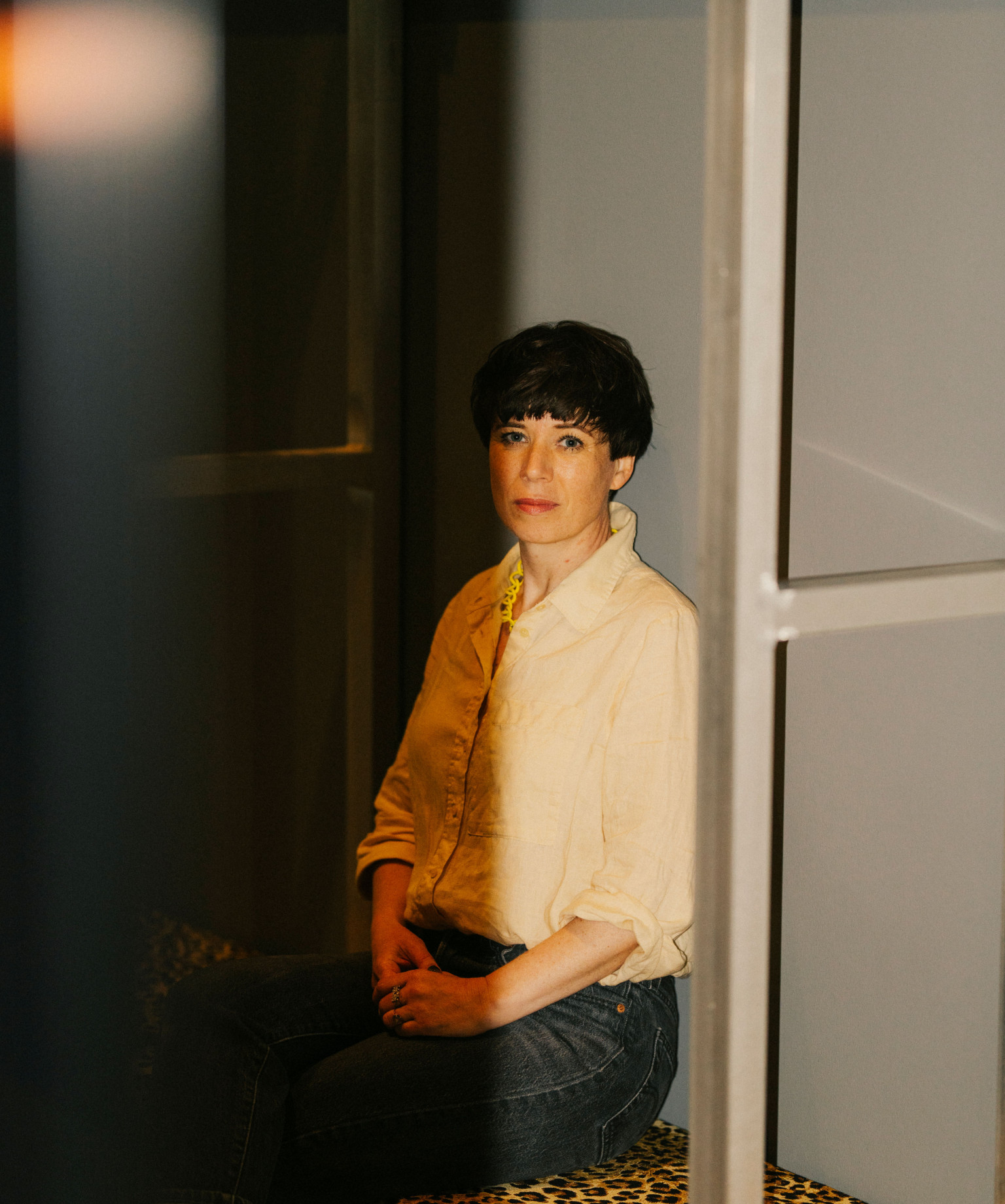
Katrine Muff. © Ditte Capion

»Music, to me, is the key to – and an extension of – my vocabulary. If I struggle to put ‘spoken words’ to something inside, or if I need release in the form of a proper cry, the right song can put me in the right gear immediately. It can be the lyrics, the melody, or both that give direct access to my emotions, where the brain can simply be put into neutral and carried away.«

Katrine Muff, born in 1985, is a composer and singer. She has set music to texts by, among others, Stine Pilgaard and Suzanne Brøgger, and in 2021 she received the Folk Song Prize (Den Folkelige Sangs Pris). Together with Lone Hørslev, she is currently releasing the album Jeg ønsker mig and working as a songwriter on the theatre concert STOLT (Folketeateret).

In brieflive
04.10

Soap Horse Kept a Tight Rein – Maybe Too Tight

Soap Horse + K Bech
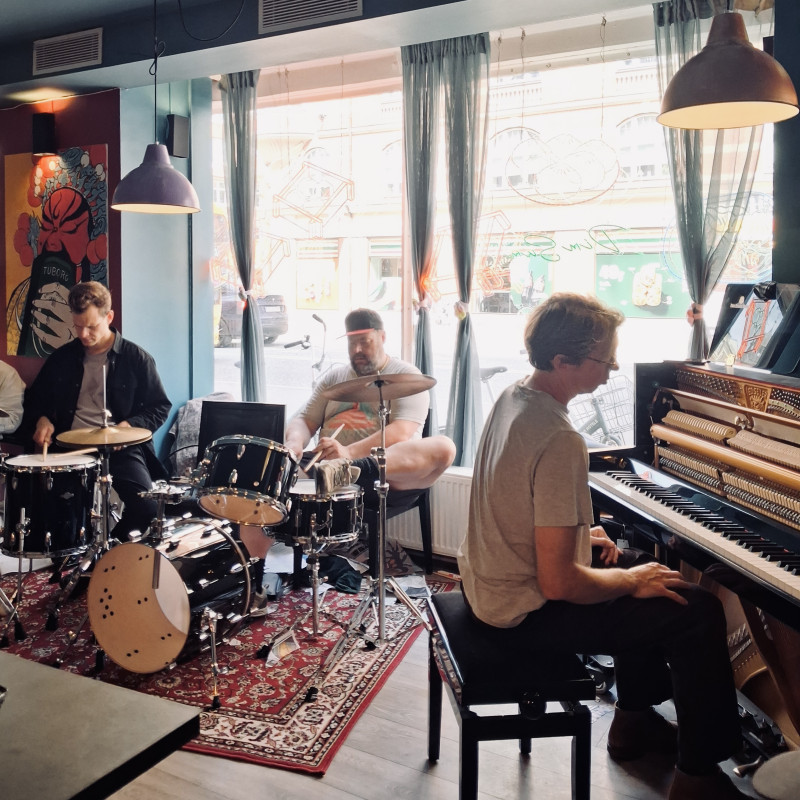
Soap Horse. © Malthe Folke Ivarsson

K Bech – known from the rock band Shiny Darkly – opened Saturday night’s concert at Alice with a raw, unpolished melancholy. A sense of Copenhagen-style urban gloom was palpable, yet the slightly nervous set never really took off. Despite a promising setup of violin, guitar, and electronic tracks, the sensitive lyrics remained more hints than breakthroughs.

Soap Horse then took the stage and truly ignited the evening with an authentic chicken-picking riff. The country-rooted guitar technique was just one example of the musical abundance running through the band, which has just released its debut EP Tooth Inside a Tooth.

Nothing seemed accidental. From the rust-red gothic tapestry to the carefully chosen instrumentation – violin, saxophone, and pedal steel alongside guitar, bass, and drums – every detail added to a deliberate aesthetic. The sound was dark and alluring, in sharp contrast to frontman Hans Gustav Björklund Moulvad’s shock of white hair and intense stage presence.

The songs were crafted with a refined sense of balance. Simple, repetitive motifs were passed between the instruments, and when massive noise walls and shimmering colors broke through, the already blurred borders of indie rock stretched even further. Moulvad commanded the whole with ease, moving charismatically between the music’s many layers. And yet, I found myself wishing Soap Horse would let go completely. The weightless intermezzos – where the unusual lineup could have truly unfolded – were too often pulled back by a steady drumbeat, returning the music to a safe ground. Soap Horse displayed remarkable control and a firm grasp of both their sonic universe and their audience. Perhaps all that’s left is to prove they dare to loosen their grip.

English translation: Andreo Michaelo Mielczarek

© PR

Illiyeen is visual artist Eliyah Mesayer’s fictional state for the stateless, a group to which the artist herself belonged until just a few years ago. Since 2019, she has continuously added national symbols in Illiyeen’s characteristic black color, and today the state has its own postal service, national anthem, uniform, navy – and a steadily expanding list of collaborators.

It’s a clever concept, at once tightly defined and completely open. Because the state is nomadic and collective, it can arise anywhere and include a wider circle of like-minded artists, such as Angel Wei from Haloplus+ and the poet Zahna Siham Benamour. It is a state of mind.

At Den Frie, it was the drum duo Thicket – Adam »CCsquele« Nielsen and Dan Kjær Nielsen – who performed from opposite sides of a split drum kit. Through an improvised drum solo so energetic that drumsticks flew through the air, they explored the shared rhythm that emerged, broke apart, and shifted character along the way. A fitting symbol of Illiyeen’s community: a constant negotiation and coordination of tempo and movement.

Along the way, the toms gave way to a recorded sound piece, a spherical electronic composition with subdued spoken word woven into the soundscape. The work originated from an earlier installation but was extended for the occasion, with added acoustic elements recorded by Cæcilie Trier and Xenia Xamanek. It carried a mournful, sensitive vibe that stood in sharp contrast to the thundering intensity of the drums. Mesayer’s poetic, black-clad universe and Thicket’s simultaneously tight and improvisational energy bursts blended perfectly into a community one longed to be part of.

English translation: Andreo Michaelo Mielzcarek