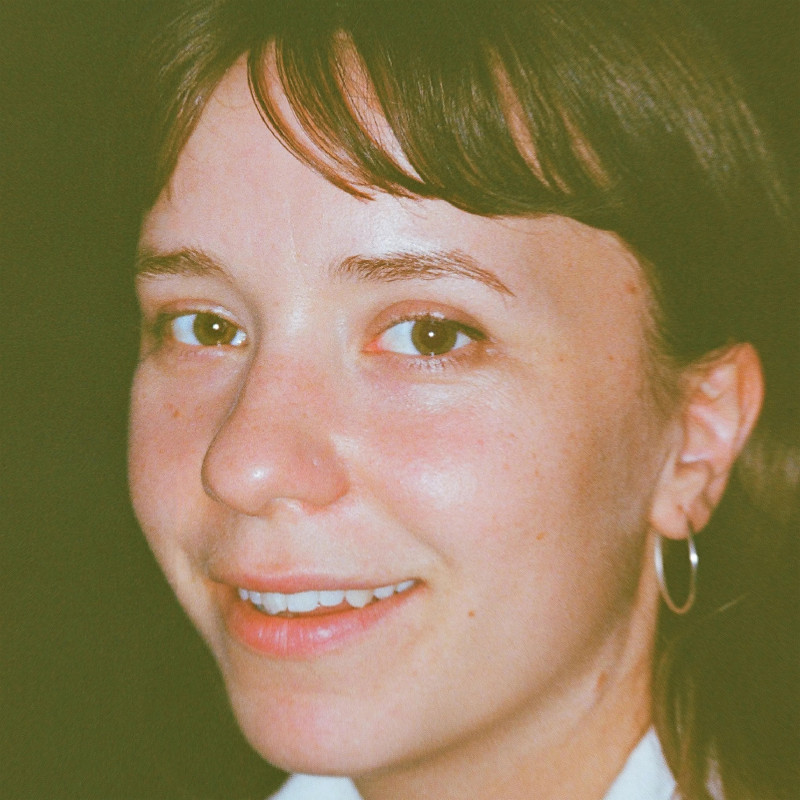
© Guannan Kang
© Guannan Kang

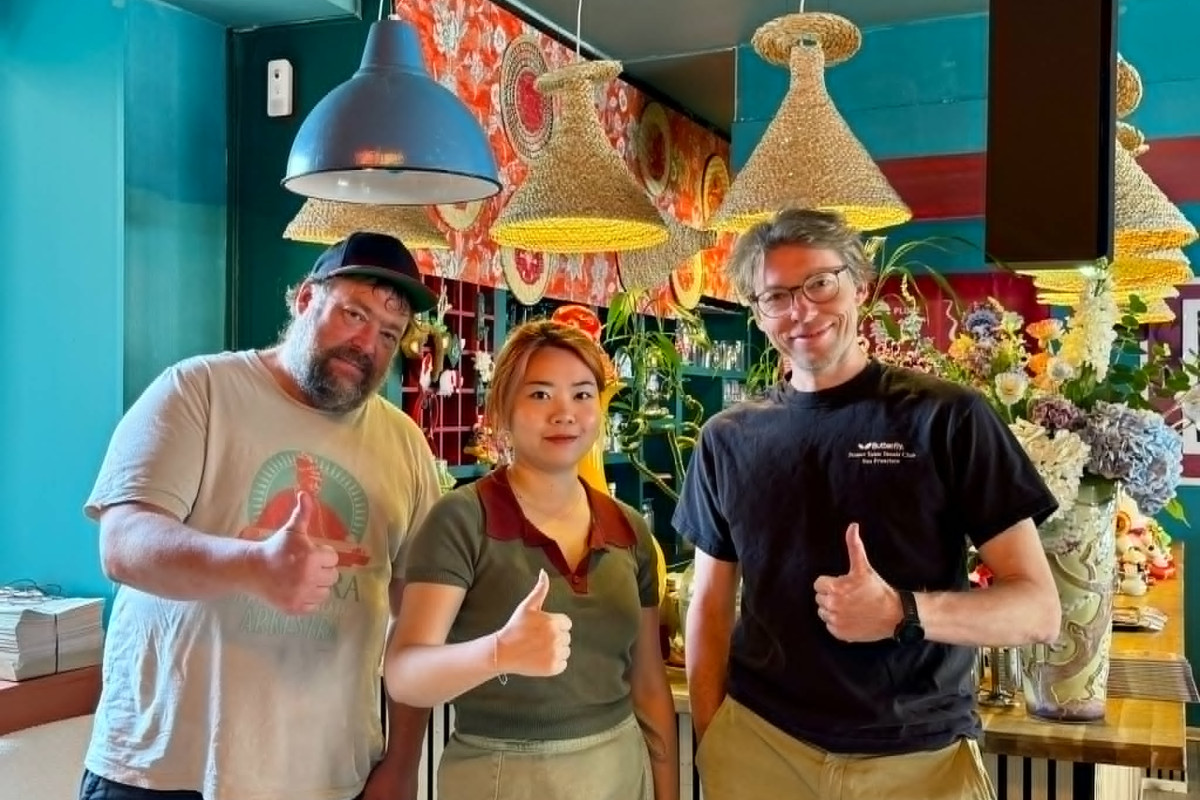
自由即兴创作比性爱更好! – »Free improvisation is better than sex.« According to drummer Kresten Osgood, the saying is attributed to Confucius. Whether the ancient Chinese philosopher ever uttered those words is doubtful. But the quote perfectly captures the spirit of one of the most unusual events at this year's Copenhagen Jazz Festival.

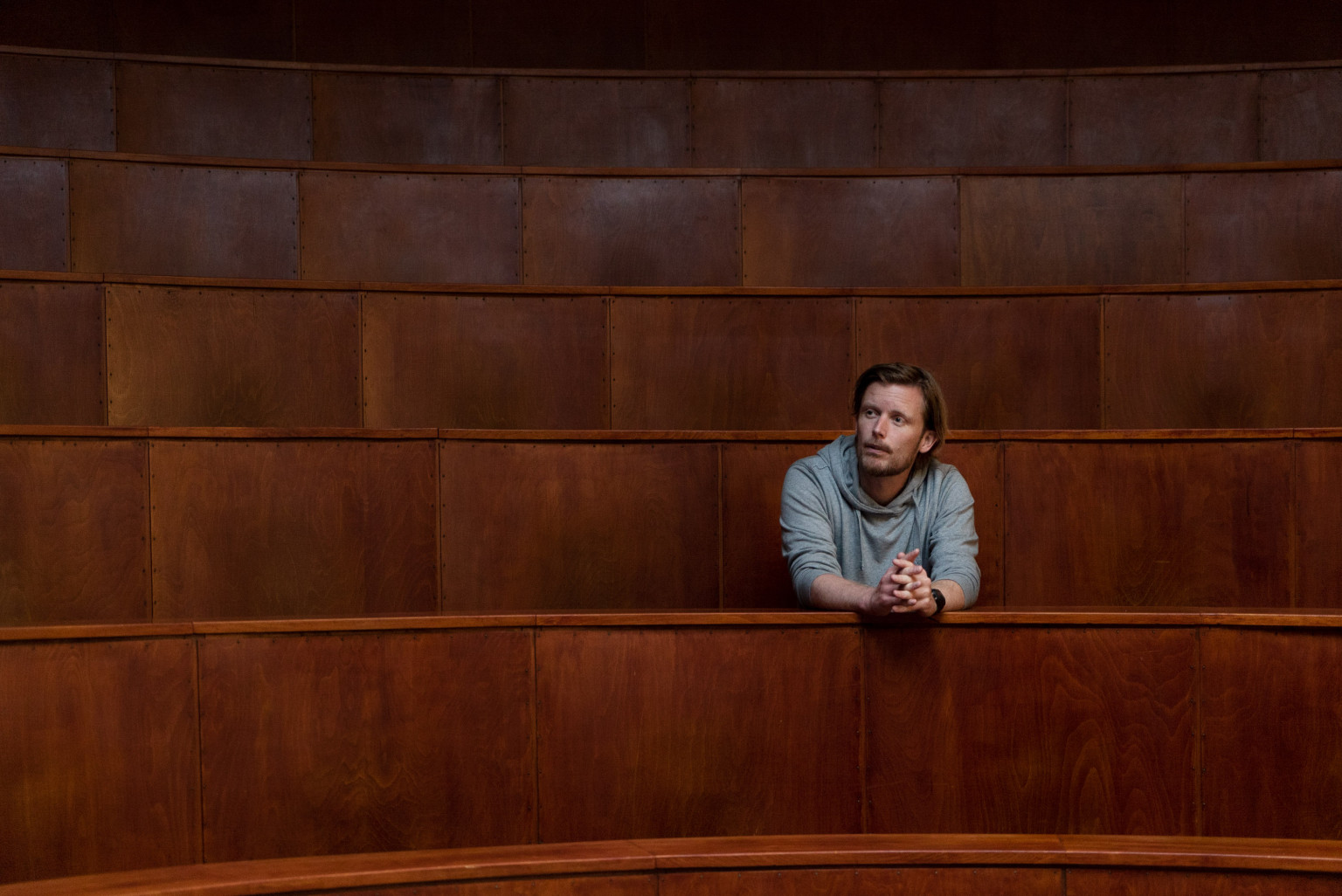
From 7–11 July, pianist Søren Kjærgaard and drummer Kresten Osgood will take over CC Taste on Amagerbrogade, performing daily from 2–4 pm among diners, dim sum and steaming hot pots.

For years, the two musicians have dreamed of taking free improvisation out of its familiar concert settings and into a place where audiences would least expect to encounter it. The idea emerged when they discovered an old upright piano in the restaurant, which has long served as one of their regular meeting places. Stephanie, the owner of CC Taste, immediately embraced the project.

Kjærgaard and Osgood are cousins who grew up together on Denmark's west coast and have been making music together since childhood. For more than 35 years, their duo has remained a constant thread running through collaborations with artists including Herb Robertson, Tim Berne, Thomas Morgan, Bent Jædig and the musician collective ILK. In recent years, they have toured as a duo in Estonia, Latvia, Finland and Norway.

»We've wanted for a long time to bring our music into places that aren't naturally predisposed to it, and to explore how the music affects an environment where people come to enjoy dim sum and have a lovely lunch,« says Kresten Osgood. »The owner of CC Taste loved the idea, and I think everyone involved is a little excited to see what happens.«

For Søren Kjærgaard, the residency format is equally significant:

»We're really looking forward to playing together in the same place for five consecutive days. That's quite rare in the world of free improvisation, where most performances are one-off concerts or ad hoc constellations. We share an enormous amount of experience and have a very deep musical relationship – yet there's always something at stake whenever we improvise together. We know each other inside out, while constantly seeking the unpredictability that comes from that familiarity.«

The restaurant will remain open throughout the performances, allowing audiences to enjoy lunch while listening to the music. The concerts take place daily from 2–4 pm, and all five performances will be recorded.


in brieflive
26.08.2024

Hooray! The Big Questions Are Still Alive in Opera

Copenhagen Opera Festival: Rolf Hind, Dante Micheaux and Jalal al-Din Rumi, Frederic Wake-Walker, Elaine Mitchener, James Hall, Yannis François, Loré Lixenberg a.o.: »Sky in a Small Cage«
© Ida Guldbæk Arentsen

If one had come to believe that new opera could only be starkly realistic portrayals of the world’s decay, Sky in a Small Cage at the Copenhagen Opera Festival would quickly prompt a rethink. The festival’s final work pointed in a completely different direction: mysticism, hope, love. All clichés, perhaps – but absolutely not in the hands of composer Rolf Hind and librettist Dante Micheaux. Together they have spun a truly astonishing opera about the Sufi poet Jalal al-Din Rumi.

It was as much the enchantment of Rumi’s poetry as the myth of the poet himself that drove the work. In fact, it was exhilaratingly difficult to distinguish between poetry and reality: the character Rumi became the object of his own grand poetic art. »It might as well be called a death: the gate you must go through to enter yourself or beloved,« sang a narrator-like figure at the outset. Love, one understood, is a self-annihilating transgression – a threshold phenomenon that at times demands its sacrifices.

This dreamlike doubleness served as a guiding principle throughout the performance. It was a pleasure to hear mysticism unfold in the music, which was phenomenally orchestrated with dripping gamelan bells and singing bowls, double harps, celebratory piano, and more pounding toms than Lars Ulrich would dare to dream of.

And what about the bird, the cage, and the idea of freedom? In Sky in a Small Cage, freedom was not a matter of opening the cage and setting the bird free. It was located in the very act of calling – in song, music, and poetry – as a reaching out toward the other in a kind of intoxication of love. Oh yes, the big questions are still alive in opera. Thank God.

English translation: Andreo Michaelo Mielczarek

© PR

»Music has always provided me with a clear pathway on which to navigate a meaningful life. It is imbued with a set of noble intentions that have taught me important lessons: the art of giving and receiving, how to grapple with the ever-shifting forces of tension and peace, what it is to trust the people who surround you, and the ability to let go.«

The Irish-born, Denmark-based composer-musician Carolyn Goodwin is a clarinetist and saxophonist, and the founder of Copenhagen Clarinet Choir. Her compositional work is driven by a desire to explore new frontiers in ensemble playing, bringing body and movement to the forefront, and combining the freedom of improvised music with her foundation in classical music. Goodwin's 2022 release with the Copenhagen Clarinet Choir, Organism, on the År & Dag label, has been described as »cranio-sacral therapy for the ear« and »a perfect cross between intelligent and sensory music.« It is these sound and performance parameters that have inspired composers like Marcela Lucatelli, Greta Eacott, and Anders Lauge Meldgaard to compose music for Goodwin’s ensemble.

Goodwin is a member of the trio Coriolis, alongside fellow saxophonists Maria Dybbroe and Nana-Pi Aabo Kim, as well as Jason Dungan’s Blue Lake project. She is also part of the musician collective Barefoot Records.


© Beowulf Sheehan

»Music is limitless, and its potential for meaning is infinite. This is neither good nor bad, but simply an acknowledgement that music is one kind of expression of any given culture (with many other inputs, of which I am mostly ignorant). From that perspective, I suppose then that music is just another medium through which I try to understand another human and/or the culture that they exist(ed) in, and more deeply feel the interconnectedness of the world that we live in, that we have inherited, and that we will pass on.«

Currently the only musician ever to receive two Avery Fisher Career Grants – in 2016 as a soloist and in 2019 as a member of the JACK Quartet – cellist Jay Campbell has brought his eclectic artistic interests both as a performer and curator to the New York Philharmonic, Deutsche-Symphonie Orchester, Los Angeles Philharmonic, Seattle Symphony, Ojai Festival, Lucerne Festival and many others. Deeply committed to collaborative music, Jay is a member of the JACK Quartet, as well as the Junction Triowith violinist Stefan Jackiw and composer/pianist Conrad Tao, multidisciplinary artist collective AMOC, and frequently works with composers and performers like Helmut Lachenmann, Patricia Kopatchinskaja, Barbara Hannigan, John Zorn, Tyshawn Sorey, and many more from his own generation. 

in brieflive
05.07.2024

A World of Contrasts – and a Touch of Smurf Vocals

Roskilde Festival: Slauson Malone 1
© PR

The cello is everywhere at this year’s Roskilde Festival. Some use it as just about anything else – hey, now it’s an electric bass, or how about a keyboard drowned in effects – but in American Jasper Marsalis’ Marcela Lucatelli-worthy bomb project Slauson Malone 1, the cello was actually used as, well, a cello.

Marsalis himself handled vocals and electric guitar on the open Platform stage, while Nicholas Wetherell opened the concert with a motor-race assault on his amplified cello, then pivoted into plucked meditations, to which Marsalis contributed overtone playing on guitar. Sensitive jazz guys? Nope – suddenly: synchronized noise sprints, intimacy splintered, and before long Marsalis threw himself into the seated audience with a somersault – and a scream.

Meanwhile, Wetherell played tender vibratos. Because contrasts thrive at Roskilde – and, after all, seem to be driving the world forward these days. And so it was the world itself that came into focus in the music: through violent shifts between 8-bit Smurf vocals, ambient gnawing solo cello, intimate indie layered over a one-second sample of Cher – culminating in a wistful lullaby veiled in digital theremin.

In many ways, it was peak hipster era. But it was also intensely moving – something like following Mahler out on the edge of the abyss as he tried to sketch the whole world into his scores. The only difference: the easel looks a bit different today.

© Kristoffer Juel Poulsen

It is not the first time Selvhenter have shown Roskilde how a saxophone can scream. Even the most avant-garde-ready listeners were left gasping for air. It was hard not to let your own lungs empathise with the long passages and unruly energy that the experimental Copenhagen quartet excelled in, wielding an instrumentarium consisting of two drum kits, synth, trombone, saxophone and assorted extras.

And the more the band – positioned in the centre of the Avalon tent, surrounded by the audience – wove their collective patchwork carpet, the more the individual character of the instruments was erased. Selvhenter could just as well have been playing entirely different instruments. You could see Sonja LaBianca standing there, forcing tones out of a wind instrument, yet it sounded more like a harp from outer space. It was astonishing how her saxophone fanfares resembled distress signals beamed into the cosmos. Meanwhile, the drums drove very grounded rhythms: Steve Reich-like pulses colliding with freer passages.

Selvhenter inflated the tent with full-fat punked and jazzy noise. Without pauses (not even when a snare drum went dead and had to be replaced mid-set) and without water for the crowd. Being so close to the musicians was a plus; on their small central stage they looked like giants in a battle arena. This was new music that was deeply physical. For about an hour we breathed together (and perhaps even sweated?) in sync. And it is profoundly good to do something together at a festival.

Selvhenter on the Orange Stage next year. Come on!